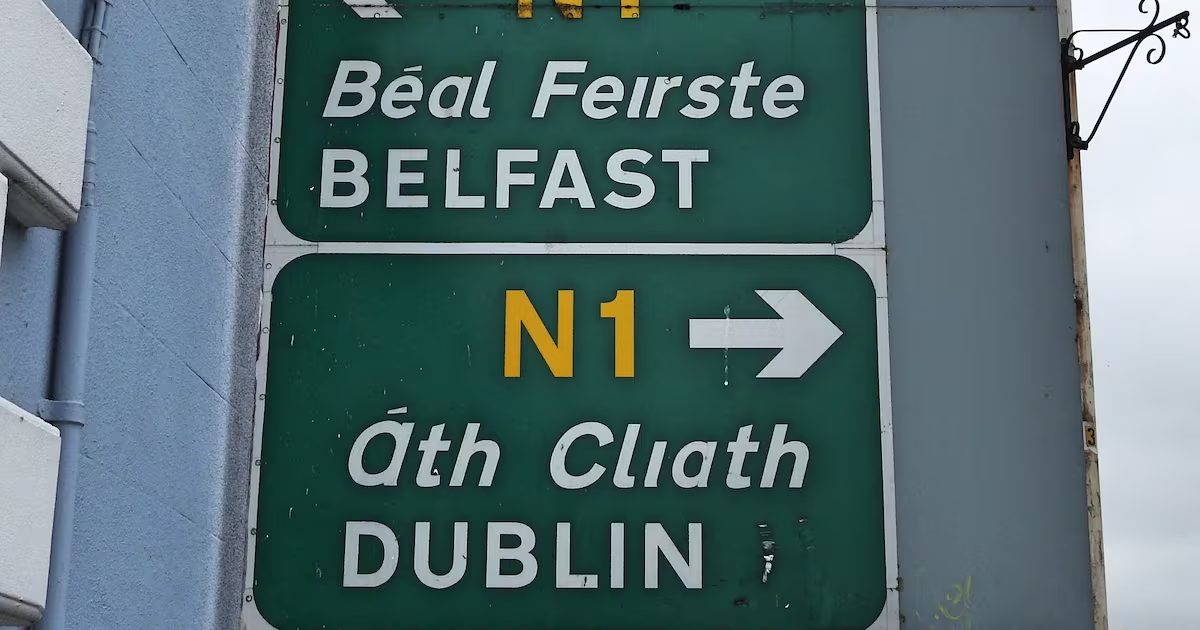
I want to import a Mercedes car from Northern Ireland to the Republic of Ireland. Is there any VAT due if the car is under three years and has been in Northern Ireland for three months. Also, customs duty and VRT? – Jim C, CorkWe’re going to have to delve slightly into the world of “it depends” here because the Revenue Commissioners, in their wisdom, have given themselves a bit of wiggle room when it comes to interpreting the import rules for cars from Northern Ireland. So, in theory, because of Northern Ireland’s half-in, half-out position with the European Union, a car bought in Northern Ireland and imported into the Republic counts as having come from the EU. So, yes you do have to pay VRT, but you shouldn’t have to pay VAT or customs duty, as you would with a car coming from England, Scotland, or Wales. So that’s the rule? Not quite. Revenue, clearly concerned about the possibility of Northern Ireland’s car dealers being able to simply go and buy-to-order used cars in the rest of the UK for Irish customers, have created that aforementioned wiggle room. So, there are a couple of criteria. If the car was registered in Northern Ireland before the January 1st, 2021, – which is when the UK completed its withdrawal from the EU – then VRT applies, but VAT and customs duty don’t.To avoid the requirement to pay VAT and customs duty (customs is usually calculated at 10 per cent of the original purchase price plus shipping costs) the car has to have been brought to Northern Ireland under the regulations of the Windsor Framework. That framework is the lattice of rules and regulations that applies to goods moving to Northern Ireland from the rest of the UK, and whether or not they’re then passing on to an EU territory (such as the Republic). It’s why you see the occasional “not for EU” label on food products if you’re nipping up North to do some shopping. So, to conform with the Windsor Framework, when a car is brought into Northern Ireland it has to be filed with the Trader Support Service and be given a master reference number. Any competent car dealer will have probably done this already, so they can provide you with the appropriate paperwork that you can then show to Revenue when you bring the car in for its VRT inspection. If a car has been brought to Northern Ireland without that paperwork – such as when a private owner has brought the car into the country themselves – then all is not lost. Assuming that you can show a history of the car being registered and used in Northern Ireland, such as road tax receipts and MOT test passes then, in theory, that car conforms to the regulations too. However, it does get a little shaky at that point. Revenue has previously said that it would expect the car to have been in use in Northern Ireland for “a reasonable amount of time”. How much is reasonable? Good question – there’s no strict definition, and that’s the wiggle room we were talking about earlier. It’s been suggested that around three months is the minimum, but as ever Revenue decides these things on a case-by-case basis. Now, there’s another wrinkle. If you say the car you’re looking at is “under three years old”, but you don’t say precisely how much, there’s a potential Revenue tripwire here. That’s because Revenue regards any car that’s less than six months old, and/or has fewer than 6,000km on the clock (or the equivalent in miles) effectively as a new car for VAT purposes. In theory there should be an allowance for depreciation within that regulation, so always double-check Revenue’s maths on this score. You’d still avoid customs duty, though. Does this mean that dealers in Northern Ireland can effectively buy-to-order as long as they use the Windsor Framework? Potentially, yes – but the old “case-by-case” approach of Revenue could soon be tightened up if it turned out that a flood of more affordable cars were coming in through that route. The short answer, then, is no – you shouldn’t have to pay any VAT or customs duty on a used Mercedes imported from Northern Ireland as long as it has the correct Windsor Framework papers. You will have to pay VRT either way, though.
Motors Q&A: Do I owe VAT on a car from Northern Ireland?
Practical advice on your motoring queries, from buying, selling or issues you have with your current car
731 words~3 min read