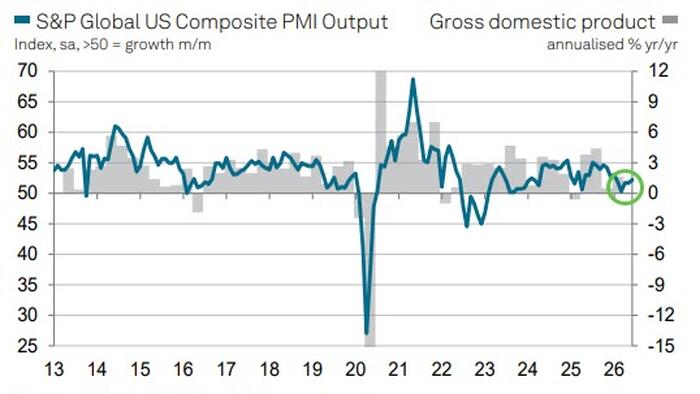
Business activity in the euro area shrank less than anticipated in June, feeding optimism that the region’s economy can weather faster inflation and the jolt to confidence dealt by the Iran war.Despite recording a third month below the 50 threshold separating growth from contraction, the Composite Purchasing Managers’ Index compiled by S&P Global rose to 49.5 from 48.5 in May. Analysts in a Bloomberg survey estimated a gain to 49.2.While Germany surprisingly slipped deeper into negative territory, France exceeded expectations thanks to a stronger-than-anticipated rebound in services, though its overall reading remained well below 50.Price pressures, meanwhile, eased, hinting that the recent inflation spike may be peaking.“The euro zone economy is showing enough resilience to just about stay out of recession,” Chris Williamson, chief business economist at S&P Global Market Intelligence, said Tuesday in a statement. The slight drop in business activity is “indicative of unchanged GDP over the second quarter”.Adjusting for volatility in Ireland, the euro area showed solid growth early in the year but is increasingly weighed down by elevated energy costs and uncertainty stemming from the Middle East. While efforts to find a lasting peace are feeding optimism, doubts remain and it will take time for sentiment in Europe to recover.June saw the downturn in services activity ease as tourism and leisure-related industries indicated demand is recovering after the war’s initial disruptions. Elsewhere, manufacturing continued to benefit from inventory-building as customers front-ran future price rises amid ongoing supply fears linked to the conflict.Adding to headwinds, the European Central Bank increased interest rates this month for the first time since 2023, warning that war-driven inflation is widening beyond energy. Data last week showed underlying price pressures were stronger than initially reported in May, making the chance of a further hike more likely.Speaking Monday, President Christine Lagarde said the ECB must remain nimble, but that data don’t “warrant a more forceful policy response at this stage”.According to S&P, input costs continued to rise rapidly in June, but the rate of inflation abated to the slowest since February. Output-price inflation also dipped, albeit to a lesser extent than for input costs.“Although widespread supply-chain delays contributed to further upward pressure on prices, there are signs that concerns over supply and price trends are starting to moderate,” Williamson said.S&P’s survey was conducted from June 11-19, capturing the first days after President Donald Trump signed his memorandum with Iran.PMIs are closely watched by markets as they arrive early in the month and are good at revealing trends and turning points in an economy. A measure of breadth of changes in output rather than depth, business surveys can sometimes be difficult to map directly to quarterly GDP. - Bloomberg
Euro zone activity shrinks less than expected, easing fears over inflation
While Germany surprisingly slipped deeper into negative territory, France exceeded expectations
445 words~2 min read