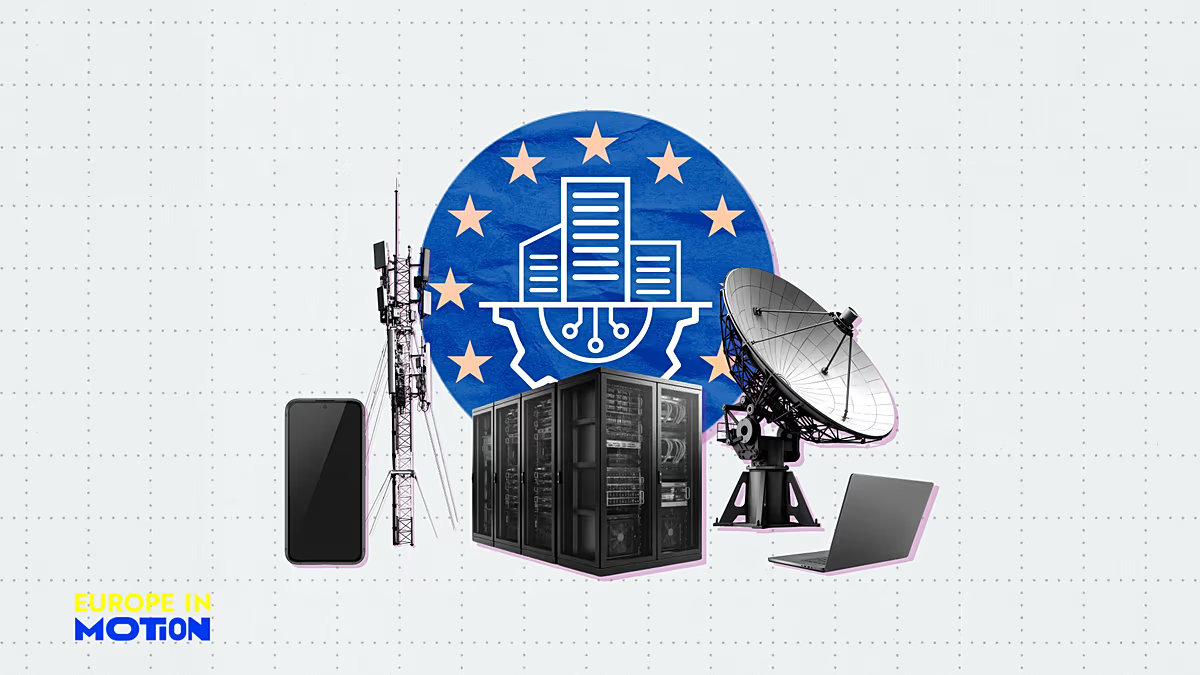
The European Commission’s latest push to reduce dependence on foreign technology providers is not surprising. If Europe believes that critical digital services could be disrupted by foreign governments, foreign legal systems, or foreign-owned providers, it will, of course, respond. That concern is now being expressed in the language of “kill switch” risk, meaning the fear that the cloud, AI, or semiconductor services that Europe depends on could be interrupted or constrained by forces beyond its control.
At a high level, that concern is valid. Europe is right to worry about strategic dependence. If critical public services, regulated workloads, or national-interest systems rely on infrastructure controlled elsewhere, sovereignty becomes more than a policy slogan. It becomes an architectural issue. However, I am skeptical of the leap from identifying the problem to assuming that a policy response will produce a cleaner, safer, or even more sovereign market. There is a good chance it may do the opposite.
What Europe is trying to protect
The motivation behind this effort is clear. Europe wants to reduce its dependence on cloud computing, artificial intelligence, and semiconductors from providers it does not fully control. It wants to ensure that core digital services cannot be switched off, legally constrained, or strategically influenced from outside the region. That is the public policy objective, and from a government standpoint, it makes sense.