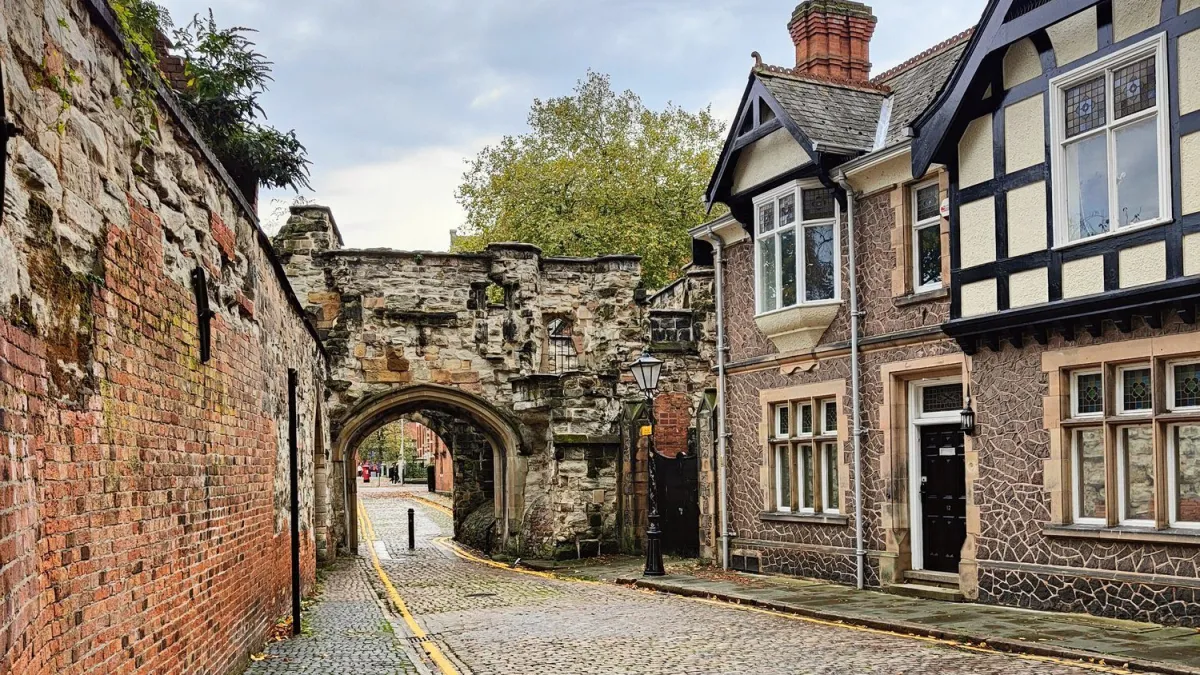
When people think of Roman Britain, their minds tend to jump to Hadrian’s Wall, Bath’s grand bathhouses or the ancient streets of York and London. Leicester, better known for its sporting triumphs and vibrant multicultural food scene, rarely makes the shortlist. Yet this Midlands city was one of Britain’s earliest Roman settlements.
The Romans founded Leicester in 47 AD, but for centuries, much of its history lay hidden beneath Victorian factories, warehouses and busy streets. Now, the Jewry Wall Museum is bringing that forgotten past back into view. Curious to see what remained of Roman Leicester, I headed to the city to uncover its ancient roots – and sample some of its famously good curry while I was there.
Shorts
At first glance, Leicester’s concrete city centre offers few clues to its Roman origins. But close to the River Soar, squeezed between an Anglo-Saxon church and a striking slab of brutalist 1960s-style architecture, stands one of the most impressive survivals of Roman Britain: the Jewry Wall.
Rising nine metres high, the wall has dominated this corner of the city since the 2nd century AD. Antiquarians once debated whether it formed part of a temple or Leicester’s Roman defences. The mystery was finally solved in the 1930s, when pioneering archaeologist Kathleen Kenyon excavated the site and revealed it to be part of an extensive and lavish Roman bathhouse – among the largest ever discovered in Britain.