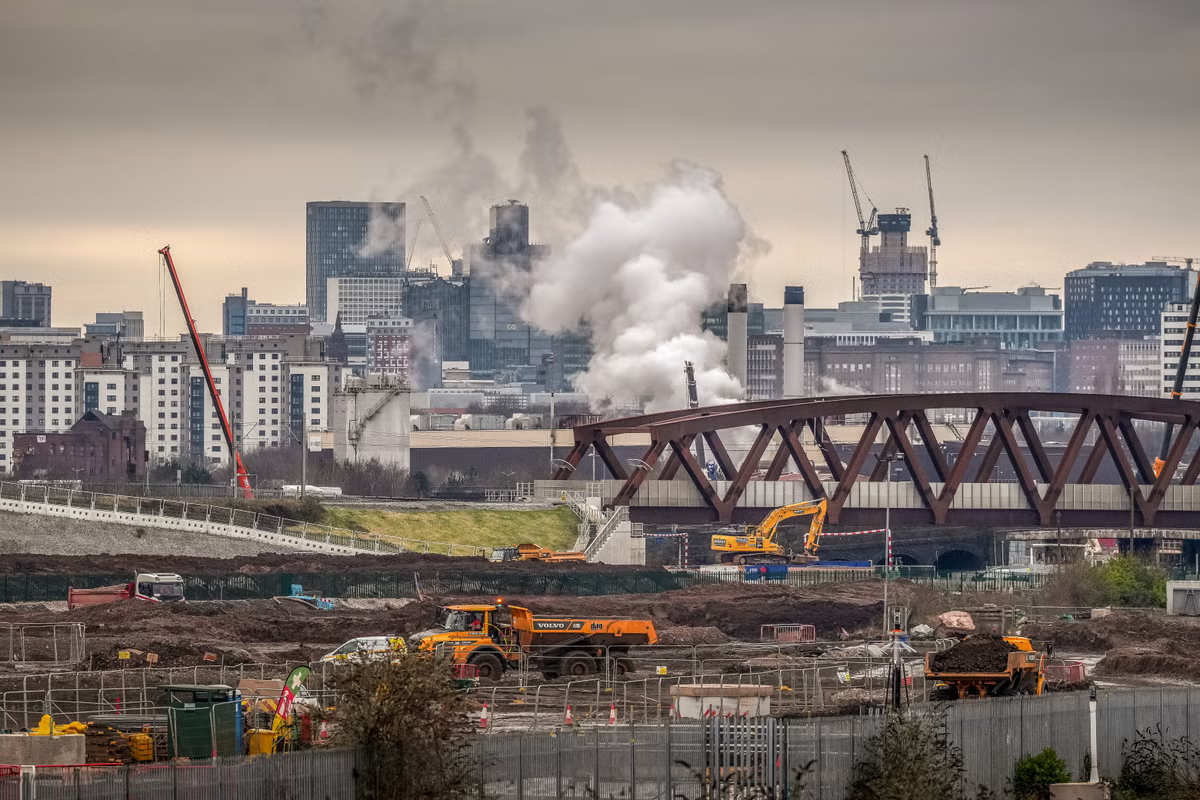
HS2 was supposed to give us high-speed trains linking London with Birmingham and Manchester, freeing up the clogged West Coast Main Line and forming the critical first part of a network reaching as far north as Leeds.
But in late May, the Government announced costs had ballooned from the £32bn originally quoted in 2011 to more than £100bn. The first trains were supposed to head north in December this year; now they are not expected until 2036 at the earliest, and will have to run more slowly than planned. The spurs to Manchester and Leeds have been long since scrapped.
It’s a fiasco. So who and what is to blame? Journalist and author Sally Gimson, transport writer Christian Wolmar and former HS2 technical director Professor Andrew McNaughton give their perspectives.
A major programme like HS2 never goes so far adrift for a single reason. Of course, national issues such as Covid, wars and inflation have had their impacts, but those don’t explain enough. Having led the design and development of HS2 from the start in 2009 until gaining the Act of Parliament for the first stage in 2017, I recall some major issues during my time, and there have been more in the near decade since.
Much has been made of the route alignment, its top speed, and tussles over where HS2 should go (and, just as importantly, not go). Frankly this has not been significant to its delay, despite the myths that have grown.