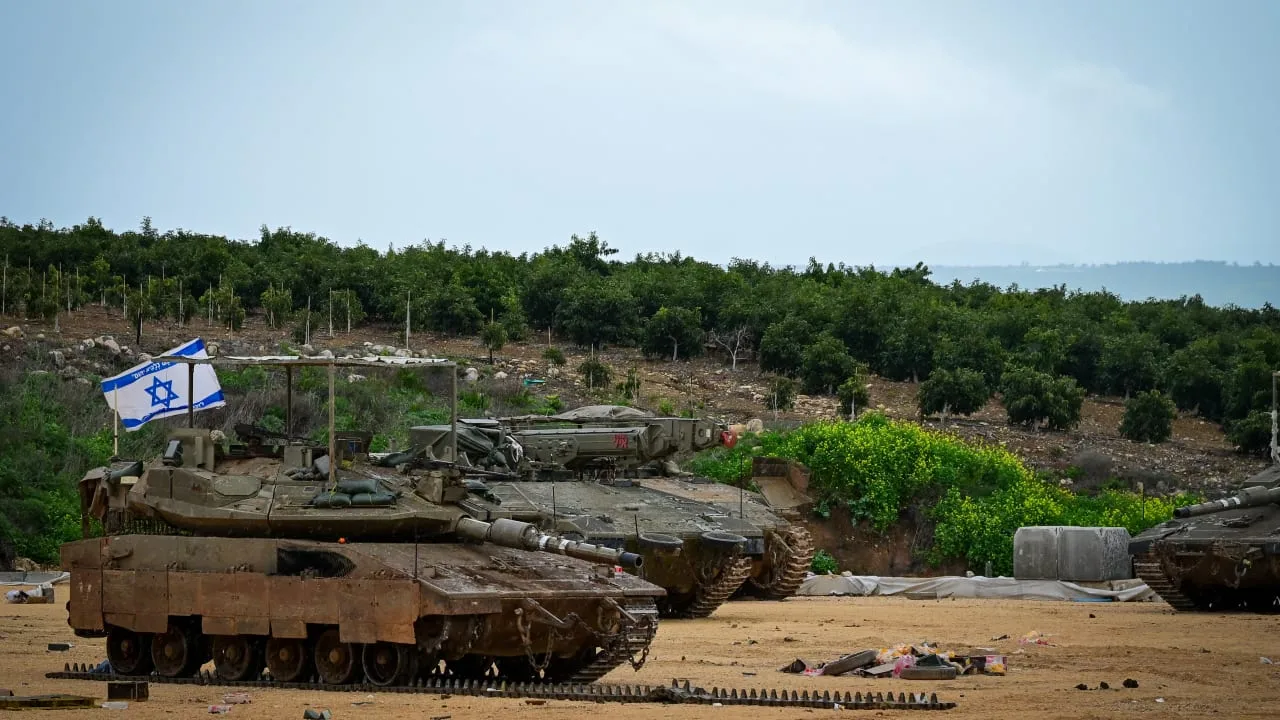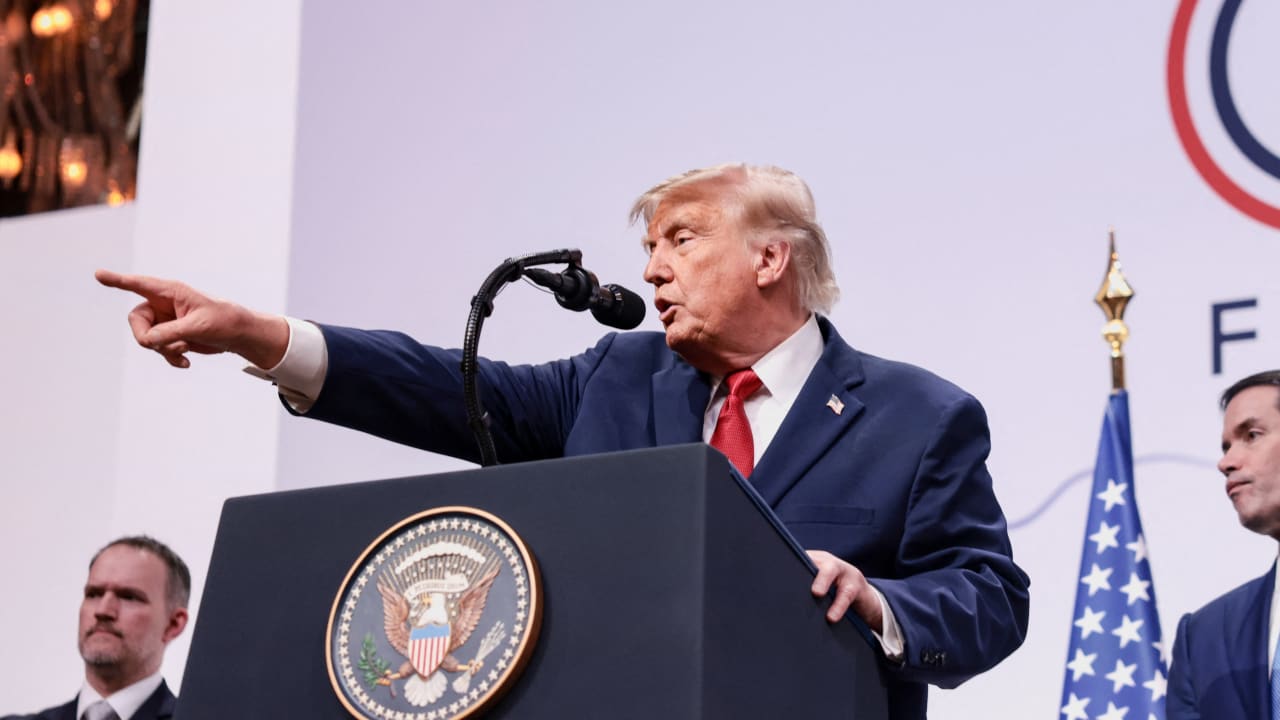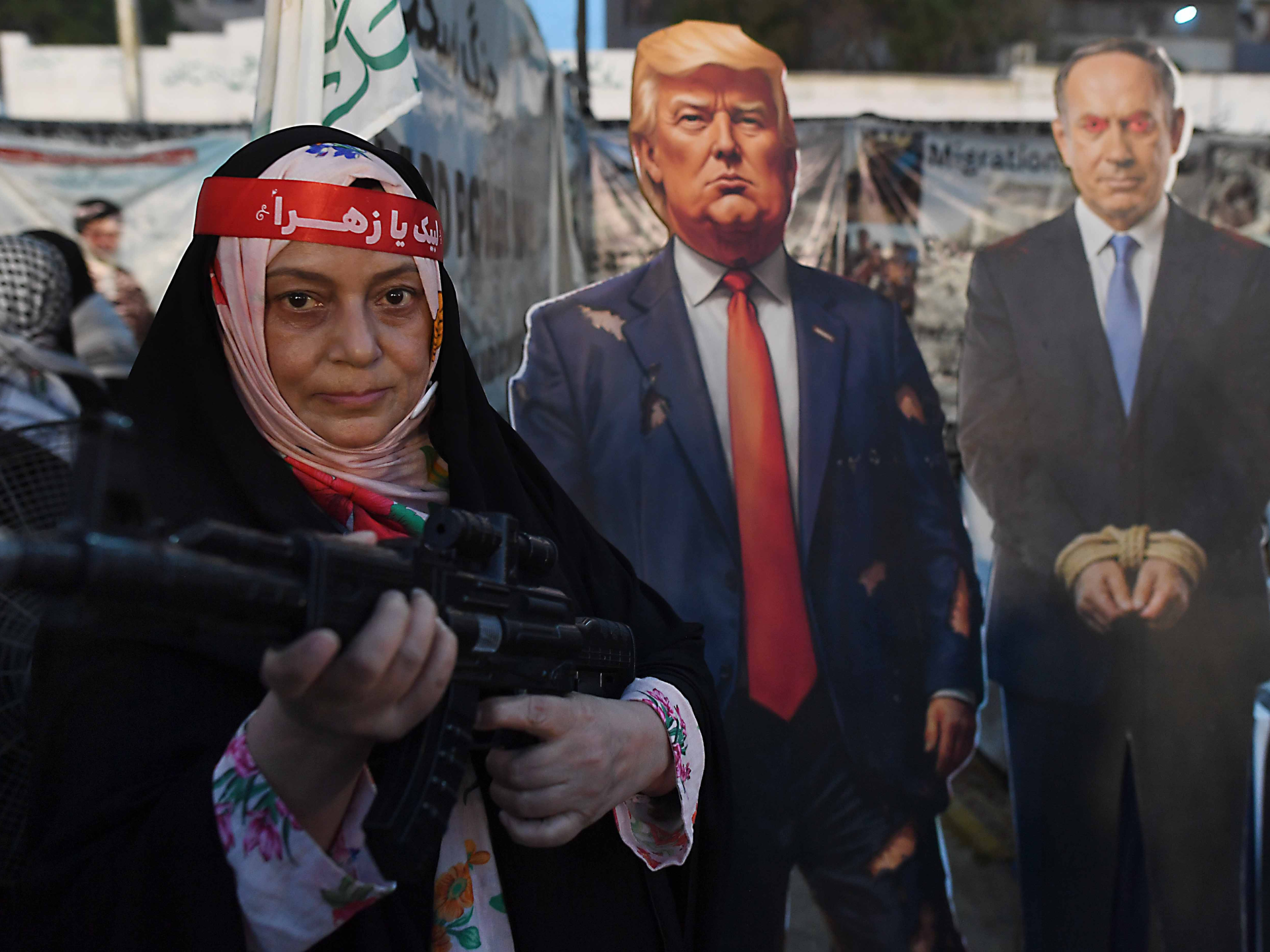
A top Israeli government official has conceded it is “very probable” Israel and Iran will return to war despite a peace deal, warning the conflict’s underlying causes remain unresolved.“Unless there’s a huge change within the regime,” Israel’s Deputy Foreign Minister Sharren Haskel told a press briefing attended by news.com.au in Jerusalem.“I think for me, the best outcome would be that Iranian people will liberate themselves.“We are at a very dangerous point right now.”Ms Haskel’s assessment echoes a growing consensus among regional experts: that without a significant shift inside Iran itself, the conditions that led to conflict remain largely intact and are likely to reignite the war.While the latest deal may ease tensions in the short term, it does little to address the decades-long ideological struggle between Israel and Iran, Tehran’s support for armed proxy groups across the region, or Israel’s determination to prevent its enemies from rebuilding their military capabilities, according to several analysts who spoke to news.com.au.‘It won’t last’Hezbollah may have agreed to a ceasefire, but experts note that the Lebanese militant group remains heavily influenced by Tehran and that previous ceasefires have repeatedly collapsed under the weight of renewed hostilities.“It won’t last as long as long as the Iranian regime continues with its long-term hostility toward the Jewish state,” an Israeli soldier, who spoke on the condition of anonymity, told news.com.au.“It’ll be back, the war.”Meanwhile, Israel has made clear it will continue acting against what it sees as existential threats, regardless of diplomatic developments.The challenge facing negotiators is that both sides appear to view any agreement through entirely different lenses.Iran presents itself domestically as having survived pressure from both Israel and the US.Israel, meanwhile, sees any pause in fighting as worthwhile only if it prevents its adversaries from regrouping and rearming.That disconnect has fuelled concerns that the latest deal may amount to little more than an intermission.Several analysts argue those concerns are rooted in the Iranian regime’s long-established approach to diplomacy.Tehran often uses negotiations as a tool to manage external pressure while preserving its core strategic interests, according to former US National Security Council official and senior fellow at the Hudson Institute Michael Doran.Mr Doran argued Iran came to the negotiating table only after suffering military and economic setbacks, and warned Tehran’s position could harden if it believes diplomacy has removed the threat of force.Institute for National Security Studies Iran specialist Beni Sebti said Western governments often “misunderstand” how the Iranian regime views negotiations.In the West, diplomacy is frequently seen as a path toward compromise and conflict resolution, Mr Sebti explained.But Tehran often sees negotiations through a very different lens — as a strategic tool to buy time, relieve pressure and outlast its adversaries, according to Mr Sebti.‘The hubris is growing’Further, the regime’s perception of success is fundamentally different from that of Western nations, he added.Where other governments may seek a decisive outcome, Iran’s leadership has historically demonstrated a willingness to absorb economic pain, international isolation and military setbacks in pursuit of long-term objectives.“In their mind everything that happens is a win for them,” Mr Sebti said.“When Trump compliments them he actually gives them psychological strength that sometimes is more important than missiles or the nuclear program or terror program. It means that you can survive.”Tehran’s leadership often places enormous weight on psychological and political victories, even when its military position appears weaker, he said.“Iran see the West is kind of giving up against them. The hubris is growing more and more,” Mr Sebti warned, adding that Western policymakers often underestimate the extent to which Tehran views survival itself as a strategic victory.That mentality, analysts argue, is one reason many remain deeply sceptical that the current agreement will hold.Some analysts take that argument a step further, contending that no diplomatic arrangement can succeed while the current Iranian regime remains in power.‘Decapitation of the regime’Middle East analyst Dr Jonathan Spyer has repeatedly argued that any lasting resolution to tensions with Iran ultimately depends on changes to the Islamic Republic itself rather than diplomatic agreements alone.“The (regime’s) goal: Iranian hegemony, Islamist rule, and perpetual war until victory over Israel, the US and western-aligned regional states is achieved,” Dr Spyer recently wrote in The Middle East Forum.“The objective needs to be the decapitation of the regime.”The latest ceasefire agreement has provided a temporary pause after months of escalating confrontation, but events on the ground have already highlighted just how fragile the arrangement remains.It comes amid reports of continuing tensions involving Iranian-backed groups elsewhere in the region and lingering questions over how any agreement will be enforced.For Israeli officials, the concern is not simply whether Iran pauses its activities, but whether it fundamentally changes course.That remains highly doubtful, according to many observers.For years, Israel has argued that Iran’s support for groups including Hezbollah and Hamas represents a long-term threat that cannot be resolved through temporary ceasefires alone.“Hezbollah and Hamas are terror organisations,” Mr Sebti said.“These are not people who make deals with the West and honour them.”Whether those warnings prove justified may become clearer in the coming days. Those concerns are now being tested in real time in Lebanon, where the latest ceasefire is being held up as an early measure of whether the broader diplomatic push can survive beyond the negotiating table.‘First real test’After a first round of US-Iran talks in Switzerland on ending the Middle East war, mediators Pakistan and Qatar said on Monday that Tehran and Washington had agreed to set up a “de-confliction cell” with Lebanon “to ensure the adherence of the termination of military operations” there. Fighting between Israel and Hezbollah, which drew Lebanon into the Middle East war on March 2 with rocket fire at Israel in support of its backer Iran, has repeatedly threatened to derail regional peace efforts. After the talks in Switzerland, Iran’s Foreign Minister Abbas Araghchi wrote on X: “1st real test: Lebanon deconfliction cell.” The negotiations came after Washington and Tehran last week signed a memorandum of understanding to end the broader Middle East war that includes Lebanon. Israeli strikes and clashes with Hezbollah late last week threatened to derail the deal, but fighting in Lebanon has been paused since Saturday evening. ‘Reduction of hostilities’Meanwhile UN secretary-general spokesman Stephane Dujarric on Monday said “yesterday marked the first day since the resumption of hostilities on March 2 in Lebanon, that peacekeepers from our peacekeeping force in Lebanon did not detect any trajectories or observe any interceptions”. Mr Dujarric said “this lack of activities has continued through this morning”, welcoming the “reduction of hostilities”.Israel on Sunday said all war-related restrictions in its northern border areas were lifted from Monday morning. Under US pressure, Lebanese officials began direct talks with Israel in April in Washington, and a fifth round of negotiations is scheduled to begin on Tuesday. The goal of talks will be “to end the cycle of violence for good,” and “advance a comprehensive peace and security agreement between the two countries,” a US State Department official said on Monday. “We are enabling Israel and Lebanon to negotiate as two sovereign states and to find a way to have peace and security,” the official said. Lebanese authorities are seeking the withdrawal of Israeli troops from the country and to separate the negotiations from the US-Iran deal. “We negotiate for ourselves, and we do not accept any other party doing so for us,” Lebanese President Joseph Aoun said later Monday. “We welcome any assistance that comes from any country to end the war, particularly as the situation in the region is interconnected,” Mr Aoun added. “But there is a big difference between trying to help us and interfering in our internal affairs,” he said, alluding to Iran, which through Hezbollah has long wielded significant political influence in Lebanon. Yet for all the talk of ending the cycle of violence, experts who follow the region most closely caution that nobody should mistake a pause for peace.
‘Very probable’: Israel’s grim prediction
A top Israeli government official has conceded it is “very probable” Israel and Iran will return to war despite a peace deal, warning the conflict’s underlying causes remain unresolved.
1,311 words~6 min read