Back to Articles
1. Autonomous Data Engineering & Ingestion Setup (ML-Intern) 2. Quantitative Feature Extraction: Log-Likelihood Ratios (LLR) Tokenizer Realignment The LLR Formulation 3. Optimizing the Neural Decision Boundary (Classifier Head) Model Architecture Optimization Strategy 4. Multi-Stage Production Inference & NumPy Compilation The Inference Lifecycle Automating Variant Effect Prediction (VEP)—the task of determining whether a specific genetic mutation is pathogenic (disease-causing) or benign—requires a careful marriage of deep biological sequence modeling and fast, deterministic classification.
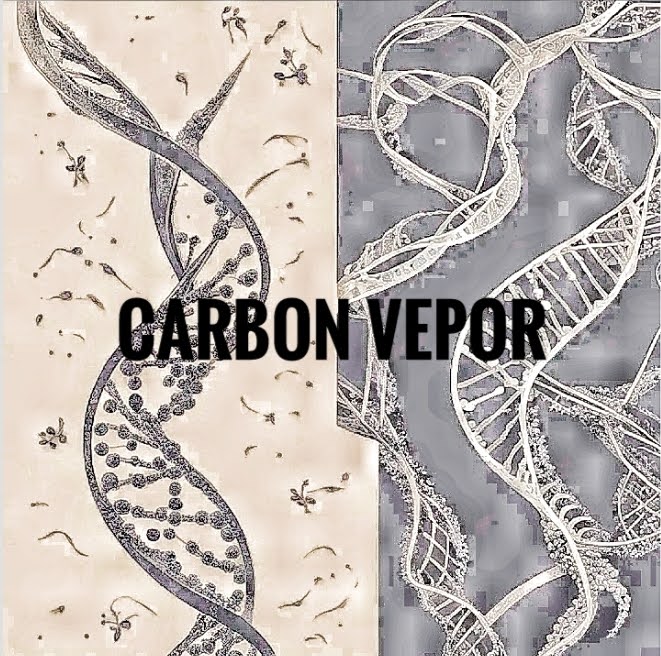
By utilizing an autonomous ML-Intern agent with NVIDIA's Nemotron-3-Nano-4B to build our script foundation and pairing it with MiniCPM-V-4.6 and Carbon-3B in a multi-stage production pipeline, we built an end-to-end machine learning system that transitions from raw sequence tokens to a production-ready classification head.
Link to space: https://huggingface.co/spaces/build-small-hackathon/carbon-vepor
1. Autonomous Data Engineering & Ingestion Setup (ML-Intern)