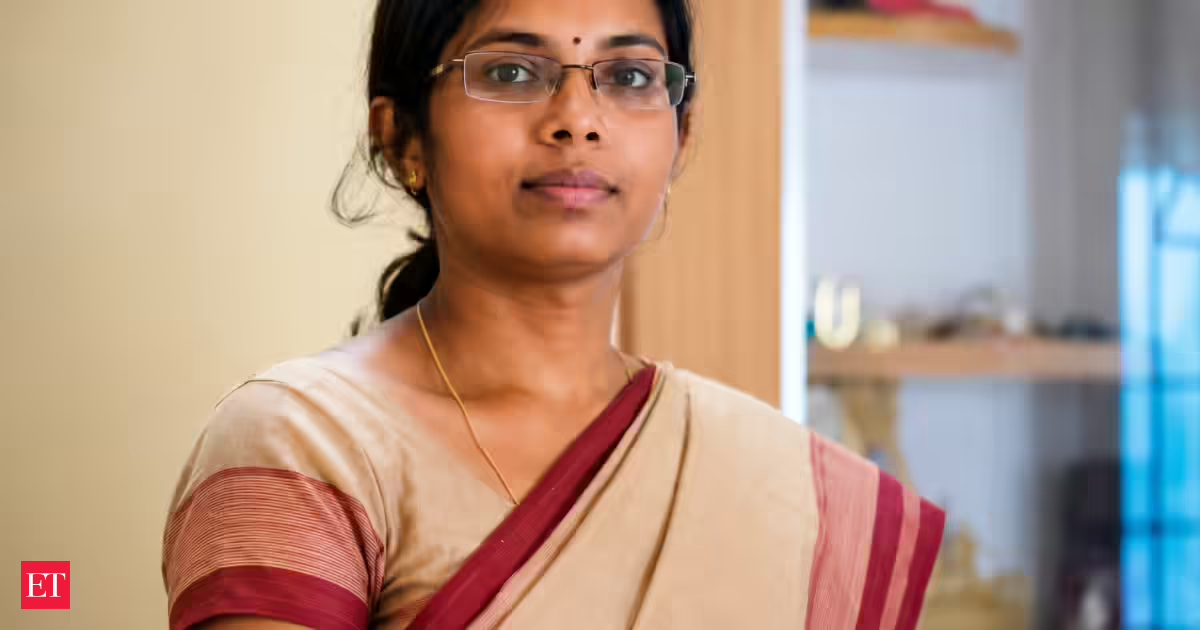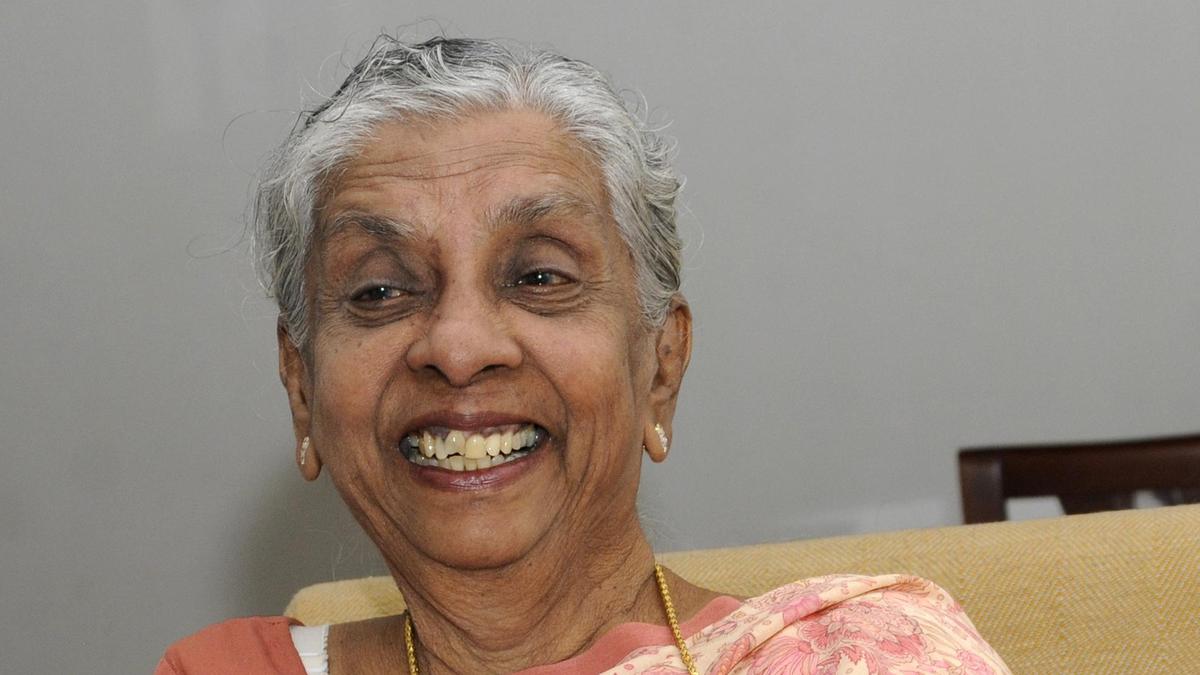
Anna Rajam Malhothra, first IAS Lady officer (1951) batch, at an interaction in Kochi.
| Photo Credit: Vipin Chandran
You must have heard of words like IAS, IPS, IFS and Civil Services in general. Ever wondered what exactly they stand for? Do you also know that the first female IAS officer to ever come into charge in the 1950s was from Kerala? Well, IAS stands for Indian Administrative Services, IPS stands for Indian Police Services, while IFS stands for Indian Foreign Services. And the first woman IAS officer from the batch of 1951 was none other than Anna Rajam Malhotra, and this is her story.Early ageBorn in July 1927, Anna Rajam George was the daughter of Ottavelil O. A. George and Anna Paul (believed to be one of the first ever women graduates from Madras University). She was also the granddaughter of Malayalam author Pailo Paul. Growing up, her family shifted to the present-day Calicut/Kozhikode in search of better educational opportunities as well as a better career. After completing her schooling at Providence School, she joined the Malabar Christian College to finish her intermediate (11th and 12th standard, in present days). Post which she moved to Chennai (erstwhile Madras) to complete her Bachelor’s in Literature Honours at Presidency College. India was not yet as socially developed back then, and job opportunities for women were still limited. After her graduation, Anna started her career as an upper division clerk at the Accountant General’s Office in Madras.Luck and hard workOne of the major lucky points of Anna’s life came when she happened to stumble upon the application for the Civil Services examinations in 1950, and she filled it out even though she did not hold any hope for it. But much to her surprise, she soon got a call to join.Her interviewers encouraged her to take IFS since it was considered a better opportunity for a woman, while IAS was considered to be more difficult on-ground work in various parts of the country. However, Anna stood her ground and demanded equal opportunities beyond societal norms and barriers. Her first posting as a civil servant was in Madras State, and it is said that the then Chief Minister of Madras Presidency, C. Rajagopalachari, was sceptical about giving a woman the charge of a district sub-collector and instead offered her a post in the Secretariat. However, she had undergone training in horse riding, rifle and revolver shooting and in using magisterial powers and stood up for herself, finally leading to her eventual appointment as the sub-collector.