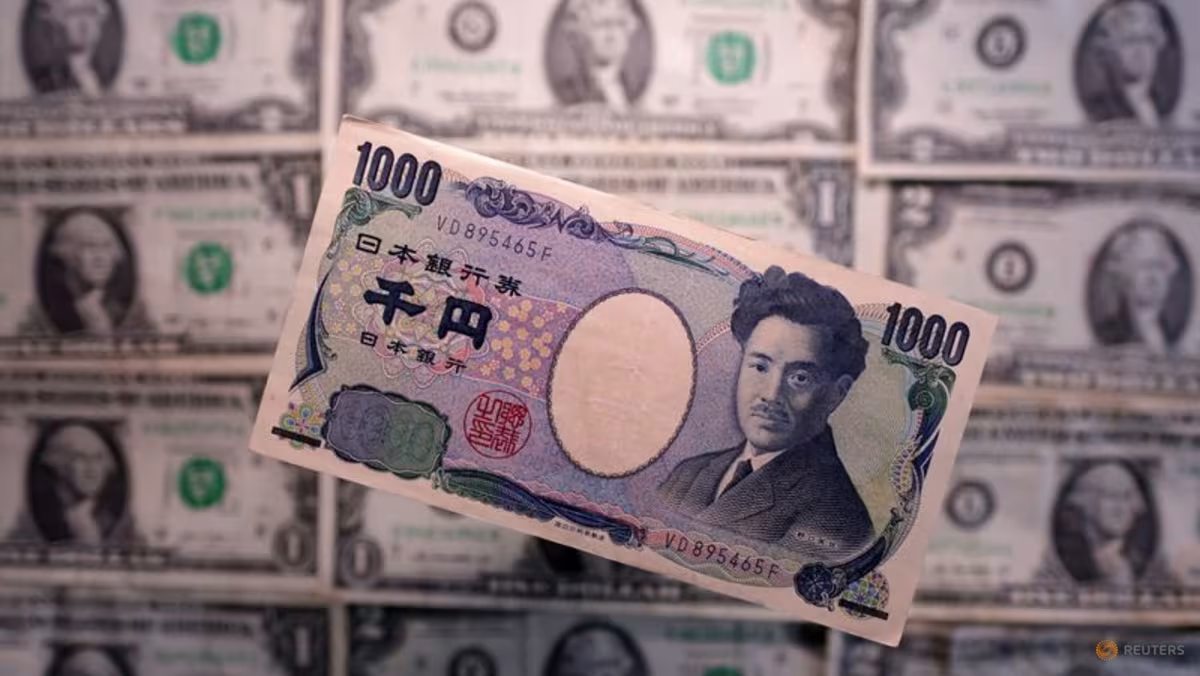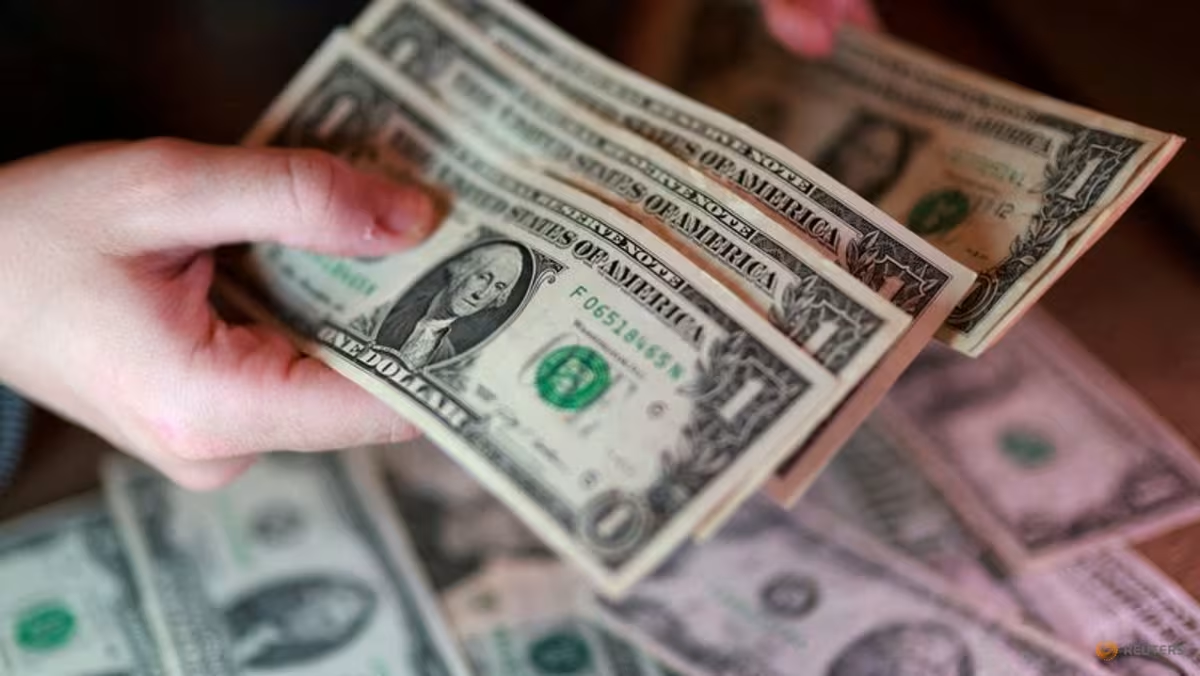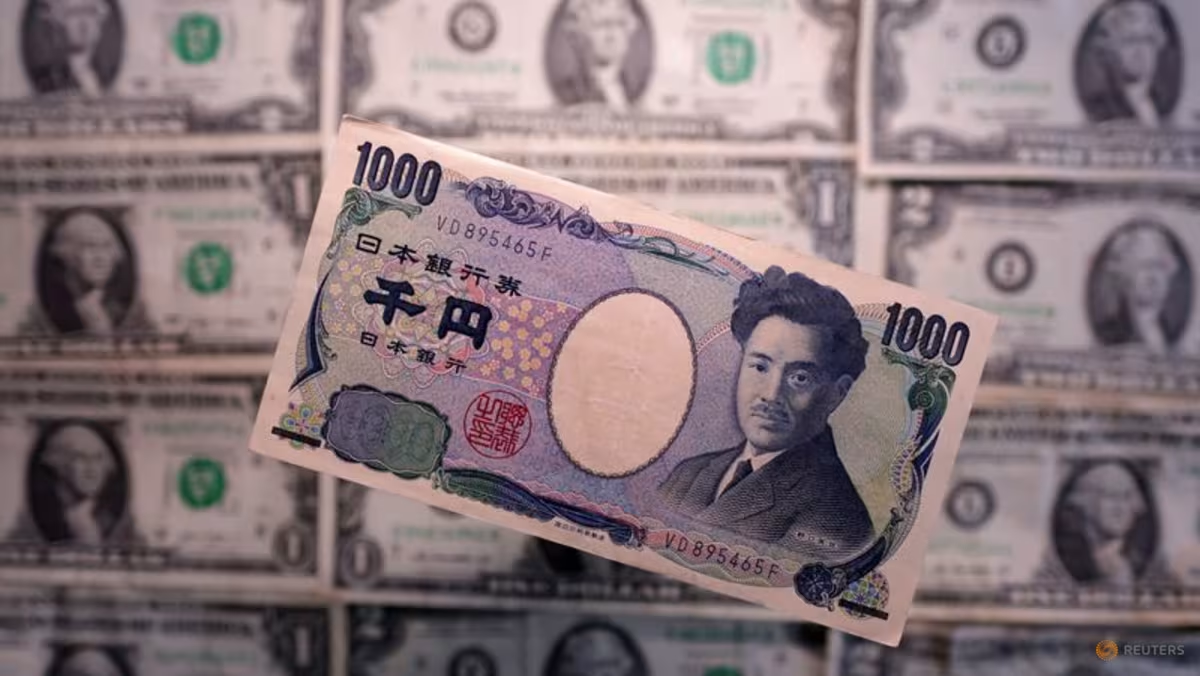
The U.S. dollar rose to its highest level in more than a year on Tuesday as traders positioned for a more hawkish Federal Reserve despite oil prices inching lower on ebbing Gulf tensions, while the yen flirted with a four-decade low.Fed funds futures are pricing in more than an 80% chance of a rate hike by September, while BofA Global Research and Deutsche Bank abandoned prior forecasts for steady policy and now expect the Fed to raise rates within the year, citing economic resilience."Right now, the dollar is pricing in higher rates and is gaining on that," said Tommy von Bromsen, FX strategist at Handelsbanken."It's also getting support from the Middle East conflict not being totally resolved. There's still a great deal of uncertainty that is supporting the dollar."The dollar index, which measures the greenback against a basket of currencies including the yen and the euro, inched up to 101.13, its highest level since May 2025.The euro last traded at $1.1414, its lowest level since March, after European Central Bank President Christine Lagarde played down second-round inflation worries.The British pound traded at $1.3234, down slightly on Tuesday after rising the day before following the resignation of Prime Minister Keir Starmer.Health Minister Wes Streeting, a possible leadership candidate, backed Andy Burnham to replace Starmer, paving the way for an orderly transfer of power."One factor weighing on the GBP was the uncertainty surrounding the leadership succession," said Commerzbank FX analyst Michael Pfister."With Streeting's willingness to back Burnham, this uncertainty is now likely to be a thing of the past, which has allowed the pound to strengthen."The risk-sensitive Australian dollar slid 0.8% to $0.6945, the weakest level since early April. The New Zealand dollar was down roughly 0.5% at $0.5684.YEN HOVERS AT 40-YEAR LOWThe Japanese yen last traded at 161.48 after briefly weakening to a two-year low of 161.93 late on Monday as the greenback extended broad gains. A break above 161.96 per dollar would take the yen to its weakest level since 1986."We can expect volatility when the yen is close to these levels as the market is expecting that Japan will signal intervention or even intervene outright," Handelsbanken's von Bromsen said.Japanese Finance Minister Satsuki Katayama held an online meeting with U.S. Treasury Secretary Scott Bessent late on Monday, a source told Reuters, as concerns grow over sharp currency swings.The meeting focused on policy responses to the historically weak yen, potentially including currency intervention.Japanese financial authorities kept markets guessing about possible currency intervention, with the lack of clear signals suggesting a shift in communication tactics.
Dollar hits one-year high on Fed hike bets; yen nears 40-year low
The US dollar surged to a year-high on Tuesday, driven by expectations of a more aggressive Federal Reserve and ongoing Middle East uncertainty. Traders are anticipating rate hikes, with major banks revising their forecasts. Meanwhile, the Japanese yen teetered near a four-decade low, prompting speculation about potential intervention by Japanese authorities amidst growing concerns over sharp currency swings.
423 words~2 min read