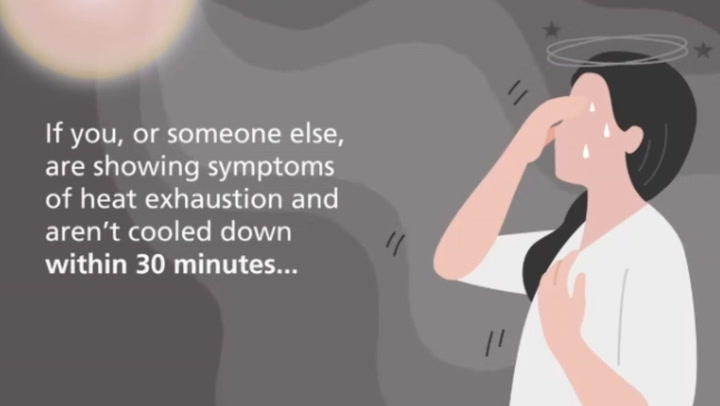
Stay up to date with notifications from The IndependentNotifications can be managed in browser preferences.Jump to contentThank you for registeringPlease refresh the page or navigate to another page on the site to be automatically logged inPlease refresh your browser to be logged inAllNewsSportCultureLifestyleA "heat-dome" is forecast to bring temperatures of up to 40C to parts of England and Wales mid-week, potentially nearing the UK's all-time high of 40.3C recorded in July 2022. Heat exhaustion occurs due to high temperatures and excessive sweating, with symptoms including nausea, headache, heavy sweating and dizziness, according to Johns Hopkins Medicine. If ignored, heat exhaustion can progress to heatstroke, a more serious condition where the body loses its ability to control its temperature, potentially reaching 41C, according to the Centers for Disease Control and Prevention.Heatstroke symptoms include hot, dry skin, rapid heart rate, vomiting and loss of consciousness – and can lead to seizures, coma, or death if not treated promptly. According to the NHS, you can help treat heat exhaustion by moving the affected person to a cool place, removing unnecessary clothing, drinking cold drinks and keeping the skin cool. In fullWhat is the difference between heat exhaustion and heat stroke?Thank you for registeringPlease refresh the page or navigate to another page on the site to be automatically logged inPlease refresh your browser to be logged in
What is heat exhaustion – and how is it different from heatstroke?
Stay up to date with notifications from The IndependentNotifications can be managed in browser preferences.Jump to contentThank you for registeringPlease refresh the page or navigate to another page on the site to be automatically logged inPlease refresh your browser to be logged inAllNewsSportCultureLifestyleA "heat-dome" is forecast to bring temperatures of up to 40C to parts of England and Wales mid-week, potentially nearing the UK's all-time high of 40.3C recorded in July 2022. Heat exhaustion occurs due to high temperatures and excessive sweating, with symptoms including nausea, headache, heavy sweating and dizziness, according to Johns Hopkins Medicine. If ignored, heat exhaustion can progress to heatstroke, a more serious condition where the body loses its ability to control its temperature, potentially reaching 41C, according to the Centers for Disease Control and Prevention.Heatstroke symptoms include hot, dry skin, rapid heart rate, vomiting and loss of consciousness – and can lead to seizures, coma, or death if not treated promptly. According to the NHS, you can help treat heat exhaustion by moving the affected person to a cool place, removing unnecessary clothing, drinking cold drinks and keeping the skin cool. In fullWhat is the difference between heat exhaustion and heat stroke?Thank you for registeringPlease refresh the page or navigate to another page on the site to be automatically logged inPlease refresh your browser to be logged in