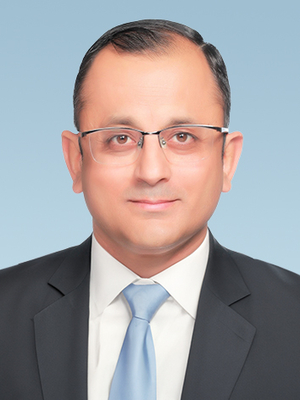
AI supply deals boost earnings visibility for Samsung, SK hynix, though concentration risks persist Sanjeev Rana, head of Korea research at CLSA (CLSA) South Korea's memory chip industry is moving beyond its traditional boom-and-bust cycle as artificial intelligence demand pushes major customers to lock in long-term supply at high prices, according to CLSA.Memory has long been highly cyclical: profits rise when supply is tight and fall when capacity catches up. But the rapid growth of high-bandwidth memory, or HBM, and AI servers is changing that pattern, said Sanjeev Rana, head of Korea research at CLSA."The fact that major memory customers are signing multiyear supply deals with the suppliers at record high prices suggests that they are concerned about the availability of memory," Rana said in a written interview with The Korea Herald, adding that supply is expected to remain tight for the next several years.Customers' rush to sign long-term agreements means 50 percent to 70 percent of suppliers' capacity could be tied to such contracts over the long term, he said. Those deals, which include fixed and variable pricing, could support higher valuation multiples for memory makers.HBM led the earnings recovery for memory suppliers in the early phase of the AI cycle, but the profit story has since broadened. Conventional DRAM has also become a major driver as prices climbed sharply, Rana said. Some DRAM products used in high-end servers are now more profitable than HBM, he said, reflecting the sharp rise in conventional DRAM prices.For SK hynix, the question is whether its HBM lead can translate into durable pricing power and margins. Rana said its early lead has given it a strong share in the fast-growing segment, while its close relationship with Nvidia strengthens its position.SK hynix's strong relationship with Nvidia and their recent multiyear partnership suggest the chipmaker is "guaranteed a role" in supplying HBM for Nvidia's future platforms, Rana said, adding that its HBM position is likely to remain "very strong for the foreseeable future."Samsung, meanwhile, is working to regain ground in AI memory after falling behind SK hynix in the early phase of the HBM race. Rana said Samsung has gained HBM qualifications from the likes of Nvidia, AMD, Broadcom and OpenAI over the past year, showing that it has regained customer trust and is now on firmer footing in terms of HBM technological competitiveness. Samsung's overall DRAM market share is also recovering, he added.The AI memory boom has helped turn Korean equities into one of the world's strongest-performing markets this year. As of Monday, the Kospi had risen more than 110 percent year to date, powered by Samsung Electronics and SK hynix, which together accounted for more than half of the benchmark.Still, Korea's growing reliance on a handful of chip names carries risks for the broader market. Rana said the country's stock market performance has been driven by a small number of stocks, creating concentration risk.He expects Korean memory stocks to see a valuation rerating as a majority of their profits in the coming years are expected to come from multiyear supply contracts with stronger visibility on pricing and volumes."AI isn't just causing an increase in demand — it is reshaping how memory creates value," he said, adding that investors need to better understand the shift.
AI breaks Korea memory's boom-bust cycle: CLSA
South Korea's memory chip industry is moving beyond its traditional boom-and-bust cycle as artificial intelligence demand pushes major customers to lock in long
TL;DRAI
SK hynix and Samsung lock 50-70% capacity in multiyear supply contracts at record prices, securing margin visibility for years ahead. AI transforms memory from cyclical commodity to predictable pricing asset—critical for IT capex planning and server refresh schedules.
542 words~2 min read