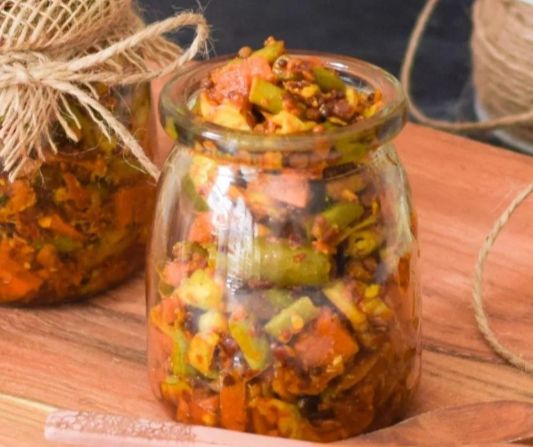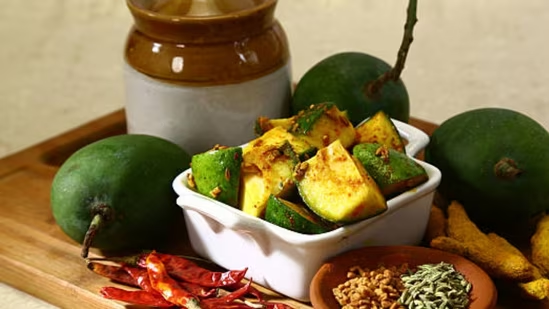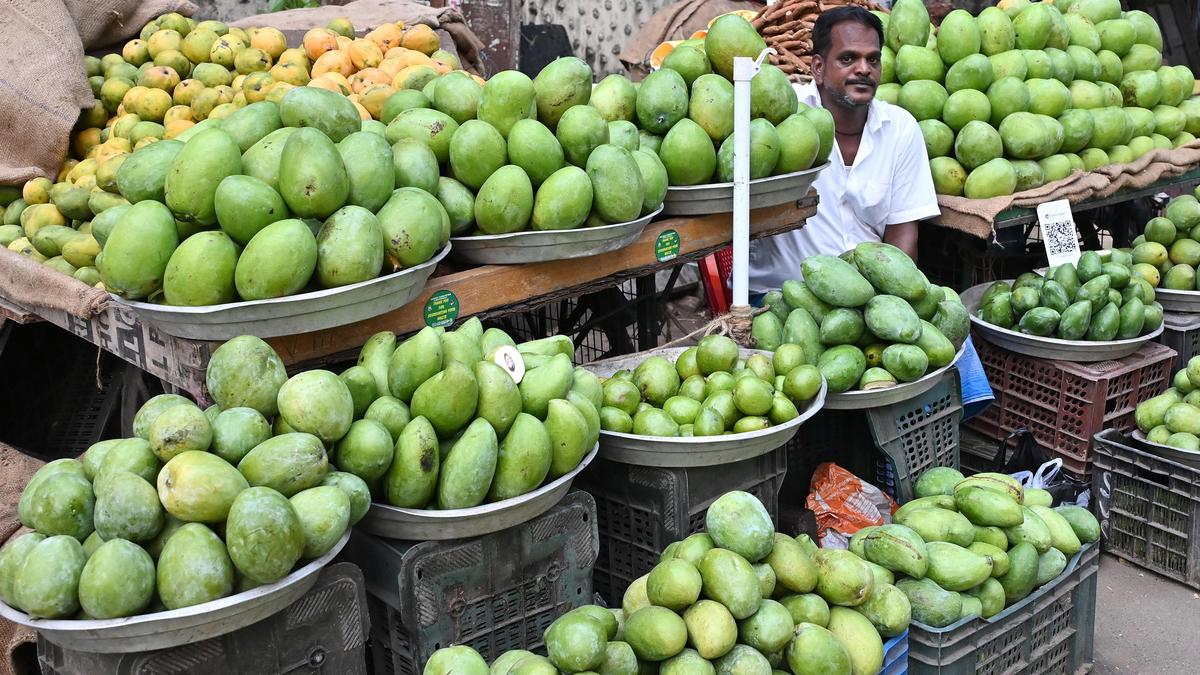
The air around South Mada Street is heavy with the scent of fresh turmeric, mango ginger and citrons. March and April are the peak months for vadu manga (also known as maavadu), with markets flooded with varieties of the tiny, unripe mangoes. Traditionally prepared without oil, they are made into pickle using turmeric, chilli powder, mustard seeds and salt in carefully balanced proportions.A summer ritual in every jar“I sell Thirumurthi mala vadu, a long variety, as well as urundai vadu from the Madurai region, Periyakulam vadu, Coimbatore vadu and Azhagarkoil vadu, which is greenish and round with red stems,” says M Mallika, 78, who has been selling vegetables near Chitrakulam in Mylapore for the past 60 years.
Seasonal pickling ingredients, including vadu manga, narthangai and mango ginger, are displayed at vegetable stalls along South Mada Street in Mylapore during Chennai’s annual pickling season.
| Photo Credit:
Along South Mada Street, more than a dozen vegetable vendors stock seasonal pickling ingredients during the summer months, including vadu manga, avakkai mangoes, kadaranga (kefir lime), narthangai (citron), lemons, manga inji (mango ginger), nellikkai (gooseberry), mahali kizhangu (an aromatic root used in traditional pickles) and fresh turmeric.“This month, the focus has shifted to avakkai mangoes, most of which arrive from Andhra Pradesh. Although the vadu manga season is over, we can still source them for customers on request, albeit at a slightly higher price. Vadu manga from Kancheepuram and Vellore are expected over the next few weeks,” says Ezhil Arasi, whose shop is located opposite Bharatiya Vidya Bhavan on East Mada Street, adding that most of the vendors source mangoes via agents in Koyambedu market.Ezhil says she has been selling about 100 kilograms of vadu manga a day during the peak season. Demand for avakkai mangoes also remains steady, with sales of nearly 10 to 25 kilograms a day.