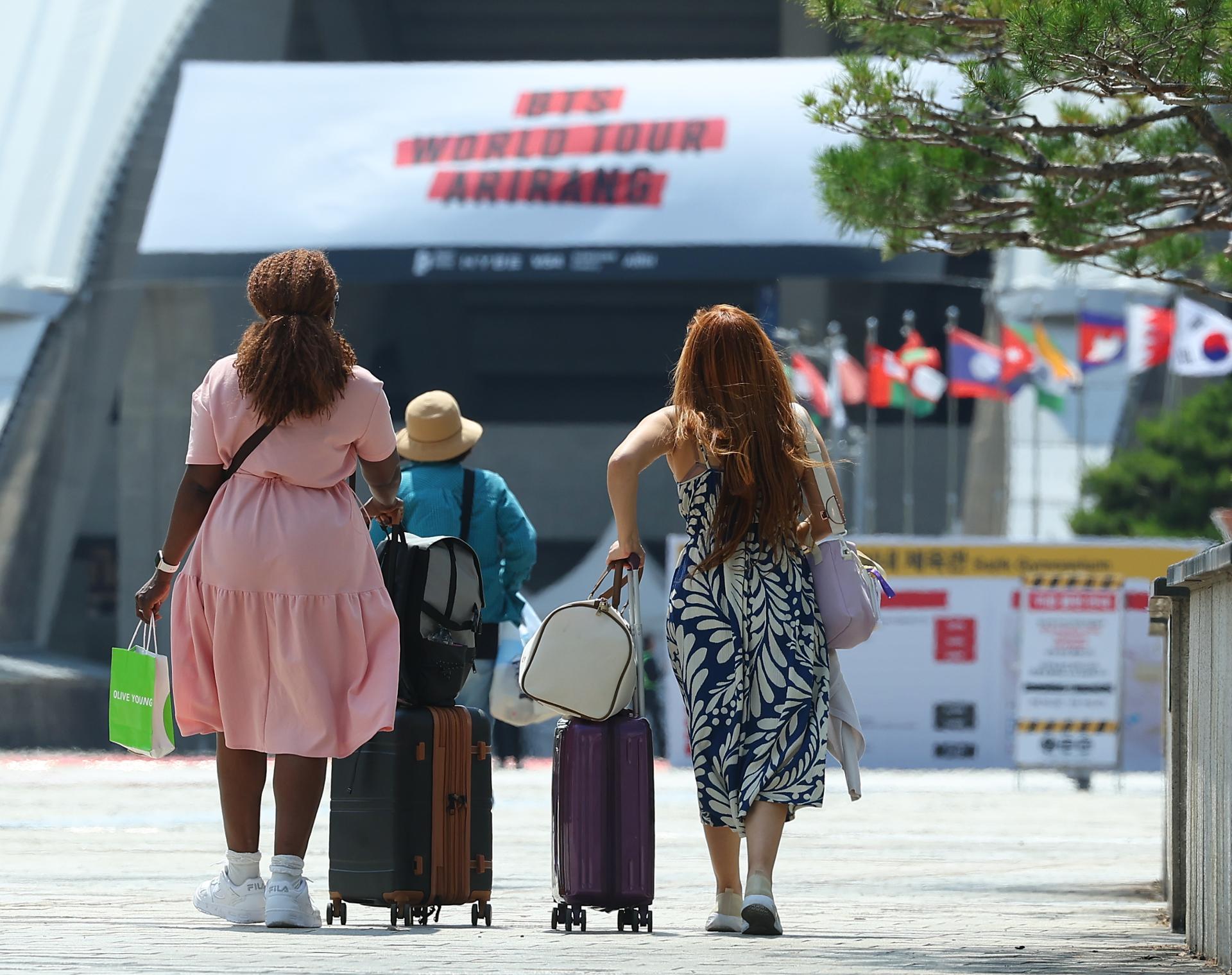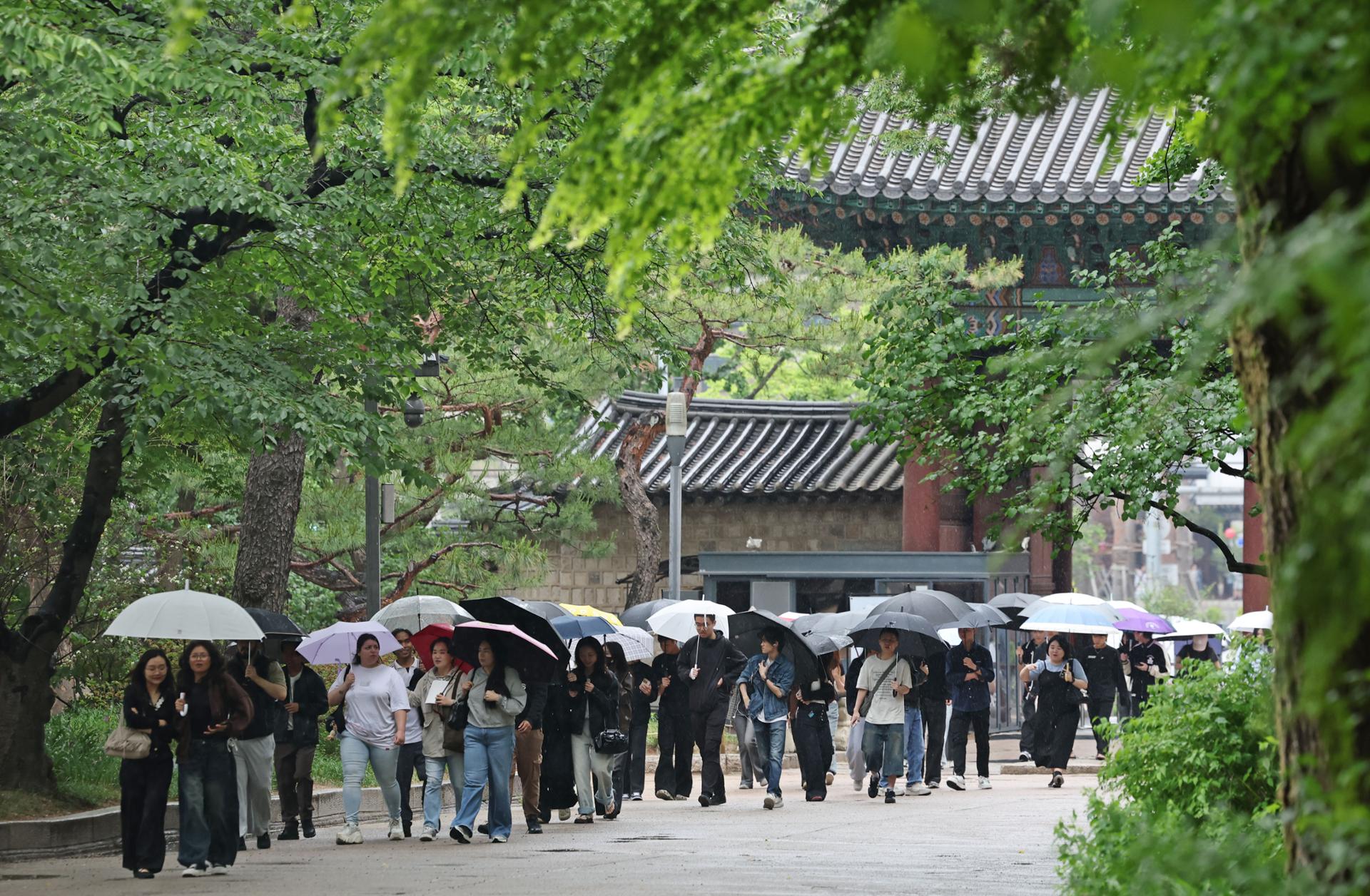
Pedestrians walk through Myeong-dong, Seoul, on June 9 (Yonhap) Advocates say foreign tourists bring in less tax revenue than Koreans spend abroadTravel industry groups, lawmakers and tourism scholars have called for raising South Korea's departure levy, warning that a 2024 cut has drained the country's main tourism fund at a time when the industry is struggling with high oil prices and global uncertainty.The appeal was floated during a roundtable at the National Assembly on Monday concerning whether now is the time to raise the charge. The session was hosted by Rep. Cho Gye-won of the assembly's Culture, Sports and Tourism Committee and the Ministry of Culture, Sports and Tourism, organized by the Korea Tourism Organization, the Korea Tourism Association and the Tourism Sciences Society of Korea.The departure levy is a key pillar of the Tourism Promotion and Development Fund, supplying about 30 percent of its revenue. The fund finances loans, training and marketing that support travel businesses and promote Korea at home and abroad.In July 2024, the levy was lowered to 7,000 won ($4.60), and the exemption was widened to cover children under 12, up from under 2.Ryu Kwang-hoon, a researcher at the Korea Culture and Tourism Institute, delivered the keynote address and pointed to the fund's deteriorating finances. Korea's per capita nominal GDP has more than quadrupled since the levy was introduced in 1997, rising to 51.79 million won from 12.2 million won, he noted, yet the charge sat at 10,000 won for 27 years before being cut 30 percent in 2024.The institute estimated that about 18.49 million travelers, both Korean and foreign, departed the country in 2025. The reduced levy erases roughly 135.5 billion to 137 billion won in tourism funding each year.The fund is already under strain. After borrowing about 2.4 trillion won from the Public Capital Management Fund during the COVID-19 pandemic, it now spends 55 billion won a year on interest alone.Participants, including the Korea Association of Travel Agents, the Korea Hotel Association and the Tourism Sciences Society of Korea, argued that the fund is vital for industry loans, tourism workforce training and regional tourism. They said restoring the levy is needed to expand travel information and guide services and to help Korea reach its goal of drawing 30 million foreign visitors."When a foreign tourist visits Korea, the revenue we secure is just 7,000 won, while the taxes our own citizens pay abroad average around 20,000 to 30,000 won per person. This asymmetric structure leads to hundreds of billions of won in tourism funding losses every year and ultimately creates a vicious cycle that blocks the advancement of domestic tourism services," Cho said.Several other countries have been raising their levies. Japan plans to raise its departure tax to 3,000 yen ($19) from 1,000 yen starting in July. Australia, which collects a Passenger Movement Charge of70 Australian dollars ($49), has confirmed an increase to 80 dollars in January 2027. Hong Kong raised its Air Passenger Departure Tax to 200 Hong Kong dollars ($26) from 120 Hong Kong dollars last October. Thailand increased its international departure charge to 1,120 baht ($34) from 730 baht on June 20.The fund shortage is already reaching the field. The Korea Hotel Association said reduced resources have forced cuts to hotel staff training and workforce development."Hotel businesses require heavy upfront investment, which makes policy financing essential, but related programs are being scaled back because of the fund shortage," said Yu Yong-jong, president of the Korea Hotel Association. He called for raising the levy to strengthen industry infrastructure.Park Sung-hyeuck, president of the Korea Tourism Organization, framed the charge as the foundation of the sector's future."The departure levy is the seed money that supports the entire tourism industry, from the promotion and marketing used to attract foreign visitors to support for domestic businesses," Park said. "Expanding the fund's resources will be the starting point for Korea's leap into a tourism powerhouse."
Tourism sector floats raising departure levy as fund shrinks
Travel industry groups, lawmakers and tourism scholars have called for raising South Korea's departure levy, warning that a 2024 cut has drained the country's m
TL;DRAI
South Korea's tourism sector pushes to reverse a 2024 levy cut (7,000 won, -30%) erasing 135.5 billion won yearly from the Tourism Fund. Underfunding forces hotel training cuts as competitors boost levies and Korea pursues 30 million foreign visitors.
648 words~3 min read