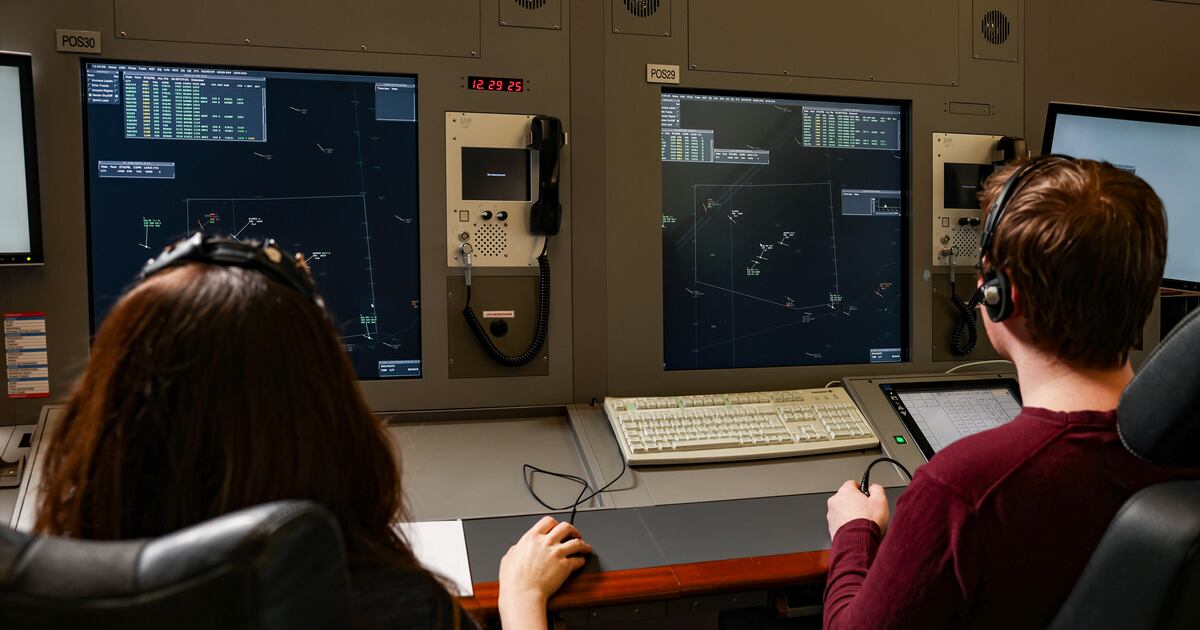
For many young people finishing school or college, choosing a career can feel overwhelming. Traditional routes often dominate the conversation, while other opportunities remain largely unknown.Air traffic control is one of those careers most people never think about. Yet for those who discover it, it can become a profession unlike any other.That was certainly the case for Orla Newell. Before joining AirNav Ireland, Newell studied radiation therapy and had worked in London. Air traffic control was not a career she had ever considered.“I didn’t know much about air traffic control to start with,” she says. “Like most people, I didn’t really know what the job involved. But once I looked into it, I realised it was something completely different to anything else out there.”Today Newell is an air traffic controller with AirNav Ireland at its Shannon En-Route Centre, helping to guide aircraft safely through Irish airspace every day. Her story highlights something many people don’t realise. There is no single route into the profession.It is easy to take aviation for granted: booking a flight, heading on a holiday, ordering goods online. It all feels seamless. But none of it works without the systems behind it.As an island nation on the western edge of Europe, Ireland is a critical gateway between Europe and North America. AirNav Ireland plays a central role in that connectivity, safely guiding aircraft to and from Dublin, Cork and Shannon while also managing the vast majority of transatlantic traffic crossing Irish-controlled airspace.‘The job is challenging, but that is what keeps it interesting. You are always learning and no two days are the same’— Orla Newell, air traffic controller with AirNav IrelandEvery day, thousands of aircraft travel through Irish-controlled airspace. They carry people on holidays, students travelling abroad, businesses trading globally and goods moving across continents.In doing so, AirNav Ireland safeguards more than 160 million passengers every year – equivalent to more than 430,000 passengers per day – highlighting its vital role in supporting Ireland’s global connectivity, trade, tourism and economic activity.As AirNav Ireland chief executive Ger Caffrey says: “Our role is to ensure the safe, efficient and sustainable management of Irish airspace. What we do matters every single day because it underpins national connectivity and global travel.“Every hour, AirNav are safeguarding over 18,000 passengers in Irish-controlled airspace – that’s the scale and responsibility of what our people deliver every day.”Air Traffic Control Tower, Dublin Airport He also highlights the wider importance of aviation to the Irish economy: “As an island nation, our connectivity is essential for business, tourism and trade, and the safe management of our airspace is a key part of making that possible.” In simple terms: if planes are not moving, neither is the economy.While Newell joined the profession after working in healthcare, many AirNav Ireland controllers begin their journey much earlier. The Student Controller Programme offers school leavers and graduates a direct pathway into the profession without the need for a university degree.Applicants must be at least 19 years old and have achieved a minimum of one H2 in a Leaving Certificate subject. For many young people, this offers a direct alternative to the traditional university route. It is the chance to begin a highly skilled and respected career straight from school.One of the biggest misconceptions about air traffic control is that there is only one route into the profession. In reality, AirNav Ireland’s controllers come from a wide range of backgrounds, including healthcare, retail, farming, architecture and public service.What they share is the ability to stay focused, communicate clearly, solve problems and make decisions in a dynamic environment.For Newell, some of the skills she developed as a radiation therapist proved valuable when she moved into aviation. “The job is challenging,” she says, “but that is what keeps it interesting. You are always learning and no two days are the same.”Successful candidates undertake about 18 months of training, combining classroom learning with real-world operational experience. During training, participants receive a weekly training allowance of €515. The programme is structured to help trainees build their knowledge and confidence step by step, while working towards a professional qualification in air traffic control.‘If you had told me a few years ago that I would be working as an air traffic controller. I probably would not have believed you. Now I cannot imagine doing anything else’— Orla Newell, air traffic controller with AirNav IrelandOne of the things that surprises many applicants is how modern the profession is. Air traffic controllers work with advanced technology, sophisticated radar systems and real-time information to support safe and efficient air travel. The role also offers continuous learning, with ongoing skill development throughout a career.It’s also a team environment, where controllers, engineers and operational specialists work together to keep the aviation system running smoothly. For many young people today, choosing a career is about more than simply finding a job. It is about finding something engaging, challenging and feels worthwhile.Air traffic control offers the opportunity to build a long-term career while playing a direct role in how people travel, how businesses operate and how Ireland stays connected to the world. Every aircraft that travels through Irish-controlled airspace represents people going on holiday, loved ones returning home, international trade moving across borders and businesses staying connected to global markets.Looking back, Newell says she could never have predicted where the opportunity would lead. “If you had told me a few years ago that I would be working as an air traffic controller,” she says, “I probably would not have believed you. Now I cannot imagine doing anything else.”Most people have never considered air traffic control as a career. That might be exactly why it is worth a second look.Applications for the AirNav Ireland Student Controller Programme are now open at airnav.ie
‘I never realised a job like this existed’: Why more young people are choosing careers at AirNav Ireland
AirNav Ireland safeguards more than 160 million passengers every year through Irish skies – equivalent to more than 430,000 passengers per day
956 words~4 min read