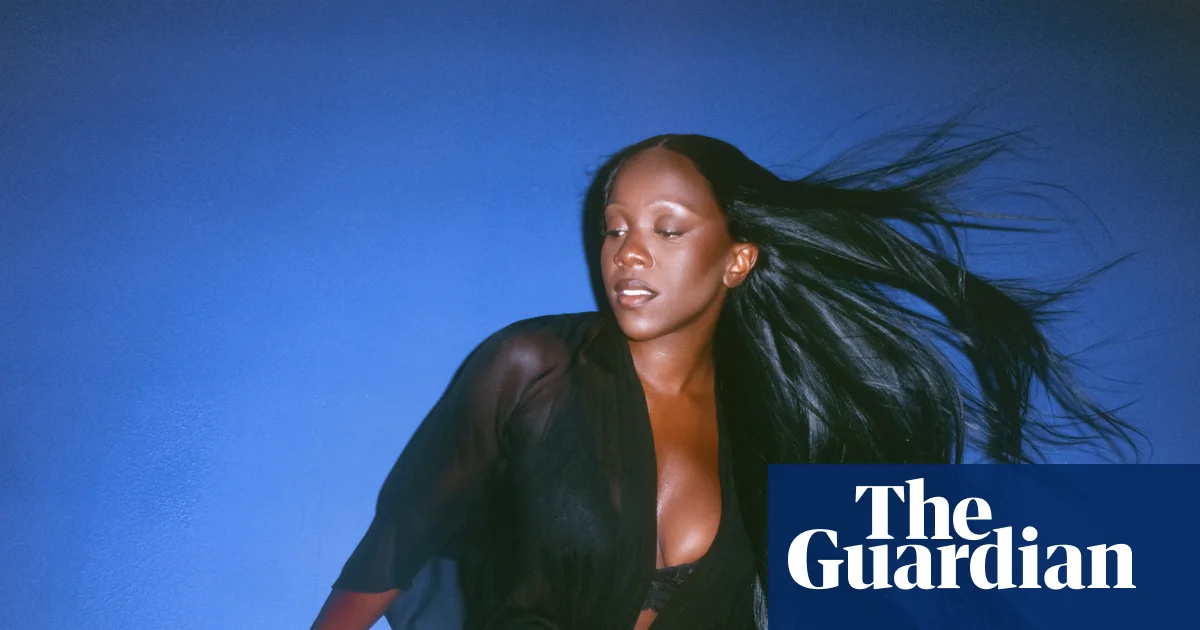
Lucy Rose doesn’t want to be a rock’n’roll parent, juggling soundchecks and nappy changes and raising her children on the road. But as she was planning the release of her most recent album, This Ain’t the Way You Go Out, from 2024, she was told more than once that she should put her music first and her kids second. Trying not to roll her eyes too conspicuously over a Zoom call from her home in Brighton, on the south coast of England, she says it was the easiest “no” of her career.“In the discussions, even some women were being, like, ‘I think you’d do so much better if you toured nine months of the year full time. My kid’s got a nanny; they don’t see me; they’re doing great.’” She shakes her head, marvelling at the absurdity. “I don’t want to not spend time with my children, if possible.”Rose has tentatively returned to live performance since having her second child, last year, but it has been on her terms. Which means a show here and there – or a short tour, such as her dates in Ireland next month. It’s like cycling a bike, she says. You never forget. But there’ll be the occasional wobble as you get back in the saddle.“I definitely was, like, ‘Gosh, this is hard work.’ I live a different life now. I just did school and then started doing music and then went on the road. It’s all that I knew in my adult life.“Now I know something different in adult life. I’m a mother. Performing for an audience was something that felt quite physically demanding – playing and remembering what I’m doing and singing to the best of my ability. It was mentally and physically exhausting at the end of each show.”In person and on stage, Rose is thoughtful and softly spoken. But there is a steeliness under the gauze: she knows her mind and refuses to be led astray by what she regards as poor advice. It was that quality that allowed her to navigate the early-2010s indie scene, staying true to her music when there was pressure to focus on her image. ‘I didn’t think it was going to be possible for me to sit upright for that long and perform’— Lucy RoseShe was required to call on that same tenacity after she was diagnosed with a rare health condition after the birth of her son and had to push for the treatment she needed.How different her life is now compared with the blurry days of 2012, when her debut album brought a much-needed note of folky ennui to the blokey world of British landfill indie. Born in rural Surrey, just south of London, she had started writing songs at the age of 16 and began playing with the indie band Bombay Bicycle Club while studying geography at University College London.Rose had a beautiful voice and a way with soft songs that punched hard – an authenticity that set her apart amid the stampede of too-cool-for-school indie groups that dominated UK music at the time. She soon became a name to watch. The gigs with Bombay Bicycle Club led to a record deal with Sony Music and the release of her debut album, Like I Used To, which went top 20 in the UK and prompted Vogue magazine to declare her one of the breakout stars of 2012.Then, out of nowhere, her bright future shattered. In 2021 she had had her first child, Otto. In the months after his birth she began to experience excruciating back pain; she initially believed it to be part of the normal postpartum experience.Lucy Rose at London jazz club Ronnie Scott's. Photograph: Ellie Koepke But instead of receding, the pain kept getting worse. Doctors were stumped; one suggested it might all be in her head. She pressed for an MRI scan – which revealed that her back was broken in eight places. Rose had a rare form of osteoporosis, a condition that causes the bones to become weak or brittle and in her case was an after-effect of pregnancy.“It was other women who helped me the most, who had gone through it,” she says. “I joined a Facebook group of other women worldwide. There are only a couple of hundred of them in the whole world. They gave me better advice than the doctors. They knew more about it; they’re better researched. Almost every doctor I saw at hospitals was, like, ‘Oh, I’ve never treated anyone with this.’ So you were never feeling too much hope.”Rose continues to live with the condition, which has been made bearable through groundbreaking drug treatment and hydrotherapy, the therapeutic use of water to relieve pain. She says she has achieved closure in that she no longer pines for the life she had before osteoporosis. She has also accepted that the pain is part of her now. It is enormously freeing – a feeling she poured into This Ain’t the Way You Go Out, an optimistic record about coming through the bad times and celebrating the positives in your life.“Healing took a long time. I’ve got to the point where I tune out what is remaining as best as I can. I’ve forgotten what it was like beforehand. For a long time I remembered how I felt before this happened – my body felt so alien to me. Now it is who I am, and I’ve come to accept it.”Rose was always a bit of an old soul – blessed, or perhaps cursed, with a wisdom beyond her years. You can hear as much in early songs such as the keening Middle of the Bed. But coming back to music, both as a parent and as someone with a life-altering health condition, means she now thinks of herself differently. That is neither positive nor negative: it’s just life. But it did mean she felt as if she was starting over in some ways when she went back on the road for a UK tour earlier this year.After the osteoporosis, after her children, “there’s a lot of identity shift from being a naive, self-confident youthful person in what you’re trying to do. Going up on stage is always nerve-racking. But it was my passion. Everything I wanted to do was make music.“To have a health crisis and then become a mother and coming full circle ... I felt the tour had a lot of mixed feelings in it. The biggest thing I got from it was some confidence back.”Rose decided she would speak about her osteoporosis when promoting This Ain’t the Way You Go Out. This isn’t the first of her records to draw on deeply painful events; she wrote No Words Left, her 2019 album, in the aftermath of a miscarriage. But with her most recent LP she wanted to celebrate the solidarity she had found in the community of other new mothers who shared her condition.“When it happened there were a lot of things I didn’t think I’d ever get back to. Music was definitely one of them. I didn’t think it was going to be possible for me to sit upright for that long and perform, because my back was so bad.”Even before these challenges Rose had learned the hard way that sometimes you have to fight your corner. Shuddering, she recalls her unhappy years as a major-label artist. She has always seen herself as a songwriter rather than an entertainer, and she bridled at advice aimed at making her more marketable. People told her to be funnier, to focus on her banter, to “work the room”, so that fans didn’t just appreciate her music but worshipped her as an individual.It was all about how the audience had to idolise you, she says. “I was probably too real on stage. I wanted to play my songs and for people to listen. ‘You need to start telling jokes. You need to start pumping the crowd ...’ I wouldn’t even know where to begin In terms of describing how uncomfortable that would make me feel.”Rose is happier doing things on her own terms, touring and recording when she wants to and giving equal time and attention to family life. Can a musician have it all? Rose would like to think so. “It never felt right to be ticking all the boxes and doing what everyone says I should do,” she says. “I get a lot more back from doing things differently.”Lucy Rose plays Whelan’s, in Dublin, on Tuesday, July 14th; and Monroe’s, in Galway, as part of the city’s international arts festival, on Wednesday, July 15th
Singer Lucy Rose: ‘Almost every doctor I saw was like, Oh, I’ve never treated anyone with this’
The singer on being a present parent, refusing to work the room, and coming to accept being diagnosed with a rare life-changing illness
1,434 words~7 min read