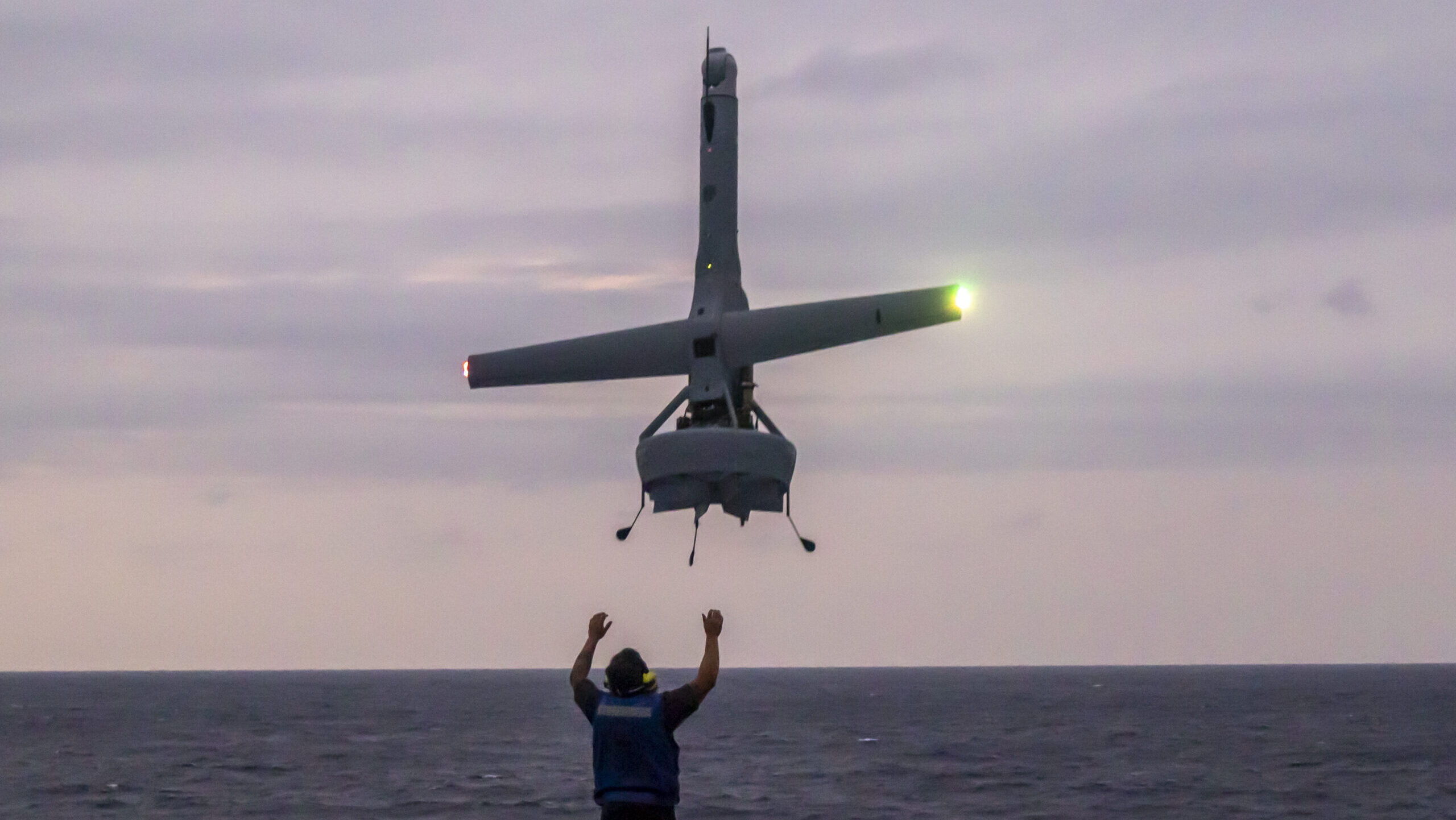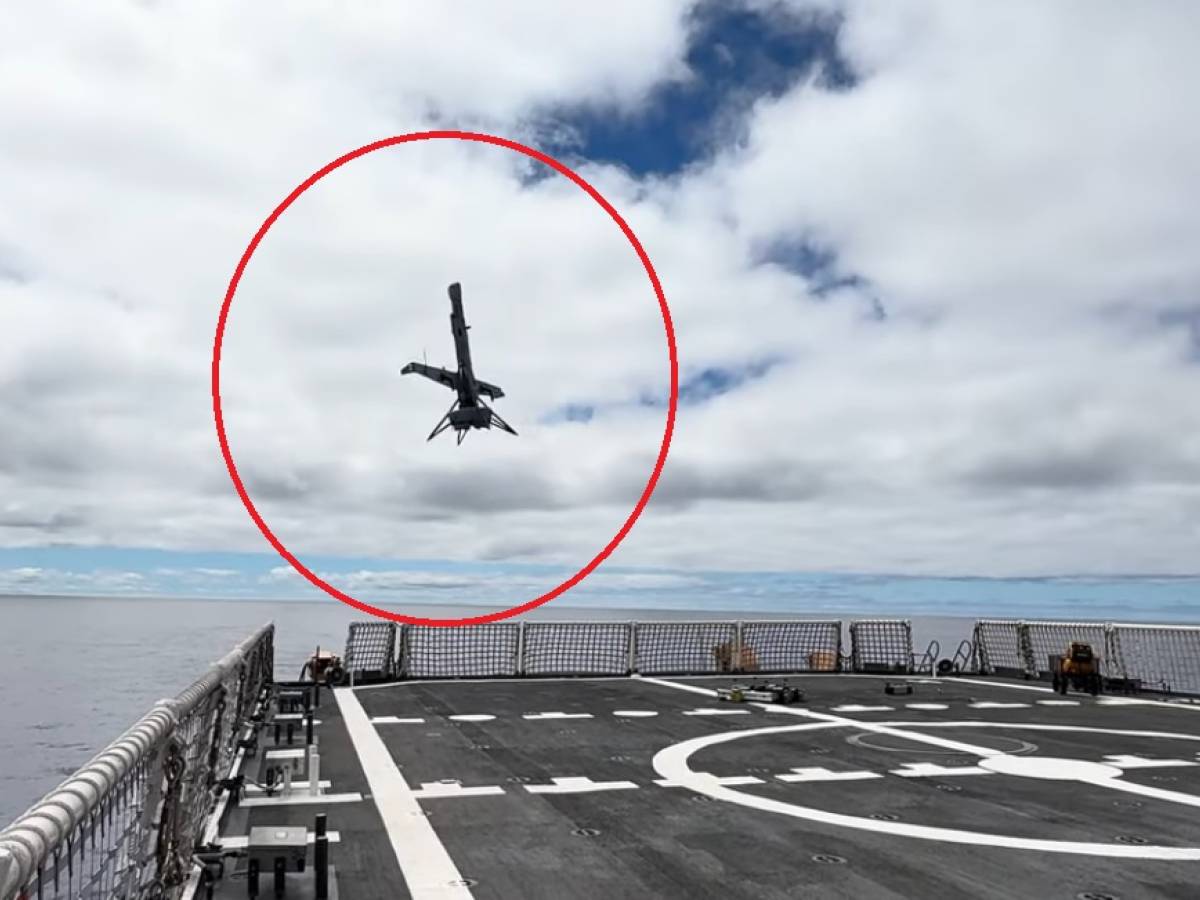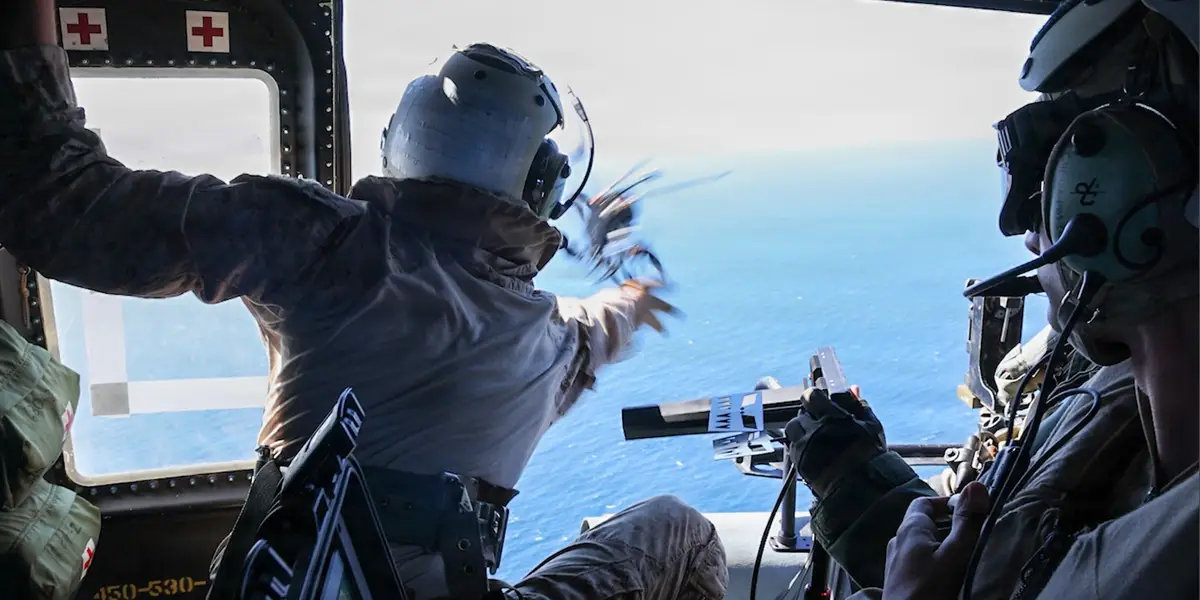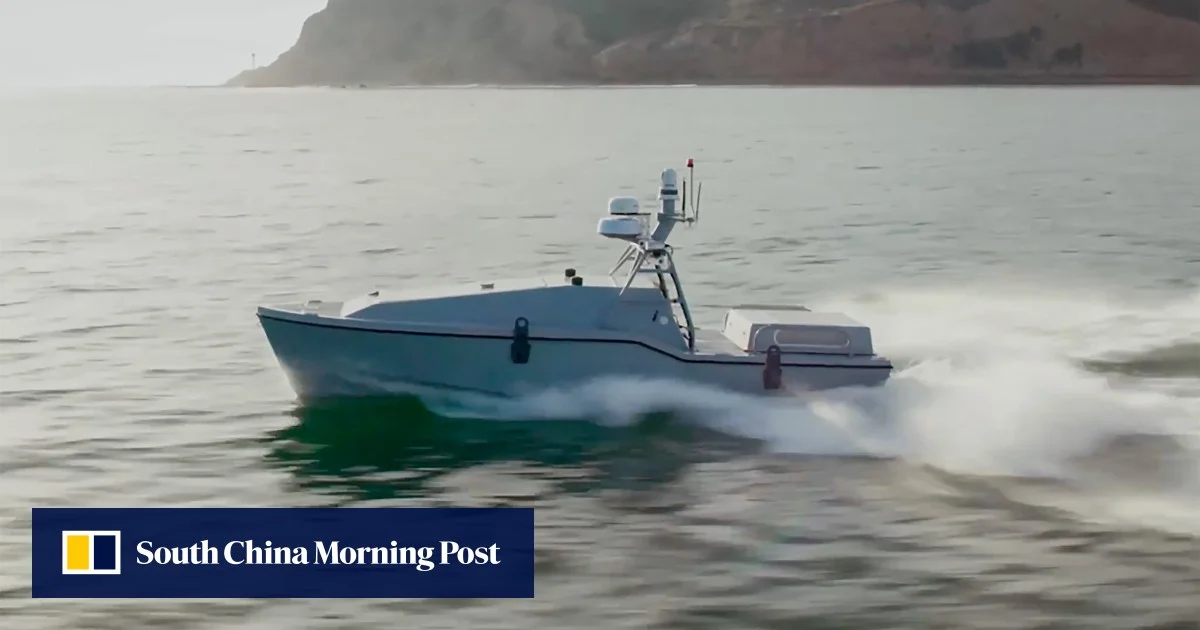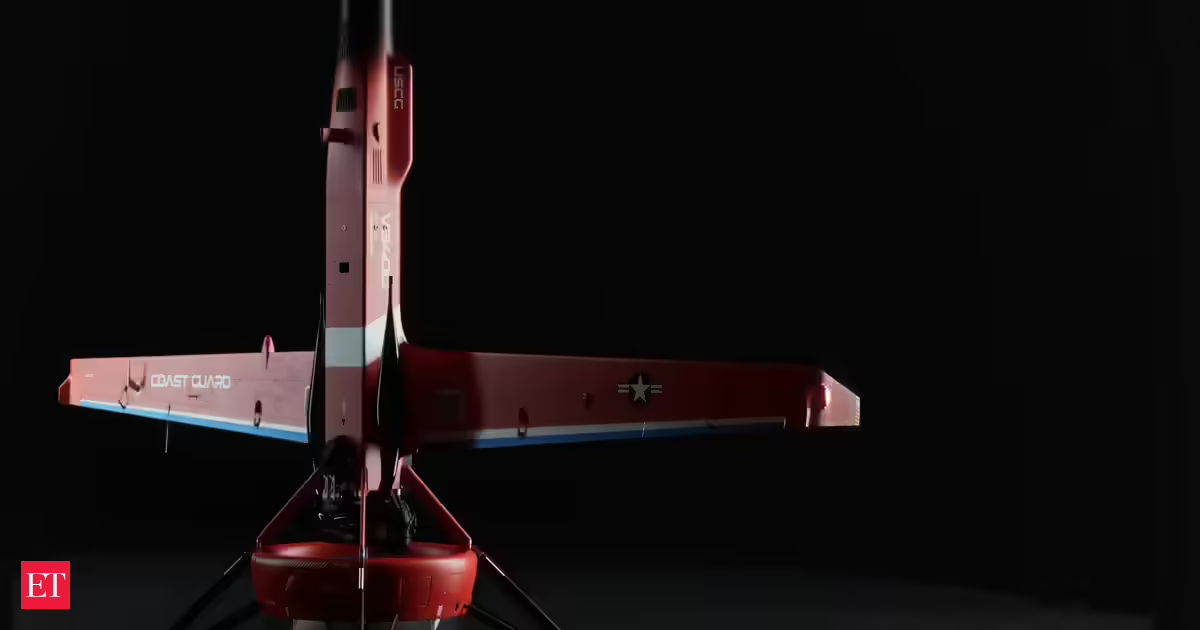
The US Marine Corps has demonstrated a growing ability to conduct long-range intelligence, surveillance and reconnaissance missions from amphibious warships operating deep inside contested maritime regions, following the launch of a V-BAT unmanned aerial system from the USS Portland in the South China Sea.The June 17 launch, conducted by Marines and Department of War contractors assigned to the 11th Marine Expeditionary Unit (MEU), highlights the growing role of advanced drones. The development was first reported by Defence Blog.Operating from the flight deck of the San Antonio-class USS Portland, and developed by California-based defense technology company Shield AI, the MQ-35A V-BAT is designed to provide intelligence, surveillance and reconnaissance (ISR) capabilities without requiring traditional launch infrastructure.Unlike conventional fixed-wing aircraft that need runways or catapult systems, the V-BAT can take off and land vertically from a space as small as 6 meters by 6 meters (20 feet by 20 feet). The aircraft weighs approximately 56.5 kilograms (124 pounds) when fully loaded and has a wingspan of about 3.8 meters (12.5 feet).Its unique ducted-fan propulsion system allows it to transition from vertical flight to forward flight in less than 15 seconds, combining the flexibility of a helicopter with the endurance of a fixed-wing aircraft.According to Shield AI, the drone can remain airborne for more than 10 hours on a single fuel load while carrying electro-optical and infrared sensor payloads capable of detecting, tracking and identifying targets over long distances.A naval vessel's radar is inherently limited by the Earth's curvature, meaning ships can only directly detect low-flying targets or surface contacts out to the radar horizon. By deploying a long-endurance drone such as the V-BAT, commanders can extend surveillance coverage well beyond those limitations.Defence Blog noted that the drone can operate more than 130 kilometers (81 miles) away from the host vessel while providing real-time intelligence feeds. This capability is particularly valuable in the South China Sea, where dense maritime traffic, disputed territorial claims and numerous island features create a highly complex operating environment.One of the V-BAT's most significant advantages is its ability to operate in contested electromagnetic environments.The system uses Shield AI's autonomous software architecture, known as Hivemind, which enables the drone to continue operating even when GPS signals are degraded or communications links are disrupted.The platform gained international attention after deployments supporting Ukrainian operations, where it reportedly conducted intelligence and targeting missions in areas experiencing intense electronic warfare activity. Shield AI has stated that the drone successfully completed long-endurance ISR missions despite GPS jamming and communications interference.The Role of the 11th Marine Expeditionary UnitThe V-BAT launch occurred during an Indo-Pacific deployment by the 11th Marine Expeditionary Unit, one of the US military's forward-deployed crisis-response forces.The approximately 2,200-Marine formation departed San Diego in March 2026 aboard the Boxer Amphibious Ready Group. The deployment includes:USS Boxer, a Wasp-class amphibious assault shipUSS Comstock, a dock landing shipUSS Portland, a San Antonio-class amphibious transport dockThe 11th MEU includes Battalion Landing Team 3/5, Combat Logistics Battalion 11, Marine Fighter Attack Squadron 122 and Marine Medium Tiltrotor Squadron 163 (Reinforced).Together, these units provide a self-sustaining expeditionary force capable of conducting amphibious assaults, humanitarian assistance missions, crisis response operations and combat deployments without relying on land-based infrastructure.
All eyes on China: From the deck of USS Portland, a new spy drone takes America’s maritime surveillance further into the South China Sea
US Marines have successfully launched a V-BAT drone from the USS Portland in the South China Sea, showcasing enhanced long-range intelligence capabilities. This advanced drone, capable of vertical takeoff and landing, extends surveillance beyond traditional radar limits, even in contested electromagnetic environments. The deployment by the 11th MEU highlights the growing importance of autonomous systems for maritime operations.
528 words~2 min read