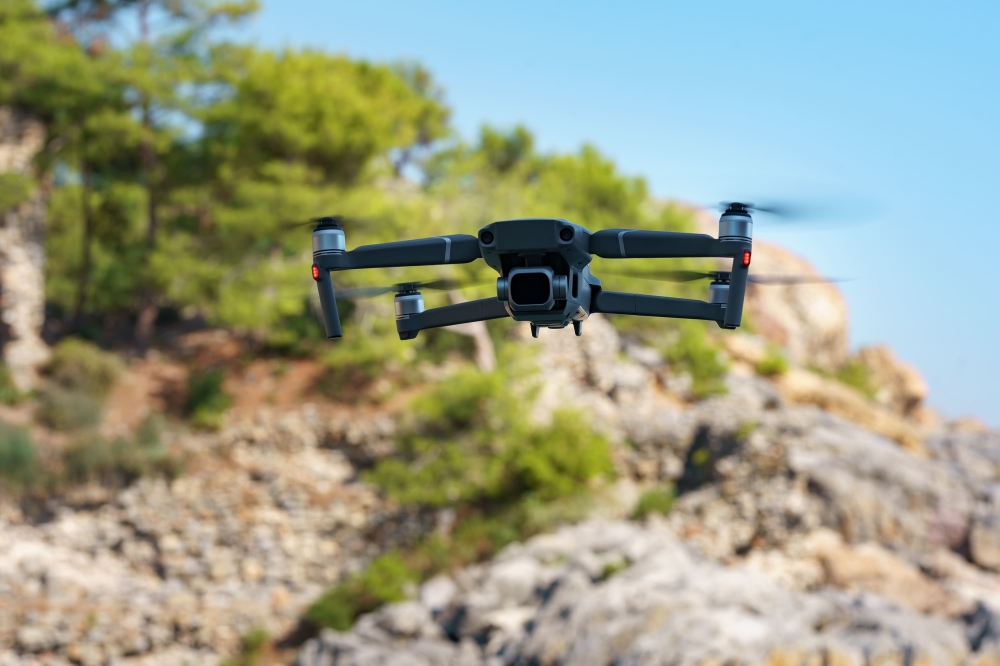
Earn a fixed rate of up to 4.2%* p.a. for 210 days with Versa Save! Plus, enjoy an additional FREE RM10 when you sign up using code VERSAMM10 with a min. cash-in of RM100 today. T&Cs apply. KUALA LUMPUR, June 23 — Imagine a future where medicine is delivered by drone, emergency responders can fly blood supplies across traffic jams, and “flying taxis” shuttle passengers above congested city streets.It may sound like science fiction to some, but governments and aviation regulators around the world have already begun experimenting with it.In major cities in the US and China, drones regularly deliver meals, groceries, packages and medicine, while in Dubai, pilotless air taxis may soon be able to take passengers from the mall to the airport in about 10 minutes.The concept is known as the Low Altitude Economy (LAE) — an emerging sector that uses low-level airspace, generally below 1,000 metres, as a new economic zone for transport, logistics, public services and industry.With the Civil Aviation Authority of Malaysia (CAAM) set to host a forum on the subject later this month on June 24, here’s a beginner’s guide to what the Low Altitude Economy actually means, why countries are investing in it, and why it has become one of aviation’s most closely watched frontiers.So what exactly is the Low Altitude Economy?The Low Altitude Economy typically refers to economic activities that use low-level airspace, typically below 1,000 metres — much lower than commercial aircraft, which operate at around 9,000 to 13,000 metres — through technologies such as drones, unmanned aircraft and future electric air vehicles.The new layer of economic activity is above roads and buildings but below conventional commercial airplane routes, so instead of cars, trucks and motorcycles moving goods on the ground, the LAE imagines part of that movement taking place through the air.This includes delivery drones, drones used for agriculture, security and infrastructure inspection, mapping and surveying, emergency and medical services, and more recently, pilotless aircraft known as Electric Vertical Take-Off and Landing (eVTOL) aircraft, or “flying taxis”.How drones and the LAE could change everyday lifeFor the average consumer, one of the most obvious examples is logistics.Instead of driving a parcel, food, or supplies across the city, a drone could potentially carry it directly to a designated delivery point in a fraction of the time, bypassing traffic, tolls and parking obstacles.In remote areas, drones could transport medicines, vaccines or emergency supplies much faster than conventional vehicles.Emergency services could also benefit from rapid deployment of drones carrying medical equipment, communications devices or search-and-rescue technology.For a state such as Sabah, where villages can be separated by rivers, mountains and poor road access, such technology could have practical and life-saving applications beyond simple convenience.Industrial uses are also significant — in Malaysia, drones are already used to inspect pipelines and power lines for energy companies, while plantation operators use them for crop monitoring and spraying, enhancing efficiency.Surveyors also use drones for mapping, land management, security and photography. Drones are already being used in sectors such as agriculture, infrastructure inspection, mapping and surveillance. — Freepik pic The race to make flying cars a realityPerhaps the most attention-grabbing aspect of the LAE is the development of electric vertical take-off and landing (eVTOL) aircraft, often described as flying cars.These are electrically powered aircraft designed to take off and land vertically like helicopters but operate more quietly, at lower altitudes and with lower operating costs.Companies in China, the United States, Europe and the Middle East have already invested billions into developing commercial passenger services, with some closer than others to making them a reality.In China, several companies are already testing or rolling out such vehicles, with current uses focused on trial flights, sightseeing and pre-programmed fixed-route trips in cities such as Hefei and Guangzhou.Some aircraft have also received approvals from the Civil Aviation Administration of China (CAAC), bringing commercial operations closer to reality.Dubai completed construction of its first air taxi station in April, with operations expected to begin later this year.The facility is reportedly designed to handle up to 42,000 landings and 170,000 passengers annually.The eVTOLs are fully electric, zero-emission aircraft that can seat up to four passengers and a pilot, travelling at speeds of up to 320km/h.In its first phase, the service is expected to shuttle passengers between four key locations, including Dubai International Airport, Downtown Dubai, Palm Jumeirah and Dubai Marina, for roughly the cost of a premium Grab ride.The rides are expected to cut some journeys from around 45 minutes to about 10 to 15 minutes.This kind of urban air mobility could eventually reduce congestion and provide rapid transport between airports, business districts and suburban areas, although such vehicles have lower carrying capacity — typically up to six passengers at a time for short trips, while larger models can carry up to 10 passengers.Malaysia’s place in the emerging industryGlobally, estimates vary widely because the sector remains in its infancy.Among the frontrunners, the Chinese government has formally incorporated the Low Altitude Economy into national development plans, and while China has moved from development to deployment, most Western companies are still working through certification, testing and commercial rollout.The United States is conducting urban air mobility trials through aviation regulators and private companies, while the European Union has been developing “U-space” systems to manage large numbers of drones safely within shared airspace in countries such as Germany, Italy and France.China estimates the country’s LAE could reach 1.5 trillion yuan, or about RM885 billion, in value and potentially exceed two trillion yuan by 2030 and 3.5 trillion yuan by 2035.According to Renub Research, the global air taxi market is expected to increase from US$1.32 billion in 2024 to US$7.74 billion by 2033, with an annual growth rate of 21.72 per cent.Bank of America Global Research estimated that the global LAE generated US$4.6 billion in 2024, with analysts projecting it could reach US$8 billion to US$15 billion in 2025, US$23.5 billion by 2030 and US$210 billion by 2045.That 2030 figure represents a 31.2 per cent compound annual growth rate over five years.Malaysia does not yet appear to have an official estimate for the potential size of its LAE market, but former Prime Minister Datuk Seri Ismail Sabri Yaakob had previously said the drone industry in Malaysia has the potential to contribute RM50.71 billion to gross domestic product and create 100,000 job opportunities by 2030.Sarawak has also indicated particular interest in positioning itself to tap into the emerging market, with plans to explore opportunities in drone logistics, smart city applications and technology-driven industries.What laws already exist in Malaysia?Malaysia is not starting from scratch.Drone operations are already regulated by CAAM under existing aviation rules — drones are subject to strict restrictions involving flight zones, altitude limits, pilot training, safety requirements and permissions for certain activities.Under current regulations, operators must submit applications at least 14 days before their proposed activity, while drones are generally limited to a maximum altitude of 120 metres, must remain within the operator’s visual line of sight and can only be flown during daylight hours.According to CAAM, drones are not allowed within 4.5km of airports, military bases or designated restricted airspace, must maintain at least 50 metres from people, vehicles, vessels or buildings, must not fly directly over crowds of more than 1,000 people and cannot drop objects or animals.The drones themselves must be certified by the Standard and Industrial Research Institute of Malaysia (Sirim) and use approved radio frequencies.Violations can result in hefty penalties, including fines of up to RM50,000 and imprisonment of up to three years for individuals, while companies can face fines of up to RM100,000.Meanwhile, Malaysia has marked unmanned aerial vehicles (UAVs), advanced air mobility, and drone manufacturing and services as growth sectors under the Malaysian Aerospace Industry Blueprint 2030 (MAIB 2030) and the Malaysia Drone Technology Action Plan 2022-2030 (MDTAP30).The vision is to establish Malaysia as the top aerospace and DroneTech hub in Southeast Asia.The blueprint targets applications in agriculture, including precision farming, infrastructure monitoring, security and surveillance, including military border control, and rural medical supply delivery.Transport Minister Datuk Seri Anthony Loke was reported saying that CAAM is looking at a broader regulatory framework specifically for the Low Altitude Economy to support industry growth while maintaining safety standards.Not everyone is convincedLike most emerging technologies, the LAE has attracted both excitement and scepticism.While drones and flying taxis promise faster deliveries and new transport options, they also pose challenges and new risks such as air collisions, falling aircraft, and privacy and security dangers.As more drones, delivery aircraft and future air taxis possibly take to the same shared airspace, there is a possibility of mid-air crashes between aircraft or collisions with buildings, power lines and other infrastructure.Regulators also worry about what happens if an aircraft, particularly one carrying passengers, suffers a technical failure and falls onto roads, homes or crowded public areas.Unlike commercial aviation, which operates in tightly controlled air corridors, the LAE could eventually involve thousands of aircraft operating simultaneously over urban areas.Even relatively small drones can cause damage if they crash into people or vehicles, while larger cargo drones and future passenger-carrying air taxis pose greater risks because of their weight and speed.The question then becomes who should be held responsible when accidents happen.Other concerns are privacy-related — both digitally and in real life.Low-altitude aircraft tend to rely heavily on software, GPS navigation and wireless communications, which could be susceptible to hacking, GPS spoofing or signal interference, raising risks such as hijacking and cyber attacks on air traffic management systems.Drones can also be equipped with cameras, sensors and imaging systems, which could raise public unease over aircraft regularly flying above homes, schools and private property.Some countries have already debated whether drone operators should face stricter rules on data collection and photography.But perhaps the largest challenge is cost. All arguments and discussion will be moot if the technology cannot be made affordable. Drones equipped with cameras and sensors bring new uses, but also new concerns over privacy and public safety. — Unsplash pic Drone-operated deliveries in China may already be operating at reasonable enough cost, but air taxi prices are still considered too high for the average person.The next frontier above our headsIn Malaysia, the LAE is still at an early exploratory stage, as regulators, industry players and governments are still grappling with questions over safety, privacy, infrastructure and affordability long before drones and air taxis can become part of everyday life.But much like the internet in its early days, the technology globally is advancing faster than many people realise.As Malaysia begins exploring this previously untapped space, the debate is no longer on whether such technology is possible here but how best to ensure it meets the nation’s and its people’s needs.
Above our rooftops: A beginner’s guide to the Low Altitude Economy
KUALA LUMPUR, June 23 — Imagine a future where medicine is delivered by drone, emergency responders can fly blood supplies across traffic jams, and “flying taxis” shuttle...
1,775 words~8 min read