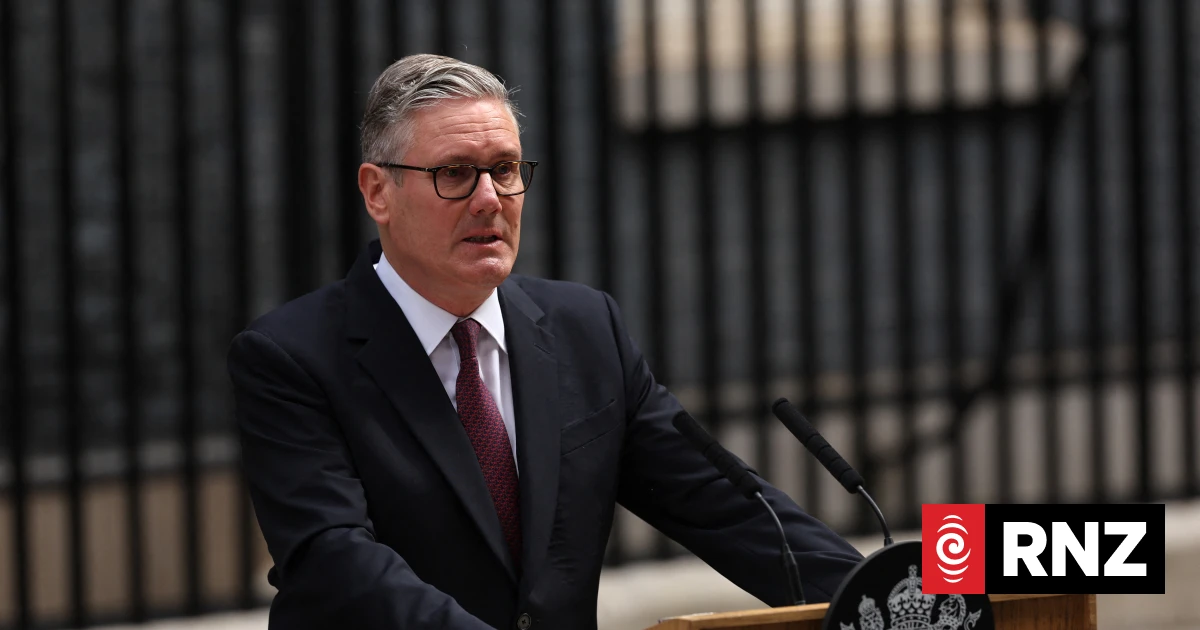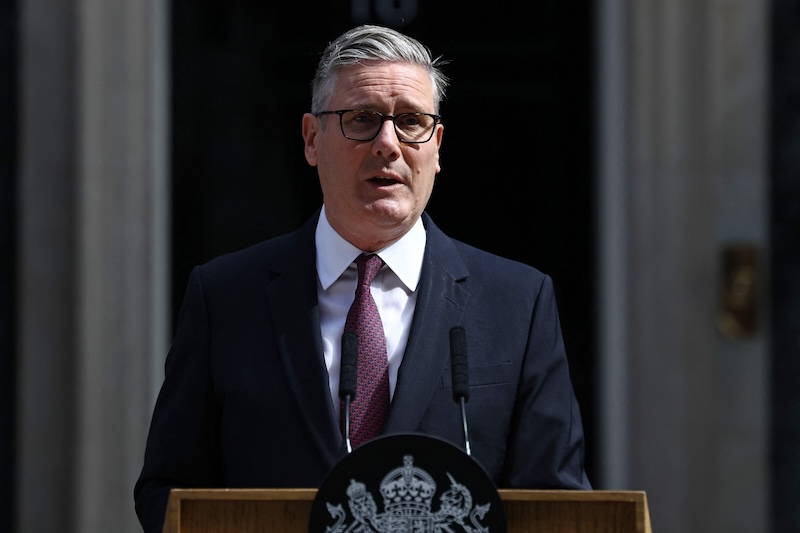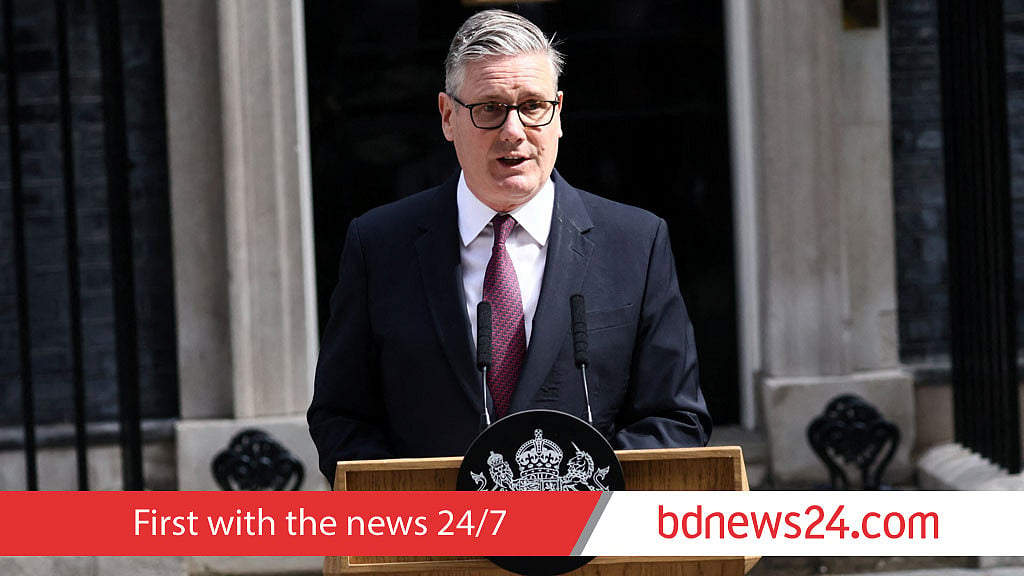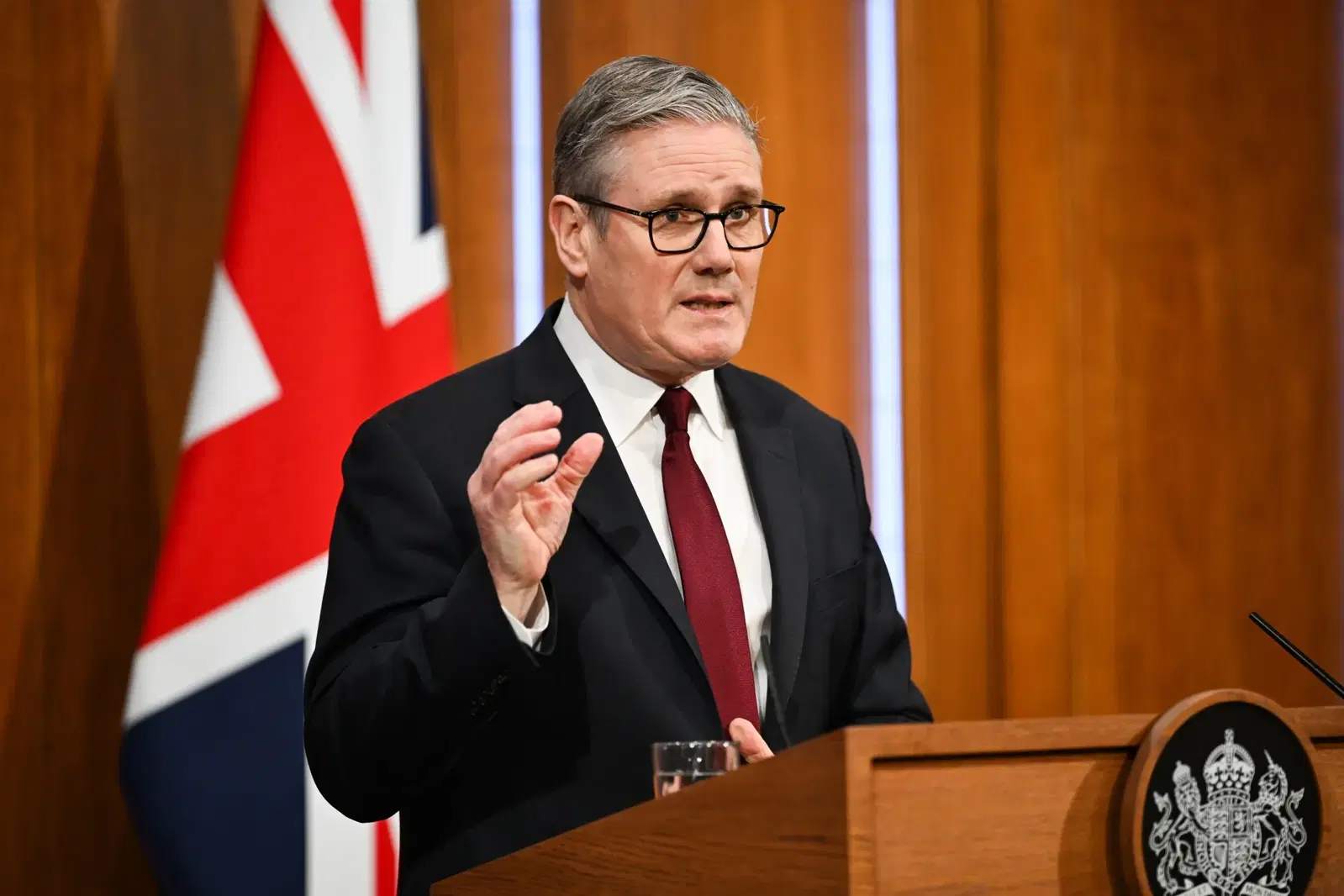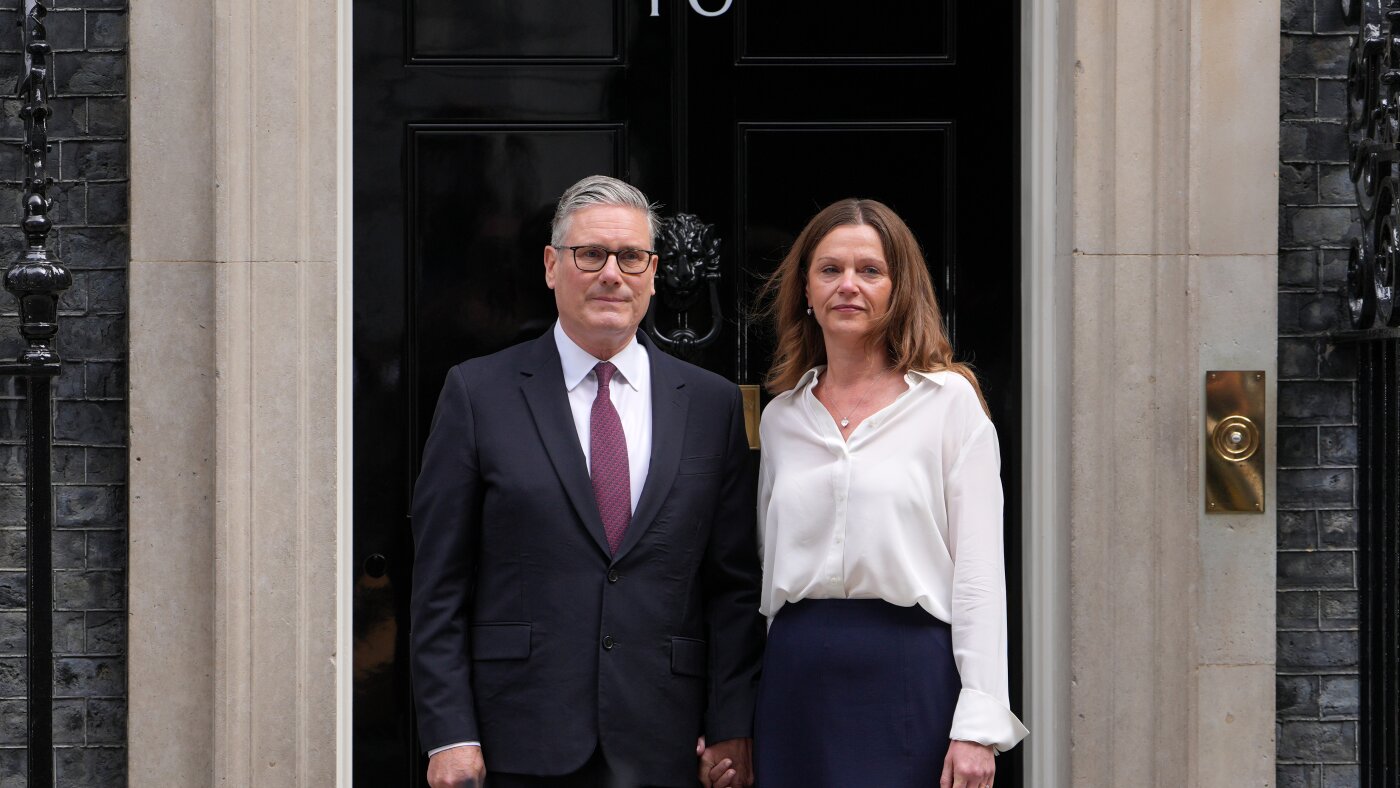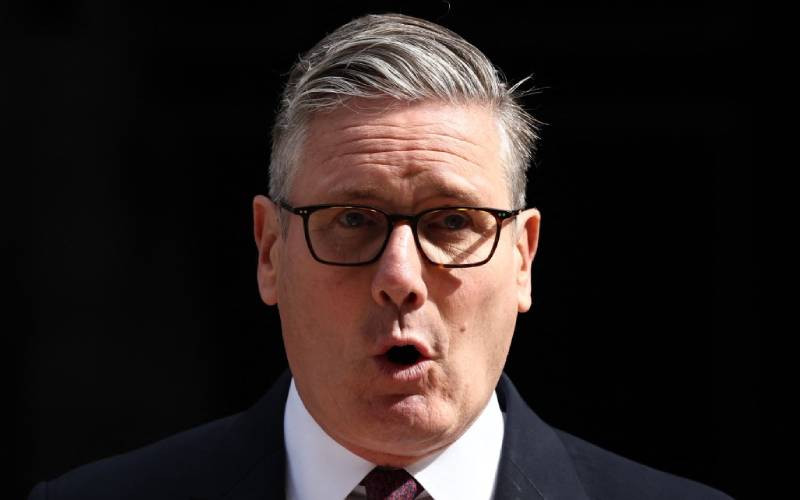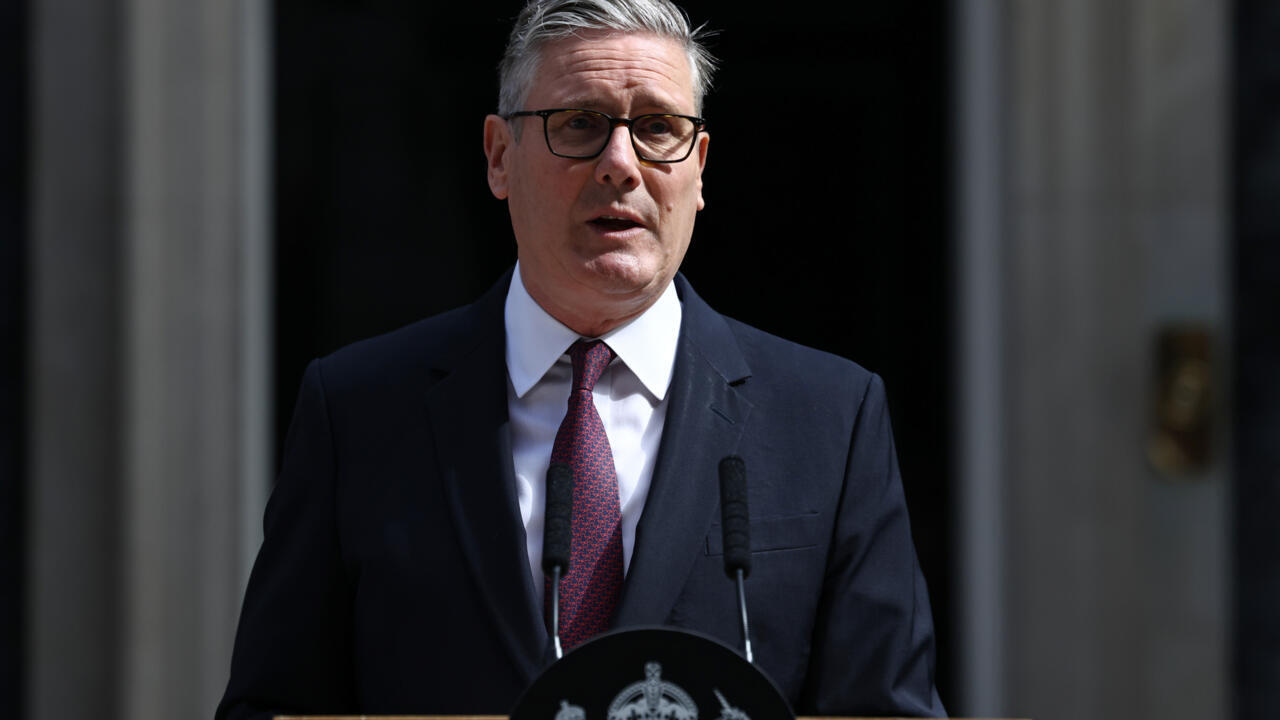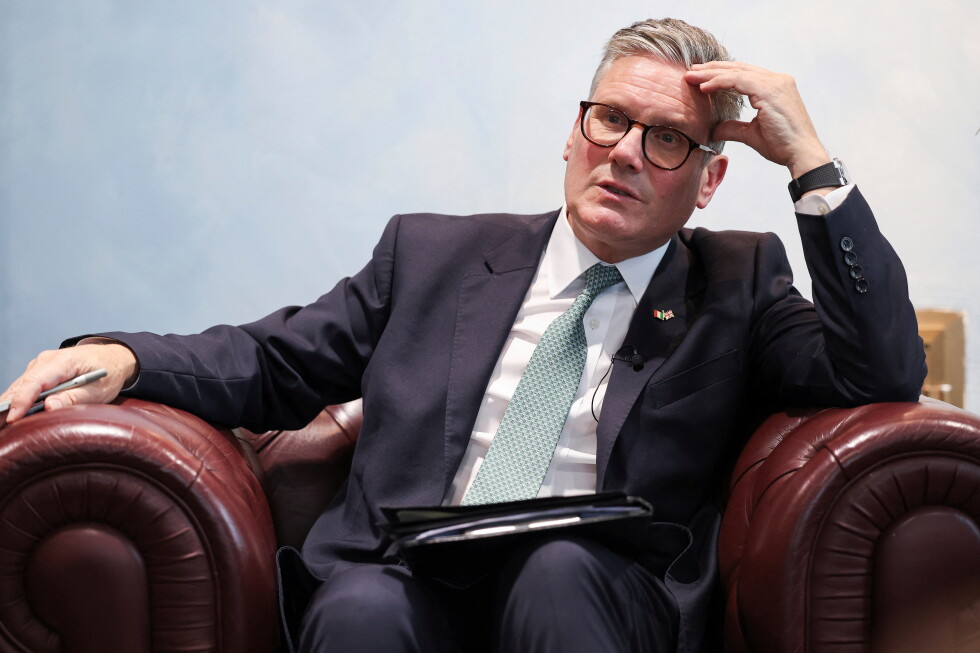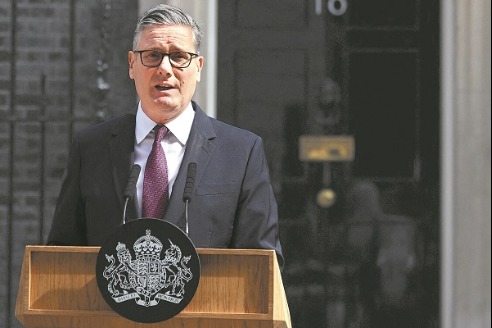
British Prime Minister Keir Starmer announces on Monday the timeline for his resignation, outside 10 Downing Street in London, the United Kingdom. JAIMI JOY/REUTERS
British Prime Minister Keir Starmer ended all speculation about his future on Monday by announcing his resignation, less than two years after guiding the Labour Party to a landslide victory in the 2024 general election.
His resignation means the United Kingdom will have its seventh prime minister in just over a decade. Amid the imminent change, the British pound slid as much as 0.4 percent to touch $1.3181 early on Monday, approaching its 2026 low of $1.3159 set in March, before paring losses. The yield of the UK 10-year gilt bonds, a benchmark for what the UK Treasury pays to borrow money, edged up from 4.84 percent to 4.85 percent, while the yield on 30-year gilts rose from 5.54 percent to 5.55 percent.
Doubts over Starmer's leadership had been growing for some time, particularly after the recent damaging local election results, for which Starmer took personal responsibility.
In an address outside his Downing Street office, Starmer said that he had "heard the answer of my Parliamentary party" as to whether he was "best placed" to lead it into the next general election. "I accept that answer with good grace," he added, saying that he would continue until his successor was chosen.