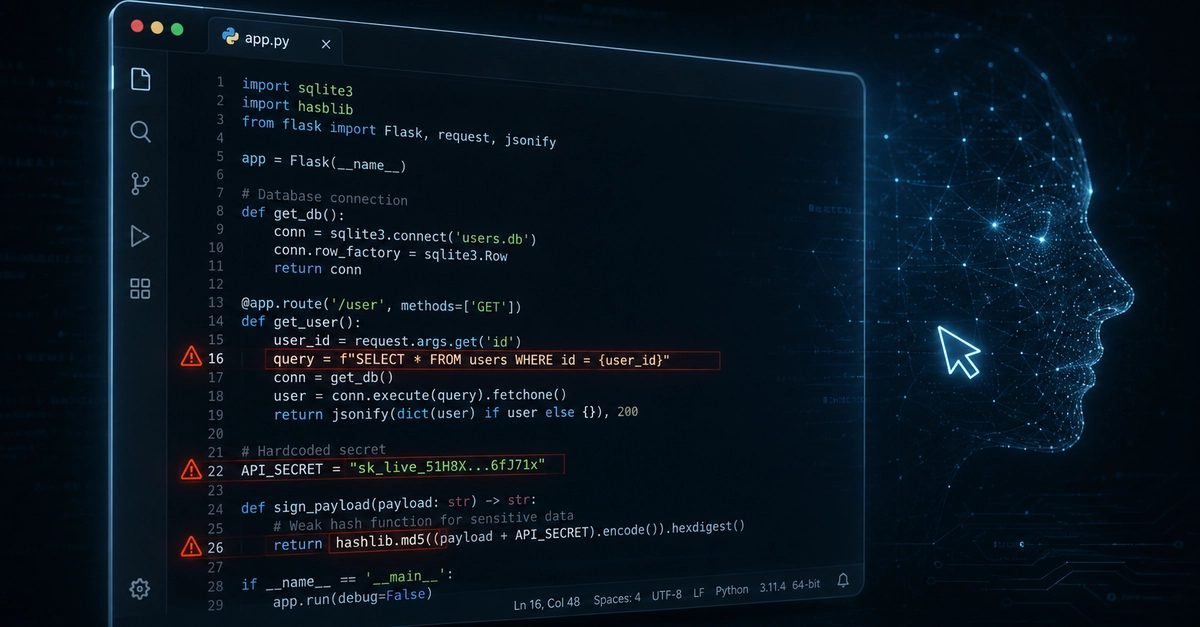
Before I released my own AI chatbot plugin, I ran it through a security review. It came back with 35 bugs, three of them critical, and the one that made my stomach drop was an HTML injection coming straight out of unsanitized model output. At the time, that felt like my low point as a developer. Then I read this year's ecosystem numbers, and 35 started to look quaint.
The numbers got loud in 2026
A pipeline built by security researchers, reported by Help Net Security, paired AI static analysis with automated verification and surfaced more than 300 critical zero-days across the WordPress plugin ecosystem in about 72 hours of scanning, with every finding manually verified before disclosure. Patchstack's 2026 report puts a name on one of the causes: vibe coding, where developers ship LLM-generated plugin code they can't actually audit. One agency reported finding 100 distinct security issues in a single vibe-coded plugin.
AI moved both sides of the board at once. It writes plugins fast, and while it's writing it skips the boring security parts: escaping, capability checks, nonce validation. Then it finds those exact holes fast, including on the attacker's side. The two things that used to protect a small plugin, obscurity and time, are both gone. Patchstack measured the weighted-median time from public disclosure to mass exploitation at roughly five hours. The standard advice, keep your plugins updated, assumes you have a window to react. Five hours is not a window.