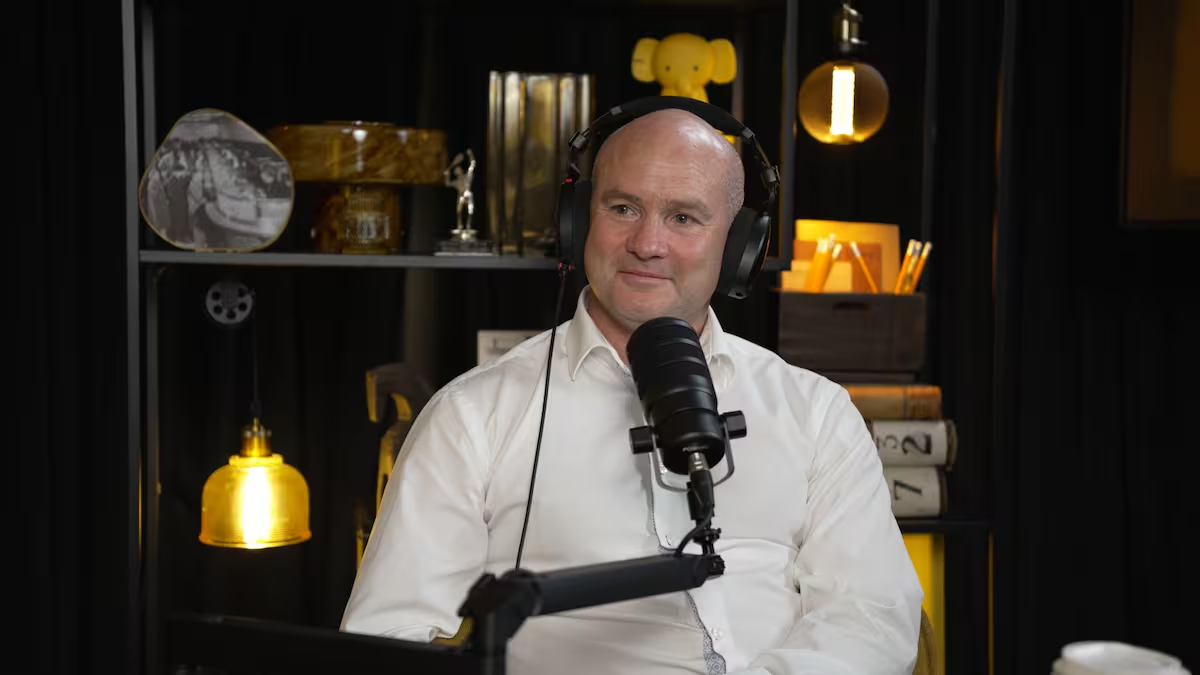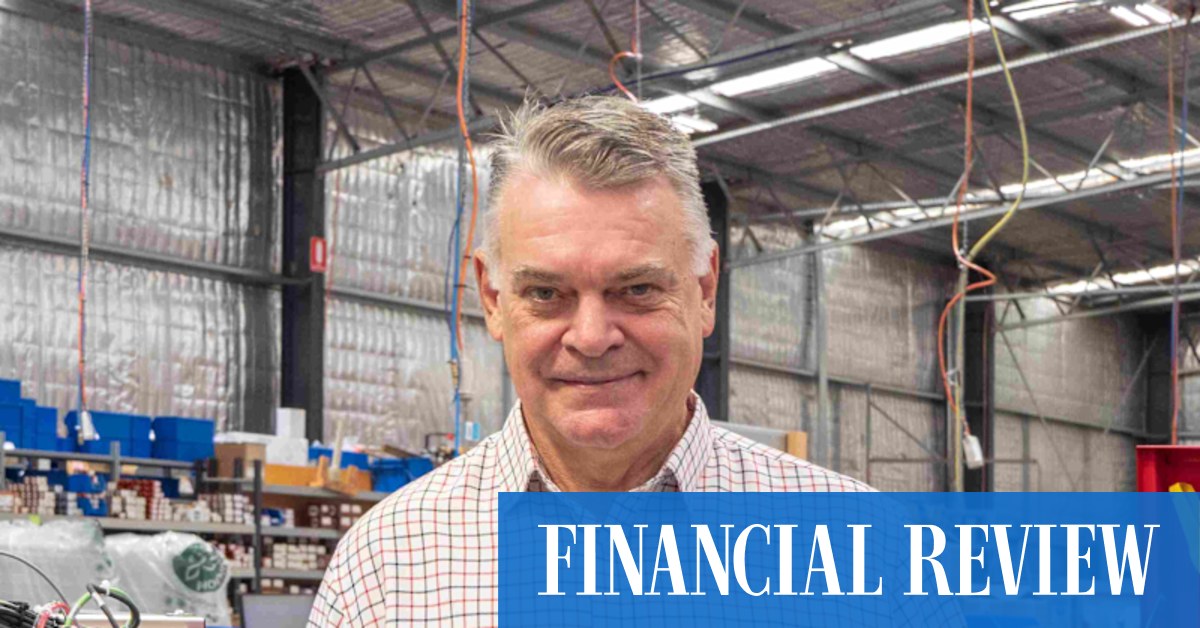
“Most of these businesses are founder led and family owned. They don’t spend time promoting themselves. They just work hard to serve their customers and feed their family. It’s a humble part of the economy.”ABGF CEO and managing director, Anthony Healy. Aside from their under-rated economic contribution, ABGF’s research points to a significant equity funding gap for established Australian businesses.While private equity funds under management in Australia have reached a record $65.5 billion, most of this money has been used for recapitalisations and large buyouts. Just 2 per cent of private equity funds and 0.4 per cent of venture capital funding is used for growth capital.Worryingly, ABGF’s data shows that while 35 per cent of growth economy businesses have sought external equity funding in the past three years, more than half (53 per cent) were unsuccessful. This equals a $38 billion equity funding gap.That is the gap ABGF, Australia’s only purpose-built growth capital investor, was created to address. ABGF is a fund that invests in small to medium-sized Australian businesses with a sound growth story, and was established through a partnership between the federal government and some of Australia’s largest banks to ensure mid-market businesses have access to growth capital.“There’s venture capital available for high-growth start-ups. Then, at the other end, you’ve got the big, buyout funds. They invest in larger businesses and they like to take control,” says Healy.“Many businesses that don’t fit these two categories just don’t know where to go to access capital. At the same time, many of them are at a point where they want to sell down and take some risk off the table.”For founders who have spent years – or even generations – building a business, the fear of losing control can be a major barrier to seeking capital. ABGF’s model is designed to address that concern, with the fund taking minority stakes and working alongside existing management, rather than replacing them.But keeping control is only part of the equation. Many founders are also looking for a partner to help them grow. ABGF says this is where their active growth capital approach differs from passive capital – it brings capability into the business, not just money onto the balance sheet.According to ABGF’s research, small businesses estimate their revenue could grow by 24.5 per cent if they had access to the equity capital they need.This would mean they could expand into new markets, win new major contracts, invest in modern plant and equipment, automate processes, develop new products and acquire competitors.In most cases, SMEs are missing out on accessing the benefits of institutional growth capital. ABGF’s research shows 90 per cent of small business equity funding comes from personal networks (rather than institutional investors), that typically lack the expertise and institutional capability to support the founder in executing on their growth strategies.The report also reveals Australian small and medium-sized businesses are much more reliant on debt funding than growth capital and venture capital, relative to their peers in the US, UK, Ireland, Canada and France.The imbalance is stark. Australia’s debt-to-growth capital ratio sits at 247 times, compared with 14 times in the UK and five times in the US – a sign that while the nation’s debt markets are mature, equity capital for established SMEs remains structurally underdeveloped.Meanwhile, in the UK, the Business Growth Fund has invested over £4 billion in 600-plus companies since 2011. Back home, many local businesses don’t realise they can access the same level of financial and strategic support from ABGF.“Most mid-market businesses think their main choice is bank debt, which limits their potential to how much they can borrow,” says Healy.“We talk about how much growth they could access if capital and funding wasn’t an issue. When you have that conversation, it brings out the business’s potential and ambition.”That has been true for Modra Technology, where access to growth capital and strategic support transformed the Victorian automation equipment manufacturer for the carpet industry. With more than 200 customers in 34 countries, this assistance means the business can implement formal succession planning, enter a new growth phase and embed a team equipped to carry the enterprise forward.After successfully running the company since he started it in 1991, founder Tim Modra got to the same fork in the road many businesses that have established a solid foundation do. The firm had reached the limits of its ability to get to the next stage without the right support.Joining forces with ABGF meant Modra can step into a new success phase. For an equity stake in the firm, Modra receives patient investment funds and access to a team with the right skills and experience to give the firm a serious boost. It’s a win-win.As part of the partnership, ABGF supported Modra in bringing in a chairperson and senior management team, which means Modra now has experienced executives to guide the business and support the founder.“ABGF had a very robust way of finding a CEO in Craig Fuller, who’s a terrific fit and someone I really enjoy working with, because before that it was very lonely,” Modra says.“The ABGF team offers us the expertise and the experience to grow my managers, grow the business, to look broader, to help us become more professional and ensure our continued growth.”“Our partnership with ABGF isn’t just about financial growth,” says Modra. “It’s about supporting our manufacturing operations in Warragul and continuing to solve the real challenges our customers face as we expand our global footprint.”To learn more, please visit Australian Business Growth Fund.
Australia lacks growth capital – and it’s hurting our productivity
One of the nation’s biggest growth opportunities is hiding in plain sight: established businesses that have moved beyond the start-up phase.
916 words~4 min read