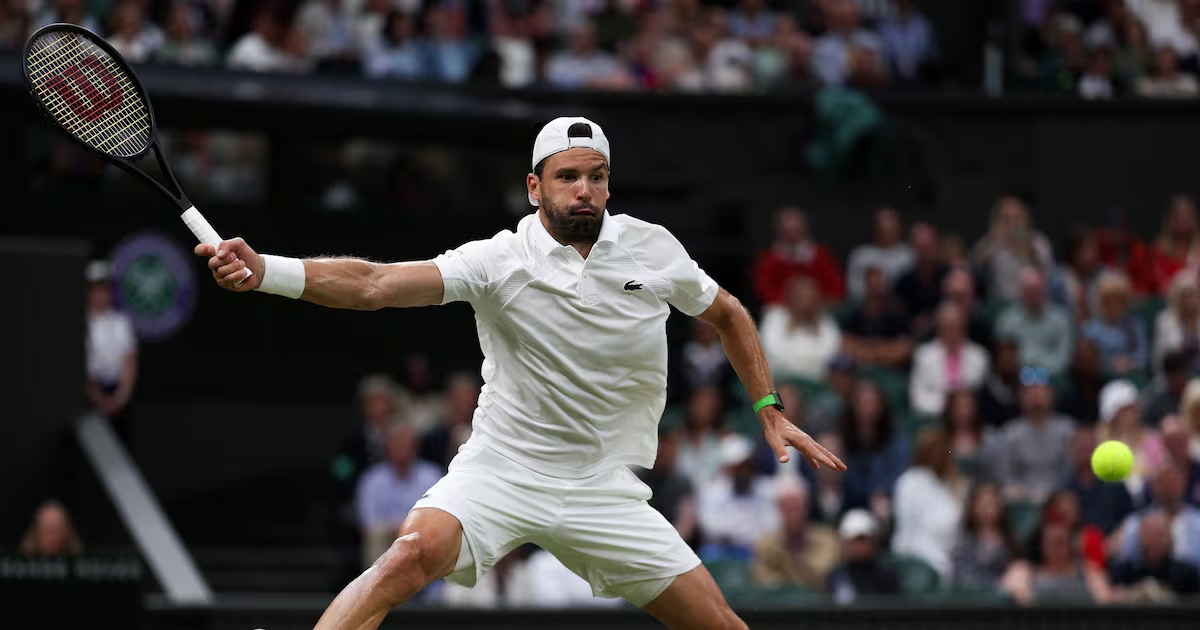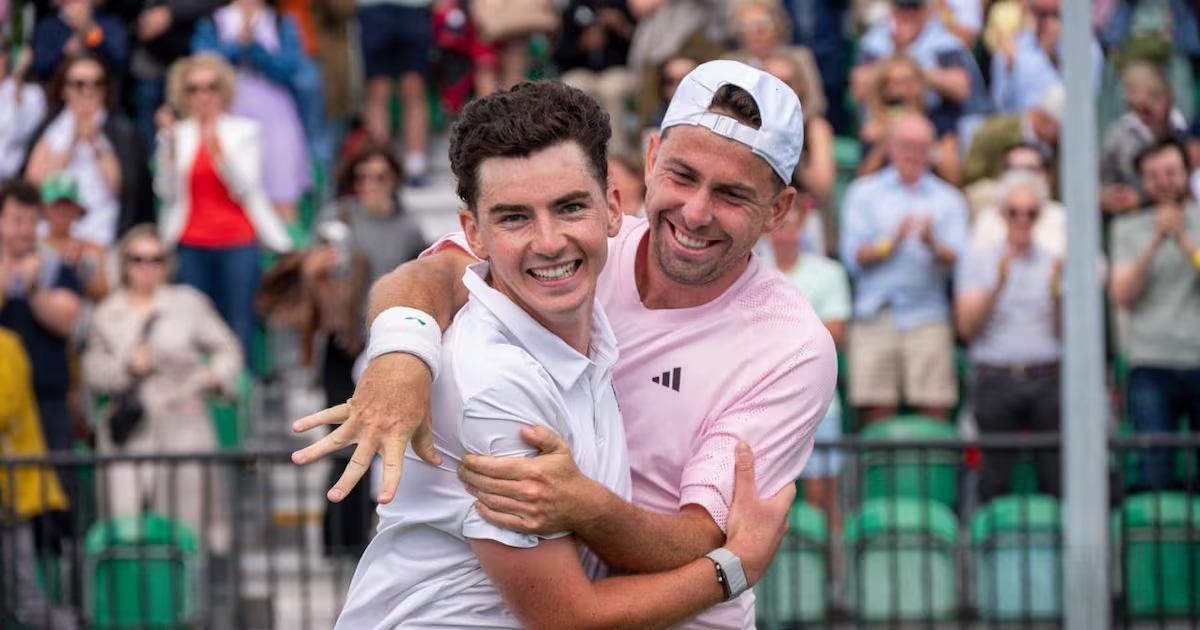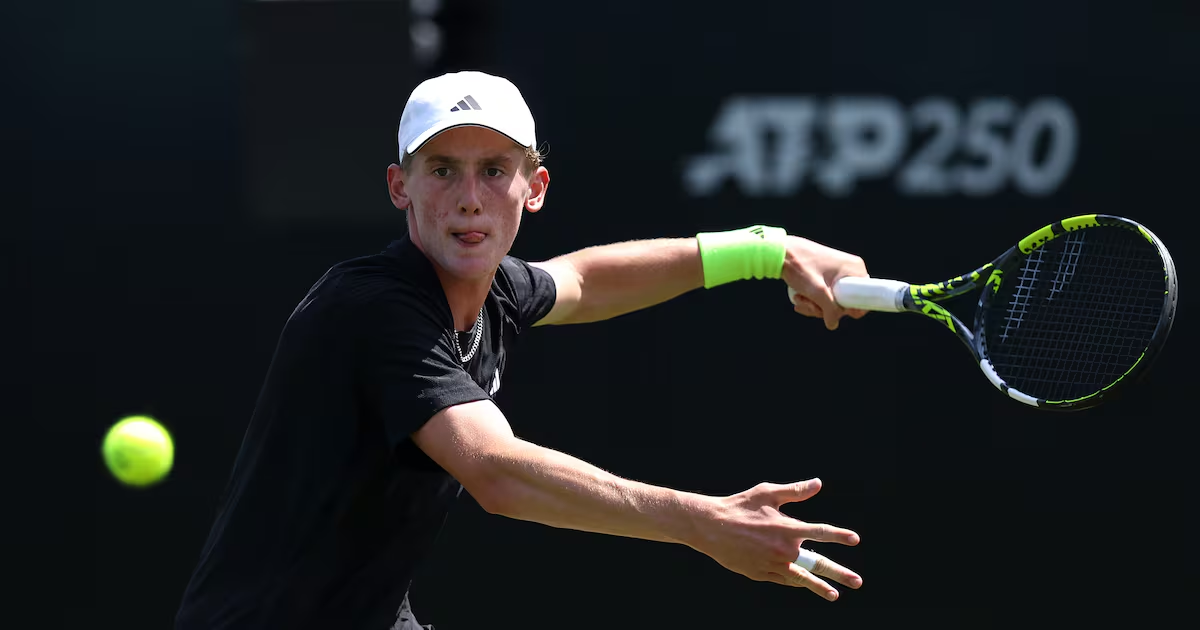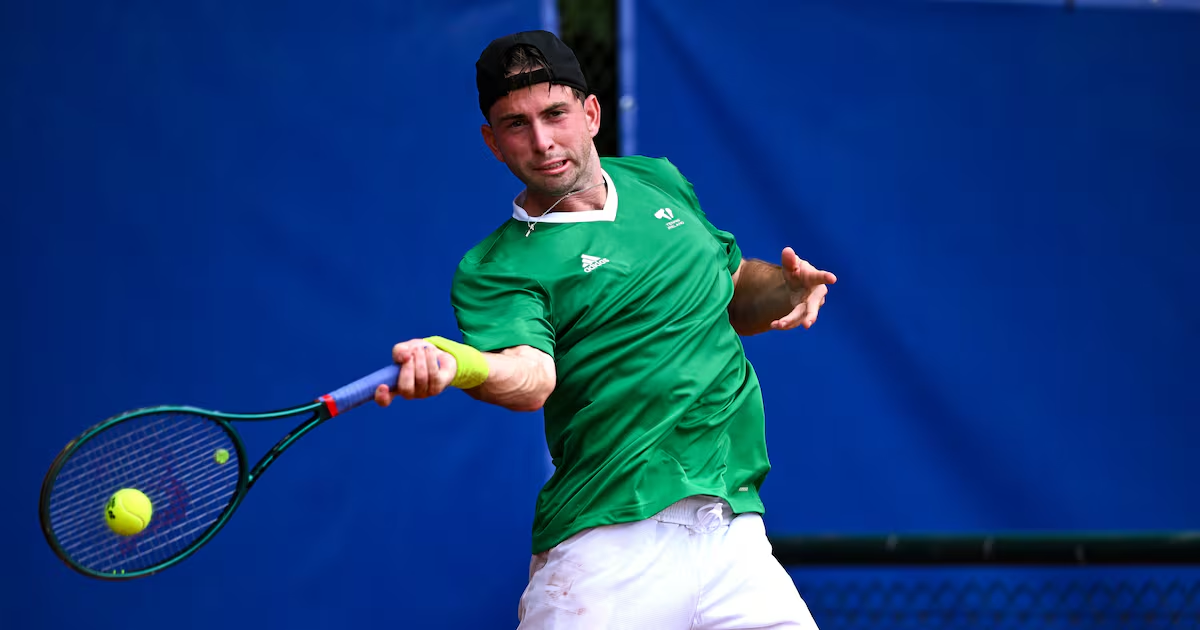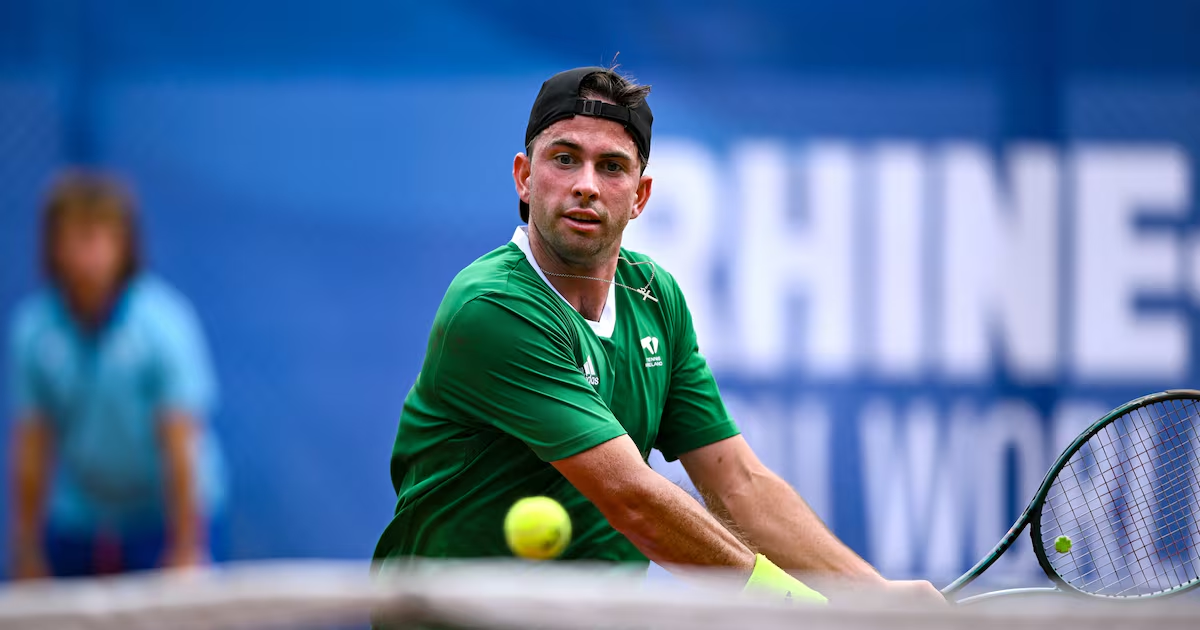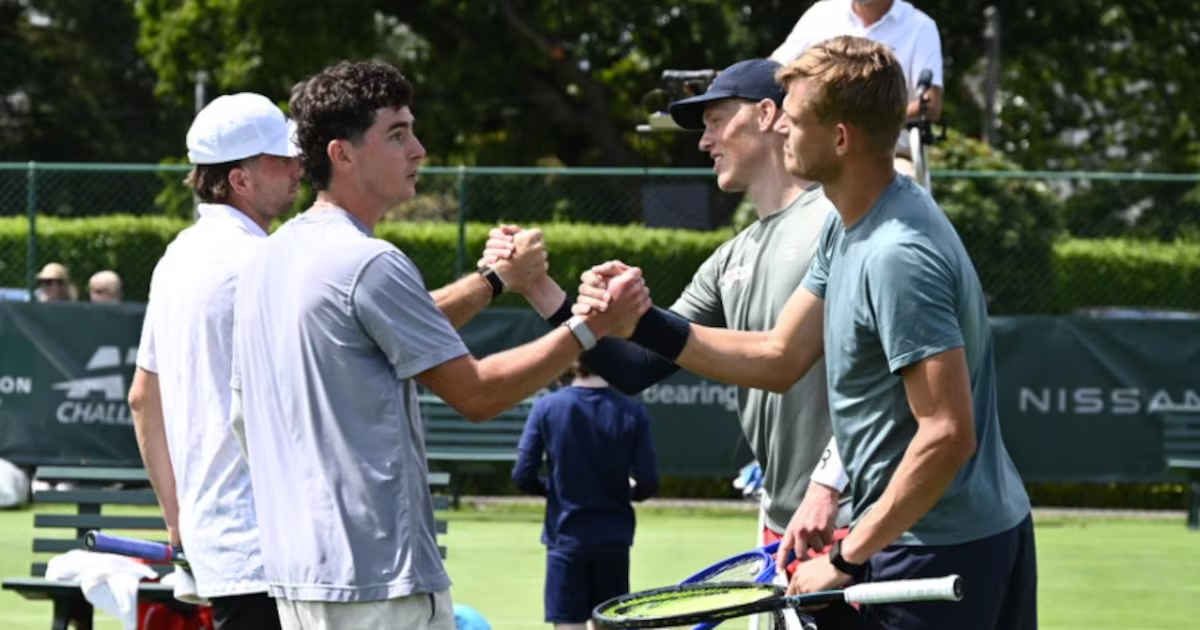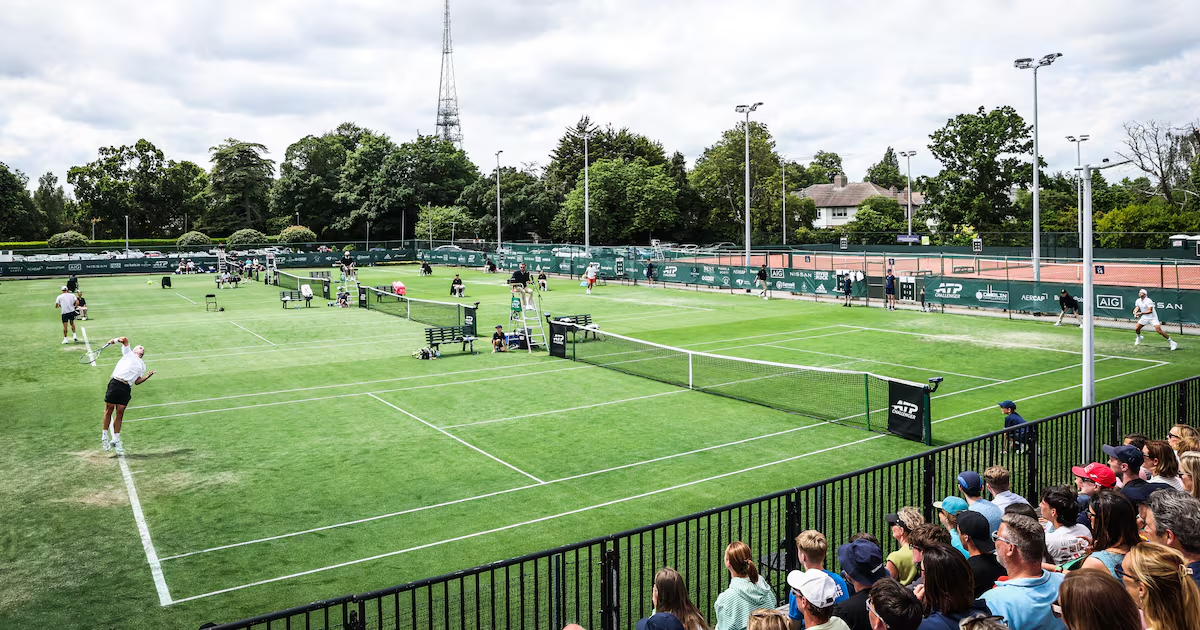
Conor Gannon used to pass Elm Park Golf and Sports Club every morning on his way to his school, St Michael’s. He had golf lessons there as a child. So when Dublin’s first ATP Challenger landed in the same venue, the decision was a no-brainer. “When there’s an opportunity like a 75 Challenger in Elm Park, in your back garden,” he said, “it’s a very hard opportunity to pass up.” Last week, that “back garden” hosted one of the more memorable weeks in recent Irish tennis.Why they cameThe ATP Challenger in Dublin attracted players for reasons as varied as their rankings were. For Jurij Rodionov, ranked 152 and heading to Wimbledon qualifying, which started on Monday, Dublin was a pragmatic choice with a slight personal edge. Locked out of both Halle and Queens, he weighed his options between Nottingham, in England’s East Midlands, and Dublin before letting his curiosity decide. “I’ve never been to Dublin, so that was for sure one thing,” he said. “I just wanted to be in Ireland.”Top seed Titouan Droguet, who is in the Wimbledon main draw next week, was more calculated in his choice. Having been in England in previous years, enduring rain-soaked courts, the Frenchman opted for a new tournament with what he assessed as a more navigable draw. “I like to discover new countries, new tournaments,” he said. “I think the list [of players rankings] was a bit weaker here.” England’s Henry Searle arrived on a wildcard arranged by the Lawn Tennis Association (LTA) and Tennis Ireland, a 20-year-old with a Wimbledon boy’s singles title already on his CV, a wildcard into Wimbledon qualifying and a reserved confidence that masked a ranking of 354. Then there was Gannon, who needed no persuading at all. Conor Gannon of Ireland shakes hands with Grigor Dimitrov of Bulgaria after their match last Wednesday. Photograph: Tom Maher/INPHO What they foundThe players who made the trip found something they perhaps hadn’t fully expected: a city that wanted them there. Searle found time for dinner and exploration on his second visit here. Droguet, despite his coach’s recommendations about the city centre’s bars, admitted he never quite made it out after the matches, “For sure, I have to go once in the week”, but found Elm Park itself a more than adequate substitute. The courts drew constant praise, with Searle commenting on their similarity to Roehampton, but the more telling endorsement was simpler: players who came not knowing quite what to expect left pleased.What it deliveredIf there were a moment that distilled what a new tournament could produce, it came during Gannon’s first-round match against Bernard Tomic. Midpoint, a seagull swooped in on to the court and made off with Gannon’s banana. Play was stopped. The Elm Park crowd, watching a local wildcard face a former world ranked number 17, loved every second of it. For Gannon, the stealing seagull aside, the occasion bore significance that the scoreboard alone couldn’t capture. “It was a huge kind of pinch-me moment when I was playing him,” he said of Tomic. “I’ve been watching him [compete] since I was a young age. He’s a huge character in tennis. Everyone knows him.”A seagull steals Conor Gannon’s banana from his bag during the game. Photograph: Nick Elliott/INPHO Gannon’s game was well suited for the green surface. “I’ve a big serve. My slice is also a weapon,” he said. “I absolutely loved it.” He came back from a first-set tie-break loss to beat Tomic 6-7(4), 6-4, 7-6(1). Tomic was gracious afterwards. “He [Gannon] played a lot better than his ranking, that’s for sure. I think he suited grass.” For Gannon, the win meant more than the result. “I saw my mom and dad in the crowd, which was really special,” he said. “I’m travelling a lot, so they don’t really get to see my progress. It’s nice to show them that I’m following my dream and not taking the easy road out.”It set the spirit for an Irish week that exceeded nearly every single expectation going into the week. Gannon and his doubles partner Charlie Barry, who have played together since childhood, went further still, beating the top seeds Rithvik Bollipalli and Trey Hilderbrand 6-1, 3-6, 10-9 in a quarter-final which had Elm Park on its feet. Barry described their partnership instinct simply. “He’s able to pick me up when he sees me before I even know that I’m down sometimes, and I can do the same for him.” The duo eventually fell to Jarno Jan and Niels Visker in the semi-final, with the Dutch pair going on to win the tournament, but the wildcards had already done significant damage to the seedings. Charlie Barry and Conor Gannon. Photograph: Tennis Ireland The singles final belonged to Searle, who has a ritual of touching the net post each time sides were swapped. He’s not alone in these quirks: tennis players are superstitious creatures. Grigor Dimitrov chewed gum from the moment he entered the venue until he reached the bench and he blessed himself exactly three times on the walk on to the court, looking up to the sky each time. Gannon, meanwhile, paced the grounds with headphones in before each match. Small routines but telling ones. The kind of detail that only appears when a home tournament actually gives you the time to observe it.Facing Rodionov, who had beaten top seed Droguet that same morning before returning to the courts just over an hour and 40 minutes later, Searle was composed from the off, winning 6-4, 6-2 in under an hour, converting three of four break points and winning 75 per cent of his second-serve points. What it all meansGannon, contemplating what tournaments like the one in Dublin offers players ranked outside the top 100, put it simply. “There’s maybe 4,000 tennis players that are very, very good,” he said. “Those players don’t probably get appreciated as often [for their skills]. These are the weeks where you can show that you can compete with some of the best players in the world.” Dublin’s first ATP Challenger proved his point.
Seagulls, seeds and Searle: How Dublin’s first ATP Challenger delivered
Conor Gannon and Charlie Barry’s run to semis gave tournament an Irish heart
TL;DRAI
Dublin's first ATP Challenger crowned Henry Searle champion (6-4 vs Rodionov), with Irish wildcards Gannon and Barry excelling on grass courts. Lower-ranked players outside the top 100 demonstrated grassroots tournaments' critical role in competitive development against elite opposition.
1,012 words~5 min read