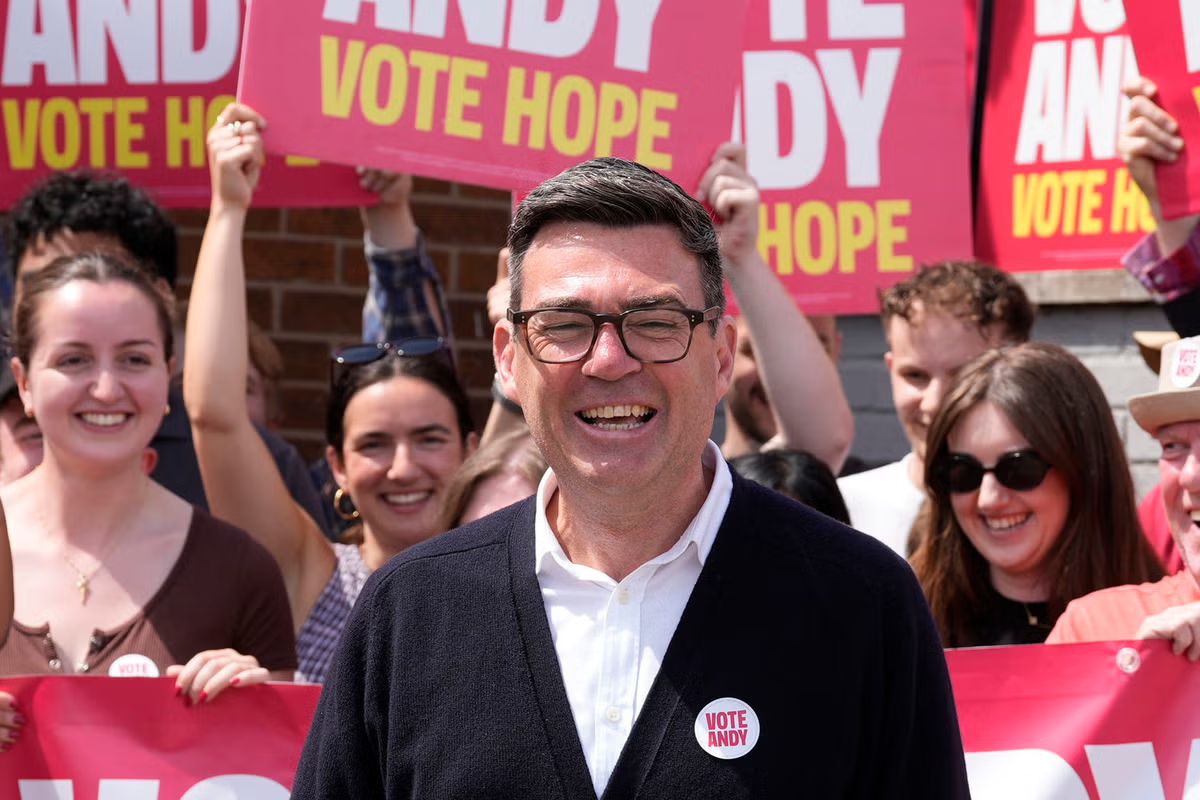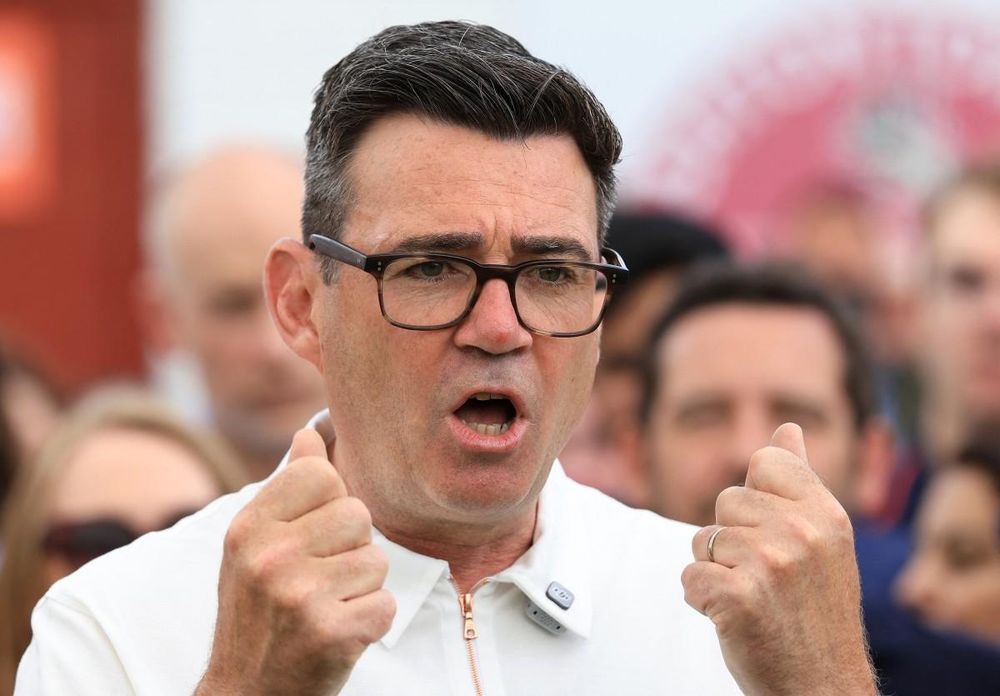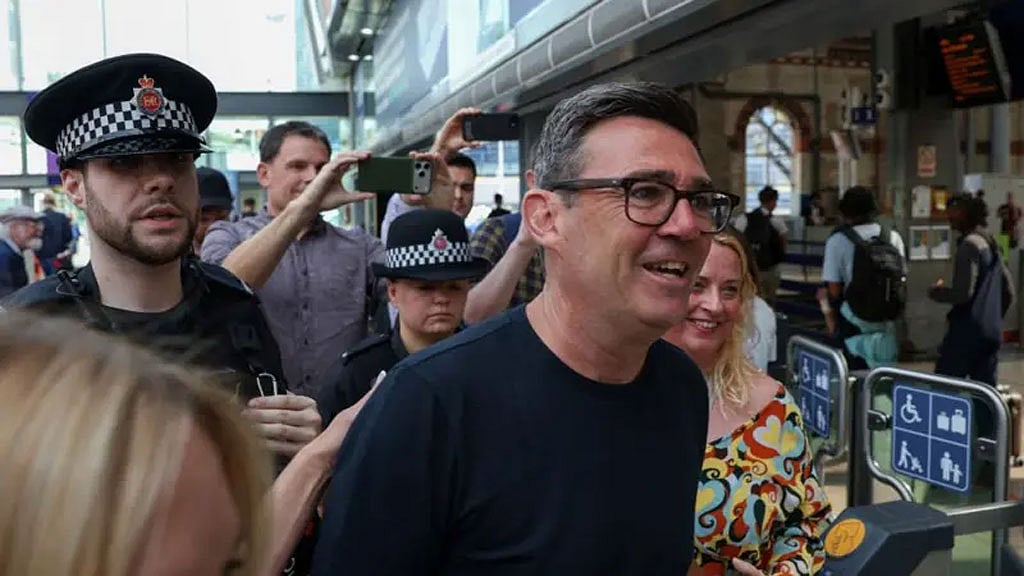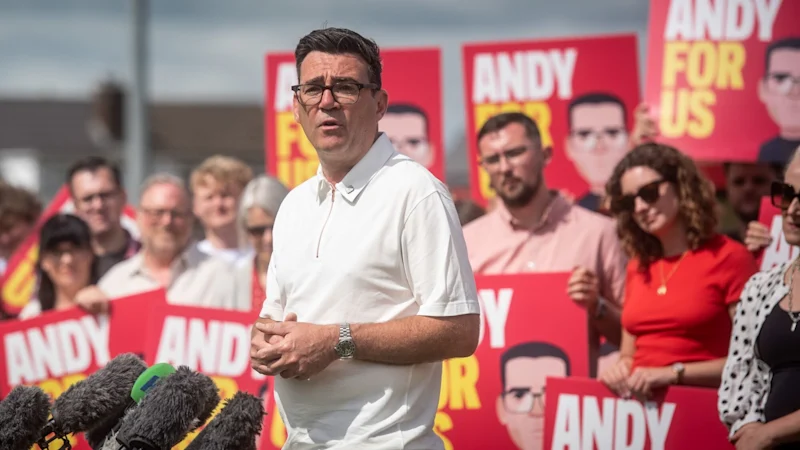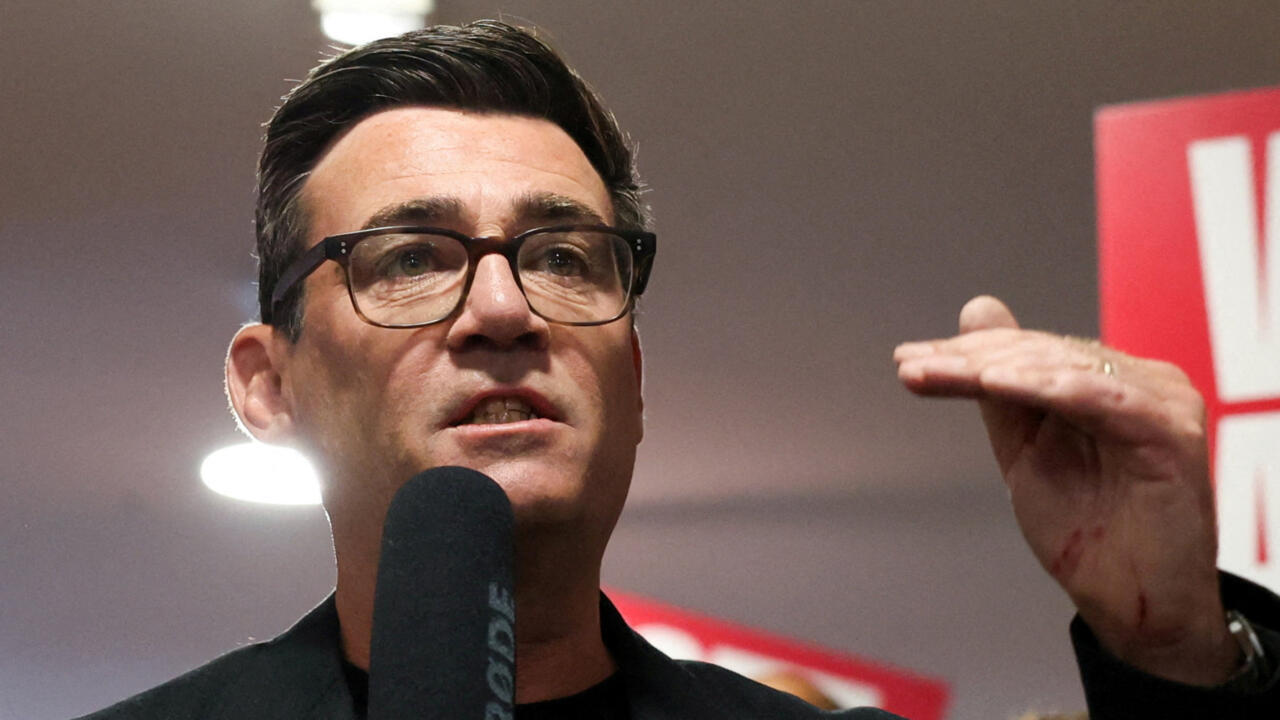
In the story that Andy Burnham tells about himself, “the turning point” in his political life came in 2009 when he was booed at a football ground in the north-west of England. He had been an ideologically reliable middle-ranking minister under Tony Blair, the centrist New Labour prime minister between 1997 and 2007, and had gone on to be appointed as secretary of state for culture, media and sport under Blair’s successor, Gordon Brown.On the 20th anniversary of the Hillsborough disaster – the fatal crowd crush that killed 97 Liverpool fans in 1989 – Burnham was representing Brown’s administration at Anfield, Liverpool’s famous stadium. But as he began to offer his words of condolence into a microphone on the pitch, the then 39-year-old minister’s speech was interrupted by loud and angry calls from the stands for justice for those who had been killed due to no fault of their own. A series of British governments had refused demands for a public inquiry into the disaster.Footage from the day shows Burnham, who was born in Aintree, a suburb of Liverpool, rattled and close to tears, before nodding and mouthing “OK”. He later explained: “My journey away from Westminster began at Anfield that day. It was the turning point in my life. To be honest, I fell out of love with it.”On Monday, as a result of Keir Starmer’s announcement that he intends to resign as prime minister once a successor has been chosen, Burnham, 56, looks likely to be the country’s next leader.After spending the last nine years as mayor of Greater Manchester, Burnham is on the brink of taking the top political job in the land on the basis of a certain sort of boyish charisma and charm but also with a promise that he will be different to those who have gone before, offering a politics that understands the motivations and concerns of those outside London and who feel unheard.Burnham prepares to speak to the media in Manchester in 2020, when he was threatening legal action if tier 3 Covid restrictions were imposed on the city without agreement. Photograph: Martin Rickett/AFP/Getty ImagesHis political shtick as a man of the people was given a healthy boost during the Covid pandemic when Burnham went to battle with Boris Johnson’s government over its treatment of his region during the Covid pandemic. While Burnham’s critics characterise him as “Captain Flip-flop”, on the grounds that his politics have appeared to change over the decades, others see him as a man who is listening.Burnham, whose father was a phone engineer and his mother a doctor’s receptionist, has described his childhood in the village of Culcheth, Cheshire, as “fantastic”. He was inspired to join the Labour party at the age of 14, after being moved by the BBC TV drama Boys from the Blackstuff, about being long-term unemployed in Liverpool. His two brothers were the first in their family to go to university but Burnham did well enough at school to win a prestigious place to study English at the University of Cambridge, where he went on to meet his now wife, Dutch-born Marie-France van Heel.After graduation, he moved to London where he spent a brief period working on trade magazines, including Tank World and Passenger World Management, before starting work as a researcher in the parliamentary office of the Labour MP Tessa Jowell. After that he became an adviser to the then culture secretary, Chris Smith. He was elected as MP for his home town of Leigh in Greater Manchester in 2001. He first served as a junior minister under Blair, but joined the cabinet as chief secretary to the Treasury, and later culture secretary and then health secretary, under Brown.Burnham ran for the Labour leadership in 2010 offering “aspirational socialism” but came fourth out of the five contenders, losing to Ed Miliband, who had offered to take the party a bit more to the left. When Miliband lost at the 2015 general election, he stood again with a centrist pitch that sought to emphasise his business-friendly credentials. He launched his campaign at the headquarters of the accounting and professional services firm Ernst & Young. Entrepreneurs, he suggested, should be treated “as much our heroes as the nurse”. He lost to the leftwing candidate, Jeremy Corbyn.Burnham with the then prime minister, Gordon Brown, in 2010. Photograph: Stefan Rousseau/AFP/Getty ImagesUnlike many of his generation of politicians, Burnham accepted a shadow cabinet position in Corbyn’s team, taking up the position of home affairs spokesperson. He was also one of the few not to resign from Corbyn’s team in 2016 when the Labour leader’s lack of energetic support for staying in the EU was blamed by some for the leave campaign’s Brexit victory.Burnham only left Corbyn’s side in 2017 to stand to become the first mayor of Greater Manchester. He won the contest with more than 60% of the vote and was re-elected by an even bigger margin in 2021.During his time in Manchester, he has drawn praise for his transformation of the region’s transport system by taking the buses under public control. His vocal championing of the area, which has economically outperformed much of the rest of the country, earned him the moniker “king of the north”. There remain questions over quite what Burnham’s politics are today but he is seen within Labour as the best chance the party has to steal votes back from Nigel Farage’s rightwing anti-immigration Reform UK and the Greens on the left. He has offered a “turning point” for the country.
Who is Andy Burnham, the ‘man of the people’ likely to be next UK prime minister?
Expected successor to Keir Starmer has promised to understand voters outside London and those who feel unheard
919 words~4 min read