Building real-time blockchain indexers means wrestling with hard choices: speed vs. simplicity, RPC dependency vs. reliability, and resource costs. This is what I learned.
The Problem Nobody Talks About
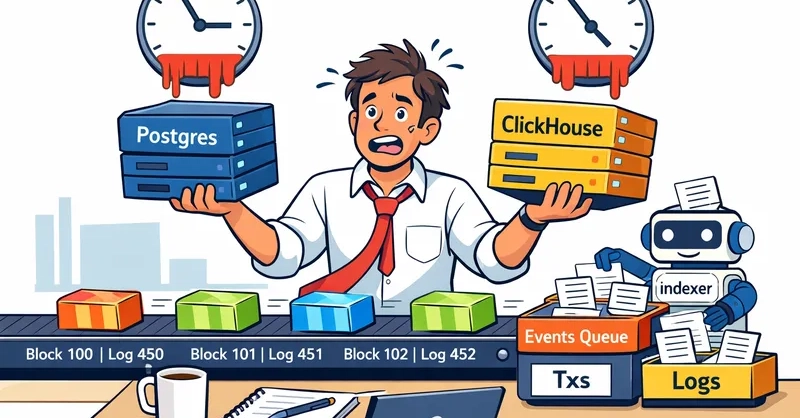
Most Solana developers hit the same wall: the official RPC endpoint is slow, rate-limited, and not designed for analytics. So you build an indexer. But then you realize indexing blockchain data isn't like indexing a traditional database.
You're not indexing static data. You're indexing a stream of transactions that never stops, where missed blocks mean data gaps, where network latency translates directly to stale data, and where a single RPC node failure cascades into the entire system failing.
After shipping a production Solana indexer in Rust, I learned that every architectural decision is a trade-off. Here are the ones that matter.