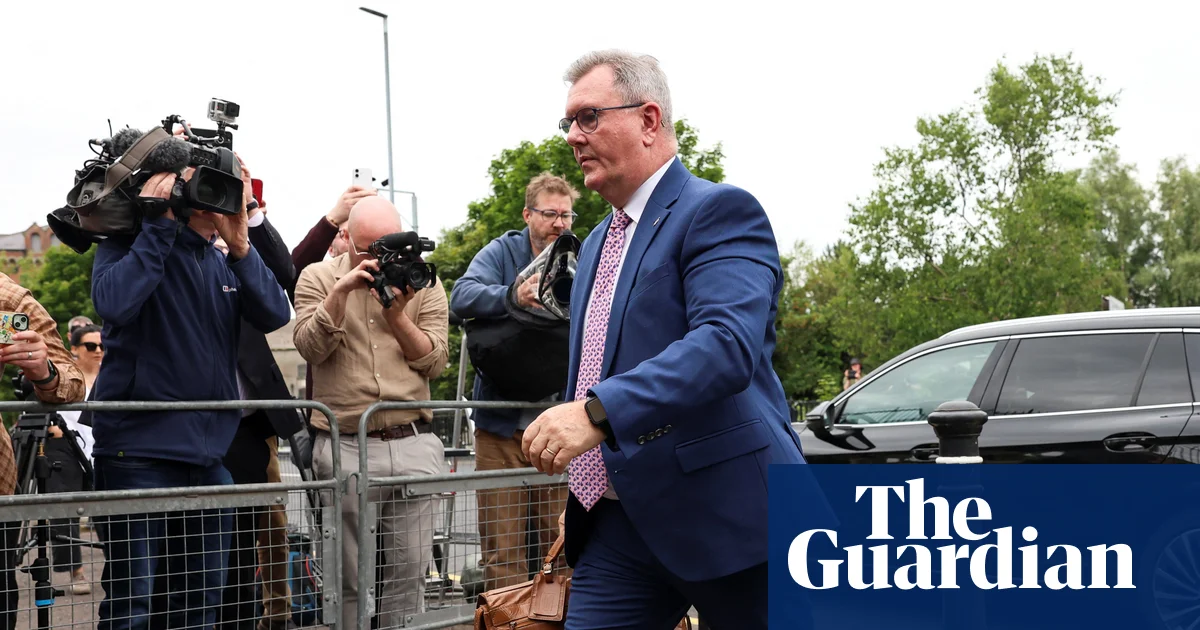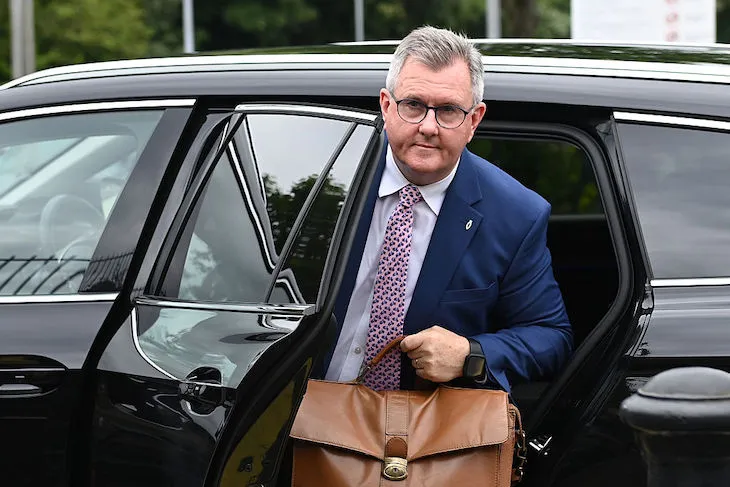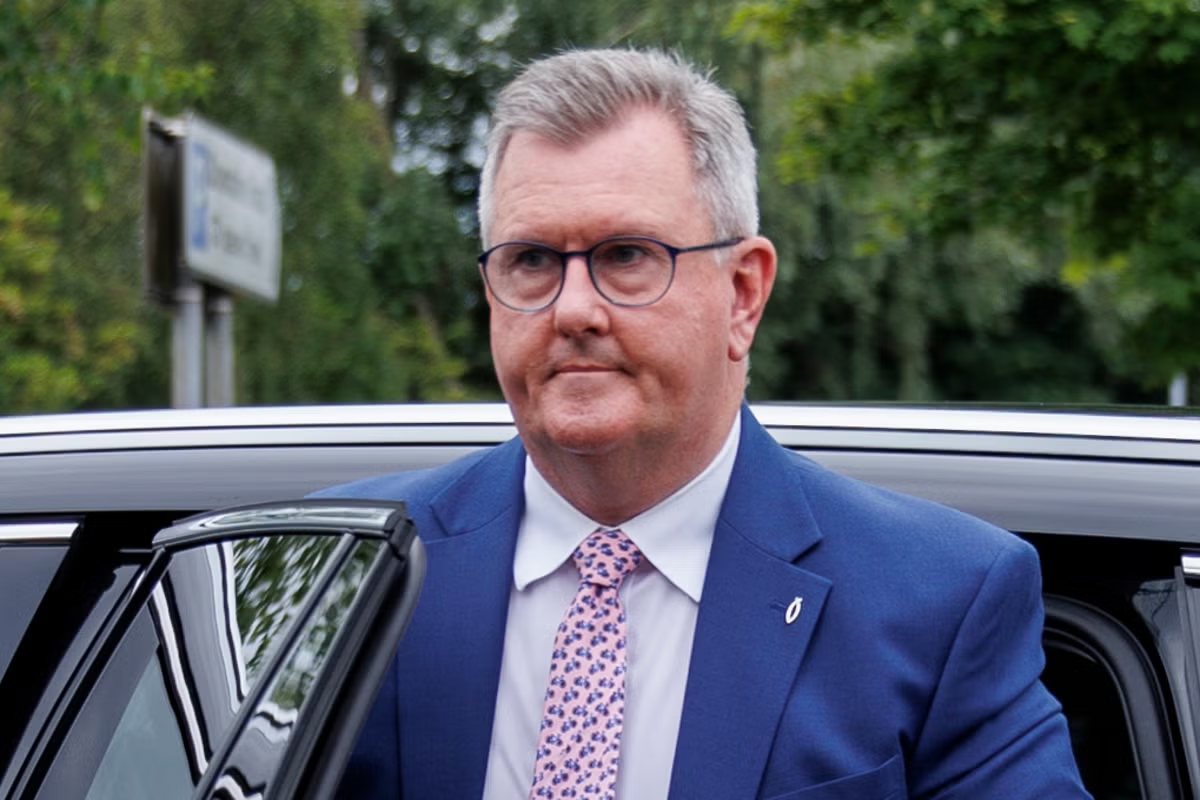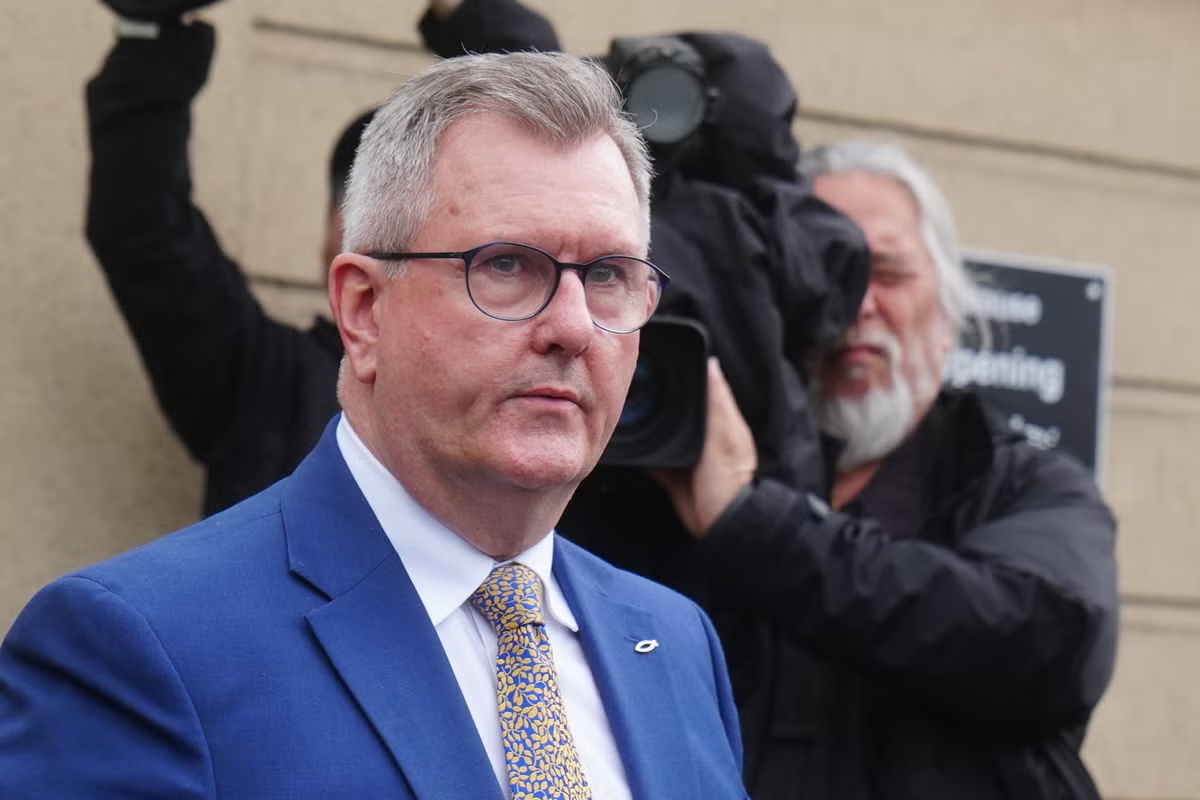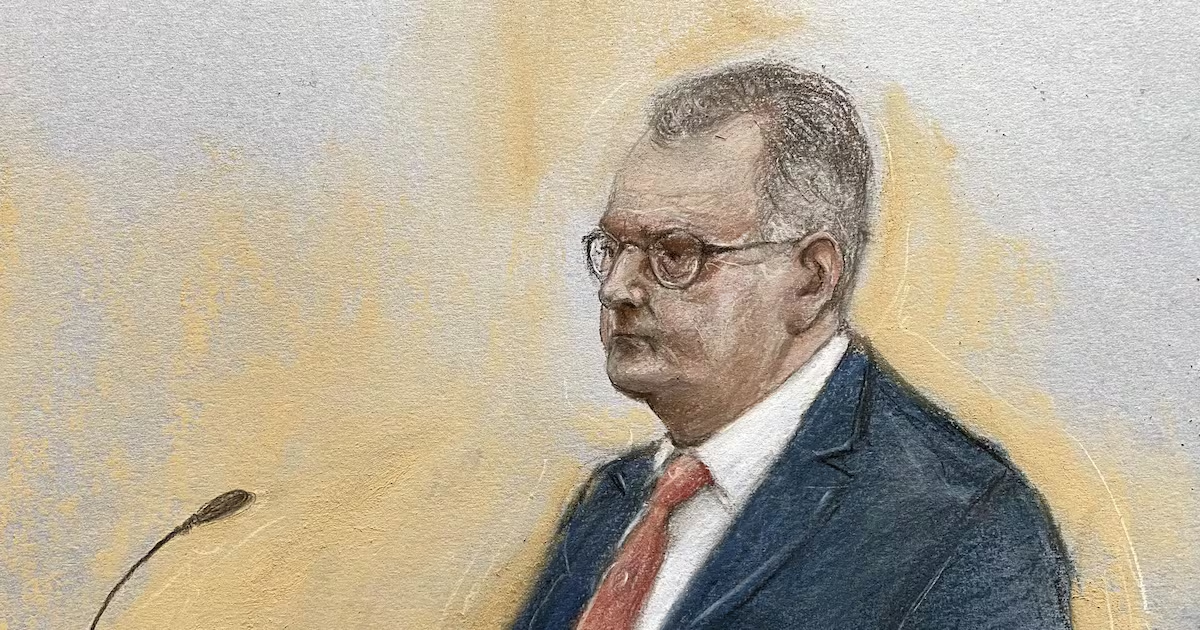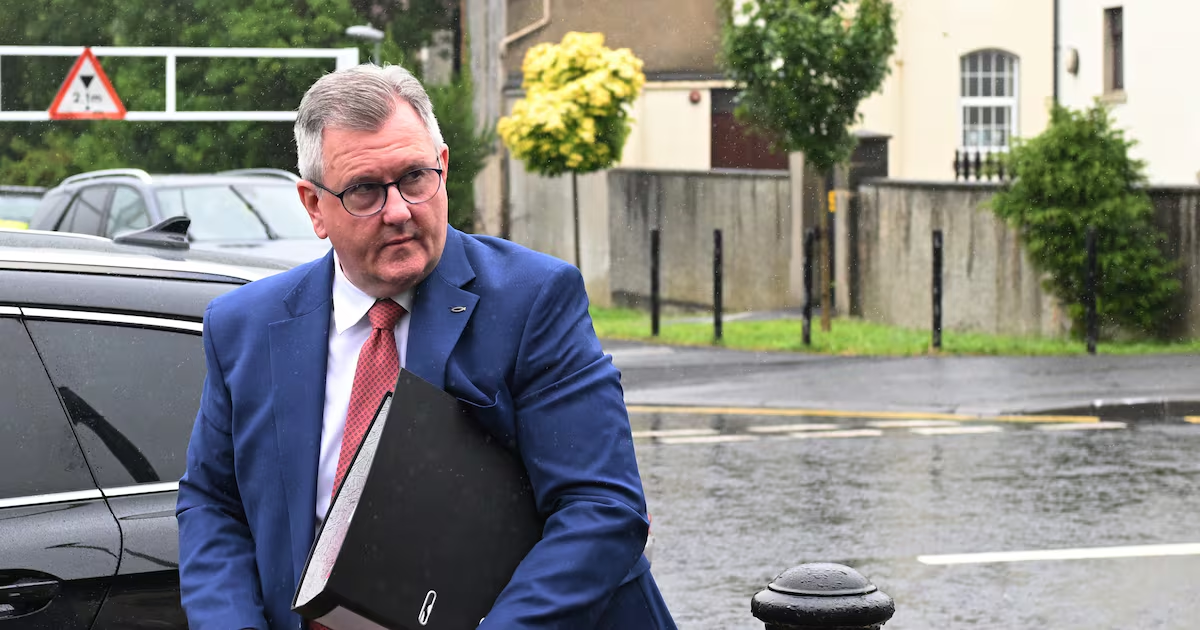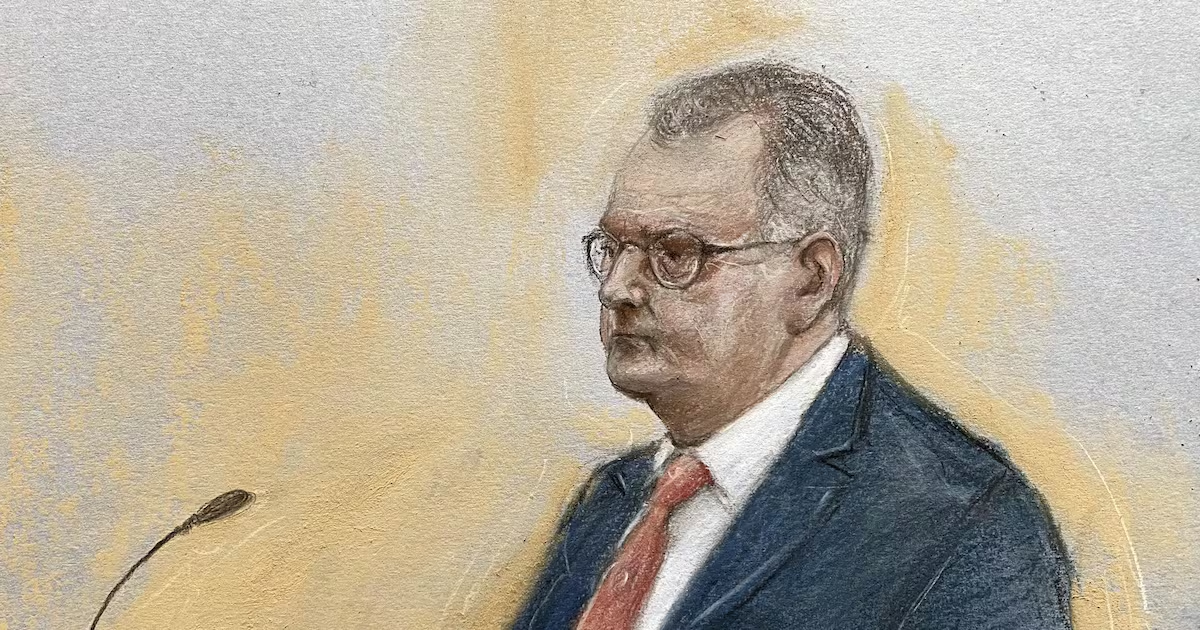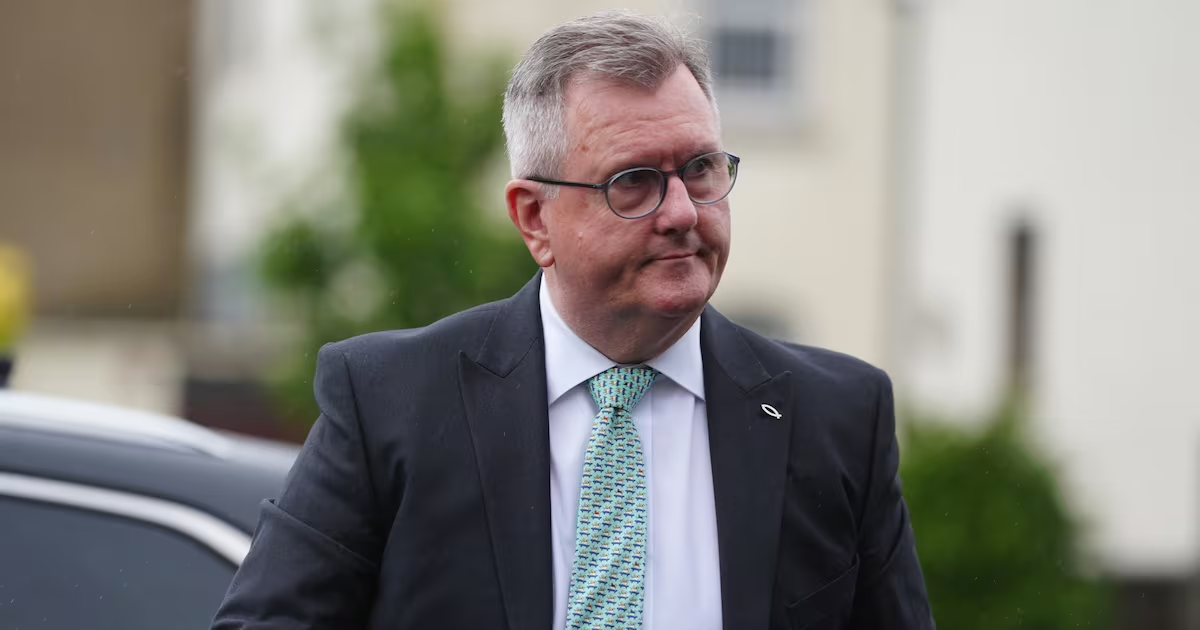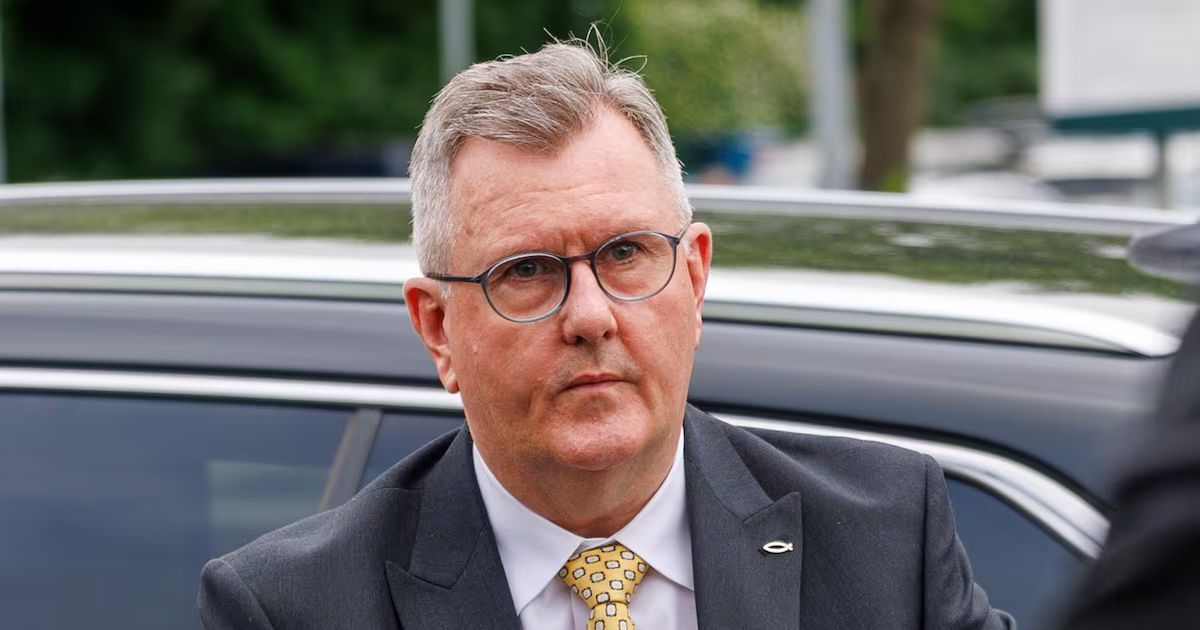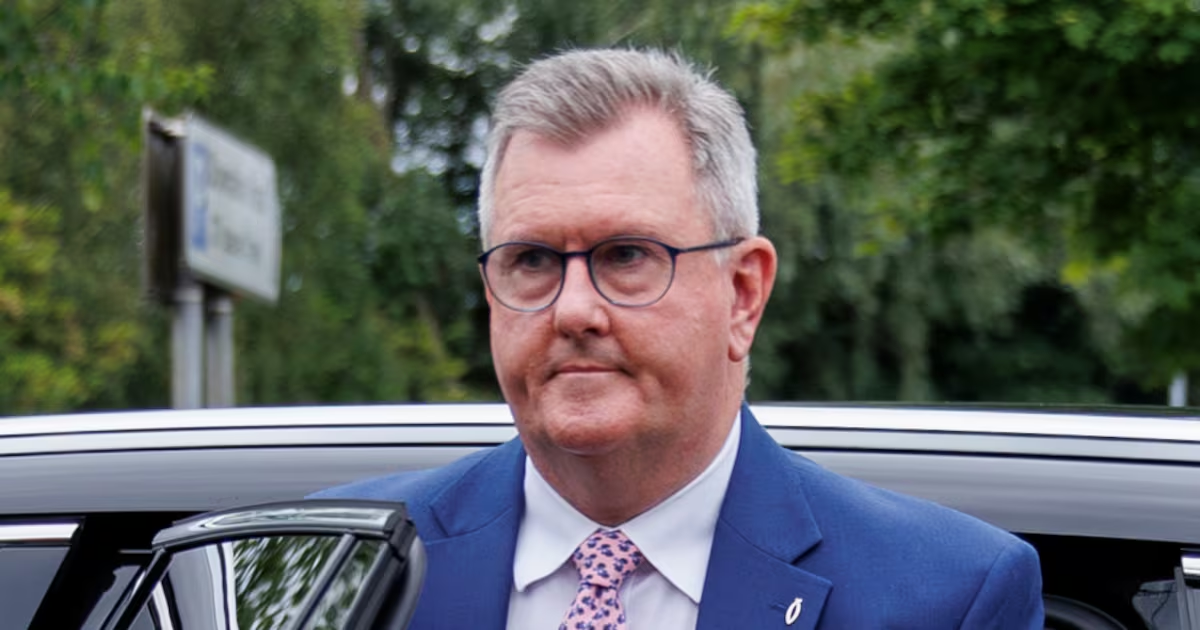
After more than six hours on her feet cross-examining Jeffrey Donaldson, Rosemary Walsh, prosecuting, reached her conclusion. “The only person telling lies is you, isn’t it,” she said.Quoting back to him his own words, written in a letter of “apology” to one of his victims, she said: “You were sinful and deceitful.”Seated in the witness box opposite, Donaldson denied it: “Not true”, he said, “not true” – just as he has denied the charges against him since his arrest more than two years ago and throughout his four-week trial. The jury did not believe him.[ Former DUP leader Jeffrey Donaldson found guilty of all 18 child sex abuse charges ]On Monday Donaldson (63), the former leader of the DUP, one of Northern Ireland’s most high-profile and longest-standing politicians, was convicted of sexually abusing two women when they were children, from the ages of about seven-eight to 12-13. Jurors found Donaldson, with an address in Dromore, Co Down, guilty of 18 offences: one count of rape, four counts of gross indecency with or towards a child, and 13 counts of indecent assault on a female, on dates between 1985 and 2008. The jury’s verdicts were unanimous. Given the “inevitability” of a custodial sentence, and a “lengthy sentence at that”, the judge said, Donaldson was remanded in custody. He nodded to indicate he understood before he was taken down to the cells. His wife, Eleanor Donaldson (60) had been ruled unfit to stand trial on medical grounds. In her absence, the jury found she did the acts she was accused of: four counts of aiding and abetting her husband and one count of cruelty towards children. Again, the jury’s decision was unanimous. As the verdict was delivered, Jeffrey Donaldson remained impassive. He stared straight ahead, a neutral look on his face, just as he has remained impassive throughout much of his trial at Newry Crown Court. During the month of the trial, Donaldson would slip into the small oak-panelled courtroom quietly, almost unnoticed. He learned to raise his arms automatically to be frisked before taking his seat, one custody officer on either side, in the dock at the back of the courtroom. Invariably wearing a grey or blue suit – with a Christian fish pin on his lapel – and a white shirt, but with a different tie each day, Donaldson rarely reacted to evidence heard in court. If he did, it was to bow his head to take notes. Once or twice he shook his head. When, during week three, it was his turn to give evidence in his own defence, he hurried to the witness box as if keen to tell his version of events. He cradled the Bible in both hands, one underneath and one on top, to take the oath. A prison van carrying former DUP leader Jeffrey Donaldson leaves Newry Crown Court on Monday. Photograph: PA He did not accept any of the allegations against him, Donaldson told the jury. His response, repeated often during police interview and on the stand, was that the abuse “did not happen” or the claims were “simply not true”.The barrister for the prosecution phrased it differently. Walsh put it to Donaldson during cross-examination that the witnesses were “telling lies, that’s your defence?”Donaldson replied: “Yes.” The genesis of the prosecution dates back more than two years.The two complainants – known as “A” and “B” to protect their identities – went to the police in 2024. They told officers they had been abused by Donaldson as children. At the time of his arrest – March 29th, 2024, Good Friday – Donaldson had just negotiated the DUP back into Stormont after a two-year walkout over Brexit. He was at the pinnacle of his political career and a seat in the House of Lords seemed assured. The police arrived at his house at 6am. Rumours swirled. He was uncontactable by phone and his social media profile had been deleted. By lunchtime, Donaldson’s 40-year political career was over. He stood down as DUP leader and was suspended from the party, and did not stand in the Westminster general election that July, losing the seat – held since 1997 – as MP for Lagan Valley. Donaldson’s trial began in Newry Crown Court just over two years later, on May 26th, 2026. Ten of the charges – that of rape, and nine counts of indecent assault dating from between 1985 and 1991 – related to Complainant B, the older of the two victims. The remaining eight counts of indecent assault and gross indecency, dating from between 1999 and 2008, related to Complainant A. In her police interview played to the court, Complainant B said Donaldson raped her while she was in primary school. She remembered him “putting his hands inside my pants” then “pulling my legs apart with his two feet”.She pretended to be asleep “hoping it would stop”. Donaldson was always silent during the abuse, she said, but she remembered his breathing: “It wasn’t just in and out; it was laboured and panting,” she said.Jeffrey Donaldson's wife, Eleanor Donaldson, leaving Newry Magistrates' Court in 2024. Photograph: PA Eleanor Donaldson, she claimed, had facilitated the rape and had interrupted another incident in which Jeffrey Donaldson had followed her into a room and “lifted up my top and started playing with my breasts and stuff”, but she “turned around and walked out”, closing the door behind her. Complainant A told police she was “sexually abused” by Jeffrey Donaldson from “quite a young age”. She remembered “vividly” sitting on Jeffrey Donaldson’s knee and he put his “hand up underneath my top” and was “rubbing me”. This happened “quite a lot”, she said.He would usually “start on the outside” and “generally the hand would eventually go underneath”, she told police. “It became quite normal practice.”During another incident, when she was 13 or 14, the complainant said she woke in the night to find him “over the top of me” holding a bright light with her nightie pulled up and “lying with my legs kind of open”.“I knew he was looking at my private parts,” she said. Jeffrey Donaldson repeatedly rejected the allegations against him, and told the court the rape “just didn’t happen”. “I’m absolutely crystal clear about that. It’s not something I would ever have done … it’s just simply not true,” he told the court.“The idea I was standing in a room with a child and her clothes pulled up and feeling her chest and my wife walked in and saw that is just unbelievable,” he said.“She would have been very angry, she would have intervened immediately, because that is the nature of my wife.”Eleanor Donaldson “never saw anything inappropriate”, her barrister, Ian Turkington, said on her behalf, and “at no stage” did she facilitate B’s rape. It was “a figment of your imagination”, he said. In police interviews played to the court, Eleanor Donaldson said she asked her husband “many times” why he was in the room with B and he “just dismissed it” as “just talking”.She kept asking “because I was uncomfortable … every time I did ask I was met with a blank wall, it was not coming out”, Eleanor Donaldson said. But Walsh told the jury Eleanor Donaldson was “aware that her husband had a sexual interest in prepubescent girls”. In B’s case, she “did not intervene and rather facilitated the abuse”, the barrister for the prosecution told the court.Over the course of the trial, the jury heard how Jeffrey Donaldson had “apologised” to both victims. In her evidence, Complainant A said she received a letter from Donaldson describing himself as a “sinner” who regretted “all the hurt, pain and distress I have caused”.She said it “felt like an apology … he was trying to apologise for perhaps the abuse that had occurred, but he didn’t want to say that formally in writing”.Jeffrey Donaldson told police nothing in the letter was “to do with any allegation or any action involving sexual abuse”, and “the remorse was about other things” and “infidelity”.He told the jury he had a brief affair in 2008 with “a lady, a divorcee in London”, and he temporarily moved out of his family home in 2020 after “flirtatious messages” with a constituent led Eleanor Donaldson to plant a bugging device in his car. In her police interviews, Eleanor Donaldson described their marriage as “difficult at times”. She said he was “very focused and driven” in his career, and that there had been “infidelity”.She told police her husband had told her: “I’ve been put in positions and I just couldn’t refuse.”She added in her interviews with police that while it was “no defence”, she had been at events with him where she had seen “people actually throwing themselves [at him] … I’m guessing it’s a power thing. “People have put themselves to him and he’s just gone, ‘Yeah, why not?’” During cross-examination, the prosecution barrister asked Jeffrey Donaldson about the language used in the letter to Complainant A, in which he described himself as a “sinner” with a “sinful nature” who needed to be lifted from “a deep pit of sin”, and the “deep wounds” he had caused. His response was that Christianity’s “starting point” was that “we all have a sinful nature … that’s what I was referring to”.“We might all be sinful, but we’re not all in a deep pit of sin,” the prosecution barrister replied. The letter was “about far more; it’s about sexual abuse”.“No, it’s not,” Jeffrey Donaldson replied. Former DUP leader Jeffrey Donaldson arriving at Newry court house on Monday. Photograph: Getty This interpretation was rejected by A, who said Jeffrey Donaldson was “a very clever man … given the success of his career, he would never have written what he had done [about the abuse] in a letter”.She said that as an adult she had asked Donaldson to confirm [the abuse] and “he couldn’t look at me but he looked at the ground and he nodded”.Complainant B said Jeffrey Donaldson apologised to her “for what he’d done to me in the past” at a meeting at the Christian Family Centre in Armoy, Co Antrim, when she was a teenager. Donaldson rejected this, telling the court that at the meeting he had said that “if she felt uncomfortable or unhappy with our relationship, I was sorry for that”.The centre’s co-founder, David Hoy, who arranged the meeting, gave evidence in court that when Jeffrey Donaldson met B he told her “I know what this is about. I’m sorry. Please forgive me.” Hoy’s wife, Linda Hoy, told the court she had a “very clear” memory that this was what Donaldson had said. Walsh asked Donaldson if this was another example of the lies he claimed were being told and put it to him that the Hoys’ evidence to the court was that Donaldson had gone to the meeting and “asked for forgiveness”.“I did not use the word forgiveness,” Donaldson replied, adding that the Hoys were “good people”.“Good people who wouldn’t come to court and make things up?” Walsh asked. The prosecutor put it to Donaldson that he had gone to the meeting “because you knew this was something you needed to nip in the bud” and he “had to go on the offensive to deal with it”.“I didn’t take control. I didn’t march into that meeting and say: ‘Okay, I know what this is about, I’m sorry’,” Donaldson said. Asked by the barrister why he thought complainant B “has told all these various serious lies”, Donaldson said that at the time he was “going forward to become an MP … she sees I’m on the up and up as an aspiring member of parliament, maybe she resents that”.In one of the most emotionally charged moments of the trial, Complainant B broke down when asked why she had not gone to the police many years ago.She said she blamed herself for what happened to Complainant A. “It’s my fault,” she said. “I should have [gone to the police] … I should have”, she said, but she was “so afraid”.She told the court what happened was “seared” into her brain for the rest of her life and her “biggest mistake” was not telling anyone at the time. “I wish I could go back in time and scream the house down, but I didn’t,” she said. “I will regret that every day.” Under cross-examination on what was the final day of evidence in the trial, the prosecution barrister put it to Donaldson that he had attempted to use the faith of the complainants for his own ends. Complainant A, she said, “was a woman of faith … not somebody to make things up or tell lies” and at the meeting with Complainant B “you are using your faith and her faith … appealing to her faith to get her to forgive you.”“That is not the case,” Donaldson replied. She suggested Donaldson’s habit was “blaming the woman” and there was a “pattern” to Donaldson’s behaviour regarding his “attempts to seek forgiveness over the years”. “When you have wronged someone, what is wrong with seeking their forgiveness?” Donaldson asked. “You have hurt [B] and [A] for the reasons [of sexual abuse] given, that’s why you’re seeking forgiveness,” the barrister said. “No,” said Donaldson. “I have spelt out the reasons why.”Donaldson’s claim was that the victims were “promoting a pack of malicious lies for absolutely no good reason”, the prosecution barrister told the jury in her closing address.But the evidence, she said, showed they were “telling the truth about what happened to them. Because this is what happened to them and they made a decision to call it out.” “They put their heads above the parapet and braced for what was coming at them,” she said.It was the “consequences of Donaldson’s actions, and to a much lesser extent his wife’s”, that had brought them all – victims and perpetrators, barristers and solicitors, judge and jury – to courtroom one of Newry Crown Court, she said. “Because the sexual abuse they suffered has consequences – consequences that cannot be brushed under the carpet any longer.”
‘The only person telling lies is you’ – the full story of Jeffrey Donaldson’s abuse trial
Former DUP leader in custody after being found guilty of sexually abusing two women when they were children
2,348 words~11 min read