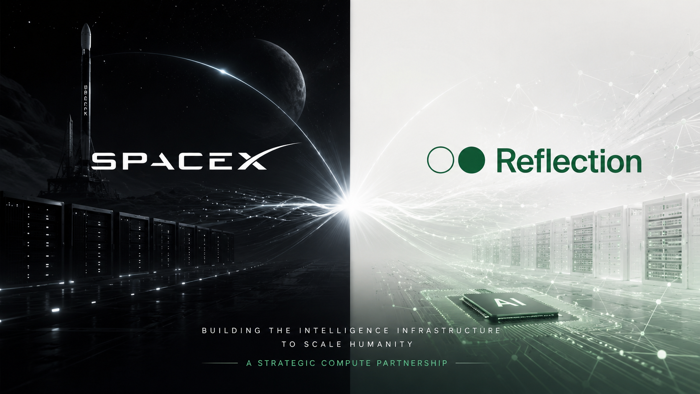
Reflection — an Nvidia-backed open-source AI startup — signed a major compute agreement with SpaceXAI, securing immediate access to chips and hardware from the SpaceX Colossus 2 data center.Why it matters: If open-source AI companies are going to compete with the frontier AI labs, they needs compute. Reflection is now getting it from the same source its competitors are. Driving the news: After an initial ramp period, Reflection will pay SpaceXAI $150 million a month starting July 1, 2026, through 2029.The deal gives Reflection access to high-end reasoning GB300 chips and other hardware inside Colossus 2, expanding the compute available to train its models.Either company can end the deal with 90 days' notice after the first three months.The deal follows similar compute agreements. Both Anthropic and Google are expected to spend billions for access to Elon Musk's compute capacity.Follow the money: It's a reminder that the AI boom's biggest players are increasingly investors, suppliers and customers to one another, often all at the same time.Nvidia invested $800 million in Reflection, which is now getting access to Nvidia chips purchased by SpaceX. Nvidia is helping fund its next generation of customers, while some startups are dodging the multibillion-dollar cost of building their own data centers by leasing compute from others.Between the lines: Compute is the scarce resource fueling the AI race.Some investors have called Reflection the "DeepSeek of the West," The Wall Street Journal reported. The company is still training its models.Having more compute capacity while training its models could allow Reflection to compete more directly with frontier AI labs like OpenAI and Anthropic. Zoom out: The deal comes amid a surge in interest surrounding open source models.Anthropic shut down access to its most powerful models after the Trump administration threatened to block access for foreign nationals, raising questions about who gets to control access to intelligence. Unlike closed models, open models can often be downloaded, inspected and modified. Many of the strongest open models now come from Chinese labs.What they're saying: "Recent events highlight how important open source is to the AI ecosystem, with more nations and enterprises recognizing the risks and costs associated with exclusively depending on closed models," a Reflection spokesperson said.
Nvidia-backed Reflection lands SpaceX compute deal
The massive deal could help the open-source startup compete with Anthropic and Google.
TL;DRAI
Reflection signed a $150M/month deal with SpaceXAI for GB300 chips in Colossus 2. Compute emerges as the AI race bottleneck: open-source startups compete by leasing hardware from suppliers rather than building billion-dollar data centers.
364 words~2 min read