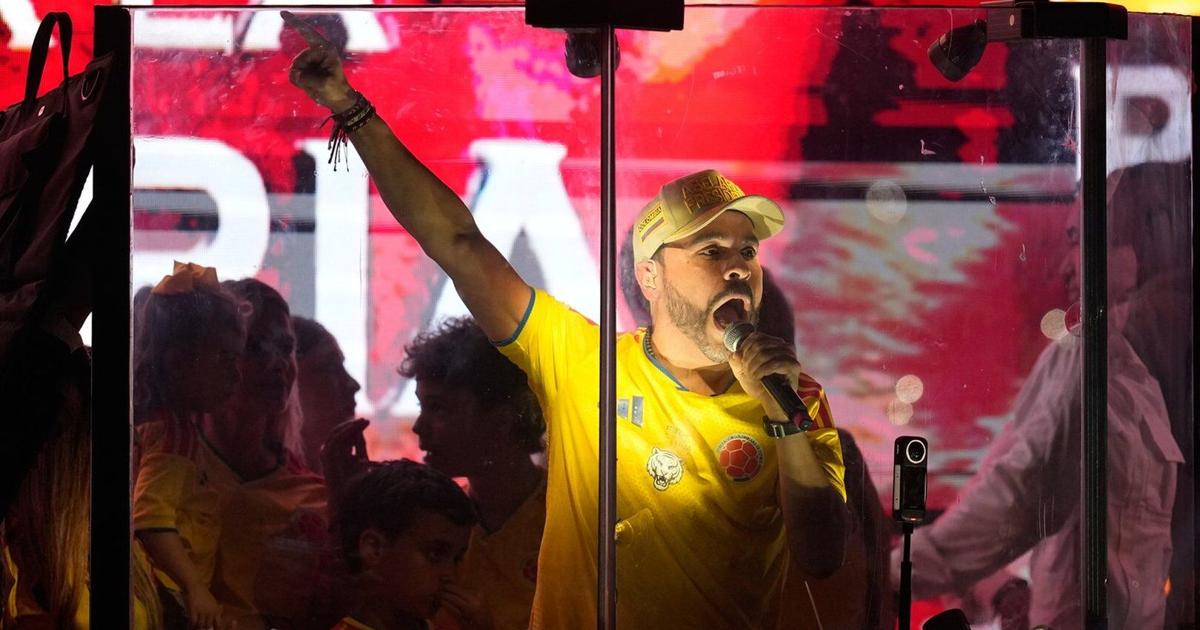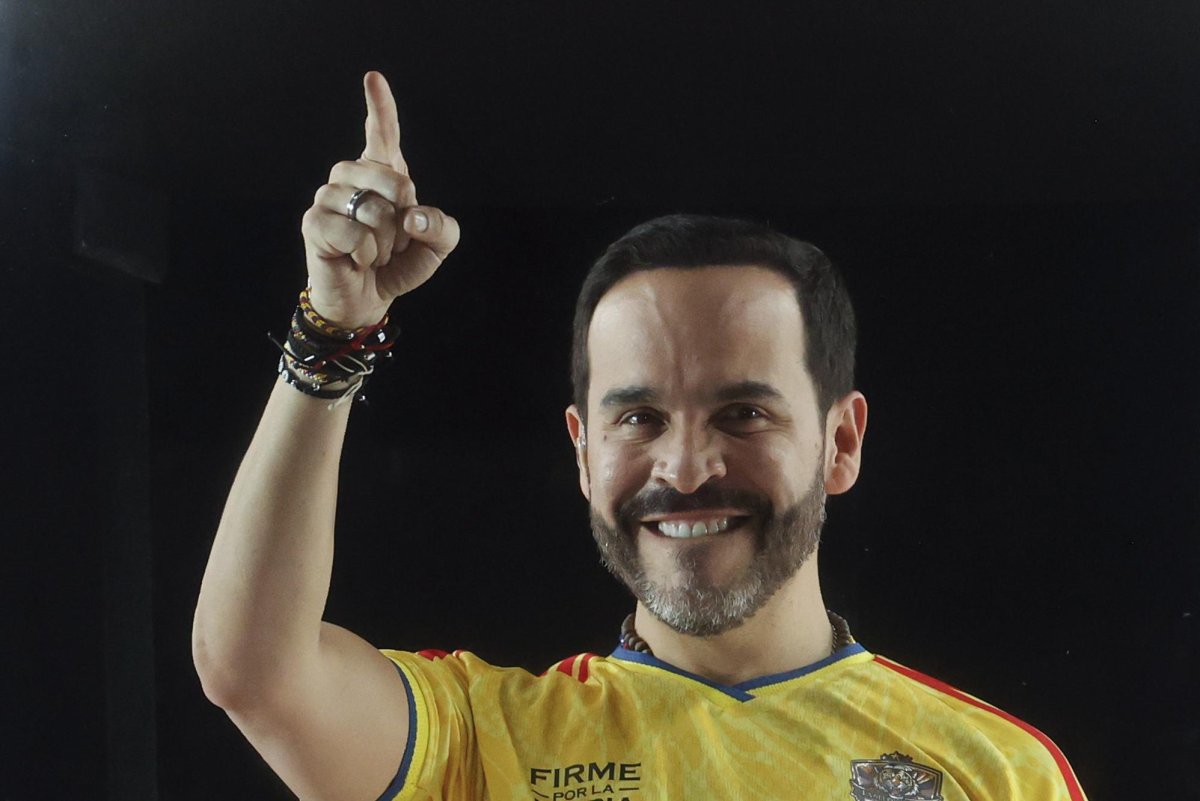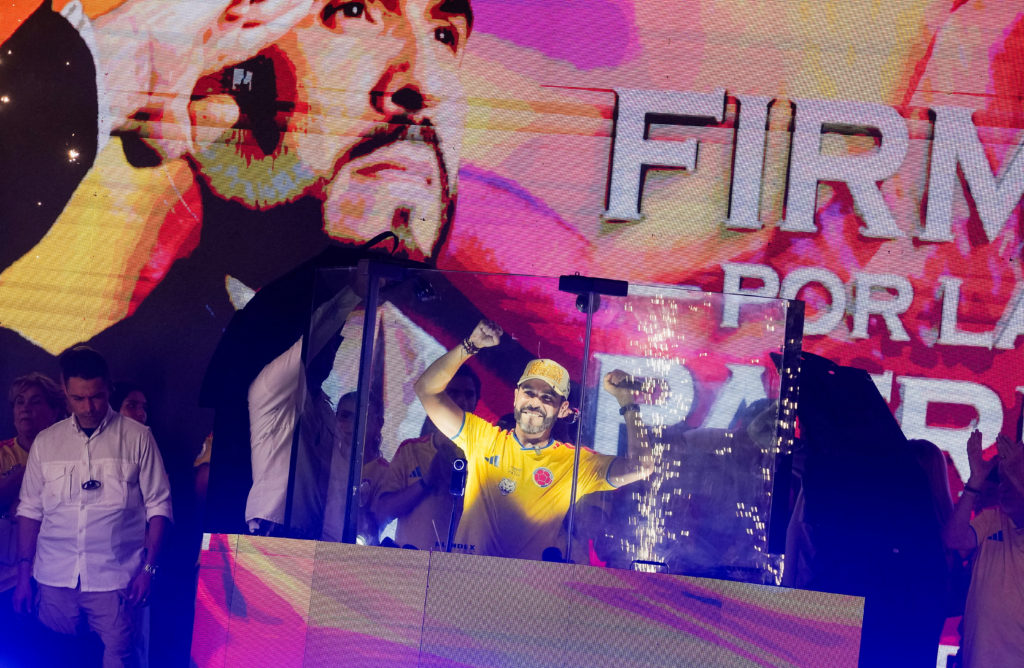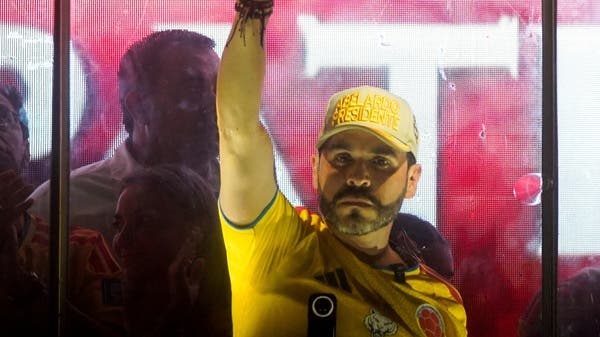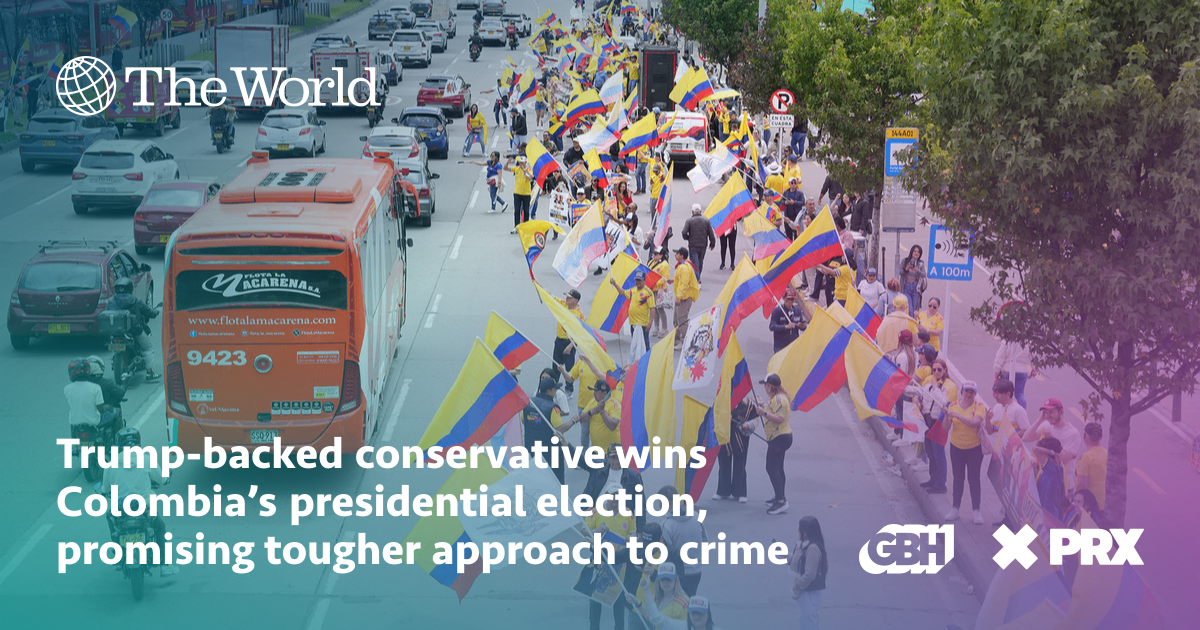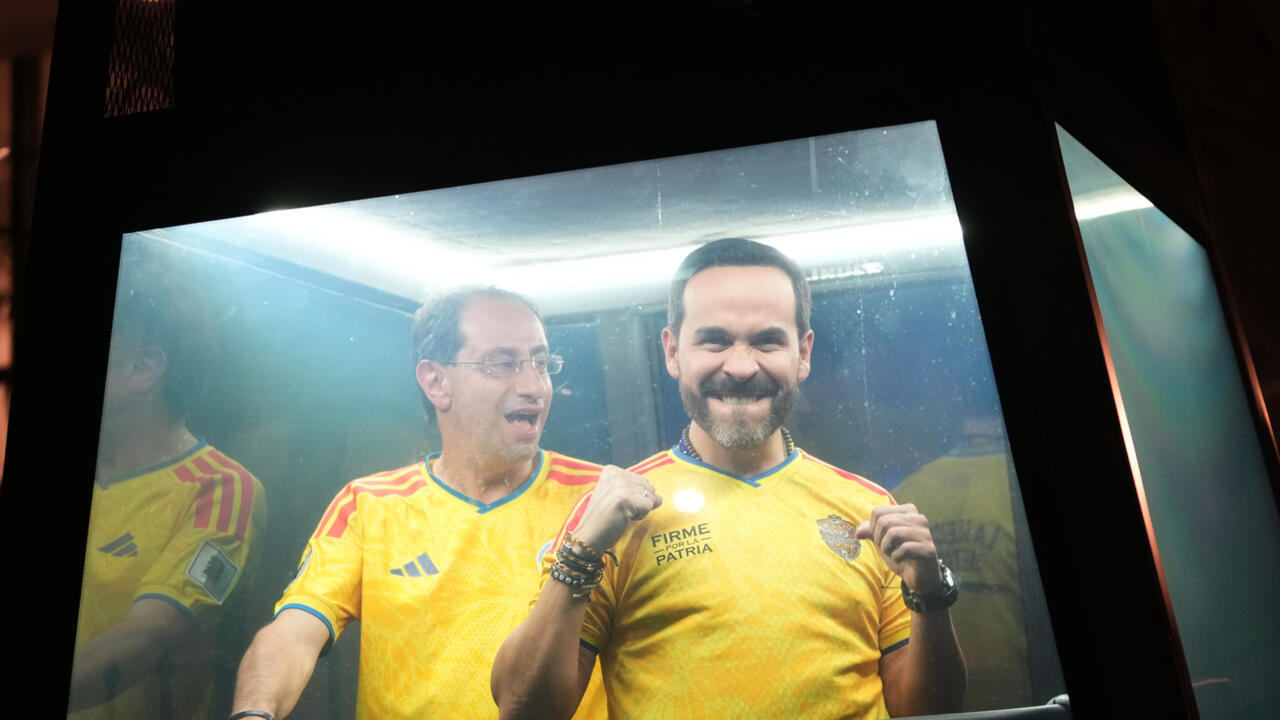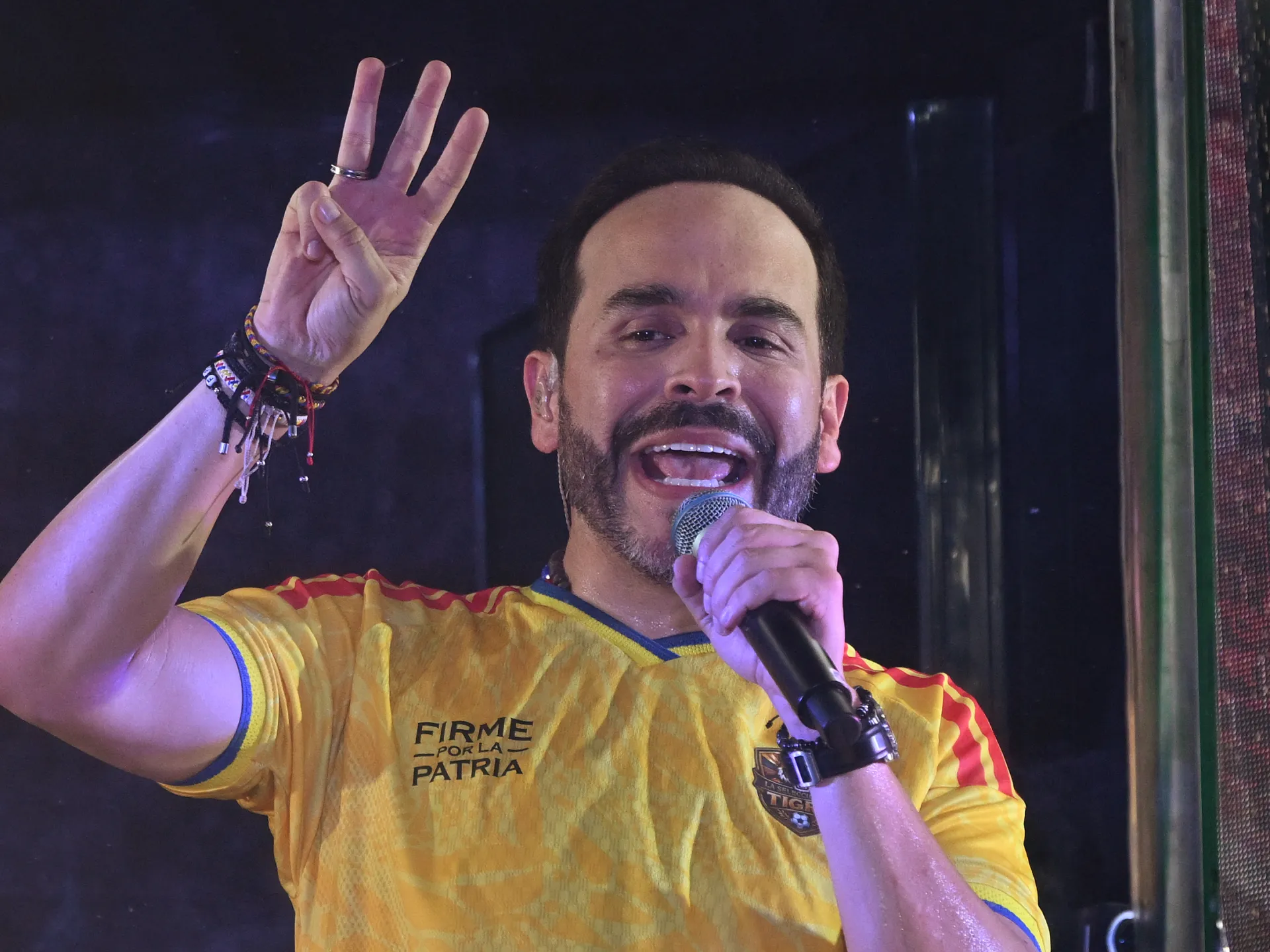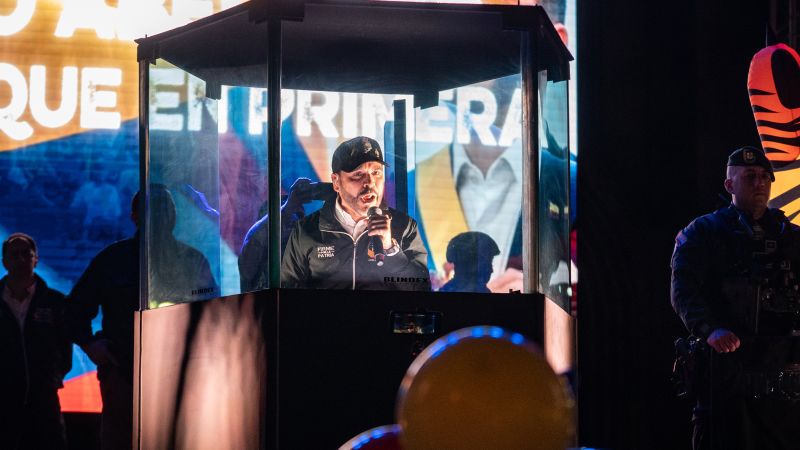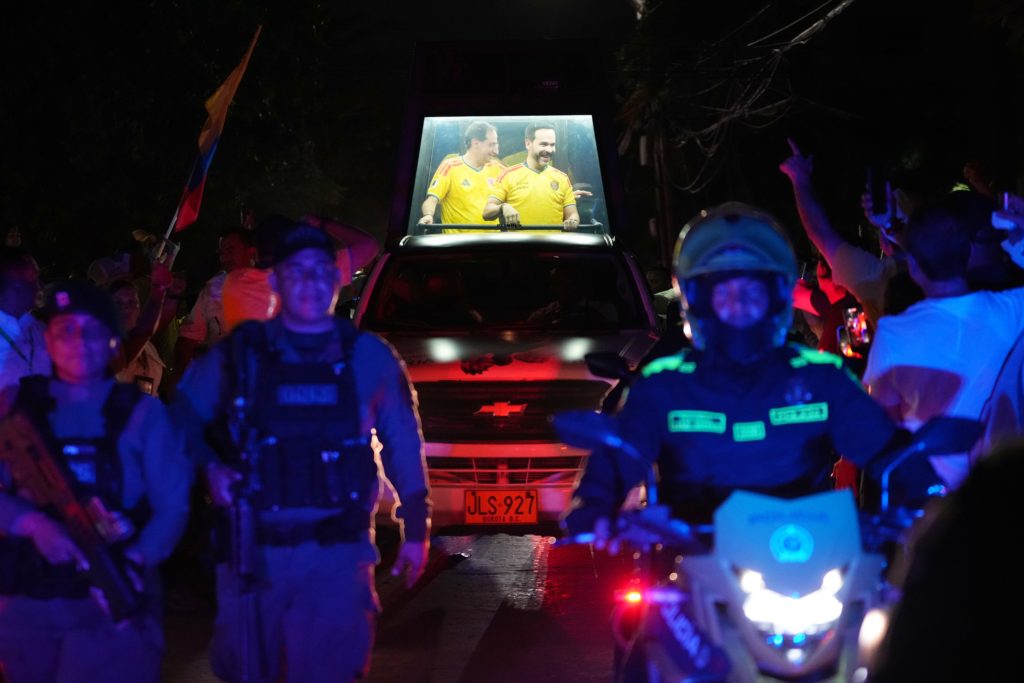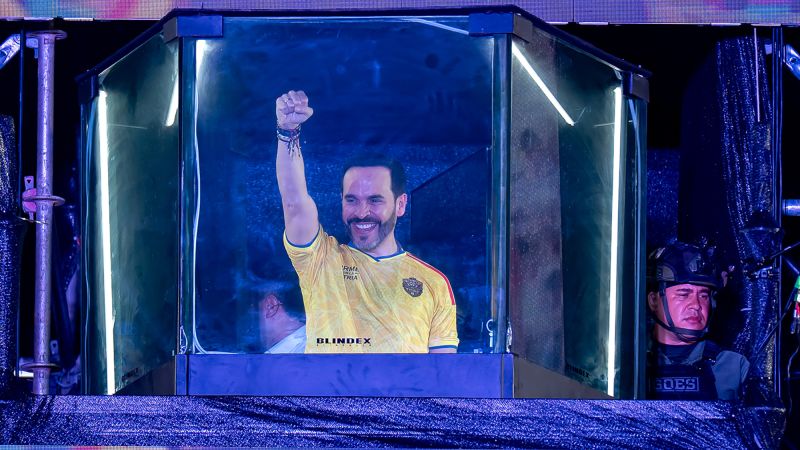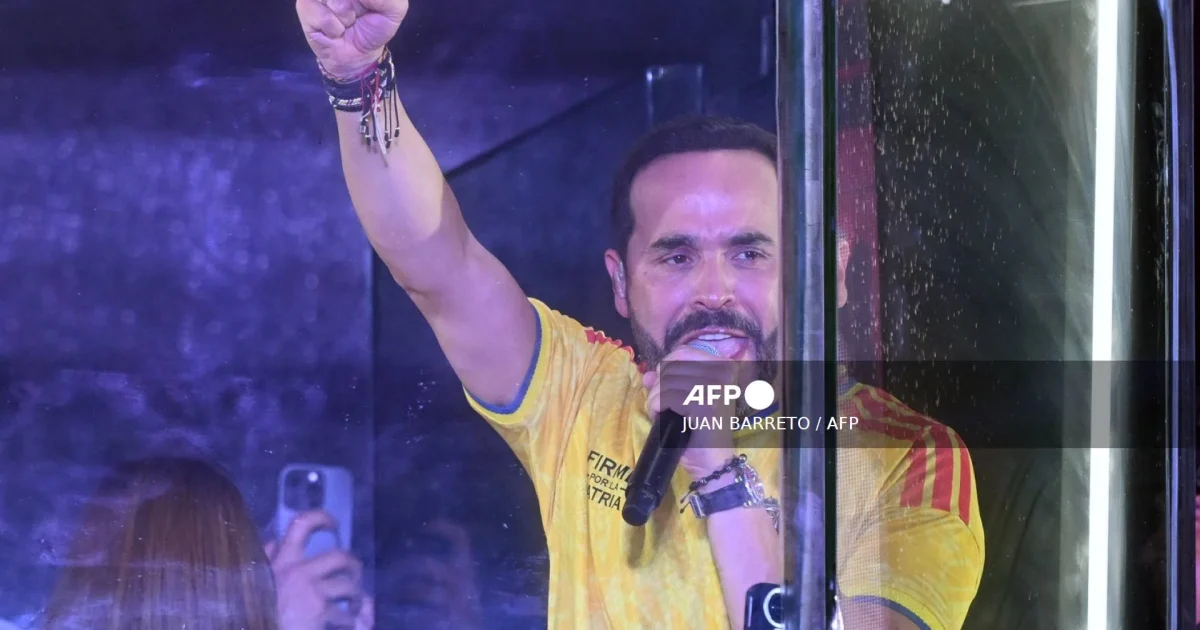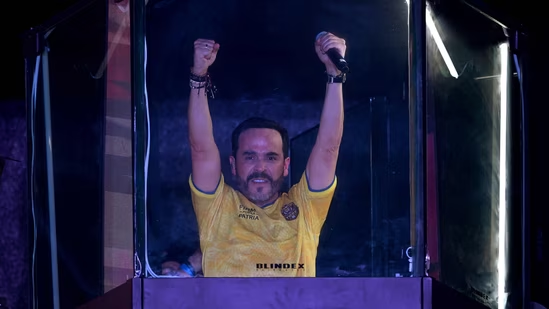
World·AnalysisAbelardo de la Espriella, characterized by critics as far right, had earned the endorsement of U.S. President Donald Trump, who had said he would stop illegal immigration and crack down on crime and drugs.Outsider candidate capitalized on frustration with Petro's 'Total Peace' approach to gangsCody Weddle · CBC News · Posted: Jun 22, 2026 10:01 AM EDT | Last Updated: 10 minutes agoListen to this articleEstimated 5 minutesThe audio version of this article is generated by AI-based technology. Mispronunciations can occur. We are working with our partners to continually review and improve the results.Abelardo de la Espriella, the Colombian presidential candidate for the Defensores de la Patria movement, gestures next to his wife, Ana Lucia Pineda, at a polling station in Barranquilla, Colombia, on June 21. (Vanexa Romero / AFP via Getty Images)Abelardo "The Tiger" de la Espriella, a criminal defence attorney with no prior political experience and an eccentric public persona, is on track to win Colombia’s presidential elections Sunday night by a thin margin. The 47-year-old De la Espriella led his rival, Sen. Ivan Cepeda, 63, by just under one per cent of the vote, or just over 250,000 votes with 99.9 per cent of votes counted. Election authorities have not officially declared a winner. More than 41 million Colombians were eligible to vote, with turnout reaching nearly 64 per cent — one of the highest in the country’s history. Abelardo De La Espriella wins Colombia election, continuing rightward trend in Latin AmericaThe outsider de la Espriella, who rose to prominence by pushing a heavy-handed, zero-tolerance campaign against criminal groups, warned Cepeda, as well as current President Gustavo Petro, to not question the results. "Petro and Cepeda, refrain from triggering a social explosion — respect the popular verdict, democracy, there will be no third round in the streets," de la Espriella told supporters from behind bulletproof glass in his hometown of Barranquilla, on Colombia’s Atlantic coast. For his part, Cepeda told supporters at a Bogota hotel that he recognized the initial count of votes as "a piece of information" that was "neither official nor binding" and that he planned to challenge the tallies from 33,000 voting tables. "This campaign has ended with the tightest margin that has ever been registered in the electoral history of Colombia," Cepeda said.Earned Trump endorsementCaravans of de la Espriella supporters paraded through the streets of Bogota as the results became apparent, many blowing horns and waving Colombian flags.De la Espriella participated in a similar caravan in Barranquilla, with videos posted online showing him waving to supporters from a specialized vehicle equipped with bulletproof glass. "For the first time, the Colombian people have elected somebody who is not part of politics, the politics that have destroyed this country," said 19-year-old Juan Esteban Martinez. Juan Esteban Martinez participated in spontaneous celebrations in Bogota, Colombia, after it became apparent that Abelardo De La Espriella would likely win the presidential election. (Cody Weddle/CBC)De la Espriella, characterized by critics as far right, had earned the endorsement of U.S. President Donald Trump, who had said he would stop illegal immigration and crack down on crime and drugs. U.S. Secretary of State Marco Rubio was among the first to congratulate de la Espriella following his apparent win, posting on social media that "Colombia's best days are ahead."A victory for de la Espriella would mark a return to conservative rule in Colombia after four years under Gustavo Petro, the country's first-ever leftist president.It also adds Colombia to a growing list of Latin American countries that have shifted toward right-wing leadership in recent years, with many of those governments also embracing heavy-handed security policies to confront crime and gang violence.Many of de la Espriella’s signature security proposals have drawn comparisons to those implemented by El Salvador’s Nayib Bukele, who since 2022 has overseen a crackdown on criminal groups that has led to the imprisonment of more than three per cent of the adult male population, but also to a massive drop in violent crime. Iván Cepeda, candidate for the Pacto Histórico party, shows his voting card in Bogota, Colombia, on June 21, 2026. (Andres Rot/Getty Images)De la Espriella has proposed building 10 mega-prisons in remote jungle locations, has suggested he would enact legislation to grant himself extraordinary powers to lock up criminals and would conduct an extensive bombing campaign of criminal groups involved in narcotics trafficking that would "retake the country in 90 days."Frustration with 'Total Peace' policyThe outsider candidate likely gained traction by capitalizing on widespread frustration with Petro's "Total Peace" policy. It sought to negotiate with armed groups but instead saw the number of active fighters more than double, from roughly 13,000 in 2022 to about 27,000 by the end of 2025, according to the Colombian think-tank Ideas for Peace Foundation."A very particular feature of Colombian politics is that whenever we have a peace agreement or a peace negotiation with insurgent groups or criminal organizations and those talks fail, we tend to go all the other way to politicians who promise a military approach and don’t want any talks," said Sandra Borda, an associate professor of political science at Colombia’s Los Andes University. Colombia is roughly 54 times the size of El Salvador, and analysts warn that Bukele-style tactics may not translate as easily to a country where security forces lack a consistent presence across vast, often jungle-covered territory. It’s a vacuum that many have warned could create conditions ripe for human rights abuses by state forces operating with little oversight.De la Espriella's team "are extremists, because they speak from a place of violence, fantasizing about mass extrajudicial killing campaigns," said Ann Mosquera, a Cepeda supporter, shortly before the vote. Ann Mosquera stands outside a campaign office for presidential candidate Ivan Cepeda shortly before Colombia’s vote. (Cody Weddle/CBC)De la Espriella had also proposed cutting the size of the state by up to 40 per cent, leading to comparisons with Argentine President Javier Millei, who has cut government spending by nearly 30 per cent since assuming office in 2023. De la Espriella also promised to bring fracking to Colombia and restart oil and gas exploration. If he's confirmed as the election winner, de la Espriella would take office on Aug. 7 for a four-year term. ABOUT THE AUTHORCody Weddle is a journalist covering Latin America from Bogotá, Colombia. He has focused on the region for nearly a decade, including five years living in and reporting on Venezuela.
ANALYSIS | De la Espriella's law-and-order platform wins Colombia vote after earning Trump's support | CBC News
Abelardo de la Espriella, characterized by critics as far right, had earned the endorsement of U.S. President Donald Trump, who had said he would stop illegal immigration and crack down on crime and drugs.
1,066 words~5 min read