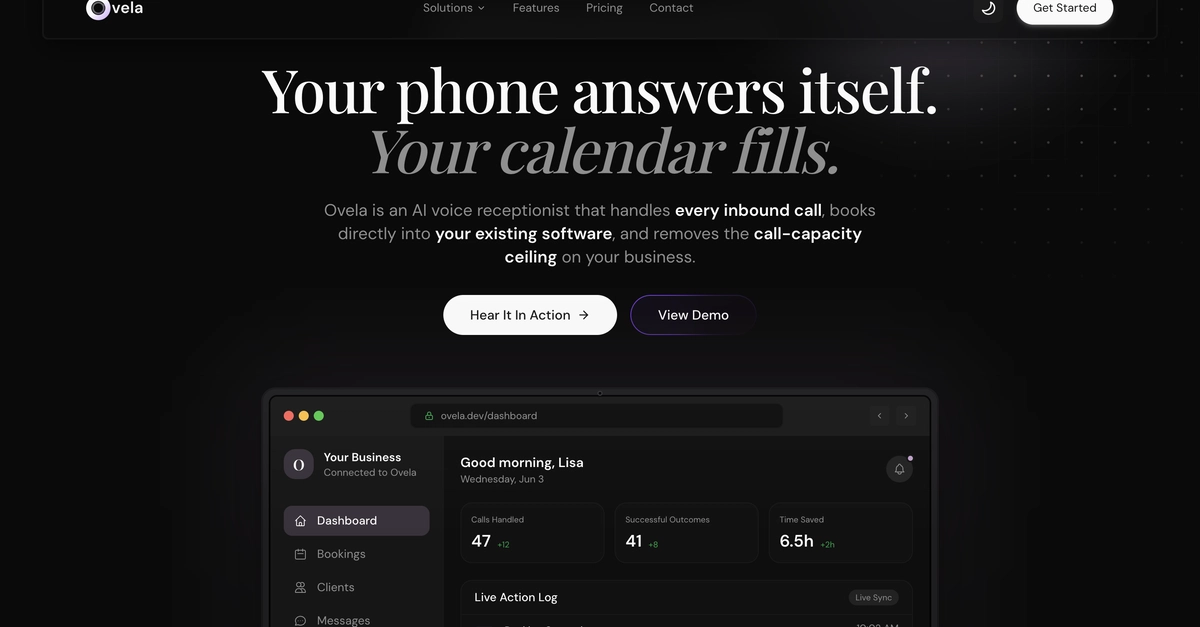
Six months ago we pushed Loquent — our voice AI receptionist for healthcare and dental clinics — into production. It now handles thousands of automated calls per month across multiple clinics, 24/7, in both English and French. Here's everything that actually happened once real patients started talking to it.
This isn't a launch post. We wrote that already. This is the unglamorous sequel: the parts where our assumptions were wrong, where vendors changed things under us, and where we looked at our own architecture and thought "why did we do it that way?"
The System at Month Zero
Quick context on the stack we shipped. Loquent runs on Twilio for telephony, Deepgram for speech-to-text, Anthropic Claude for conversation logic, and ElevenLabs for text-to-speech. The backend is NestJS with PostgreSQL and Prisma, deployed on AWS with Docker. We built the whole thing in 8 weeks.
At launch we had a single healthcare client running about 400 calls per week. The system handled appointment booking, cancellations, insurance verification routing, and basic triage — determining whether a patient needed to speak with a human or could be handled automatically.