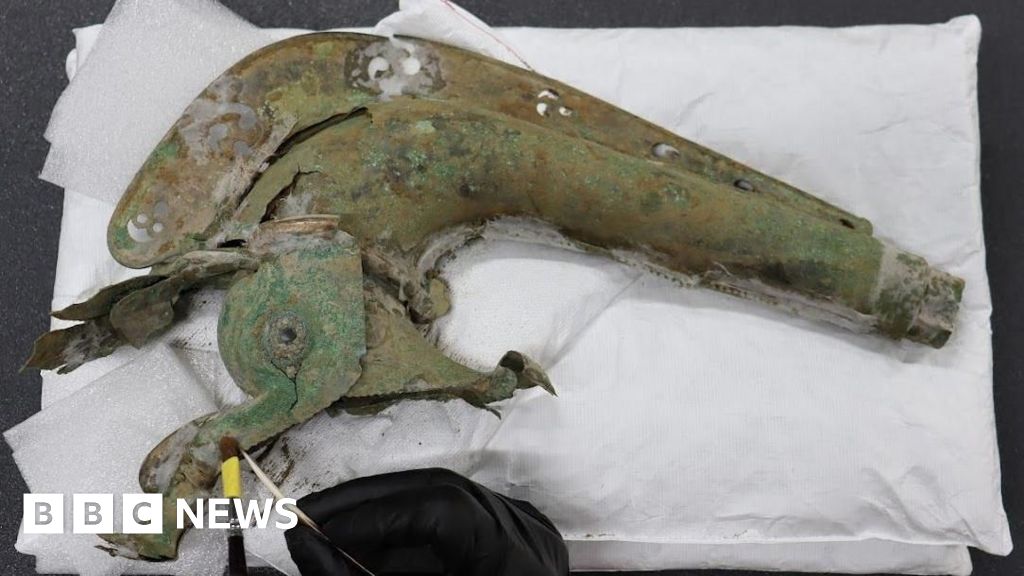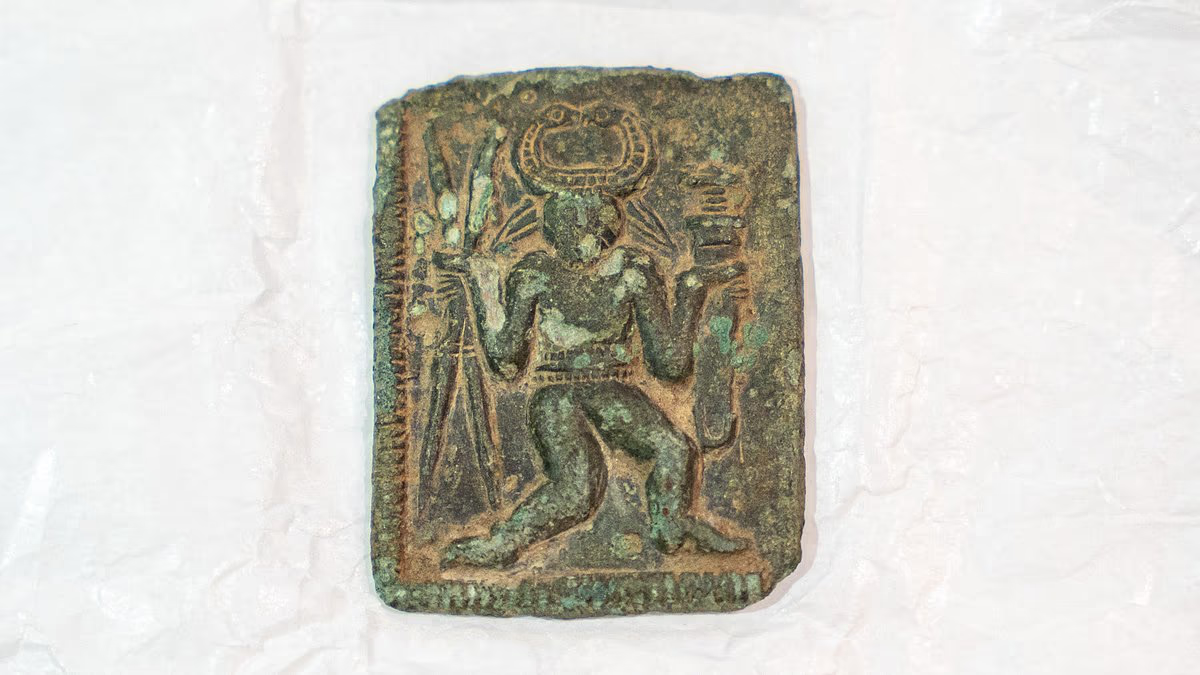
The history of an iconic British treasure could be rewritten after a tiny artefact was unearthed in a field in Kent.For decades, the Sutton Hoo helmet – which was buried with a Suffolk king around 1,400 years ago – has been suspected of being an import from Sweden.But the 'extraordinary' discovery of a small object suggests it may have been made much closer to home.A copper–alloy die stamp, unearthed by a metal detectorist in a field near the Kent village of Lynsted, dates from the late 6th or early 7th century.It appears to have been used to press decorative panels for high–status Anglo–Saxon military equipment, such as helmets.Analysis reveals it is closely comparable in size and design to panels on the famous Sutton Hoo headgear.Crucially, it is the only confirmed example of its kind found in Britain – and indicates that helmets previously thought to be Scandinavian may have actually been made in England.Dr Andrew Richardson, Finds Liaison Officer for Kent County Council, said: 'This small but remarkable find provides important evidence that helmets like the Sutton Hoo example could have been made in Kent, highlighting the skill and connections of early medieval craftworkers in the country.' The small copper–alloy object, found by metal detectorist Stephen Newbury, is the only confirmed example of its kind found in Britain The artefact, which had broken into more than 100 fragments, took the conservation team at the British Museum many years to reconstruct into a replica (pictured)
The tiny artefact that shakes up Sutton Hoo helmet's origin story
The history of an iconic British treasure could be rewritten after a tiny artefact was unearthed in a field in Kent.
TL;DRAI
A copper-alloy die stamp found in Kent (c.600 AD) is the first British example, suggesting the Sutton Hoo helmet was made locally, not imported from Scandinavia. The discovery reveals Anglo-Saxon metalworking sophistication, contradicting long-held assumptions about post-Roman Britain's technological capabilities.
1,012 words~5 min read