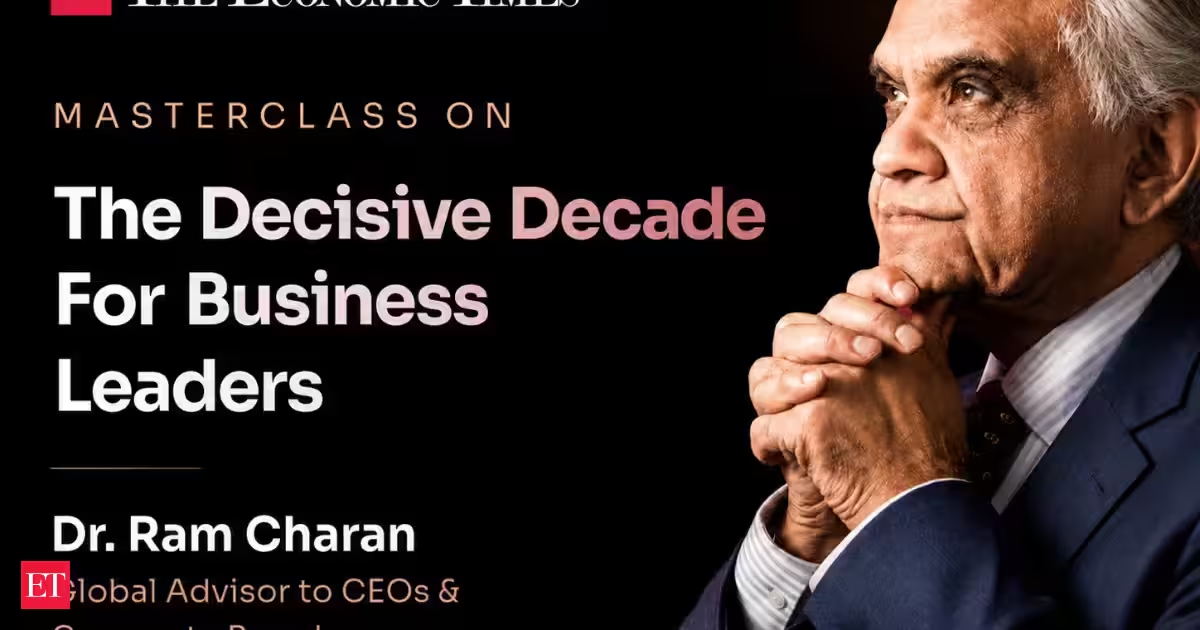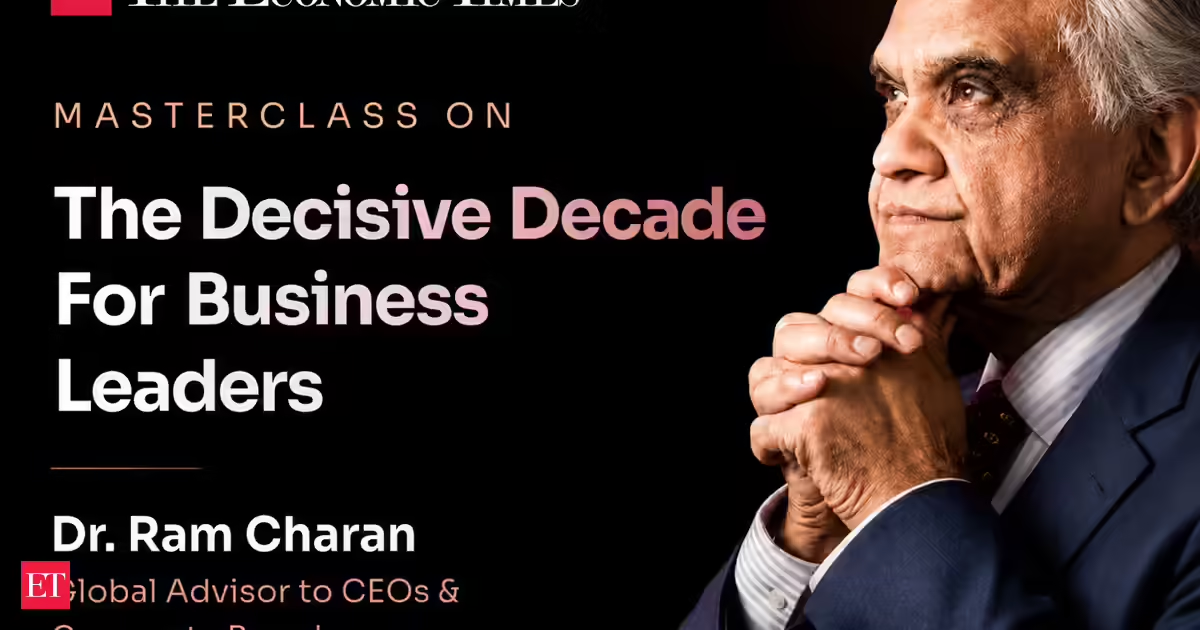
SynopsisAI, emerging technologies, evolving workforce expectations, and global uncertainty are reshaping the rules of business. As organisations navigate this period of rapid change, leadership decisions are becoming more consequential than ever. From technology adoption and talent strategy to innovation and transformation, the choices made today will play a crucial role in determining long-term growth, resilience, and relevance.ET Online and AgenciesThere are moments in history when change arrives slowly, giving businesses time to adapt. Then there are moments when change comes from every direction at once, forcing leaders to make decisions before all the answers are available. Today’s business environment feels much closer to the latter. Technology is evolving at unprecedented speed, artificial intelligence is changing how work gets done, customer expectations continue to shift, and new competitors emerge from unexpected places. At the same time, economic uncertainty, geopolitical developments and workforce transformation are creating challenges that few leadership teams have experienced before, resulting in a business landscape that looks very different from the one many organisations were built for. For leaders, this creates a unique challenge. The pressure is no longer limited to solving today’s problems. They must also prepare their organisations for opportunities and risks that may not fully reveal themselves for years. Decisions around technology, talent, innovation and growth are becoming increasingly interconnected, making leadership more complex than before. What makes this period particularly challenging is that certainty has become a luxury. Many leadership approaches were built around stable markets, familiar competitors, and predictable change. Today, those conditions no longer exist. Business environments are shifting rapidly, and leaders are often required to make critical decisions before all the facts are available. The ability to move forward despite ambiguity is becoming just as important as the ability to plan.Yet uncertainty is not necessarily a disadvantage. In many cases, it creates opportunities for those willing to act with conviction. Some of the world’s most successful organisations were built during periods of disruption, when others hesitated. The difference often lies not in having complete information. This is why adaptability is emerging as one of the defining qualities of modern leadership. Organisations that can learn quickly, experiment responsibly and respond to change are often better positioned than those that rely solely on scale, legacy, or established processes. Agility is no longer a competitive advantage; it is increasingly becoming a business requirement.The challenge for leaders today is not simply keeping up with change. It is understanding which changes matter most and where to focus attention. Every investment, hurting decision, technology initiative and strategic move contributes to shaping an organisation's future position. The choices made today will often have consequences that extend far beyond the next quarter or financial year. This reality sits at the heart of “Dr Ram Charan’s Masterclass on Decisive Decade for Leaders”. Designed for senior executives and decision makers, the program explored reshaping business and leadership, while helping participants develop the perspective needed to navigate an increasingly complex future. It brings together insights, frameworks and conversation around the decisions that will define organisational success over the coming decade. The leaders who thrive in the years ahead may not be those who can predict every disruption. More likely, they will be those who can adapt faster, learn continuously and make confident decisions amid uncertainty. As industries evolve and expectations continue to shift, leadership itself is entering a new chapter. Join Dr Ram Charan and discover what it takes to lead in the decade ahead. Secure your spot now.
The new rules of business: AI, innovation and strategic leadership for long-term success
AI, emerging technologies, evolving workforce expectations, and global uncertainty are reshaping the rules of business. As organisations navigate this period of rapid change, leadership decisions are becoming more consequential than ever. From technology adoption and talent strategy to innovation and transformation, the choices made today will play a crucial role in determining long-term growth, resilience, and relevance.
600 words~3 min read