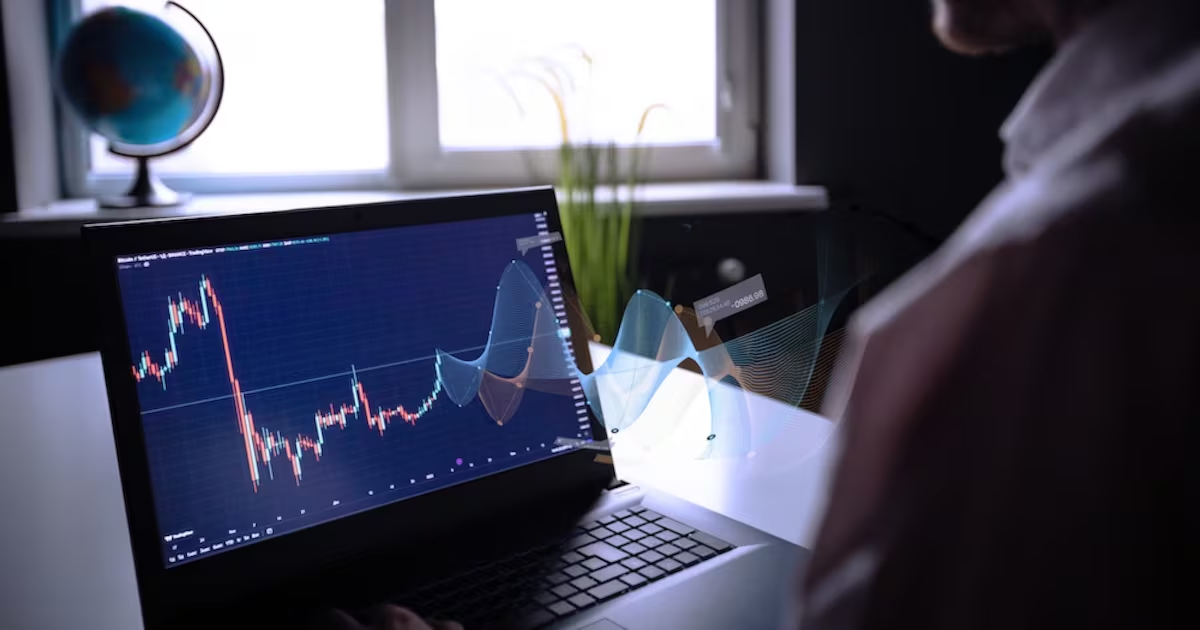
"In a world that thrives on 24-hour-a-day financial news, inactivity is seen as brain-dead." — Chris Browne The modern investor lives in an era of relentless information. From television channels and financial websites to social media platforms and smartphone alerts, market news flows around the clock. Every earnings report, policy announcement, geopolitical development, or analyst opinion is presented as something that demands immediate attention and often immediate action. Chris Browne's observation serves as a timely reminder that constant activity is not the same as successful investing.The Pressure to Always Act The pressure to always be buying, selling, or reshuffling portfolios has grown significantly in today's markets. Many investors equate frequent trading with being proactive, fearing that staying on the sidelines means missing opportunities. In reality, some of the world's most successful investors have built fortunes not by constantly reacting to headlines but by exercising patience and discipline. Why Emotions Can Hurt Returns Financial markets are designed to test emotions. Sharp rallies create fear of missing out, while sudden corrections trigger panic selling. Continuous exposure to market commentary can amplify these emotions, leading investors to make decisions driven by short-term noise rather than long-term fundamentals. History has repeatedly shown that quality businesses tend to create wealth over time, regardless of daily market fluctuations. Investors who remain focused on earnings growth, competitive advantages, and long-term economic trends often outperform those who frequently chase every market move. Patience Is an Investment Strategy Remaining inactive does not mean being indifferent. It means resisting the temptation to trade simply because markets are open or news is flowing. Patience allows investors to wait for attractive valuations, avoid unnecessary transaction costs, and prevent emotional decision-making. Long-term investing is often about knowing when not to act. Every headline does not require a portfolio change, and every market swing is not an opportunity that must be seized.The Takeaway In an era where every minute brings a new headline, Chris Browne's quote highlights an often overlooked truth: sometimes the most productive investment decision is to do nothing at all. Successful investing is not measured by the number of trades executed but by the quality of decisions made over time. For long-term investors, inactivity is not a sign of complacency. It is often a reflection of confidence, discipline, and a well-thought-out strategy.
Quote of the day by Chris Browne: "In a world that thrives on 24 hours a day financial news, inactivity is seen as brain dead"
Chris Brownes quote highlights the importance of patience in investing amid constant market noise. The piece explains how excessive trading, emotional decisions and information overload can hurt returns, while disciplined, long-term strategies focused on fundamentals and valuation help investors build sustainable wealth over time.
381 words~2 min read