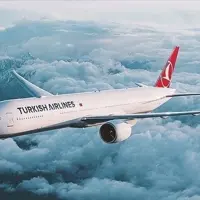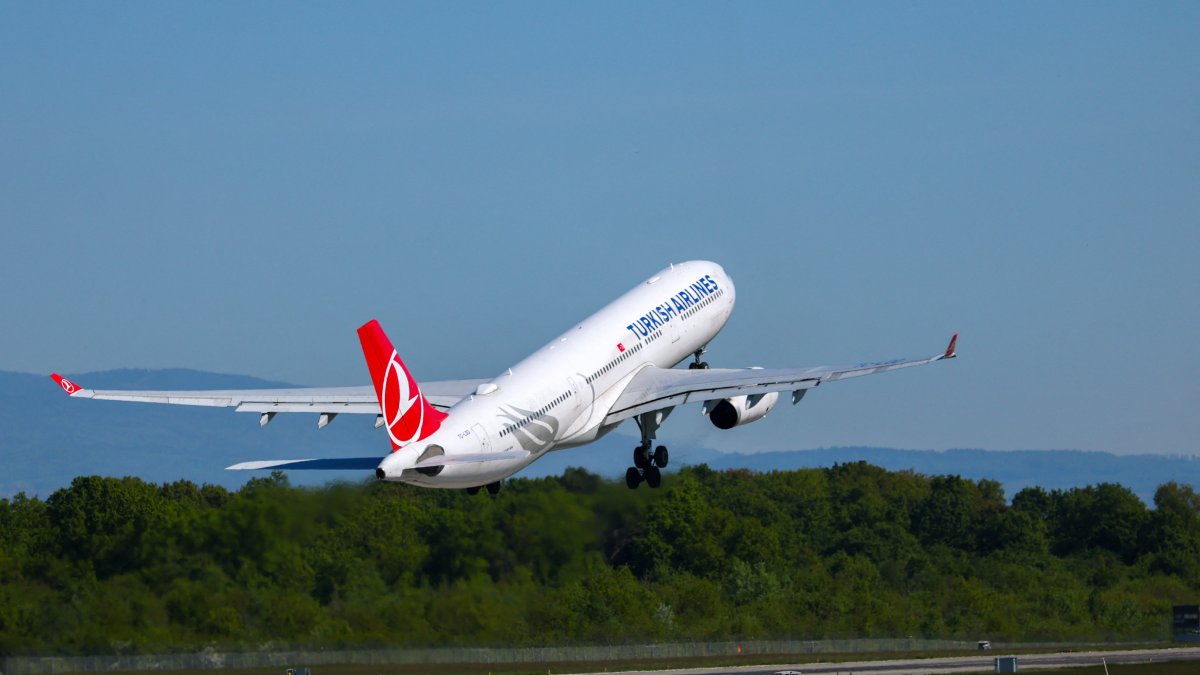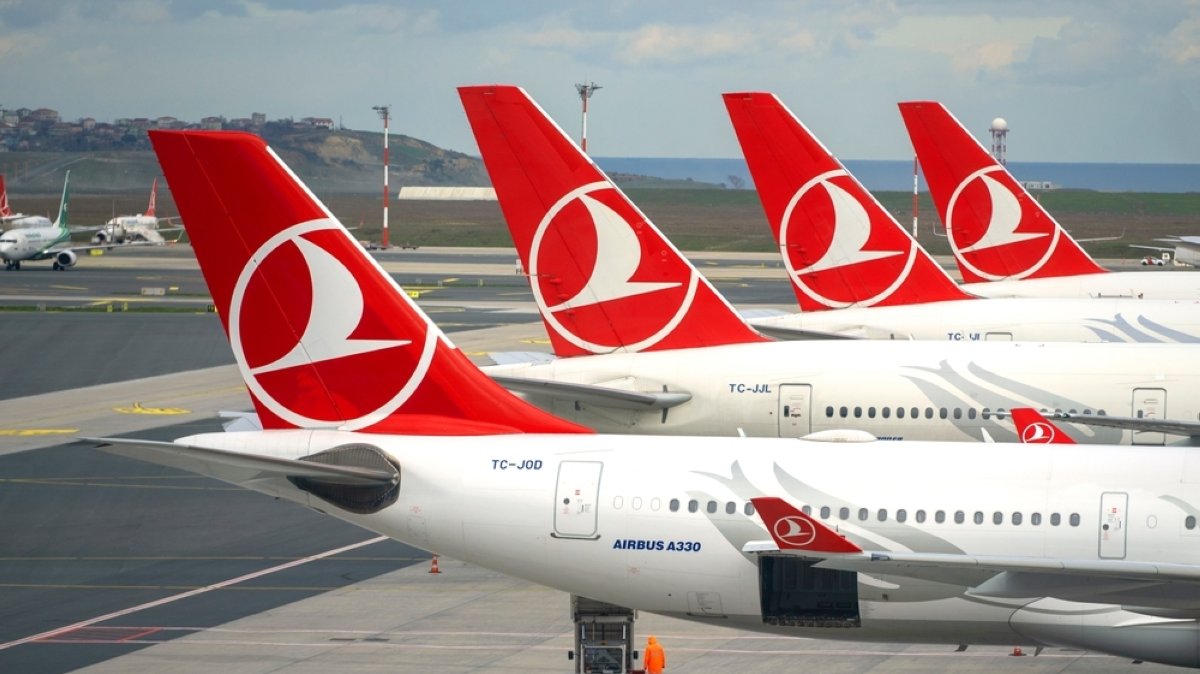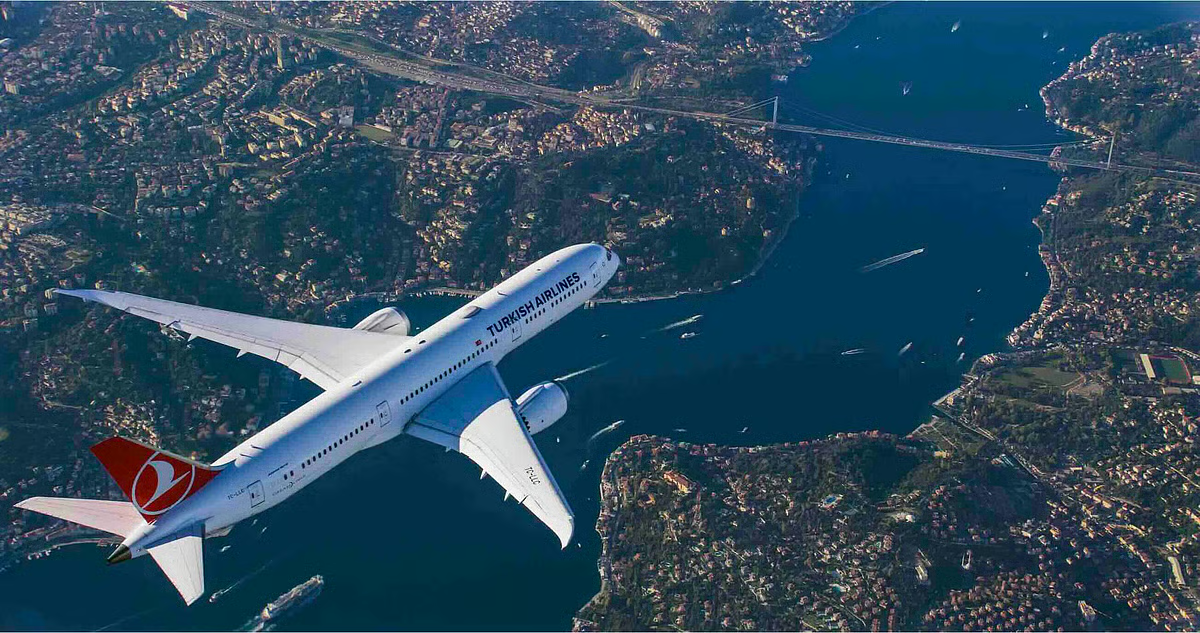
Ahmet Olmuştur was appointed CEO in April.Turkish AirlinesAhmet Olmuştur was appointed to lead Turkish Airlines in April and has taken charge of this growing airline at an unusual time. The war with Iran, fuel instability and a changing passenger profile have upended many airlines and their forward growth. But, that does not stop Olmuştur from making big plans for the Turkish national carrier. After having served as the chief commercial officer for nearly a decade, he reveals for the first time potential changes coming soon.What does the future of Turkish Airlines look like?A Boeing 787-9 flies over Istanbul and Bosphorus.Turkish AirlinesDespite constraints, our long-term direction remains clear: Our 2033 strategy targets a fleet of over 800 aircraft, annual revenues over $50 billion and expanding our network to 345 international destinations.While widebody and cargo fleet plans remain largely unchanged, we are likely to recalibrate our 2033 strategy, including a reassessment of narrowbody fleet plans based on passenger demand and delivery timing. In other words, we remain committed to our long-term fleet and network targets, but our path must be more adaptive, scenario-based and profitability-focused.Turkish Airlines Airbus A350-900 at Amsterdam Schiphol airport in the Netherlands.gettyFor now, we are currently planning 420 aircraft deliveries between 2026 and 2036, excluding leased aircraft. The 2026 delivery plan includes 10 aircraft while our 2027 plan includes 28 aircraft.The first A350-1000 is expected in the third quarter of 2027, following delivery delays from 2026 to 2027, with as many as 15 of them expected by 2030.Skift’s Gordon Smith writes that this revised rollout plan demonstrates “more measured path toward becoming one of the world's largest carriers.”The new business class suite will have doors that fully close.Turkish AirlinesComing soon is the new Crystal Business Class Suite, our first with a fully enclosed suite with adjustable door and an electronically controlled privacy panel. They have a marble-look side table and wireless charging among other amenities.The rollout will begin in early 2027 with newly delivered A350 aircraft and the refurbishment of our Boeing 777 fleet, before progressively expanding across both aircraft types through our retrofit program.The new flat-bed seat will have a door that separates it from the aisle.Turkish AirlinesWe are also evaluating premium economy for widebody aircraft starting in 2028, with around 8–9% of current economy capacity potentially allocated to the new cabin. Our research shows that around two thirds of the passengers on long-haul flights are willing to pay a premium for additional legroom and comfort. Together with new-generation deliveries and cabin reconfiguration, seats per aircraft are targeted to increase by more than 12%, while business class capacity per aircraft is planned to increase by more than 10%. Despite geopolitical challenges, you have rising load factors and profits, how can that be?The business class cabin on a B787 Dreamliner.Turkish AirlinesGeopolitical developments and conflicts in the Middle East are affecting the global aviation industry primarily through two channels: volatility in the Middle Eastern airspace and fuel price shock.Flight restrictions and airspace closures have increased flight times, fuel consumption and operational complexity. Our current network plan reflects operational restrictions and fuel-price pressure. The most visible impact has been on our Middle East network, where we have applied around 30% reduction in flight frequency.Duty Free Shops and Food Court at Istanbul Airport’s International Departures TerminalgettyWhen traffic flows are disrupted in one region, Istanbul’s geographic position and the breadth of our network allow us to redirect capacity toward stronger markets.We have been able to reallocate capacity from more exposed or underperforming markets toward regions of stronger demand while preserving network connectivity. We have moved around 3% of capacity from the Americas to the Far East, where demand has been stronger than expected. For the summer widebody schedule, Central and South Asia capacity has been increased by 9%.Istanbul is the airline's primary global hub.gettyOur Istanbul hub provides an operational advantage for narrowbody aircraft range, too, including the Airbus A320neo family and Boeing 737 MAX. As a result, we can reach 100 countries, 4 billion people, around 50% of the world’s population and 60% of global trade volume. We can easily serve the majority of our network with them, reducing trip costs and decreasing financial pressure.For Europe-originating intercontinental connecting traffic, flights via Istanbul have a detour factor of less than 13% compared with direct point-to-point flights. This means that we can offer highly efficient routing alternatives for transfer passengers while maintaining a strong cost position, thanks to our flight network.On the fuel side, the current price shock is mainly driven by the market’s exposure to the Strait of Hormuz. Jet fuel supply is more dependent on the region than crude oil, which is why prices reacted more sharply than Brent crude during the early phase of the conflict.In early April, there were concerns about possible fuel availability constraints in parts of Far East Asia, South Asia and Africa. So far, we have not suspended any operations due to fuel availability, and our fuel supply in Istanbul remains secureThe airline has won awards for its flying chefs and inflight food.Turkish AirlinesAdditionally, forward bookings show gradual normalization. In the early phase of the conflict, passengers adopted a more cautious “wait-and-see” approach. However, recent revenue management data suggests they are gradually returning to more planned booking behavior. What routes are seeing growth at the moment?Santiago, Chile goes from six to seven weekly flights this month, while Panama City increases from three to four weekly flights starting next month. This reflects our confidence in key Latin American markets. There is also additional room for growth in Canada. Following discussions held last month, our weekly traffic rights increased from 12 to 21, giving us greater flexibility to expand capacity.The interiors of the new business class cabin.Turkish AirlinesOverall, demand remains resilient, booking visibility is improving, Asia-led transit traffic is outperforming, and we are managing capacity dynamically to protect both operational reliability and revenue quality.When it comes to network planning, Chengdu, Minneapolis/St. Paul, Orlando and Philadelphia are on the short-term agenda.Turkish just began flying to its sixth continent, is there more Australian flying planned?A Boeing 787 Dreamliner landing in IstanbulgettyMelbourne flights started in March 2024 and Sydney in November 2024. Currently, we are operating our Melbourne and Sydney flights with a brief stopover in Singapore and Kuala Lumpur, respectively. With eight weekly frequencies in total, we believe there is still room to grow our presence in Australia. The first A350-1000 is expected to join our fleet in the third quarter of 2027, and the aircraft will support our planned launch of nonstop services from Istanbul to Australia from 2028, without the need for a stopover.Turkish is seeing growing demand to leisure destinations, like the Maldives.gettySince the escalation of the conflict in the Middle East, we have observed a strong increase in bookings for Australia, as well as China, Japan, Sri Lanka, the Maldives and the Philippines.How do you manage flying to security-challenged destinations like Mogadishu, Somalia and Juba, South Sudan?Operating one of the widest networks in the world, which includes higher-risk destinations as well, requires a proactive and case-by-case approach to security and risk management. Along with our routine assessments, we also conduct onsite inspections and continuously monitor the security environment in each higher-risk destination we serve. When necessary, we implement additional mitigation measures, including enhanced procedures and extra security staff.Safety and security of our passengers and crew have always been our top priorities, and our approach ensures that we can operate safely and securely even in complex environments.Editors note: Flights to Juba and Mogadishu have been suspended temporarily.What role does the 737 play in your Africa strategy? Turkish Airlines Boeing 737s are integral to the airline's long-haul flying to Africa.gettyAfrica has been a long-term strategic priority for Turkish Airlines, and the density of our network across the continent reflects a deliberate and disciplined network strategy. Today, we serve 41 countries and 65 destinations in Africa, giving us the broadest network coverage on the continent among international carriers. We are also the leading network carrier in Europe–Africa seat capacity, with an 8.2% market share among European carriers.Our African network is a key pillar of our transfer passenger strategy. Through Istanbul, we offer African passengers approximately 5,500 connection options to every major region of our global network, creating a strong bridge between Africa and the rest of the world.Passengers boarding a plane in Constantine, AlgeriagettyThis broad African presence is supported by a highly flexible fleet allocation strategy. Around 77% of our Africa flights are operated with narrow-body aircraft, compared with an average of around 53% among the major European network carriers. This higher narrow-body utilization is not coincidental; it is one of the structural advantages that allows Turkish Airlines to serve a wider geography, including markets with different demand profiles, airport infrastructures, stage lengths and maturity levels. This approach helps Turkish Airlines operate a broader African network than its European peers while maintaining a comparable level of frequency depth.Kilimanjaro, Tanzania is one of Turkish Airlines' numerous destinations in Africa.gettyThe Boeing 737 plays a central role in this strategy and currently accounts for 63% of our African operations. Eighteen African destinations are served exclusively with the Boeing 737, demonstrating its importance in supporting network breadth and providing disciplined capacity.We use the Boeing 737 both to enter developing markets and to build existing destinations progressively. As demand matures, we can increase frequencies or deploy larger narrow-body or wide-body aircraft where commercially justified. This flexibility enables us to grow sustainably while preserving connectivity through Istanbul.Are there plans to change or expand features of your airport lounges or stopover program? The dessert cart in Turkish Airlines business classTurkish AirlinesAs the country’s flag carrier, we are continuously looking for new ways to share our country’s culture, cuisine and hospitality with our guests, both onboard and on the ground.We are increasing the use of locally sourced ingredients, promoting premium Turkish olive oil, and expanding healthier menu options in line with changing passenger preferences. This approach was recently recognized for the fifth time by APEX with the “Best Food & Beverage in Europe” award.The infinity pool at the Fairmont Quasar Istanbul, one of the hotels that the airline uses for business class passengers during a layover.FairmontBeyond the inflight dining experience, our Stopover and Touristanbul programs allow eligible transfer passengers to discover Istanbul during their journey. Those with a layover of at least 20 hours can stay at partner hotels in Istanbul. Eligible passengers traveling from selected U.S. destinations stay at a variety of hotels including the new Fairmont Quasar Istanbul. Economy Class guests receive two nights while business Class guests receive three nights.Guided tours are complimentary for passengers on a layover.gettyAlong with the Stopover program, we also offer complimentary Istanbul city tour service, “Touristanbul,” exclusively to international travelers with a six-24-hour layover in Istanbul, including transportation, a professional guide, meals and museum entrance fees, giving passengers a convenient opportunity to experience the city’s history and culture.Investments in our lounge network continue. A new lounge opened in Edinburgh Lounge last December, increasing the number of international lounges to eight. A new Turkish Airlines lounge at JFK’s Terminal 1 is also in the pipeline. MORE FROM FORBESForbesKLM Adds Limited-Edition U.S. Delft House, But Can You Get One?By Ramsey QubeinForbesHotel Insiders Share Their Tips For 5 New Park Hyatts Around The WorldBy Ramsey QubeinForbesThe Best Airport Hotels For Budding Young Aviators And ‘Aviation Geeks’By Ramsey Qubein
New Turkish Airlines CEO Says Premium Economy Being Considered, Among Other Fleet Upgrades
Turkish Airlines' new CEO reveals plans for new destinations, aircraft and even a new premium economy cabin on its new planes. He is bullish on the airline's growth plan.
1,884 words~9 min read