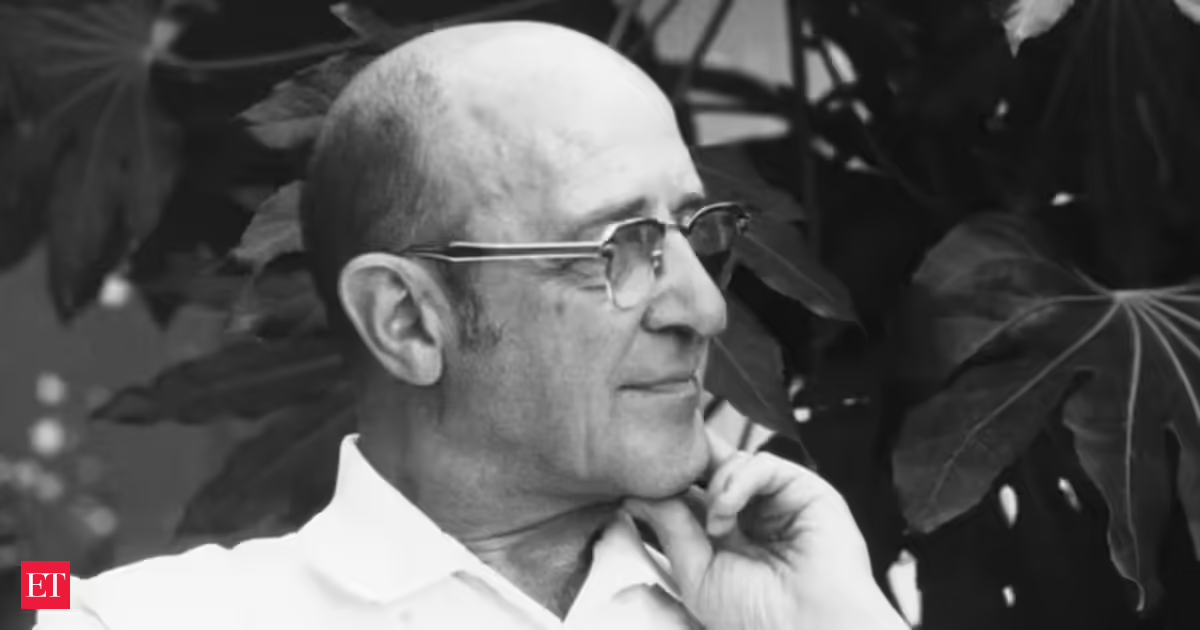
SynopsisPsychologist Albert Ellis's Rational Emotive Behaviour Therapy (REBT) emphasizes emotional responsibility, asserting that individuals control their feelings by challenging irrational beliefs. His quote of the day, 'The best years of your life are the ones in which you decide your problems are your own,' highlights reclaiming agency. In today's blame-focused world, REBT offers a vital path to mental resilience by fostering self-accountability and internal peace, rather than external validation.Albert Ellis' quote of the day captures the core philosophy of Rational Emotive Behaviour Therapy. (Image - Instagram: Albert Ellis Institute)There’s a term in psychology called Rational Emotive Behaviour Therapy (REBT), which is a highly effective Cognitive Behaviour Therapy (CBT). In simple terms, it encapsulates the meaning of emotional responsibility, highlighting that we are largely responsible for how we feel, and have the power to change our emotional responses to various stimuli and triggers. REBT tells us we can achieve this emotional control by identifying our irrational, unhealthy demands and beliefs about a situation, replacing them with healthy rational beliefs, and then thinking and acting in accordance. Quote of the day by Albert Ellis: Psychological context REBT’s theory emerged from the mind of acclaimed American psychologist Albert Ellis, considered to be one of the originators of the cognitive revolutionary shift in psychotherapy and an early proponent and developer of cognitive-behavioral therapies. Today’s quote of the day by Ellis which goes like this, ‘The best years of your life are the ones in which you decide your problems are your own,’ perfectly captures the core philosophy of REBT. Albert Ellis’ quote of the day shows that although it might seem easy to blame other for how you feel, ultimately i sour responsibility to regulate our emotional states. For example, if you are still bothered by something someone did or said to you years ago, chances are that you are the one who is telling yourself to keep you feeling that way, instead of letting it go, causing emotional pain and turbulence. Ellis challenges this though process, urging everyone to tell yourself something more true, logical and helpful instead.Albert Ellis quote of the day: Deeper meaning and modern relevanceThe deeper essence of Albert Ellis’s quote of the day lies in the liberating yet terrifying realization of radical self-accountability. He is not suggesting that external hardships do not exist; rather, he argues that our suffering is manufactured by the rigid, irrational demands we place on those hardships. When we stop waiting for the external world to change in order for us to feel secure, we reclaim our cognitive sovereignty. The ‘best years’ begin the exact moment we stop playing the victim to our circumstances and accept that while we cannot always control life’s triggers, we possess the absolute agency to dismantle the unhelpful beliefs that keep us miserable.In an era dominated by a hyper-connected digital landscape, this philosophical shift is desperately needed. Modern culture frequently encourages us to point fingers outward, fostering an environment of chronic outrage and external blame on social media. We easily become trapped in cycles of resentment, waiting for algorithms, workplaces, or toxic people from our past to apologize before we allow ourselves to heal. Ellis’s words serve as a vital psychological wake-up call for the 21st century: true mental resilience is an inside job. In a world full of triggers, emotional maturity means taking responsibility for our own peace of mind.More about Albert EllisAlbert Ellis was born in Pittsburgh in 1913 and raised in New York City. He completed his college in 1934 with a degree in business administration from the City University of New York before venturing in the business world was a pants-matching business he started with his brother, as per The Albert Ellis Institute. In 1938, Ellis became the personnel manager for a gift and novelty firm but devoted most of his spare time to writing short stories, plays, novels, comic poetry, essays and nonfiction books. By the time he was 28, he had finished almost two dozen full-length manuscripts, but had not been able to get them published.In 1942, Albert Ellis returned to school, entering the clinical psychology program at Columbia University. He started a part-time private practice in family and sex counseling, receiving a master’s degree in 1943. Columbia awarded him a doctorate in 1947. In the late 1940s Ellis taught at Rutgers and New York University, and also served as the senior clinical psychologist at the Northern New Jersey Mental Hygiene Clinic. He became the chief psychologist at the New Jersey Diagnostic Center and at the New Jersey Department of Institutions and Agencies.Albert Ellis published his first book on REBT, How to Live with a Neurotic, in 1957. 2 years later he organized the Institute for Rational Living, where he held workshops to teach his principles to other therapists. The Art and Science of Love, his first successful book, appeared in 1960, and he published 80 books and over 1200 articles on REBT, sex and marriage. Until his death on July 24, 2007,. Ellis served as President Emeritus of the Albert Ellis Institute (AEI) in New York, which provides professional training programs, psychotherapy, and psychological assessments to individuals, families and groups.Read More News on...morelessRead More News on...moreless
Quote of the day by famous American psychologist Albert Ellis: ‘The best years of your life are the ones in which you decide your problems are your own.’
Psychologist Albert Ellis's Rational Emotive Behaviour Therapy (REBT) emphasizes emotional responsibility, asserting that individuals control their feelings by challenging irrational beliefs. His quote of the day, 'The best years of your life are the ones in which you decide your problems are your own,' highlights reclaiming agency. In today's blame-focused world, REBT offers a vital path to mental resilience by fostering self-accountability and internal peace, rather than external validation.
863 words~4 min read