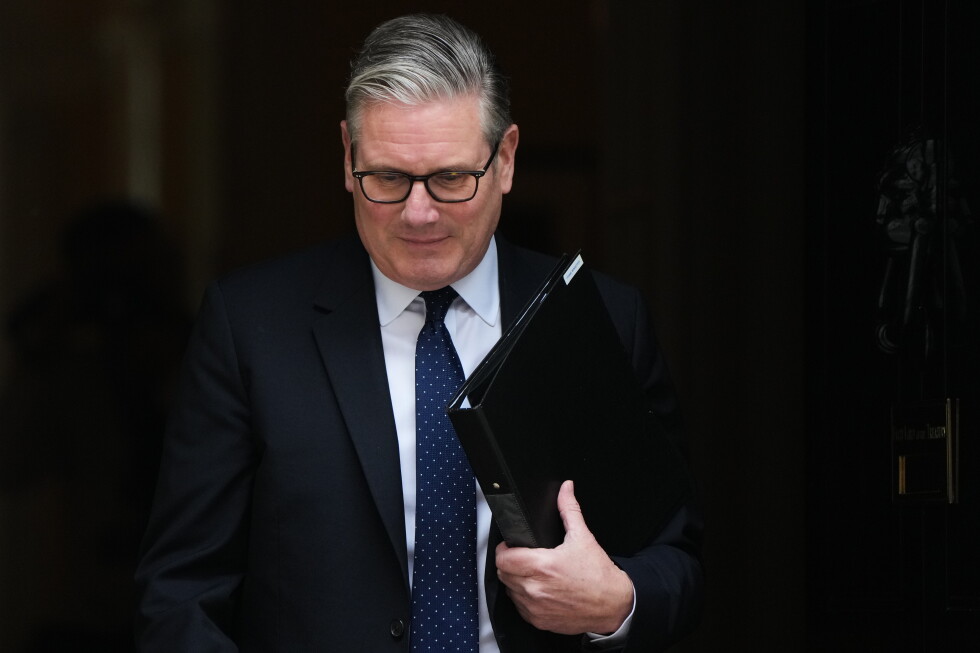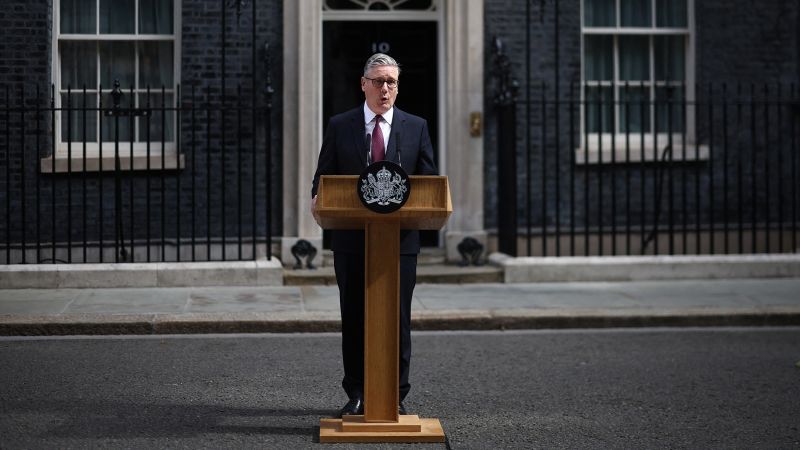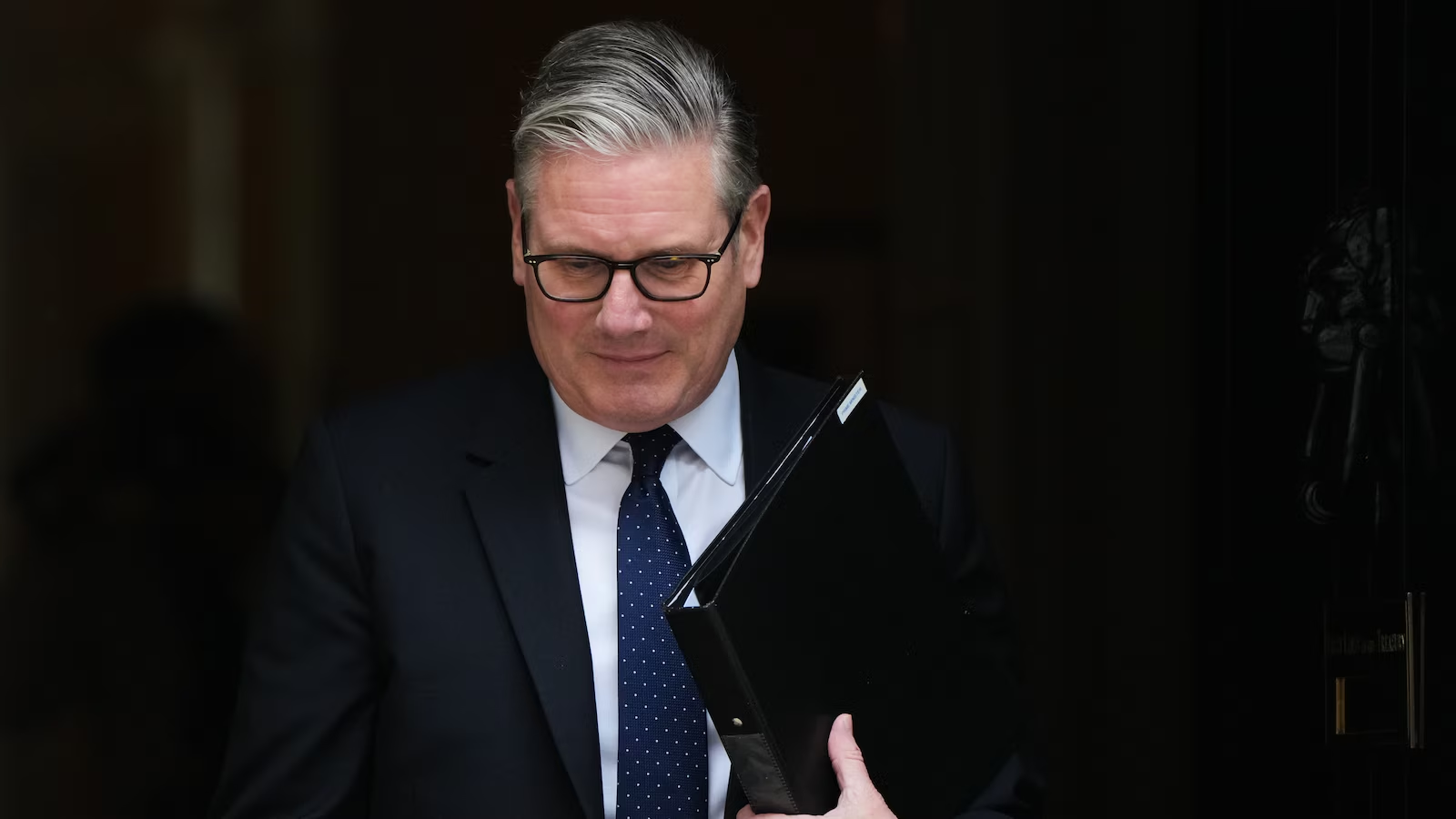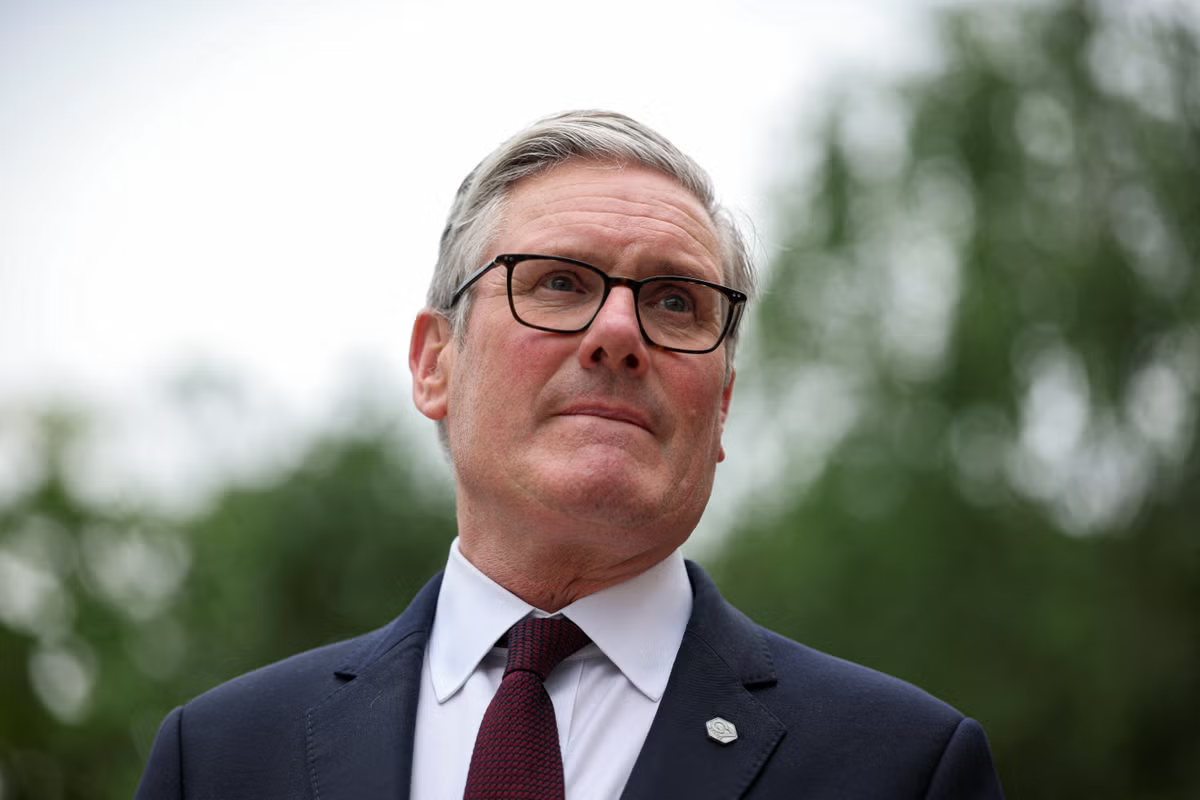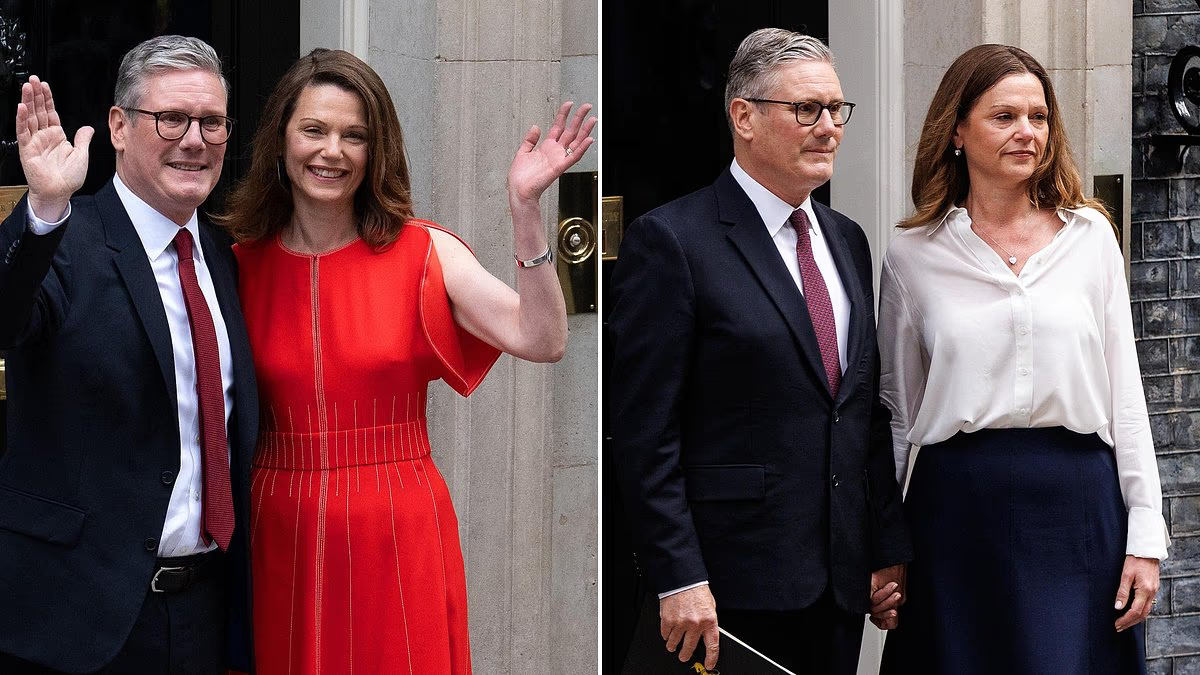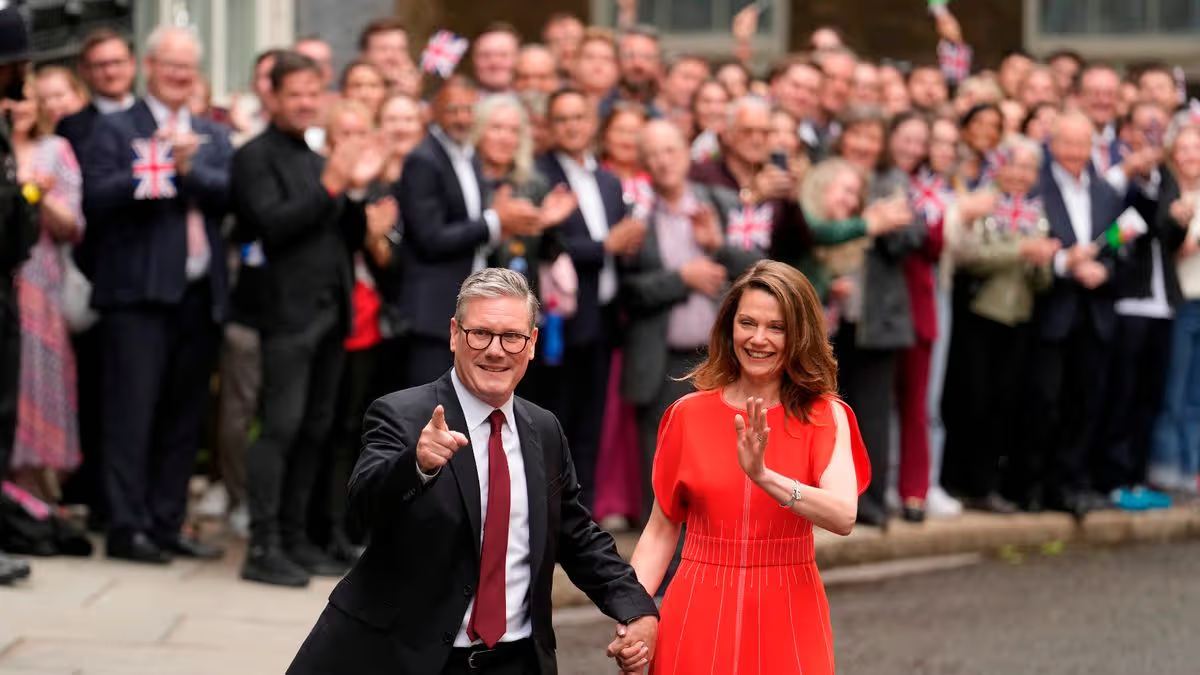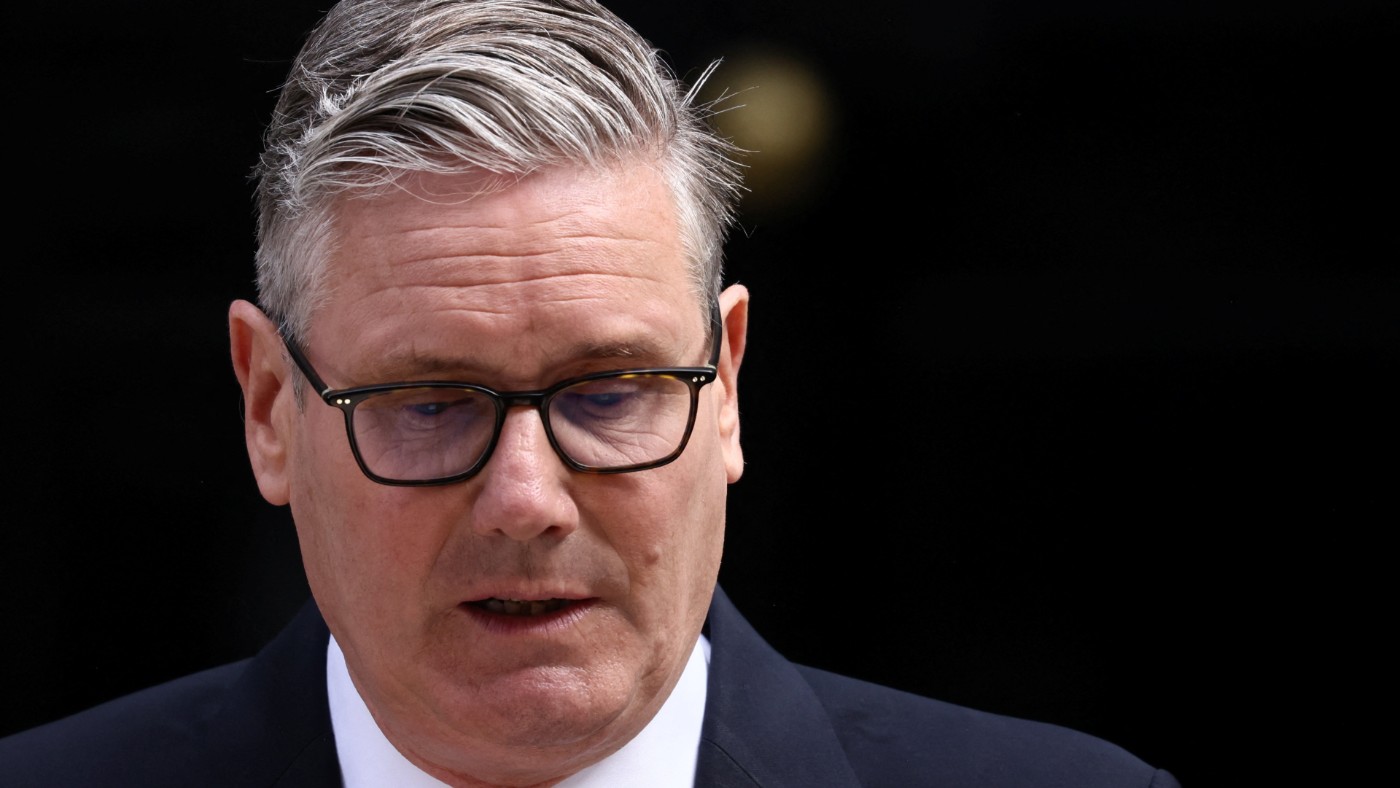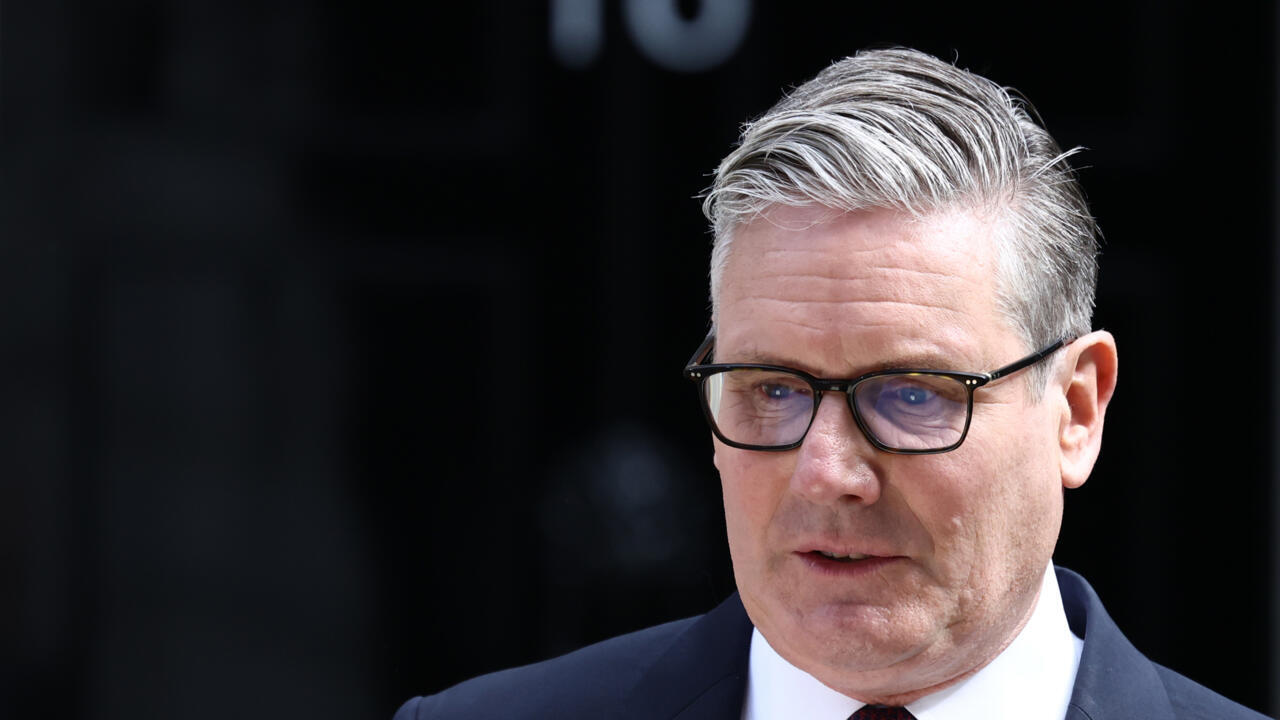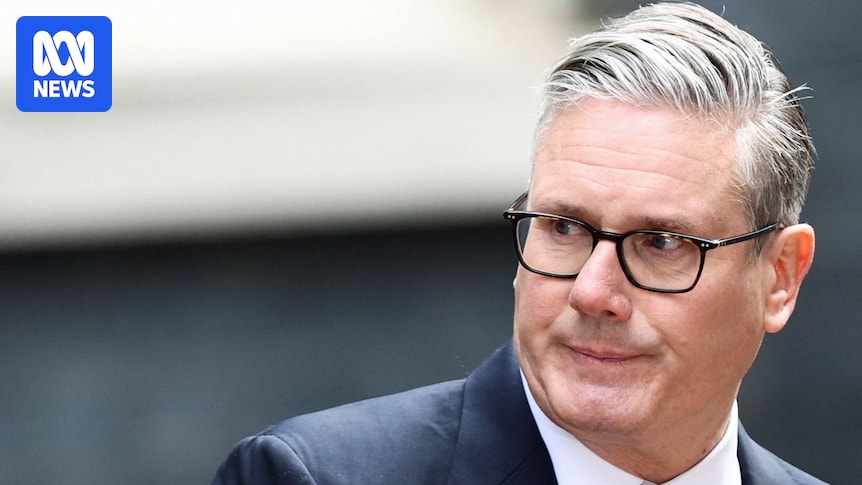
Sir Keir Starmer was elated as he declared victory."Change begins now, and it feels good!"It was 3am, and Sir Keir was standing before hundreds of Labour Party campaigners and supporters, whose loud cheers and applause reverberated around London's iconic Tate Modern Art Gallery, which they had hired for the celebration.Sir Keir and his Labour colleagues had not just won government in July 2024, they had achieved a landslide, winning 411 of the 650 seats in the House of Commons, the second-largest majority in British history.And with that, 14 years of Conservative rule came to a crushing end.Now, less than two years on, there is change again, but for Sir Keir and his supporters, it feels very different.Today, after months of pressure, he announced he was resigning as leader of the Labour Party and would cease to be prime minister once a replacement was chosen in the coming weeks.The least unpopular option Things did not look great for Sir Keir from the start.On the face of it, the 2024 election landslide would have appeared to give the new prime minister and his Labour colleagues a strong mandate to achieve the change they had promised during the election campaign.But those numbers did not tell the whole story.Voter turnout was at a historic low of 65 per cent, which meant more than a third of those registered to cast their ballot stayed at home.Sir Keir Starmer celebrating his election victory at London's iconic Tate Modern. (Reuters: Suzanne Plunkett)Voting is not compulsory in the UK as it is in Australia.Among the British public at the time, there was a common sentiment — people were voting to get the Tories out, not necessarily to get Labour in.Sir Keir was not a popular choice for PM either. Rather, he was the least unpopular option.And even though he was Labour's man of the moment, the fact he came to politics later in life, aged 52, meant he did not have the deep party networks to draw support from as he began to govern.That would prove to be a problem throughout his prime ministership.From government lawyer to Labour MPSir Keir began his career in the legal profession.He qualified as a barrister in 1987 and gravitated towards representing ordinary people against high profile litigants, such as Shell and McDonald's.He rose to become the UK's Director of Public Prosecutions in 2008, a role he held for five years.In 2014, he was knighted by the then-Prince Charles for his services to the criminal justice system.A year later he ran in the safe Labour seat of Holborn and St Pancras and was elected as an MP in the 2015 election.Sir Keir Starmer was the Director of Public Prosecutions before entering politics. (Reuters: Lewis Whyld)In opposition Sir Keir was shadow immigration minister and shadow Brexit secretary, with the latter portfolio helping to raise his political profile.Then, just five years into his political career he was elected Labour leader in April 2020, following the resignation of Jeremy Corbyn.As he led the opposition during the COVID-19 pandemic, he was also working with colleagues to rebuild and reposition the party ahead of the 2024 election.It worked. The former prosecutor who had styled himself as a safe, even boring, pair of hands became the first Labour PM for 14 years.Backbench revolts, policy backdownsNumber 10 Downing Street's newest occupant promised to stop the political chaos that had plagued the Tory years (remember, there were five different prime ministers in those 14 years), but not long after moving in things began looking shaky.There were policy backflips, such as cutting winter heating payments then restoring them, and pledging to cut sickness and disability benefits only to face a revolt from his own MPs.There was scrutiny over Sir Keir and ministers accepting free clothes and concert tickets, large protests about immigration, internal turf wars, and the high-profile resignation of deputy prime minister Angela Rayner over a housing tax scandal.The prime minister survived all of that, but a greater scandal was to come.Sir Keir Starmer's appointment of Peter Mandelson (left) proved costly to his prime ministership. (Reuters: Carl Court)In late 2025 and early 2026, as revelation after revelation about the late convicted sex offender Jeffrey Epstein came to light, Sir Keir's name was nowhere to be seen in the infamous Epstein files.But he would soon become one of the biggest casualties anyway.The PM had appointed Labour stalwart and lord Peter Mandelson to the plum job of ambassador to the United States. Lord Mandelson held the role for just seven months, and resigned when details about the extent of his personal and business relationship with Epstein were made public in documents released by the US Justice Department.Sir Keir admitted to knowing of some links between Lord Mandelson and Epstein (that were already a matter of public record), but said he had been kept in the dark about the extent of their dealings.That explanation did not abate the growing public, political and media storm. For the leader of the Scottish Labour Party Anas Sarwar, it was the final straw.At a hastily arranged press conference in February, he called for the PM to quit.Former deputy prime minister Angela Rayner was long touted as a possible successor. (Supplied: House of Commons)"The distraction needs to end and the leadership in Downing St has to change," Mr Sarwar said."There have been too many mistakes. Have there been good things? Of course, there have. Many of them. But no-one knows them and no-one can hear them because they are being drowned out."There was widespread acknowledgement that Mr Sarwar had a point.The Number 10 press office issued a defiant statement saying the PM was not going anywhere, but he had never looked more vulnerable.For about an hour it seemed as though the Scot might be the first of many to call for the embattled PM to stand down, but then came a co-ordinated show of support with statements from key cabinet ministers.Nevertheless, many MPs privately insisted it was not a matter of if Sir Keir would go, but when.The hold up, they said, was that there was no clear alternative.Sir Keir Starmer charmed Donald Trump with an invite from the king.
Sir Keir Starmer's landslide win left him with shaky foundations
Sir Keir Starmer, the former prosecutor who styled himself as a safe, even boring, pair of hands became the first Labour PM in 14 years to win in a landslide. It was not enough to keep him in the job.
1,517 words~7 min read