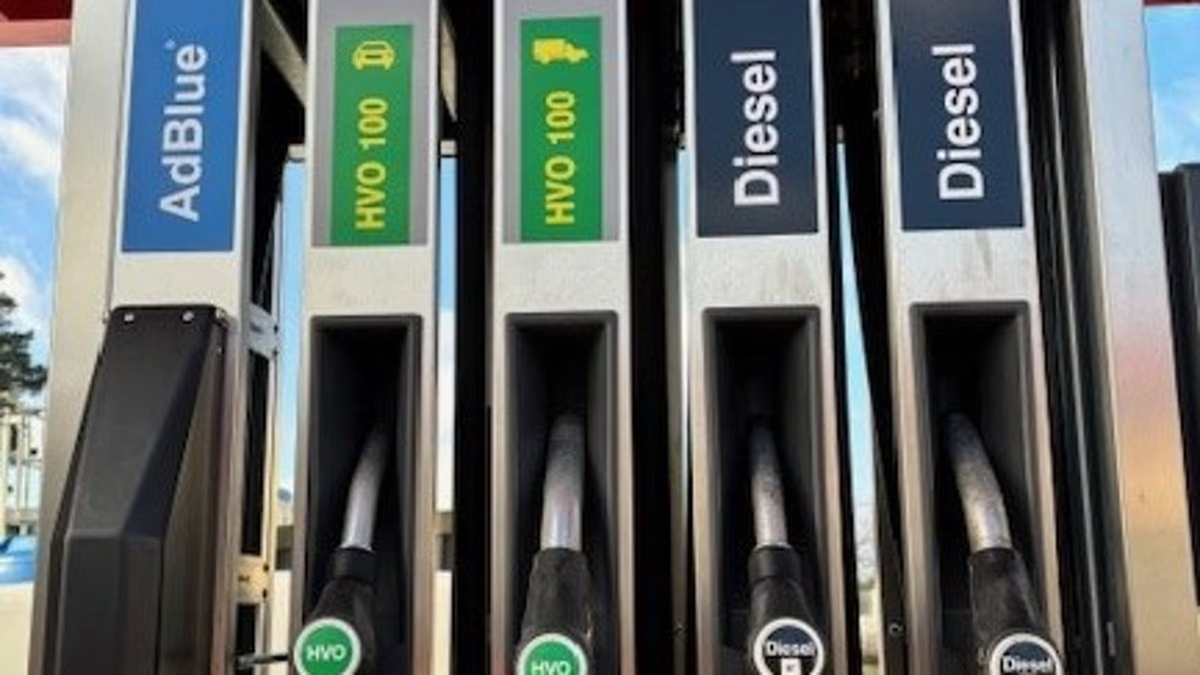
Audi has released its third-generation £82,000 Q7 SUV - and it has cooked up quite the story.That's because the German car giant has turned to a different recipe book for its latest luxury family car by using a diesel engine that's fully compatible with hydrotreated vegetable oil (HVO).This eco-alternative to conventional diesel from the pumps reduces a car's carbon footprint and can even increase the performance of your vehicle - or so the German car giant claims.HVO is a synthetic, renewable fuel that's a substitute for traditional diesel without any faff, such as using fuel additives. And it's being marketed as a genuine alternative to going electric.But is the niche fuel actually a viable option? And where do you go to fill up with it?After Audi's somewhat surprising move, we take a look at what it is, how much it will cost and its benefits. Audi has just launched its new, third-generation luxury Q7 SUV with a diesel engine that takes Hydrotreated Vegetable Oil (HVO), a renewable fuel alternative to diesel. Will it catch on? What is hydrotreated vegetable oil?HVO is a biofuel that's made by hydrotreating renewable bio-feedstocks. This is typically waste vegetable oils or animal fats.Once converted through a chemical hydrogenation process, it becomes a low-carbon fuel.HVO is free from sulphur and aromatics. And because it doesn't require any farmland, it is deemed a sustainable option.It is different to 'biodiesel', the green additive derived from agricultural crops that currently makes up 7 per cent of the diesel fuel you buy at the pumps.How much carbon does HVO save?By replacing conventional diesel with hydrotreated vegetable oil, diesel drivers can significantly reduce their environmental impact.HVO fuel offers up to 90 per cent lower net carbon emissions compared to fossil diesel.Rolls-Royce has been testing HVO as an alternative to conventional diesel.The engine maker said it can enable a reduction in harmful particulate emissions of up to 80 per cent and nitrogen oxide emissions by an average of eight per cent. HVO fuel offers up to 90% lower net carbon emissions compared to fossil dieselWhat other benefits does HVO offer? As well as significantly reducing net CO2 gas emissions, and releasing fewer nitrogen oxides, HVO produces fewer harmful particulates than diesel, making it better for air quality and less harmful to those breathing it in.It also has operational benefits.HVO is more stable than biodiesel, posing less risk of blocking filters or contaminating water, and there's no need to change infrastructure - it can be used as a drop-in alternative to traditional diesel.So there's no need to swap out your £82,000 Audi for a different £82,000 car - heaven forbid.HVO is also claimed to improve engine performance and longevity. That's because it produces less waste that can get into the engine itself, reducing maintenance costs and extending the lifespan of the vehicle.As it has a higher cetane number - which measures the ignition quality of diesel - HVO has also been found to improve engine performance and reduce consumption, counteracting the higher upfront purchase costs.HVO is more stable than biodiesel, so it presents fewer storage problems and has a shelf life of up to 10 years, making it easy to store without fear of degradation or contamination - provided, of course, you have the space for your own renewable diesel supply.Why are carmakers offering HVO?While drivers are being firmly incentivised to go electric - or pushed into electric cars, depending on your view - carmakers are looking to offer more flexibility and choice where they can.Renewable synthetic fuels are an alternative option, albeit a more left-field one.As HVO doesn't require engine updates (typically for engines up to 10 years old) and can be mixed with diesel, manufacturers do not have to tweak engines or incur extra expense to offer drivers this option.Simply, they need to list the compatible models and let you do the rest. HVO costs vary depending on your distributor, but it's typically around 10 to 15% more expensive than traditional diesel. Finding a forecourt selling it will be the biggest issue...Where can I fill up a car with HVO?HVO pumps are still a rarity at mainstream forecourts, with around 40 to 50 across the UK today. And the infrastructure typically caters to commercial HGV fleet operators who have a membership fuel card, rather than the general publicThat said, Esso has been trialling the availability of Ethos 25 per cent Renewable Diesel for passenger cars at around 35 of its 1,200 nationwide sites. These are primarily in the south east of England, including London, Brighton and Essex.AS 24 offers pure HVO100 for heavy transport across 22 sites in the UK, including Castleford, Leeming Bar, Liverpool, Bridgwater, and West Thurrock.Certas, another provider, also has 13 nationwide fuel stations for HGVs.Whether the network of HVO availability will grow is unknown. However, recent history of hydrogen filling stations - most of which have been closed down - show that if there isn't enough appetite, these could soon disappear. Which carmakers have models which take HVO?As we've explained, most engines made within the last decade or so are naturally compatible with HVO, so in theory most diesel cars from this period should be fine to use it.However, some manufacturers actively advertise which models support HVO.Skoda, for instance, states that all diesel models from model year 2022 onwards are approved to use HVO fuel.Similarly, Stellantis - which owns Fiat, Citroën, Peugeot and Jeep, to name a few - says that all its cars and light-duty commercial vehicles have been validated for HVO use.BMW also lists models certified as HVO-compatible on its website.Is HVO Clean Air Zone compliant?While HVO reduces tailpipe emissions, it does not automatically make your car compliant with Low Emission Zone standards for the London ULEZ or Birmingham CAZ, for instance.Using it doesn't change your car's official Euro emissions rating or upgrade it in the eyes of most local councils or Transport for London. Diesel cars on sale from September 2015 were required to meet Euro 6 standards, while petrol cars can enter most low emission - or clean air - zones without charge if they are compliant to Euro 4 (from 1 January 2006).Because enforcement cameras read your car's registration plate and check DVLA databases for the engine's official emissions rating, there's no way for a camera to know you're running HVO.So, for the moment, you'll just have to be satisfied patting yourself on the back, with no official recognition for your eco efforts.That said, as most cars that can use HVO will already be compliant due to their age and engine, most drivers won't notice any change.Will HVO save you money?HVO isn't an eco-fuel solution if you're looking to save money or prioritise convenience.Costs vary depending on your distributor, but it's typically around 10 to 15 per cent more expensive than traditional diesel.The benefits, however, for those prioritising performance and environmental impact, can outweigh the cost - if you've got the cash to spare and are happy to source it yourself.
Audi's £82k diesel SUV runs on vegetable oil: Is it better than an EV?
The German car giant has turned to a different recipe book for its latest luxury SUV by using a diesel engine compatible with hydrotreated vegetable oil. Where can you fill up and will it save you money?
1,159 words~5 min read