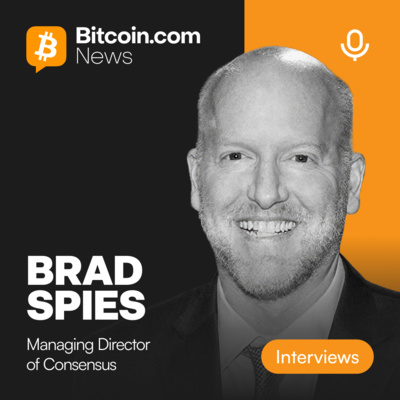
Gencel, Solflare Co-Founder — The Stablecoin Take That Got Him Almost BootedVidor Gencel co-founded Solflare in 2020 — Solana's first self-custodial wallet. He's been in crypto since 2016 and has spent five years doubling, tripling, and quadrupling down on a single chain while competitors went multi-chain. So when he says stablecoins matter most outside the West and the obsession with replacing banks is misguided, it's a contrarian take worth hearing.David Sencil sits down with Vidor at Consensus 2026 for a tour through the Solflare consumer stack, what self-custody really means, the multi-chain trap, the $49 hardware wallet built on Visa/MasterCard chip platforms, the PAL Privacy Aggregator Layer, and Solflare Magic — the AI assistant that translates human intent into deterministic trades.We cover:- The London conference where Vidor was "almost left out of the room" for his stablecoin take- Why multi-chain forces "lowest common denominator" features- Solflare Shield: hardware wallet at consumer-card price points- PAL and encrypted state on Solana mainnet "within one quarter"- Solflare Magic: AI as deterministic translator, never traderFilmed at Consensus 2026.Host: David SencilJun 19, 202632:30Syed, Midnight President — $200M Spent, Zero VCs, and Why Anonymity Isn't PrivacyFahmi Syed runs the Midnight Foundation, custodian of a fourth-generation privacy-first blockchain backed by Charles Hoskinson. Roughly $200 million spent. Zero VC funding. One of the biggest airdrops in crypto history.Jamie Redman sits down with Fahmi at Consensus 2026 for the full breakdown: programmable privacy, selective disclosure, the dual-token Night/Dust model, why Zcash and Monero keep getting delisted, why agentic AI desperately needs a proof layer, and what "Web 2.5" actually means.We cover:- The bank-account-number anecdote that defines rational privacy- Why transparent blockchains can't carry institutions across the bridge- Midnight's private-permissions model between Monero and JPMorgan- The dual-token Night/Dust design and predictable corporate costs- One of crypto's biggest airdrops — no VCs, no insider allocations- March 2026 mainnet and the 100+ builders in pre-prod- The 2008 TradFi trading floor that shaped his self-custody viewsFilmed at Consensus 2026.Host: Jamie RedmanJun 17, 202614:24Brown, BASE DevRel — $4T Stablecoins, X402, and the Agent EconomyEric Brown leads Developer Relations at BASE, Coinbase's L2. So when he says the chain sees over $4 trillion in monthly stablecoin payments and 25+ local stablecoins now circulate worldwide, it's worth interrogating closely.Jamie Crypto sits down with Eric at Consensus 2026 for a full read on what's actually shipping on BASE in 2026 — X402 as the default agent-payment rail, sub-cent fees and 5,000 TPS bursts, the Azul upgrade, the AI red team / blue team security flip, and why seven-plus local stablecoins are getting real point-of-sale adoption in South America while the U.S. lags.We cover:- The $4T monthly stablecoin payments figure (Eric's claim)- X402 and ~2M agent transactions in 30 days on BASE- 400M gas per block, sub-tenth-of-a-cent fees, 5,000 TPS bursts- DeFi security after a brutal month of hacks — AI's role on both sides- Why the agentic cohort is "completely unbanked already"- Morpho, 4% USDC yields, and what makes an onchain app stickyFilmed at Consensus 2026.Host: Jamie Redman🎧 Stream the full episode now and follow Bitcoin.com News on Spotify to stay ahead of the biggest trends in crypto, stablecoins, AI, and Web3 infrastructure.Jun 16, 202619:41Spies, Consensus MD — How the Institutions Showed Up to Crypto's Biggest TentBrad Spies runs Consensus, the 11-year-old big-tent crypto conference operated by CoinDesk. On day three of Consensus Miami 2026 he sits down with David Sencil to walk through what's actually different this year: 15,000 attendees, JP Morgan, Fidelity, Schwab, DTCC and Swift on the sponsor list, and 1,200 "normie businesses" reached out to about stablecoin onboarding.He's also candid about the Gensler-era detour to Toronto, the 2022 Austin apex (Method Man, Red Man, Disclosure, Celsius the day after), and his own crypto origin story: he bought his first Bitcoin in 2013 and sold it almost immediately. "I kick myself to this day."We cover:- Why JP Morgan, Fidelity, and Swift all bought booths this year- The institutional pipeline built behind closed doors over four years- Stablecoin workshops, normie-business onboarding, and the hackathon stack- Where Consensus goes after Miami 2027 and New York- Why "most every bank account will come with a wallet address"Filmed at Consensus 2026 in Miami.Host: David Sencil🎧 Listen now and follow Bitcoin.com News on Spotify for more conversations with industry leaders, builders, investors, and innovators shaping the future of crypto.Jun 12, 202622:47Abiodun, Mysten Labs CPO — The Paper That Killed Single-CPU ConsensusAdeniyi Abiodun has been in crypto since 2012, built trading and risk systems at investment banks, and led R&D on Facebook's Project Libra at Meta before co-founding Mysten Labs. So when he says every other L1 has a "skill issue" baked in at architecture time, it's worth listening.David Sencil sits down with Adeniyi at Consensus 2026 to walk through how Sui solved horizontal-scale consensus, why a famous L1 founder said it was impossible, and what comes next — native stablecoins, private payments by default, Walrus storage, and the agentic payment rails Stripe is pricing at a billion TPS.We cover:- Why every other L1 is capped by a single CPU and Moore's Law- The Project Libra story — "way too early" and what survived into Sui- 300ms finality vs Solana's 12 seconds- SuiUSD: $63M in a month and a half, free stablecoin transfers- Protocol-level private stablecoin transactions launching this year- Walrus storage outgrowing Arweave in a year- Why "AI doesn't care about your tribe"Filmed at Consensus 2026.Host: David Sencil🎧 Listen now and follow Bitcoin.com News on Spotify for more conversations with the builders, founders, and innovators shaping the future of crypto, AI, and decentralized technology.Jun 10, 202633:44Will AGI Arrive Within 3 Years? Raja Rajamannar on AI, Jobs, and the Future of CommerceCould AI agents soon handle purchases, manage finances, and automate entire job functions? According to Raja Rajamannar, that future may be arriving much faster than most people expect.In this episode, Jamie Redman sits down with Raja Rajamannar, Senior Fellow, Former CMCO, Mastercard and author of the Wall Street Journal bestselling book Quantum Marketing, to discuss how artificial intelligence is reshaping business, consumer behavior, and the global economy.Topics covered include:• The shift from traditional marketing to Quantum Marketing• Why AI adoption is accelerating at unprecedented speed• Which industries and job roles are most vulnerable to automation• The emergence of AI agents and machine-to-machine commerce• How AI could redefine brand loyalty and consumer decision-making• The role stablecoins may play in the future of payments• Challenges surrounding regulation, privacy, and trust in AI systems• Raja's prediction for when Artificial General Intelligence (AGI) could arriveAs AI continues to transform how we work, spend, and interact with technology, businesses, consumers, and policymakers are facing critical questions about what comes next.🎧 Follow Bitcoin.com News on Spotify for more conversations on AI, crypto, Web3, and the future of technology. If you enjoyed this episode, share it with a friend.Chapters:00:00 AI's Appeal: Convenience, Comfort & Human Behavior00:29 Introduction: Raj Rajamannar on Marketing's Future00:47 Why Traditional Marketing Theory Needed Reinvention01:46 The Five Paradigms of Marketing Explained04:38 Why AI Feels Different From Previous Technologies06:19 AI and the Future of Jobs: Boom or Doom?08:31 The Problem With "Learning AI Skills"09:52 AI Agents and Consumer Decision-Making12:22 Generational Differences in AI Adoption13:38 How AI Agents Will Transform Marketing15:51 Machine-to-Machine Marketing Explained17:21 Will AI Agents Use Crypto and Stablecoins?17:47 Why Stablecoins Solve Real Financial Problems19:23 How AI Agents Could Optimize Payments20:37 Inflation, Stablecoins & Preserving Value21:47 Regulation, KYC and Autonomous AI Agents23:24 How Close Are We to AGI?24:09 Final Thoughts & OutroJun 09, 202624:34BTC Inc Events Head Justin Doochin: 48 Hours to Rewrite Bitcoin 2024What does it take to organize the world's largest Bitcoin conference?In this episode, Justin Doochin, Head of Events at BTC Inc., joins David Sencil at Bitcoin 2026 Las Vegas to share an inside look at how Bitcoin conferences are built—from year-long planning cycles to last-minute pivots that reshape the entire event.Justin recounts the extraordinary 48-hour scramble that transformed Bitcoin 2024 in Nashville after an assassination attempt altered the political landscape, ultimately leading to Donald Trump becoming the first sitting or future U.S. president to address a Bitcoin audience.Topics discussed include:- The 48-hour reorganization of Bitcoin 2024 Nashville- How 60 full-time BTC Inc. team members spend an entire year preparing each conference- What happened when the Secret Service invalidated eight months of event planning overnight- The reality behind viral photos and misconceptions about attendance at Bitcoin 2026- Key differences between Bitcoin conferences in Asia and the United States- Why BTC Inc. secured a multi-year commitment to Las Vegas while preparing for Nashville 2027- Metaplanet, Bitcoin Asia 2026, and the growing influence of Asian Bitcoin markets- Why in-person events are becoming more valuable in an AI-driven world- How BTC Inc. views side events as a feature—not a threat—to the main conference experienceRecorded at Bitcoin 2026 in Las Vegas for Bitcoin.com News.Learn more:- Bitcoin Conference: https://b.tc/conference- The Bitcoin Conference on X: https://x.com/TheBitcoinConf- Justin Doochin on LinkedIn: https://www.linkedin.com/in/justindoochinHost: David SencilEnjoyed this episode? Follow the podcast, leave a rating, and share it with a friend interested in Bitcoin, crypto events, and the people building the industry's biggest gatherings.Chapters00:00 Introduction to BTC Inc. and Event Planning02:51 Transition from Marketing to Events05:55 The Bitcoin Conference Experience09:04 Nashville: A New Venue for the Bitcoin Conference12:13 Comparing Bitcoin Conferences: America vs. Asia14:46 The Importance of Human Connection in Events17:59 Planning a Major World Conference21:02 The Role of Side Events in ConferencesJun 05, 202627:52Eric Trump: Inside American Bitcoin, Trump's Crypto Vision & the Race to Become a Bitcoin SuperpowerIn this exclusive Consensus 2026 Miami interview, Eric Trump joins David Sencil for a wide-ranging discussion on Bitcoin, cryptocurrency adoption, Bitcoin mining, AI infrastructure, energy policy, institutional investment, Bitcoin ETFs, regulation, and the future of digital finance in America.Eric shares his perspective on the rapid growth of American Bitcoin, the increasing role of Wall Street and institutional investors in Bitcoin, and why Bitcoin mining is becoming a strategically important industry connected to energy production, technological innovation, and national security.The conversation also explores:- The future of Bitcoin mining in the United States- How Bitcoin ETFs are accelerating mainstream adoption- The intersection of AI, data centers, and energy infrastructure- Why nations are competing for Bitcoin hash rate and digital asset leadership- Corporate treasury adoption of Bitcoin- Regulatory developments shaping the crypto industry- America's opportunity to become the world's leading Bitcoin superpowerWhether you're a Bitcoin enthusiast, investor, entrepreneur, policymaker, or simply curious about the future of money, this episode offers valuable insights into the forces shaping the next era of finance and technology.🎙️ Guest: Eric TrumpCo-Founder & Chief Strategy Officer of American Bitcoin🎤 Host: David Sencil👉 Enjoyed this episode? Follow the Bitcoin.com Podcast on Spotify, leave a rating, and share this episode with friends interested in Bitcoin, crypto investing, mining, and the future of digital finance.🔔 Follow Bitcoin.com for more interviews, market insights, Bitcoin education, and conversations with the biggest voices in crypto.Chapters:00:00 The State of Bitcoin Mining in America10:05 America's Role in Global Cryptocurrency Leadership19:56 Challenges and Opportunities in Bitcoin Mining29:06 The Future of American Bitcoin and Industry GrowthJun 03, 202629:26Fan, Trust Wallet CEO — 200M Users, #3 in Bitcoin Volume, and Inscriptions OGs Won't LikeFelix Fan runs Trust Wallet — 200 million users and, per his own numbers, the third-largest self-custodial wallet by Bitcoin transaction volume. At Consensus 2026 he sits down with David Sencil to drop the stats, the controversies, and the roadmap.The tension Felix is honest about: shipping innovations on Bitcoin — like inscriptions — that Bitcoin OGs don't love. The Trust Wallet bet is that the next 100M users care more about features than purity, while still wanting self-custody. He also gets specific about what's NOT shipped yet: private swap, private transfer, and Zcash support are all built but waiting on legal frameworks.We cover:- The 200M-user and #3 Bitcoin volume claim- Inscriptions on Bitcoin and the OG debate- Gasless stablecoin transfers via RPC-level sponsorship- Trust Wallet's agent kit for AI on-chain- Perps, prediction markets, and the regulatory wall on privacyFilmed at Consensus 2026.Host: David SencilJun 02, 202618:52Sarah Knafo: Why a French MEP Is Fighting for Bitcoin Inside the EUBank accounts frozen. Bitcoin entrepreneurs kidnapped. A digital euro that could track how you spend money.French MEP Sarah Knafo joins Bitcoin.com News to discuss Bitcoin, financial freedom, banking censorship, the digital euro, and Europe’s growing economic and political challenges.Recorded at Paris Blockchain Week, Knafo explains why she defended Bitcoin inside the European Parliament, how frozen bank accounts changed her view on money, and why she believes Europe risks becoming a “digital colony” dependent on US infrastructure.We also discuss:• Bitcoin and monetary sovereignty• The dangers of the digital euro• Banking censorship and frozen accounts• Stablecoins and dollar dominance• Rising wrench attacks targeting Bitcoin entrepreneurs in Paris• Why French innovators are leaving for Dubai and Singapore“If you control the money, you control the people.”Follow BitcoinNews on Spotify for more Bitcoin, crypto, and macro interviews.May 28, 202629:36White House Crypto Chief Patrick Witt on Bitcoin & U.S. Crypto PolicyWhat is the future of Bitcoin and crypto regulation in the United States?In this exclusive conversation recorded at Bitcoin 2026 in Las Vegas, Patrick Witt — Executive Director of the White House Crypto Council — joins David Sencil to discuss America’s evolving crypto strategy and the government’s approach to digital assets.The discussion explores:• The Clarity Act and its impact on the crypto industry• Bitcoin as a strategic national asset• U.S. crypto regulation and tax reform• Coordination between regulatory agencies• America’s race to lead global blockchain innovation• The future of Bitcoin policy under the White House Crypto CouncilChapters:00:00 The Vision for America's Innovation Leadership02:48 Establishing the White House Crypto Council06:08 Navigating Regulatory Frameworks for Crypto08:32 The Importance of the Genius Act12:21 Bipartisan Challenges in Crypto Legislation15:09 Collaboration Among Regulatory Agencies18:11 Global Implications of U.S. Crypto Policy20:52 Striking the Right Regulatory Balance23:50 The Future of Crypto Legislation27:05 The Role of the Executive Order30:03 Strategic Asset Management and Bitcoin32:59 Commitment to the Crypto IndustryThis episode offers an inside look at how policymakers are shaping the future of Bitcoin, blockchain technology, and digital asset adoption in the United States.🎧 Listen now and follow for more exclusive interviews, Bitcoin insights, and conversations with leaders shaping the future of crypto.May 27, 202634:01TXMC on Bitcoin, the Death of the American Dream, Pax Americana & the Future of the Dollar System🎙️ Is the American Dream collapsing while financial markets keep soaring?In this episode, TXMC joins host Alex Richardson for a deep discussion on macroeconomics, Bitcoin, geopolitics, and the future of the global financial system.They explore:🔹 The decline of the American Dream🔹 Why markets rise while everyday people struggle🔹 The weakening of Pax Americana🔹 The future of the U.S. dollar system🔹 Bitcoin’s role in a changing world order🔹 Why many altcoins may never recoverA wide-ranging conversation on money, power, inflation, Bitcoin, and the economic shifts reshaping the world today.🎧 Listen now and follow for more conversations on Bitcoin, macroeconomics, and the future of finance.May 25, 202655:35Is Crypto Near the Bottom? Bitcoin, Hyperliquid, and the Self-Custody CrisisIn this episode of Token Narratives, Graham Stone, Alex Richardson, and David Sencil break down a market that still looks shaky on the surface but may be getting closer to a major turning point. They debate whether Bitcoin has more downside ahead, why some cycle indicators still point to a later bottom, and why others are turning more bullish despite ugly macro conditions.The conversation also dives into Hyperliquid: its deal with Circle, whether regulation could eventually crush its edge, and what happens if traditional finance finally moves in on the perpetuals market. They unpack the bigger question of whether Hyperliquid can build a moat before the old system fully wakes up.They also cover one of the darkest themes in crypto right now: the growing physical security risk around self-custody. From bodyguards at conferences to wrench-attack fears and real-world theft tactics, the episode explores whether “not your keys, not your coins” is running into a brutal real-world limit.A wide-ranging conversation on Bitcoin, macro, AI-driven markets, Hyperliquid, security, and the narratives shaping crypto right now.00:50 - Welcome Back and Market Overview02:13 - Crypto Market Analysis03:39 - Glassnode Chart Explanation04:51 - Cycle Length Chart Discussion06:12 - Inflation and Rate Cuts07:43 - Stock Market and Fed Transitions09:10 - Bullish Sentiments and AI Impact12:07 - Crypto and CapEx Spending13:44 - Future of Bitcoin and Crypto23:26 - Hyper Liquid and USDC Partnership27:17 - Regulation and Hyper Liquid's Future33:29 - Hyper Liquid Market Cap Surge33:50 - Crypto Security Concerns41:27 - Conclusion and Wrap-UpMay 22, 202642:29Campbell, Ex-Paxos Risk Lead — The Bank Lobby Is Sabotaging ItselfAustin Campbell ran roughly $23 billion in USDP and BUSD reserves at Paxos. Before that he was a fixed income trader running major funding desks at the banks. Today he's a Professor at NYU Stern and founder of Zero Knowledge advisory. So when he says the U.S. bank policy lobby is sabotaging itself, the mechanics matter.David Sencil sits down with Austin at Consensus 2026 for a dense, opinionated tour through what stablecoins actually do to bank deposits, why GENIUS Act implementation may bite crypto in unexpected ways, why he's bearish on CLARITY, and why Aave in its current form can't survive the nation-state security era.We cover:- The Paxos vs Circle SVB "craftsmanship" gap- The mechanical case that stablecoins don't cause deposit flight- Reshoring the eurodollar market into U.S. banks- GENIUS Act and the yield compromise- The decentralization / smart contracts / RWAs trilemma- Aave on Ethereum and nation-state attackersFilmed at Consensus 2026.Host: David Sencil🚨 The banking lobby may be fighting the wrong battle. Hear Austin Campbell explain why — now streaming on Spotify.May 21, 202640:21Community Is King: Why Wadoozie Is Ditching Online Hype for Real-World ParticipationWadoozie is a narrative-driven, on-chain attention network built on Ethereum, pairing a native ERC-20 token ($WADZ) with a real-world 48-state U.S. tour, 576 Signal Fragments redeemable for tokens (336 hidden across the 48 states, 240 in an online pool), and a Publishers Network that pays creators directly from a dedicated 7% of total supply.This episode features two guests from the Wadoozie team. The project is led by Mr. Wadoozie, Senior Internet Architect Engineer of Software, who brings more than a decade of experience in the cryptocurrency industry. He is joined on this episode by Tay, Operations Manager, who has a background in marketing and management and has run operations for multiple crypto projects.The token launches with a roughly one billion effective supply (two billion minted, 999,999,999 burned at launch), 0% buy/sell tax, a DAO-governed locked liquidity pool, and a renounced contract — every parameter publicly verifiable on Etherscan and audited by CertiK.At the center is Wadoozie himself: a returning signal that takes a character's form, traveling the country by tour bus to “activate” each state as a node in a fractured cultural network the mythology calls The Feed. The mission is structured as eight narrative Acts opening with the Austin Flagship and closing back in New Orleans, with seven Flagship cities — Austin, Los Angeles, Las Vegas, Chicago, NYC, Miami, and Nashville — anchoring the arc across roughly four and a half months. After the 48 states wrap, the network expands to Europe.About Our GuestsMr. Wadoozie is the Senior Internet Architect Engineer of Software on the project, with more than a decade of experience in the cryptocurrency industry. He sits at the center of the mission — the returning signal that takes a character's form, traveling the country by tour bus to activate each U.S. state as a node in a fractured cultural network the mythology calls The Feed.Tay is the Operations Manager at Wadoozie, with a background in marketing and management and prior operations experience across multiple crypto projects. Tay runs the @wadoozie X account and sets the public voice of the mission as the network activates one state at a time. On this episode Tay represents the operational side of the project — the people moving the bus, dropping the Signal Fragments, and building out the Publishers Network across the 48-state route.To learn more about the project visit Wadoozie.com, and follow the team on X, Telegram or Discord.May 21, 202651:23The Future of Crypto Regulation in the U.S. | Mike Selig (CFTC Chairman)CFTC Chairman Mike Selig joins David Sencil to discuss the future of crypto regulation in the United States.He explains the shift away from enforcement-driven policy, the push to make the U.S. the crypto capital of the world, and what new legislation could mean for Bitcoin, markets, and innovation.Topics include:- CFTC vs SEC- Federal crypto legislation- Bitcoin futures and derivatives- Prediction markets- The future of crypto in AmericaRecorded at Bitcoin 2026 in Las Vegas.🎧 Follow the podcast for more conversations with leaders shaping the future of Bitcoin, crypto, and Web3. If you enjoyed this episode, share it with a friend and leave a rating to support the show.May 20, 202630:43Pauline Shangett: '99% of Crypto+AI Projects Are Going Obsolete'ChangeNow Chief Strategy Officer Pauline Shangett sits down for her second Bitcoin.com News interview — this time from Consensus Miami, after six years away from the U.S. market. Her sharpest call of the day: "99% of crypto plus AI projects are going to go obsolete... launching a new chain is going to be, I think, like a desperate measure rather than a necessity."We also dig into ChangeNow's evolution from a 2017 instant swap into a full B2C/B2B ecosystem — Pro accounts, private transactions for whales, limit orders, perps, prediction markets, an in-house AI assistant, and an RWA push with X-Stoxx and Ondo Finance.We cover:- Why Pauline says 99% of crypto+AI projects are going obsolete- Her "80% certainty" call that chains stop mattering by 2028 — and the exceptions (Monero, Ton)- The coming meme coin renaissance and why Base wants revenge on Solana for the pump.fun era- ChangeNow Pro hitting almost 800,000 registered users and doubling in a year- Private transactions / private send — how it works, why whales want it, and why it's not a mixer- Limit orders, perps and prediction markets across custodial + non-custodial rails- The in-house AI assistant built by a self-described "certified AI skeptic"- RWA strategy: X-Stoxx live since January, Ondo Finance partnership almost shipped- The soft-launched ChangeNow super app teased for Token2049Learn more about ChangeNOW:🌐 Website: https://changenow.io/🐦 X: https://x.com/ChangeNOW_io📺 YouTube: https://www.youtube.com/ChangeNOW💬 Telegram: https://t.me/changeNOW_chat📘 Facebook: https://www.facebook.com/ChangeNOW.io/👽 Reddit: http://reddit.com/r/ChangeNOW_io/🏛️ LinkedIn: www.linkedin.com/company/changenow-io/ CHAPTERS:00:00 Introduction to ChangeNow and Daily Operations04:14 Evolution of ChangeNow: From Instant Swap to Comprehensive Services10:50 New Features and Innovations in ChangeNow20:45 Future of ChangeNow and the Crypto Landscape30:30 Reflections on the American Crypto Community and Upcoming Projects🎧 Is crypto heading toward a future where blockchains no longer matter?Listen now on Spotify and let us know your take.May 19, 202635:08May 16, 202629:11Is Circle’s ARC Token Legit? Bitcoin, Clarity Act, and Crypto’s Next Big FightIn this episode of Token Narratives, Graham Stone and Alex Richardson break down two of the biggest crypto stories right now: Circle’s new blockchain and token launch, and the high-stakes Clarity Act markup in the US Senate.They start with the market backdrop: Bitcoin losing $80K support, debate over whether this is just another relief rally, and the growing split between bullish and bearish macro takes. The conversation covers Dave the Wave, Benjamin Cowen, long-term holder stress, and why this cycle may still be young even if the drawdown has felt relatively mild.The episode then dives deep into Circle’s ARK chain and token. Graham and Alex unpack what ARK is supposed to do, why Circle is building a stablecoin-native financial chain, how the token is structured, and whether this is a real infrastructure play or just another corporate token money grab. They also debate whether Circle’s positioning, partners, and regulatory tailwinds give it a serious shot at becoming a major on-chain financial layer.Finally, they get into the Clarity Act markup: what the bill does, why the banking lobby is panicking about stablecoin yield, why developer protections matter so much, and how this legislation could shape the next phase of crypto regulation in the US. It’s a wide-ranging conversation on Bitcoin, stablecoins, RWAs, policy, and the narratives that could define the next cycle.00:55 - Welcome to Token Narratives Episode 10101:29 - Market Overview and Analysis02:59 - CPI and Consumer Sentiment03:57 - Geopolitical Impacts on Markets04:28 - Bitcoin Market Analysis05:34 - Long-term Market Predictions06:59 - Ray Dalio's Bitcoin Analysis08:18 - Discussion on Stablecoins and Yields10:18 - Introduction to Circle's New Token, ARK13:16 - ARK Token Analysis16:58 - Future of Circle's Blockchain20:11 - Discussion on Token Utility25:19 - Conclusion on Circle's Strategy26:30 - Clarity Act Markup Discussion37:21 - Closing RemarksMay 15, 202638:59Reynolds, SoFi SVP — Why Most New Stablecoins Are Doomed to FailBen Reynolds was Silvergate's first Bitcoin-side hire back in 2016 and the company's president when it wound down in 2023. After stops at BVNK and BitGo, he joined SoFi six months ago to build out commercial banking at the intersection of TradFi and digital assets.In this conversation, Reynolds explains why most new stablecoins are doomed without users or distribution, what makes SoFi's 15 million members and $50B balance sheet an unfair edge, and why the next wave of stablecoin innovation belongs to regulated banks.We cover:Why stablecoins without users or distribution are "almost doomed to fail"The three legs of the stool: members, Galileo, and commercial bankingHow the GENIUS Act pulls stablecoin innovation back into regulated banksWhy bank-to-bank stablecoin interoperability is the next big problemWhat SoFi's $50B balance sheet means for counterparty riskWhy lending is the next frontier after paymentsFilmed at Bitcoin 2026 in Las Vegas.Host: David Sencil🎧 Listen now and follow the show for more conversations with the builders shaping the future of Bitcoin, stablecoins, and digital finance.May 13, 202632:43Is Anonymity Really Dead in Crypto? | Concordium CEO ExplainsIs anonymity in crypto really coming to an end?In this episode, Alex Richardson sits down with Boris Bohrer-Bilowitzki, CEO of Concordium, to unpack one of the biggest shifts happening in blockchain today—where privacy, identity, and regulation collide.While much of the industry is still focused on hype cycles and memecoins, this conversation goes deeper into what it actually takes for crypto to reach mainstream, real-world adoption.We explore why institutions remain cautious, what’s missing from today’s Layer 1 blockchains, and how new approaches—like identity at the protocol level and zero-knowledge proofs—could reshape the future of digital finance.In this episode, you’ll learn:- Why anonymity may not work for large-scale adoption- The real role of privacy in a regulated world- How identity can unlock institutional use cases- What most blockchains are getting wrong today- Why the next few years could redefine the entire crypto landscapeBoris shares a clear perspective:For crypto to move forward, it needs to work within real-world systems—not outside them.This isn’t about removing privacy—it’s about building it the right way.Guest & Links:Concordium: https://www.concordium.com/X (Twitter): https://x.com/ConcordiumMay 08, 202601:01:29Michael Saylor: Bitcoin’s Next Phase - 30% Growth, Yield, and a New Financial SystemWhat if Bitcoin isn’t just digital gold… but the foundation of an entirely new financial system?Michael Saylor, Founder and Chairman of Strategy, joins David Sencil to break down Bitcoin’s next evolution from a store of value to a powerful engine for growth, yield, and global credit.In this conversation, Saylor dives into:- Why Bitcoin could grow 30% annually- How Bitcoin-backed credit is changing finance- The rise of yield-generating BTC strategies- And what a Bitcoin-powered monetary system looks likeIf you want to understand where Bitcoin is headed next — this is the conversation to hear.Chapters:00:00 Introduction to STRC and Bitcoin's Potential02:48 Transforming Bitcoin into a Stable Credit Instrument06:03 Market Demand and Target Audience for STRC09:05 Comparing Bitcoin with Traditional Assets11:46 Understanding the Growth and Acceptance of STRC14:52 Competition and Future of Digital Credit Instruments17:51 Market Dynamics and STRC's Future Strategy🎧 Hit play, follow the show, and share this episode with someone who still thinks Bitcoin is “just a coin.”May 06, 202620:15Japan’s Only Licensed Stablecoin Exchange | SBI VC Trade CEO Kondo TomohikoWhat does crypto look like in one of the world’s most regulated markets?At TEAMZ Summit 2026 in Tokyo, Matthew Owens sits down with Kondo Tomohiko, CEO of SBI VC Trade the only licensed stablecoin exchange in Japan to explore stablecoins, regulation, and adoption. From USDC lending to Japan’s upcoming JPY-backed stablecoin, this episode reveals how strict regulation is shaping long-term opportunity.🔍 Topics Covered:• SBI VC Trade’s stablecoin license in Japan• USDC lending (up to 10% promo, ~5% target)• JPYSC (yen-backed stablecoin, Q2 2026)• RLUSD + 1M yen cap on foreign stablecoins• Japan FSA regulation & Coincheck impact• Crypto adoption: 14M users, 0.2% allocation• Staking culture in Japan• Metaplanet’s ~35,000 BTC treasury🎙 Guest: Kondo Tomohiko (Representative Director and President, SBI VC Trade)🎤 Host: Matthew Owens (Bitcoin.com) 📍 TEAMZ Summit 2026, TokyoChapters:00:31 - Introduction and Company Overview01:24 - Full-scale Introduction and Gaps02:35 - USB-C and Lending Services03:45 - Interest Rates and Campaigns05:02 - Economic Context in Japan06:05 - Conference and Fake Merchants07:19 - Company Operations and Innovations08:31 - RLUSD and XRP Discussion10:26 - Licensing and Regulations11:37 - Direct-to-Sales Payment Method12:59 - Cryptography and Stablecoin Licenses14:31 - Regulatory Environment in Japan17:05 - Coin Check Incident and Regulations18:29 - Industry Impact and Protection20:20 - Japanese Market and Investments22:28 - Young People's Interest in Investments24:12 - SBI Group and Asset Classes 25:09 - Staking and Stable Income27:07 - Conference with Metplanet28:14 - Metaplanet and Market Insights29:36 - Closing Remarks👉 Like, comment, subscribe, and share for more global crypto insights—plus follow Bitcoin.com for the latest in Web3 and DeFi.May 03, 202630:16Arthur Hayes: Why Bitcoin Isn’t in a Bull Run YetArthur Hayes breaks down his macro framework for Bitcoin in this conversation with David Sencil at Bitcoin 2026 in Las Vegas.Key topics:- Why Bitcoin tracks global fiat liquidity- Why this isn’t a true bull run yet- The $145K level that matters- AI as a potential credit shock- How money printing and bank credit drive marketsHayes argues that Bitcoin’s price is ultimately tied to the expansion of fiat in the global system, not institutional narratives or short-term sentiment.Chapters:00:00 The Future of Crypto and Retail Involvement03:02 Oil Markets and Economic Implications05:52 Bitcoin's Performance and Economic Indicators09:11 AI's Impact on the Economy11:59 Liquidity and Monetary Policy15:06 The Role of Stablecoins in Global Finance18:00 The State of DeFi and Security Concerns20:55 Market Sentiment and Future PredictionsArthur Hayes IG - https://www.instagram.com/cryptohayes/LinkedIn - https://www.linkedin.com/in/arthur-hayes-b493b42/Substack - https://cryptohayes.substack.com/Web: https://www.cryptohayes.comX - https://x.com/cryptohayesMaelstrom Fund LinkedIn: https://www.linkedin.com/company/maelstromfundWeb - https://www.maelstrom.fundX - https://x.com/maelstromfund👉 Follow for macro-driven Bitcoin insights and real market analysis—no noise, just signal.May 01, 202622:48Inside the SEC's Enforcement-First Era — From a Former InsiderAshley Ebersole spent his early SEC years on the distributed ledger working group. He has a vantage on the agency's crypto enforcement era that very few industry voices have.At Paris Blockchain Week 2026, he sits with David Sencil to walk through the embodiment theory courts later rejected, the asymmetric settlement pressure that forced startups to fold, and what tx is now building: the first FINRA-approved stock-token platform in the U.S.We cover:- The SEC's enforcement-first era and what it cost- The unlimited-budget settlement asymmetry- The embodiment theory and other rejected novel theories- What tx is building with FINRA-approved stock tokens- Why Gen Z is skipping traditional brokerage accountsChapters:00:24 - Bitcoin.com Live News Desk at Paris Blockchain Week01:28 - Background of Ashley Ebersole02:11 - SEC and New Technologies03:16 - Awareness of Bitcoin and Crypto04:06 - Experience at the SEC05:04 - Changes in SEC Leadership06:14 - Regulatory Challenges and Theories07:07 - Enforcement First Approach08:05 - Legal Theories and Court Rejections10:11 - Government Influence on Settlements12:06 - Bias Against Crypto14:02 - Legal Challenges and Court Decisions16:08 - Misunderstandings About Tokenization18:03 - Generational Differences in Financial Products20:25 - Predictions for On-Chain Real-World Assets21:42 - Understanding Tokenization 24:19 - TX and Tokenization Platform27:06 - Questions About Tokenized Stocks29:59 - Regulatory Approaches and Tokenization33:23 - Jurisdictional Differences in Tokenization36:30 - Future Discussions and Closing RemarksFollow for more conversations on crypto, markets, and the future of finance.May 01, 202638:07Mercuryo's CBO on Why DeFi Will Live Inside Revolut, Not Replace ItArthur Firstov, Chief Business Officer at Mercuryo, joined Alex Richardson at Paris Blockchain Week 2026 to challenge the dominant DeFi narrative.The future isn't DeFi platforms beating banks — it's DeFi primitives living as backend infrastructure inside Revolut, neobanks, and traditional banks with polished UX and millions of users. Plus crypto cards as the consumer gateway, the 2026 fintech-pivot M&A wave, and Mercuryo's Mastercard crypto credentials product.We cover:- DeFi's actual adoption path: white-label inside banks- Crypto cards as the mainstream stablecoin gateway- The fintech-pivot driving crypto M&A in 2026- Mercuryo + Mastercard's crypto credentials product- What MiCA actually changed for an early-stage compliant firm👇 Chapters:00:11 - Welcome and Introduction of Arthur Firstov01:01 - Overview of Mercurio01:29 - The Role of Stablecoins03:06 - Stablecoin Payments in Consumer Platforms05:12 - The Future of Crypto Cards06:25 - Peer-to-Peer Payments and Agents09:26 - Changes in DeFi and UX11:41 - Impact of Micah Regulation15:34 - Expansion to the US and Regulatory Challenges18:05 - Trends in Payments and FinTech23:21 - Future Trends in FinTech and AIDrop your take in the comments — are banks winning, or just adapting?📢 Follow for more crypto insights, interviews, and updates.Apr 30, 202625:31From 15 Banks to 250: Inside Paris Blockchain Week's Institutional WaveMichael Amar founded Paris Blockchain Week in 2019 because U.S. and Asian investors told him Paris had no crypto ecosystem. This year, 250 banks showed up.At PBW 2026, he sits with David Sencil to put real numbers behind the institutional adoption story, explain why MiCA enforcement is filtering who can attend European events, and predict where the next year's crypto M&A will land.We cover:- The 15-to-250 banks curve, year over year- PBW's "Paris is good for food and vacation, but for crypto, no" origin- MiCA enforcement filtering European events in real time- Why next year is the crypto M&A year- France's strengths and gaps for crypto foundersChapters:00:17 - Welcome to Bitcoin.com News Live Desk00:36 - Michael Amar's Background01:14 - Early Involvement in Digital Assets02:23 - Launching Paris Blockchain Week03:21 - Success and Challenges of the Conference04:18 - Institutional Adoption and Growth05:01 - Institutional Presence at the Conference06:18 - European Regulations and Compliance07:32 - Market Share and Competition08:46 - Future of Crypto in Paris and Europe09:33 - France's Role in Web3 and Crypto10:34 - French Regulations and Innovations11:11 - International Perspective on French Ecosystem12:20 - Venue and Logistics of the Conference13:34 - VIP Dinner at Versailles14:48 - Planning and Execution of the Conference15:42 - Importance of Quality and Logistics16:57 - Support for French Entrepreneurs19:38 - Safety and Perception Issues21:43 - Key Elements for a Successful Conference23:00 - Networking and Business Opportunities24:11 - The Importance of Real-Life Engagements📌 Follow Bitcoin.com for more Web3 insights, interviews, and breaking crypto news.Apr 30, 202625:08Animoca's Robby Yung on Why Crypto's Real Customer Was Always AIRobby Yung runs Animoca Brands' investment business — 650 portfolio companies across Web3. At Paris Blockchain Week 2026, he sits with Alex Richardson to argue blockchain's real product-market fit was always agentic commerce, not human consumer apps. Plus the iTunes "false promise" of digital ownership, why 6 billion gamers are the natural mass-adoption vector, and how RWAs bridge the physical and AI-managed worlds.We cover:- Why crypto's real customer was always AI agents- Digital property rights and the iTunes false promise- Gaming as the mass-adoption vector- What the metaverse actually is- RWAs as the AI-physical bridgeChapters:00:16 - Welcome to Paris Blockchain Week01:12 - Overview of Animoca Brands02:13 - Agentic Commerce and Blockchain03:41 - Consumer User Interface04:27 - Digital Property Rights Explained06:12 - Ownership in the Digital Age07:40 - Gaming and Blockchain Adoption09:28 - The Metaverse and AI12:00 - Optimism and Concerns about AI13:00 - NFTs and Their Future15:05 - Tokenization and Digital Twins16:05 - The French Web3 Ecosystem17:54 - Europe's Role in Crypto19:15 - Future Trends in AI and BlockchainFollow Bitcoin.com for more crypto interviews, insights, and market updates.Apr 29, 202621:37Unregulated Crypto Loans in Europe? 😳 | Bybit EU CEOGeorg Harer was a financial lawyer for 10 years before joining Bybit. Now Co-CEO of Bybit EU, he sits with David Sencil at Paris Blockchain Week 2026 to walk through the post-MiCA European crypto landscape — including the regulatory gap MiCA hasn't closed (crypto loans), the three-license stack platforms need to operate, and his pitch to regulators for a consolidated license that would save firms millions.We cover:- Crypto loans regulatory blind spot- The MiCA + e-money + MiFID three-license operator math- Why Bybit EU started with retail before institutional- Tokenized stocks at 2am at the club- Euro stablecoin liquidity vs USDC dominanceChapters:00:42 - Bybit's Growth and History01:11 - George's Background and Transition to Bybit02:21 - Bitcoin Loans and Regulation in Europe03:11 - Crypto Loan Regulation Discussion04:03 - George's Introduction to Bitcoin05:35 - Bybit's Focus on Europe07:28 - Trust and Regulation in European Crypto Market09:00 - Bybit's Customer Base and Licensing10:30 - Institutional Focus at Paris Blockchain Week11:15 - Average Bybit User in Europe12:28 - Bybit's Licensing and Regulatory Challenges14:11 - Future of European Financial Regulation17:31 - Euro-Denominated Stablecoins19:24 - Concerns About Dollar-Denominated Stablecoins21:35 - Reporting Requirements for Stablecoins22:22 - Excitement About Tokenized Stocks23:47 - Bybit's Future Products and Success MetricsFollow Bitcoin.com for more crypto interviews, insights, and market updates.Apr 29, 202626:11Satoshis as Gas: Cardano Foundation's Frederik Gregaard on Bitcoin + Cardano, Quantum, and On-Chain AuditFrederik Gregaard, CEO of the Cardano Foundation, sits down with David Sencil at Paris Blockchain Week 2026 for a wide-ranging conversation that starts with one big idea: using Satoshis as a gas fee natively on Cardano — so Bitcoin holders get programmable DeFi without leaving BTC.From there it goes deep — quantum resilience, AI agent identity at BMW and Lufthansa, the $400 trillion TradFi identity standard now anchored on chain, Grant Thornton auditing the Foundation's books on Cardano (Bitcoin holdings included), and why Abu Dhabi is the only regulator green-lighting cryptographic privacy.We cover:- Satoshis as gas: programmable DeFi on Bitcoin via Cardano- Quantum, Q-day, and why UTXO-based chains score high- AI agent identity at BMW, Lufthansa, and 400+ enterprise clients via SocoSumi- Legal Entity Identifiers: the $400T TradFi standard now anchored on chain- Hannover Re reinsurance — $100M minimum → $50K on the London Stock Exchange- Grant Thornton's on-chain architecture audit of the Cardano Foundation's books- Midnight, BLS signatures, GDPR-compliant on-chain finance, and the ADGM exceptionRecorded at Paris Blockchain Week 2026.Host: David SencilApr 26, 202622:28Stablecoin Payments in 12 Months: Myles Harrison on AMINA Bank's Build"Absolutely not multi-decade." That's AMINA Bank CPO Myles Harrison's window for stablecoin payments going mainstream — if the US and UK get their legislation over the line.Myles joins Alex Richardson at Paris Blockchain Week 2026 to unpack what AMINA — the Swiss–Austrian–Hong Kong crypto bank behind the BIS's Project Agora — is actually building: corporate payroll in stablecoins, 24/7 settlement, and the regulatory groundwork that finally lets product teams ship.We cover:- Why Myles gives stablecoin payments 12 months, not 12 years- How MiCA and the CASP license changed what product teams can actually build- Gig-economy payroll, supplier payments, and the death of the $50 wire fee- Running AMINA 24/7 through the tariff weekend — with no downtime- Inside Project Agora: interop and legal finality as the two real walls- Why "bear market is for building" — and what TradFi is quietly shipping this cycleHost: Alex Richardson Recorded at Paris Blockchain Week 2026.Apr 26, 202621:251M Shares in 4 Days: Amy Oldenburg on Morgan Stanley's Bitcoin ETFMorgan Stanley's spot Bitcoin ETF traded a million shares by day four — at 14 basis points. Not bad for a firm that spent years on the sidelines of the ETF race.Amy Oldenburg, Head of Digital Asset Strategy at Morgan Stanley, joins David Sencil at Paris Blockchain Week 2026 to walk through how the bank is approaching digital assets — across product, infrastructure, and regulation — and why she says there's more coming behind this launch.We cover:Morgan Stanley's spot BTC ETF launch and the 14bp fee strategyWhy emerging-markets investors tend to navigate crypto better than mostThe three-bucket framework: investments, infrastructure, new productsWhere Amy lands on quantum and "Q-day" for BitcoinThe GENIUS Act, OCC digital trust charter, and what's still missing from US clarityWhy cypherpunks and Wall Street aren't as far apart as they lookHost: David SencilRecorded at Paris Blockchain Week 2026.Apr 24, 202632:14Erald Ghoos, OKX Europe CEO — MiCA, Malta, and the 80% Exchange ReckoningIn 2017, a Bitcoin-maxi friend tried to convert Erald Ghoos. He didn't buy it — he'd spent his career building bank startups across Europe and was, in his own words, on "the dark side." Today he runs OKX Europe and says 80% of crypto exchanges on the continent won't survive what's coming.David Sencil sits down with Erald at Paris Blockchain Week 2026 to dig into the regulatory pressure cooker reshaping European crypto — MiCA, PI, MiFID, GDPR, DORA — and why struggling rivals are already approaching OKX asking to be acquired. They cover OKX's decision to anchor three financial licenses in Malta, the new X-Perps product designed to bridge onshore compliance with offshore-level liquidity, and the unified spot-and-derivatives account that doesn't exist anywhere else in Europe.We cover:- The personal arc: from skeptical banker to OKX Europe CEO- Why 80% of European crypto exchanges won't survive MiCA + PI + MiFID + GDPR + DORA- Why rivals are openly asking OKX to acquire them- The case for stacking three financial licenses in Malta- X-Perps: bridging onshore compliance with offshore-level liquidity- Europe's only unified spot-and-derivatives account- Merz at Davos and the deregulation signal- Tokenized stocks and 24/7 global market accessFilmed at Paris Blockchain Week 2026.Host: David SencilBitcoin.com News X: https://x.com/BitcoinNewsApr 24, 202635:06Banks Are Racing to Tokenize European Equity — WhiteBIT's Vlad Maltsev on the "Financial Supermarket" EraTokenized stocks trading 24/7 alongside crypto on one app. One European bank planning on-chain equity infrastructure by year-end. A "financial supermarket" where every asset class converges. This isn't a forecast from a think tank — it's what Vlad Maltsev, Deputy CCO at WhiteBIT, is hearing from the banks themselves.Vlad Maltsev joins Alex Richardson at Paris Blockchain Week to unpack tokenization timelines, MiCA's real-world impact on European banks, WhiteBIT's upcoming US expansion, and why compliance is still the only door that matters for institutional adoption.In this interview:- Why compliance is the gateway for every institutional entrant- How MiCA is pulling German and Dutch banks into crypto licensing- The "financial supermarket" thesis — one app, every asset class- Why tokenized equity could settle in seconds instead of days- WhiteBIT's MiCA status and US expansion timeline- What could dominate crypto narratives a year from nowFilmed at Paris Blockchain WeekBitcoin.com News: https://x.com/BitcoinNewsWhiteBIT: https://whitebit.comHost: Alex RichardsonChapters:00:19 - Welcome and Guest Introduction00:35 - Conference Overview01:04 - Institutional Adoption in Crypto01:49 - WhiteBit's Ecosystem02:30 - Sponsorships and Partnerships03:53 - Institutional Adoption Insights05:05 - WhiteBit's Market Focus06:12 - Stablecoins and Tokenization08:06 - Future of Financial Platforms09:07 - Crypto Trading Cup10:10 - Trading Strategies10:59 - WhiteBit's Future Projects12:17 - Future Use Cases in CryptoApr 23, 202613:20KuCoin EU's Sabina Liu: A TradFi Veteran's Reality Check on TokenizationTokenizing an asset doesn't automatically make it liquid. After 14 years at the London Stock Exchange, KuCoin EU's Managing Director Sabina Liu has a reality check for crypto's RWA hype cycle.Sabina joins Alexander Richardson at Paris Blockchain Week 2026 to talk through what she actually saw in digital assets that TradFi missed, where tokenization genuinely solves a problem (and where it doesn't), how MiCA has reshaped Europe's exchange landscape, and why KuCoin EU runs as a broker — not an order book — under the new regulation.We cover:- Why tokenization alone doesn't create liquidity or demand- What TradFi still does really well — and why not everything needs to be on-chain- How MiCA has reshaped the European exchange playbook- Why KuCoin EU operates as a broker, not an exchange- France's role in Europe's institutional crypto landscape- Where the real bridge between TradFi and digital assets gets builtFilmed at Paris Blockchain Week 2026.Host: Alexander RichardsonApr 23, 202613:34Real Finance's Brandon Kazakoff: Why RWAs Need Their Own Layer 1Most RWA projects bolt onto Ethereum or Solana. Real Finance didn't — they built their own chain. VP of Ecosystem Growth Brandon Kazakoff joins Alex Richardson at Paris Blockchain Week 2026 to explain why, in his view, real-world assets aren't just another token category. Issuance, risk classification, insurance logic, and governance all need to live at the protocol layer, not on top of it.We cover:- Why Real Finance built its own Layer 1 instead of deploying on Ethereum or Solana- What RWA protocols actually need that general-purpose chains can't deliver- How issuance, risk classification, and insurance logic work on-chain- Why 2026 is the year RWAs shift from theory to structured financial products- What institutional interest in RWAs actually looks like right nowFilmed at Paris Blockchain Week 2026.Host: Alex RichardsonApr 22, 202612:17Bitpanda's Mathieu Henry: Why Europe's Crypto Goes Mainstream by 2028Is Europe on a countdown clock? Bitpanda's Enterprise lead for France, Mathieu Henry, thinks so — and he's marking 2028 as the year crypto becomes fully commoditized across the continent.Mathieu sits down with David Sencil and Alexander Richardson at Paris Blockchain Week to talk about why MiCA pulled banks off the sidelines, how Bitpanda quietly runs the full crypto stack behind Lydia (France's 8M-user payments app), and why the biggest remaining blocker to institutional adoption isn't regulation — it's trust.We cover:- Why crypto will be fully commoditized in Europe by mid-2028- How Bitpanda powers Lydia's crypto product end-to-end- The B2B pivot reshaping Bitpanda's business- What the latest AFD report reveals about French crypto adoption- How MiCA actually changed the institutional calculus- The real blocker: trust between crypto-native players and banks- Where Europe stands vs the US and Hong KongFilmed at Paris Blockchain Week.Host: David Sencil | Co-host: Alexander RichardsonApr 22, 202618:58Bybit's Ambroise Helaine: Why 93% of France Knows Crypto but Only 11% Owns ItFrance has a crypto paradox. 93% of adults know what it is. Only 11% actually own any. Bybit France Country Manager Ambroise Helaine thinks the gap has almost nothing to do with regulation — and everything to do with product.Ambroise sits down with David Sencil and Alexander Richardson at Paris Blockchain Week 2026 to talk through what a conservative European retail market actually wants (hint: not leverage), why 50% of retail assets still sit in zero-interest cash accounts, and why MiCA alone isn't enough to unlock the full exchange playbook — three separate licenses are.We cover:- Why French crypto adoption plateaued despite MiCA landing- How Bybit rebuilt its European strategy around conservative savers- The three regulatory licenses European exchanges actually need- Why every exchange may eventually issue its own stablecoin- The DCA-first product line for set-and-forget investors- Tokenized stocks and what's actually shipping- How Europe stacks up against US and Asian crypto marketsFilmed at Paris Blockchain Week 2026.Host: David Sencil | Co-host: Alexander RichardsonApr 21, 202630:21All-in-One Crypto App Demo (News, Trading, Predictions)Looking for a single app that combines crypto news, trading insights, prediction markets, and wallet integration?In this episode, Shrey Pandey (Tech Lead at Bitcoin.com) breaks down how their team built an all-in-one crypto news app designed for both beginners and advanced traders—in under 2 months using AI/ML tools.Discover how this app simplifies crypto for the 80% of users who are still hesitant to engage, while giving power users a unified dashboard (Terminal Mode) to act on market-moving information instantly.Inside this deep-dive demo, you’ll learn about:- A personalized crypto news feed with 24-hour digest + audio playback- Seamless wallet integration without confusing crypto jargon- Prediction markets directly tied to breaking news events- Terminal Mode for real-time trading insights and execution- Satoshi Herald mode for distraction-free, ad-free reading- Multi-platform experience across iOS, Android, Apple Watch, and Apple TV- Social features like following wallets and tipping creators💡 Key insight: News is emerging as the next major Bitcoin use case—giving users the ability to see what’s moving markets and act on it instantly.Whether you're a crypto beginner, trader, or Web3 enthusiast, this episode shows how the future of crypto apps is becoming more integrated, accessible, and action-driven.Chapters:00:00 Intro – Shrey Pandey at Hapo-eN00:51 15 years in software engineering, 5 years at Bitcoin.com01:23 Why a dedicated crypto news app was needed02:26 The problem: user hesitation in crypto04:23 Wallet creation via social login06:07 Content strategy: articles, videos, podcasts08:04 Live demo begins08:30 Market notifications explained09:01 News tab: read, listen, digest10:07 Video & podcast experience10:54 Predictions markets walkthrough12:08 Terminal Mode deep dive13:01 Real-time timeline view14:58 Satoshi Herald (e-ink mode)16:21 Market categories overview17:08 Why media is the next crypto use case18:10 Tools for advanced traders20:28 Social features23:24 No direct messaging (regulation reasons)24:34 Platform availability26:15 Built in under 2 months28:25 Closing thoughtsApr 19, 202628:60Japan’s USDC Airport Pilot Beat Expectations 10x | Gen Adachi on Crypto PaymentsWhat happens when crypto payments go live in a real-world retail environment—like an airport?In this episode, Gen Adachi shares how Netstars launched a USDC payment pilot at Haneda Airport in Japan—and saw demand exceed expectations by 10x. This isn’t theory or hype—this is one of the strongest real-world use cases for stablecoins in everyday payments today.We dive into how USDC is being used at checkout, why QR payment infrastructure in Japan makes it easier to integrate crypto, and how Netstars is positioning itself as a major payments aggregator with access to over 700,000 merchants.Gen also breaks down the future of crypto payments—from multi-wallet and multi-chain support to expanding pilots beyond airports, including a Pokémon card shop in Osaka and international markets like Qatar, Mongolia, and Cambodia.If you're interested in crypto adoption, stablecoins like USDC, real-world blockchain use cases, or the future of digital payments in Asia, this conversation is packed with insights.Topics covered:- USDC payments in real-world retail- Haneda Airport crypto payment pilot- Stablecoin adoption in Japan- QR code payment systems and Web3- Multi-wallet, multi-chain payment infrastructure- Netstars and Japan’s payment ecosystem- Global expansion of crypto paymentsChapters:00:00 – Intro01:11 – Netstars: Aggregating 60 Payment Methods01:26 – USDC Live Pilot at Haneda Airport02:28 – Multi-Wallet, Multi-Chain Future04:06 – 10x Results: Pilot Performance Beat Expectations06:53 – Market Position: 700K Merchants in Japan07:29 – Second POC: Pokémon Card Shop in Osaka11:45 – International Expansion: Qatar, Mongolia, CambodiaApr 18, 202616:04ENVO at 500K Users: The Rise of Web3 Social Media | Raul VelazquezWhat does it take for Web3 social media to achieve real adoption?In this episode, Raul Velazquez discusses how ENVO has grown to over 500,000 users and what this means for the future of decentralized social platforms. As the shift from Web2 to Web3 continues, platforms like ENVO are exploring new ways to combine user-friendly design, creator monetization, and global accessibility.This conversation covers the key challenges that have held back Web3 social media in the past—and the strategies now being used to overcome them. Topics include user onboarding, creator economies, AI-powered translation, token-based incentives, and regional growth strategies across Asia.Whether you're interested in blockchain technology, cryptocurrency adoption, or the evolution of digital communities, this episode provides insight into how social platforms may evolve in a decentralized future.🔍 Topics Covered:- Web3 social media and decentralized platforms- User adoption and onboarding in crypto apps- Creator monetization and token economies- AI translation and global accessibility- Asia-first growth strategies and gaming partnerships- The future of Web2 vs Web3 social platformsApr 17, 202624:36AI glasses are finally starting to feel… practical.In this episode, Even Realities CEO Will Wang breaks down why smart glasses may be closer to mainstream adoption than we think. From subtle, everyday design to powerful AI features and developer-driven ecosystems, this conversation explores how wearable tech is evolving beyond novelty into something genuinely useful.We dive into the Even G2 and EvenHub platform, unpacking real-world use cases like live translation, teleprompting, and AI-powered meeting summaries. Will also shares why developers are excited about agent workflows on eyewear, how a ring-based control system changes the user experience, and why the company made bold design decisions—like skipping the camera entirely.If you're curious about the future of ambient computing, hands-free interfaces, and where AI meets hardware, this episode is worth a listen.Featuring:Will Wang (CEO, Even Realities)Hosted by Matthew OwensTopics include:- Smart glasses design that blends into everyday life- AI-powered features that actually matter- The role of developers in shaping wearable tech- New interaction models (including ring controls)- Why the future of computing may be more invisibleListen now and explore how wearable AI is becoming part of daily life.Follow Bitcoin.com News for more: https://x.com/BitcoinNewsApr 17, 202627:18Phillip Pon on Onchain Banking, Crypto Adoption, and the Future of Finance (EMURGO)What is the real endgame for crypto?Phillip Pon, CEO of EMURGO, joins David Sencil to explore why the future of crypto lies in building onchain banking systems that function as real financial infrastructure—especially for emerging markets.In this episode, Phillip shares insights on why self-custody, stable value, and distribution are critical to crypto adoption, and why the industry must move beyond speculative, casino-style use cases.He also discusses how blockchain can coexist with traditional finance, the importance of compliance and privacy, and how real-world utility will define the next phase of growth.The conversation also covers institutional adoption, the role of Japan in the global blockchain ecosystem, and why crypto may have a unique advantage in an AI-driven world.Topics include: onchain banking, crypto adoption, blockchain infrastructure, Cardano ecosystem, EMURGO, digital finance, emerging markets, self-custody, stablecoins, and the future of money.⏱️ Chapters:00:00 – Introduction & Phillip Pon’s Journey05:02 – EMURGO & the Cardano Ecosystem09:52 – Onchain Banking & Real-World Use Cases14:58 – Privacy, Compliance & Blockchain20:12 – Institutional Adoption25:06 – Japan & Regulatory Challenges27:57 – Future OutlookApr 14, 202628:58Hamze Fawzi on Gulf–Japan Crypto Bridge, RWA & Institutional AdoptionHamze Fawzi, Founder and Chairman of Assets Advisors Capital (AAC), joins Bitcoin.com News to discuss the growing financial bridge between the Gulf region and Japan, and how institutional infrastructure is shaping the future of crypto.In this episode, Hamze explains why traditional financial systems failed to connect these two major economies—and how blockchain, tokenization, and “capital architecture” are now unlocking new cross-border opportunities. He shares insights into how institutional investors approach risk, governance, and geopolitical events differently from retail participants.The conversation also explores the rise of real-world asset (RWA) tokenization, the role of compliant and non-custodial platforms like Mirai X, and why Japan’s leadership in CBDCs and stablecoins could play a key role in the next phase of global finance.From capital flows driven by presence and relationships to the importance of trust and governance structures, this episode provides a deep dive into how institutions are entering Web3.Topics include: institutional crypto adoption, Gulf–Japan finance, RWA tokenization, stablecoins, CBDCs, Web3 infrastructure, capital markets, blockchain regulation, and global crypto trends.Chapters:00:00 Introduction to AAC and Its Role01:07 Impact of Geopolitical Situations on Business03:27 The Bridge Between GCC and Japan05:00 Institutional vs Retail Investment in Crypto07:53 Tokenization of Real World Assets10:07 Decentralized Platforms and Compliance12:37 The Future of Stablecoins14:05 Cultural Insights: GCC and Japan16:23 Building Trust and Governance Structures19:41 The Human Element in Business22:05 Future Plans for AACApr 14, 202623:56Justin Waldron on Crypto Gaming, Solana, and the Future of Web3 Games (Play.fun)Justin Waldron, founder of Play.fun, joins David Sencil to explore the future of crypto gaming, Web3 game development, and how blockchain technology is reshaping the gaming industry.Recorded at Team Summit in Tokyo, this conversation dives into how frictionless onboarding, fair token launches, and fast, low-cost infrastructure like Solana are enabling a new generation of games. Justin also shares insights on why bear markets produce the strongest builders, how mobile gaming dominates in Asia, and why simpler, casual games may drive the next wave of adoption.They also discuss the role of AI in game creation, the rise of short-form gaming experiences, and how platforms like Play.fun are lowering barriers by removing wallet friction and enabling anonymous access.Topics include: crypto gaming, Web3 games, Solana blockchain, game development, token launches, mobile gaming trends, AI in gaming, and the future of digital entertainment.⏱️ Chapters:00:00 – Navigating the Crypto Landscape05:02 – Introducing Play.fun & Open Game Protocol10:02 – The Evolution of Game Development14:54 – The Role of AI in Game Creation20:03 – The Future of Gaming in Japan25:08 – Crypto Meets Gaming29:51 – The Next 12–18 MonthsApr 13, 202636:51Mark Piano: Yen Stablecoins & Japan’s Crypto FutureMark Piano, Director and Consultant at Horizons Global, joins Bitcoin.com News to discuss the future of yen-backed stablecoins, Japan’s evolving crypto regulations, and how legal frameworks are shaping the next phase of Web3 growth.In this episode, Mark explains why Japan’s regulatory clarity could become a major advantage for blockchain builders, and how yen stablecoins may unlock new opportunities in tokenization, DeFi, and cross-border finance. He also breaks down the role of offshore structures, including Cayman foundation companies, and why they’ve become a standard for Web3 projects globally.From Bitcoin’s early real-world use cases to the lessons learned from the DAO hack, this conversation explores how law, infrastructure, and innovation intersect in the crypto industry.Topics include: stablecoins, Japan crypto regulation, Web3 infrastructure, tokenization, DeFi, offshore finance, Cayman foundations, Bitcoin adoption, and global crypto markets.Chapters:00:00 – Introduction01:08 – Bitcoin Utility in Myanmar (No ATMs)02:30 – The DAO Hack & Becoming a Crypto Lawyer03:45 – Moving to the Cayman Islands04:50 – Why Cayman Became a Crypto Hub06:05 – What Are Cayman Foundation Companies?06:45 – Why Ownerless Foundations Matter in Web308:00 – Onshore vs Offshore Structures14:13 – Directors’ Fiduciary Duties Explained16:33 – Why Mark Is in Japan17:18 – Yen Stablecoins & Tokenization Opportunities19:58 – Offshore Stablecoin Issuance21:09 – Institutional vs Retail Market AccessApr 13, 202629:35Seihaku Yoshida: Japan’s Stablecoin Strategy & the Future of JPY CryptoHow did Japan become a leader in stablecoin infrastructure—and what role could JPY-backed stablecoins play in the future of global finance?Seihaku Yoshida, Founder and CEO of Hashport, joins Bitcoin.com News to share insights from the frontlines of Japan’s evolving crypto ecosystem. From launching during the crypto winter to building one of the country’s largest stablecoin payment platforms, Seihaku explains why regulation, innovation, and timing all matter.In this episode, we explore Japan’s approach to crypto policy, the rise of stablecoin adoption, and how emerging technologies like AI could reshape how digital currencies are used.If you're curious about stablecoins, global crypto infrastructure, and where the industry is heading next, this conversation offers a unique perspective from Japan.⏱️ Chapters:00:34 – Starting the Company01:21 – Background & Experience03:26 – Challenges in 201805:15 – Consulting & Early Crypto Projects07:00 – Hashport’s Current Focus09:16 – Transition to Wallet Infrastructure11:05 – Japan Expo Experience13:02 – Strategies & Collaborations16:31 – Japanese Crypto Users21:16 – Future Opportunities26:23 – Japan’s Regulatory Environment29:00 – The Role of StablecoinsApr 11, 202634:17Crypto Performance, Scalability & Infrastructure Explained | Annabelle HuangWhat is holding blockchain performance back?In this episode, Annabelle Huang, CEO of Altius Labs, discusses crypto scalability, execution-layer bottlenecks, and the growing demand for high-performance blockchain infrastructure. The conversation explores app chains, onchain trading, decentralized finance (DeFi), and how new market players are shifting expectations around speed and efficiency.Topics include crypto infrastructure, blockchain scalability, execution performance, modular architecture, DeFi trading, and institutional adoption.Chapters:00:00 - Introduction and Scaling Discussion00:17 - Interview with Annabel Wong01:09 - Thoughts on Digital Asset Summit (DAS)02:10 - Tokenization and Infrastructure Insights03:15 - Privacy and Compliance in Blockchain05:21 - Altius Labs' Focus and Strategy08:23 - Fintech and Enterprise Interest10:05 - Infrastructure Development Trends13:31 - Privacy Solutions and Challenges16:37 - Market Trends and Scalability19:54 - Scalability and Decentralization22:27 - Institutional Interest and Market Activity26:58 - Altius Labs' Roadmap and Future PlansApr 11, 202632:29Gary Liu on Stablecoins, AI Security & the Future of CryptoGary Liu, co-founder of Terminal 3, breaks down why crypto isn’t dying—but evolving into a more mature financial system.In this episode, we explore the rise of stablecoins, the role of AI in enterprise environments, and the growing importance of security and governance for AI agents. Gary also shares insights on how agent-to-agent payments could reshape digital finance, and why stablecoins may become the backbone of this emerging economy.We also discuss Japan’s role in the global crypto ecosystem and what it signals for broader adoption.Topics include: stablecoins, AI security, crypto adoption, digital payments, Web3 infrastructure, and the future of finance.Apr 10, 202631:37AI Agents Will Replace Software | Yat Siu on the Future of AI, Jobs & the Agent EconomyAre AI agents about to replace traditional software—and even jobs?In this episode, Yat Siu, Co-Founder and Executive Chairman of Animoca Brands, explains how autonomous AI agents are creating a new economy where anyone can build, automate, and monetize digital tasks in minutes.From earning $125,000 with a single agent to building over 1,000 AI-powered skills, this conversation explores how AI is transforming software, work, and the future of the internet.If you're interested in artificial intelligence, crypto, Web3, or the future of work, this episode breaks down what’s coming next—and how you can get started.Topics covered:- AI agents vs traditional software and search tools- How AI agents are changing jobs and productivity- Real-world earnings: $125K from a single AI agent- The rise of the AI agent economy and skill marketplaces- How AI agents learn, improve, and scale- Building custom tools in minutes (no coding required)- Practical use cases for everyday users and businessesRecorded in Tokyo, Japan during cherry blossom season.Follow Bitcoin.com News for more insights on AI, crypto, and Web3: https://x.com/BTCTN⏱️ Chapters:00:00 Intro & Opening00:30 Animoca Minds Update: 1,000+ Skills Built02:00 Yat Siu’s Personal Agent Evolution: 200 Agents Running03:20 One Agent Learning & Self-Replication05:00 Real Money: $125,000 with a Single Agent07:30 AI Agents vs. Search Tools09:00 The Mental Framing: Think of It as Hiring11:15 The Agent Economy & Marketplace12:00 Pricing & The Future14:30 Practical Applications & ClosingApr 10, 202623:50
BTC Inc Events Head Justin Doochin: 48 Hours to Rewrite Bitcoin 2024 by Bitcoin.com News Interviews
What does it take to organize the world's largest Bitcoin conference?In this episode, Justin Doochin, Head of Events at BTC Inc., joins David Sencil at Bitcoin 2026 Las Vegas to share an inside look at how Bitcoin conferences are built—from year-long planning cycles to last-minute pivots that reshape the entire event.Justin recounts the extraordinary 48-hour scramble that transformed Bitcoin 2024 in Nashville after an assassination attempt altered the political landscape, ultimately leading to Donald Trump becoming the first sitting or future U.S. president to address a Bitcoin audience.Topics discussed include:- The 48-hour reorganization of Bitcoin 2024 Nashville- How 60 full-time BTC Inc. team members spend an entire year preparing each conference- What happened when the Secret Service invalidated eight months of event planning overnight- The reality behind viral photos and misconceptions about attendance at Bitcoin 2026- Key differences between Bitcoin conferences in Asia and the United States- Why BTC Inc. secured a multi-year commitment to Las Vegas while preparing for Nashville 2027- Metaplanet, Bitcoin Asia 2026, and the growing influence of Asian Bitcoin markets- Why in-person events are becoming more valuable in an AI-driven world- How BTC Inc. views side events as a feature—not a threat—to the main conference experienceRecorded at Bitcoin 2026 in Las Vegas for Bitcoin.com News.Learn more:- Bitcoin Conference: https://b.tc/conference- The Bitcoin Conference on X: https://x.com/TheBitcoinConf- Justin Doochin on LinkedIn: https://www.linkedin.com/in/justindoochinHost: David SencilEnjoyed this episode? Follow the podcast, leave a rating, and share it with a friend interested in Bitcoin, crypto events, and the people building the industry's biggest gatherings.Chapters00:00 Introduction to BTC Inc. and Event Planning02:51 Transition from Marketing to Events05:55 The Bitcoin Conference Experience09:04 Nashville: A New Venue for the Bitcoin Conference12:13 Comparing Bitcoin Conferences: America vs. Asia14:46 The Importance of Human Connection in Events17:59 Planning a Major World Conference21:02 The Role of Side Events in Conferences