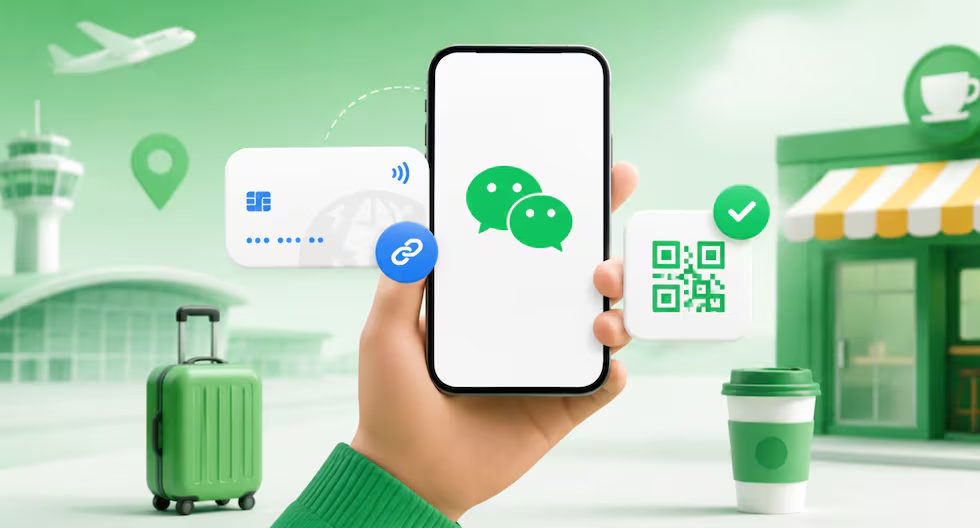
WeChat is the rare app that already does almost everything. Chinese users message, pay, book, shop, and summon a taxi without ever leaving it, which is exactly what makes Tencent’s next move interesting: rather than build a separate chatbot and fight for downloads, it is putting an AI assistant on top of the app a billion people already open every day. Tencent has begun testing that assistant, named Xiaowei, with a small group of users.
According to a statement from WeChat, the tool lets people interact by text or voice and complete tasks by tapping into the app’s vast library of mini-programs, the lightweight apps that run inside WeChat.
In practice Xiaowei is meant to be a command layer: ask it to start a call, draft a message, or navigate to a service, and it does the menu-digging for you. It draws mainly on Weixin’s own large language model, turning to DeepSeek for some queries.
The test is a limited one, and Tencent has framed it as a step toward a fuller launch. The company is targeting a public rollout in the third quarter, with the longer ambition of turning WeChat into something closer to a concierge that can handle payments, services, and financial tasks on a spoken or typed instruction. Investors liked the sound of it. Tencent shares jumped on expectations of an AI agent living inside the super app.