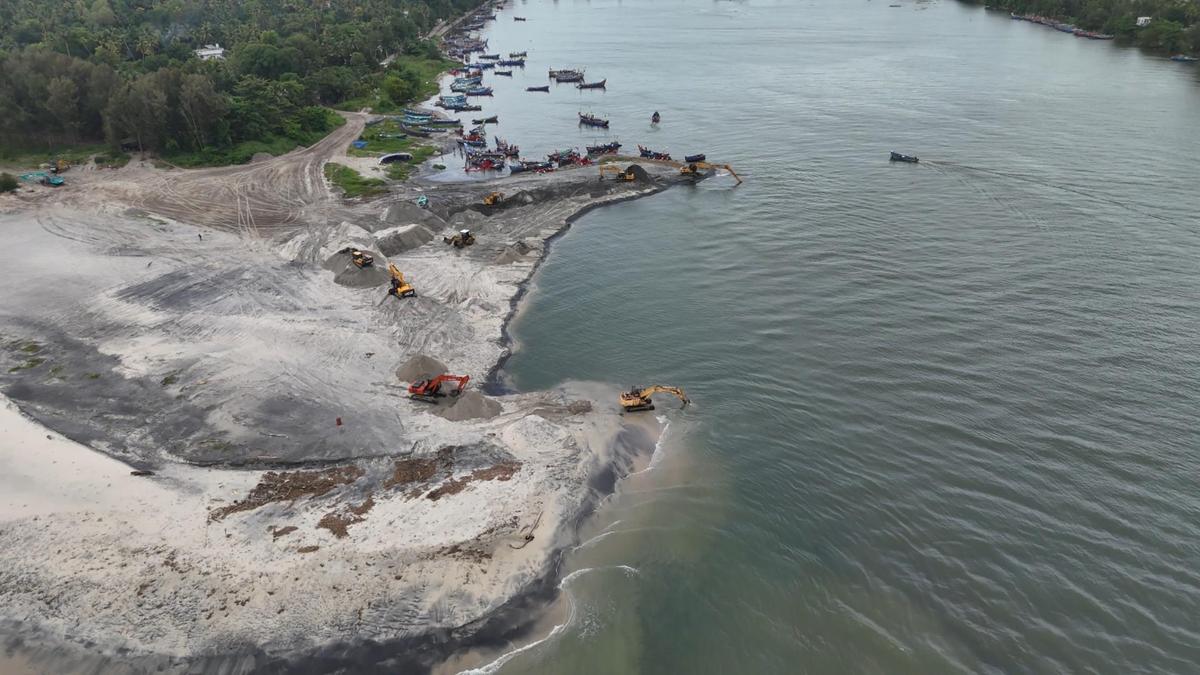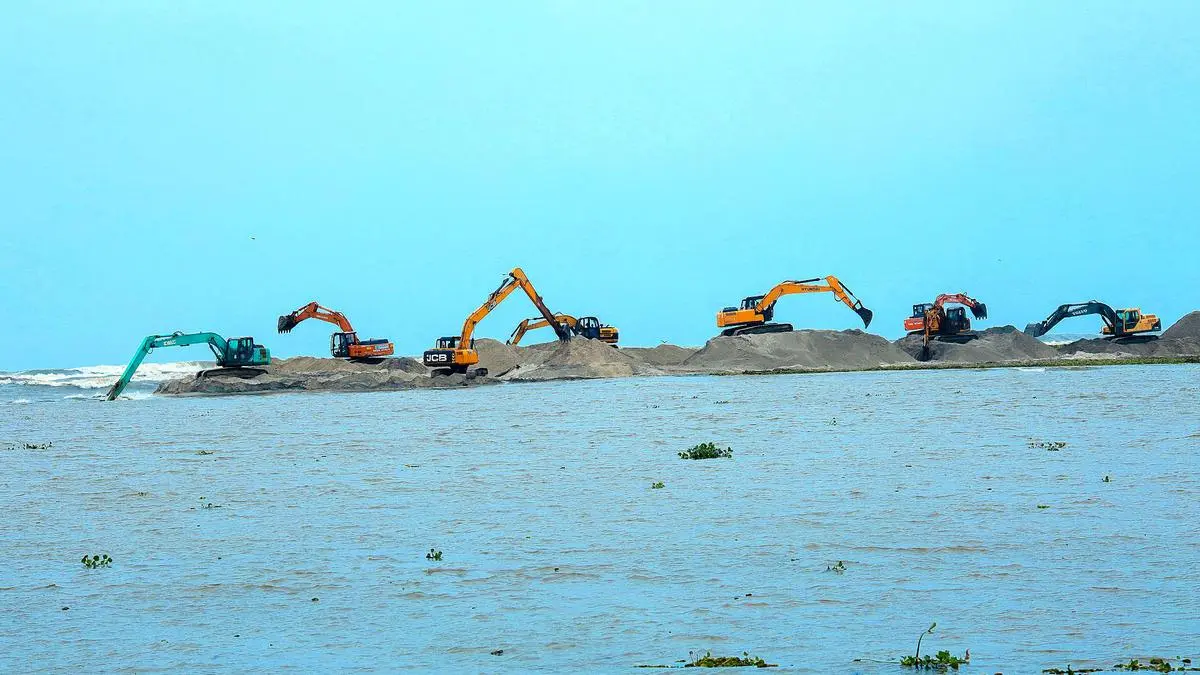
A view of mineral sand-mining at Thottappally pozhi.
| Photo Credit:
Protests are brewing among coastal communities over the revised Kerala Budget proposal to allow private participation in mineral sand mining.Chief Minister VD Satheesan earmarked ₹100 crore in the budget for establishing a Rare Earth and Critical Mineral Corridor integrating the southern districts of Thiruvananthapuram, Kollam and Alappuzha, regions known for their significant rare earth and critical mineral deposits.Former KPCC president V.M. Sudheeran stated that opening the mineral sector to private investment contradicted the election promises made by the United Democratic Front and could adversely affect public interests. The Budget announcement had heightened concerns among coastal residents in Alappuzha, recalling earlier attempts to introduce private mineral sand mining projects that had faced strong public opposition.Sudheeran pointed out that coastal communities were already protesting against mineral sand mining activities at Thottappally in Alappuzha, which had been initiated under the previous government through public sector undertakings. He alleged that the project primarily served the interests of private mining companies rather than addressing the flooding issues in Kuttanad.He called for the withdrawal of the budget proposal and appealed against any move that could facilitate private mineral sand mining along the Alappuzha coast.Charles George, State president of the Kerala Fishermen’s Aikya Vedi (TUCI), strongly opposed the proposal, alleging that it would pave the way for the privatisation of natural resources by allowing private companies to process, mine and market mineral sands. Allowing private investment in beach sand mining will devastate the fragile coastal ecology and threaten the livelihoods of local fishing communities.The fishing community, he said, would neither accept nor permit any attempt by private entities for mining sea sand and black sand from coastal areas.Technocrat M.P.Sukumaran Nair said public-private partnerships are crucial for modernising infrastructure, adopting advanced mining and mineral-processing technologies, and developing high-value industries such as titanium-based nanomaterials. Such collaborations would strengthen competitiveness and ensure the long-term sustainability of the sector. He stressed the need for an environmentally responsible mining framework to ensure the sustainable extraction of mineral resources.The proposed Rare Earth and Critical Mineral Corridor is expected to create substantial value addition through mineral processing and the development of downstream industries. Describing titanium as a sunrise industry, Nair said its demand is rising across sectors such as space exploration, including launches by ISRO, power-generation equipment, and medical implants.Published on June 22, 2026