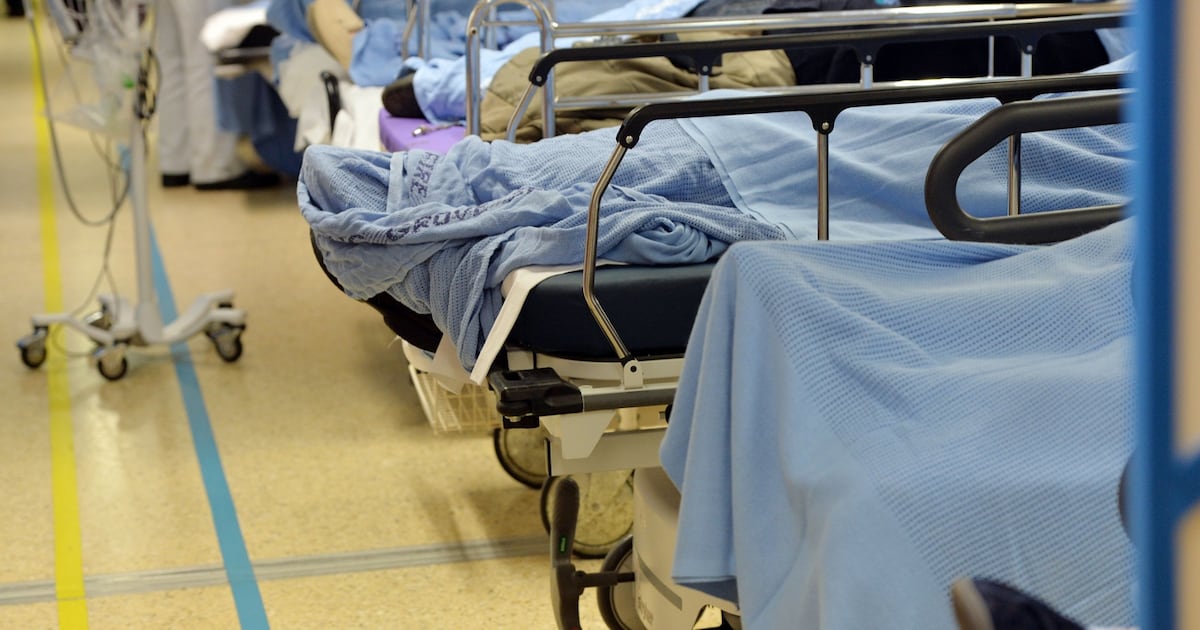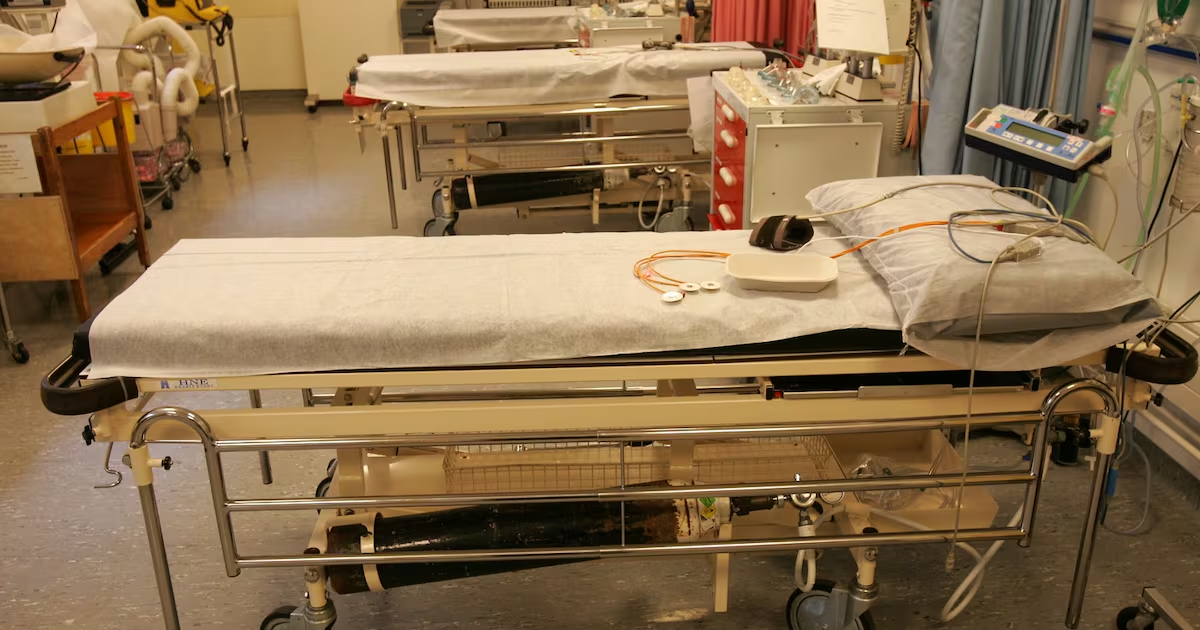
Politicians on Dáil PAC express strong concern as revenue foregone at a time of financial strain for the health sector Irish hospitals have provided details to the PAC of millions of euro being written off as a result of health insurance companies refusing to pay out on certain claims for patient treatments. Photograph: Frank Miller Mon Jun 22 2026 - 05:48 • 5 MIN READIn a note to the HSE’s annual report for 2024, the Comptroller and Auditor General maintained it had written off more than €4 million in unpaid bills submitted to health insurers in respect of subscribers treated in its hospitals.In recent weeks a number of voluntary hospitals – which are publicly funded but run by their own boards rather than by the HSE – also indicated to the Dáil Public Accounts Committee (PAC) that they, too, have had millions of euro in bills not paid by insurers.Politicians on the PAC expressed strong concern at the write-offs, given a number of hospitals have warned they are facing financial strain. Politicians maintained in many cases bills were not being paid due to delays in administration, such as the signing of forms.While there has been a lot of focus on the private practice of hospital consultants, public hospitals also earn millions in income from fee-paying patients.In letters to the PAC over recent weeks, a number of voluntary hospitals have set out the level of money received from private health insurers and the amounts in dispute.The Mater hospital said invoices to the value of about €1.2 million had not been paid by health insurers in 2025, and €1.4 million the previous year. St Vincent’s University Hospital in south Dublin said it had written off a total of €612,000 last year. It said its overall revenue from private health insurers in 2025 was €4.68 million. Tallaght Hospital said it had uncollected revenue of €8.4 million at the end of last year. This figure has fallen considerably from €18.2 million in late 2021. “Invoices issued to the private health insurer do not always get paid and there are a vast multitude of reasons for this. The reasons can range from the patient not signing the private inpatient form during their stay in the hospital, to the fully collated claim not being submitted to the insurer in the relevant time frame,” the Mater hospital said in its letter to the committee.[ Three hospitals face total funding gap of more than €120m, Oireachtas committee hearsOpens in new window ]Hospitals have an agreement with the country’s largest insurer – the State-owned VHI – but not with others. The Mater said the memorandum of agreement with VHI set out payment terms, details of documents to form fully collated claims, and an undertaking that the insurer “would pay 70 per cent of any claim submitted to it once the basic criteria of the patient was established”.“One of the challenges for the hospitals is that there is very little recourse open to them once a decision to reject is made by the private health insurer,” it said.The Mater revealed attempts were being made to challenge cases where invoices had not been paid by insurers. It said the HSE had recently awarded a contract to a company to “review the claims rejected by the insurers, and where it is felt there is possibility of recovering some or all of the invoiced amount a letter of appeal is written to the private health insurer explaining the reasons and asking for a further review of the claim”.“This has resulted in a number of successful appeals and payments being received by the relevant hospital,” the Mater said.The hospital maintained there were a number of issues cited by insurers in declining to pay. It said last year claims to the value of €508,000 were not paid as the patient was deemed not to have the correct insurance cover. It said this “refers to patients whose health insurance cover would only provide cover for a multi-occupancy room and not a single occupancy room”. “As such, the hospital is forced to write off,” it said.The Mater said invoices of nearly €26,000 were not paid last year as the bed in which the patient was treated was not on a bed map. It said hospitals had to “share a full listing of their inpatient beds with all of the private health insurers and in times of surge and the opening of additional beds (for) those patients are prohibited from being charged for”.Claims to the value of more than €220,000 were rejected by insurers who decided following internal reviews that the treatment provided was not necessary. Other invoices to be value of nearly €190,000 at the Mater were not paid, predominantly as a result of the insurer deeming the signature of the patient on the appropriate private insurance form – known as PIP – to be invalid or that the patient didn’t sign the form on that date. It said insurers on occasion refused to accept liability for the full duration of the patient’s stay.St Vincent’s University Hospital said it required the patient’s signature on the PIP form to submit a claim to health insurers, covering the full period of care. “Previously, a grace period was allowed for signing the form, where patients were too unwell or needed support to decide on using their insurance. This was challenged by an insurer in 2016, leading to a legal case between the insurer and the HSE. Court findings in 2022 were inconclusive regarding the grace period,” it said. [ Children’s Health Ireland ‘falling short’ of best-in-class care, report findsOpens in new window ]“In the absence of an agreed approach, St Vincent’s University Hospital took the decision to continue to bill for the full episode but set up a bad debt provision for the costs of the grace period.“Following clarification of treatment in 2025 the costs of the grace period ‘PIP’, related to the 10 years of this issue period, were written off.”St Vincent’s University Hospital also said if, due to bed availability, the patient was in a single-occupancy room, it billed at the single-occupancy rate. “If the patient’s insurance policy only covers multi-occupancy, the insurer will only pay at this rate and the shortfall is written off.”The hospital also said its bill was based on the patient discharge date. “The private health insurer may part-pay the claims [shortfall] where they deem the patient is medically fit for discharge before this. If a claim is not fully paid for this reason, St Vincent’s University Hospital ensure the chart is re-reviewed by a medical professional who assesses as to whether the hospital can challenge or should write off the unpaid element of the claim.”IN THIS SECTION
Hospitals write off millions as health insurers decline to pay invoices
Politicians on Dáil PAC express strong concern as revenue foregone at a time of financial strain for the health sector
1,114 words~5 min read