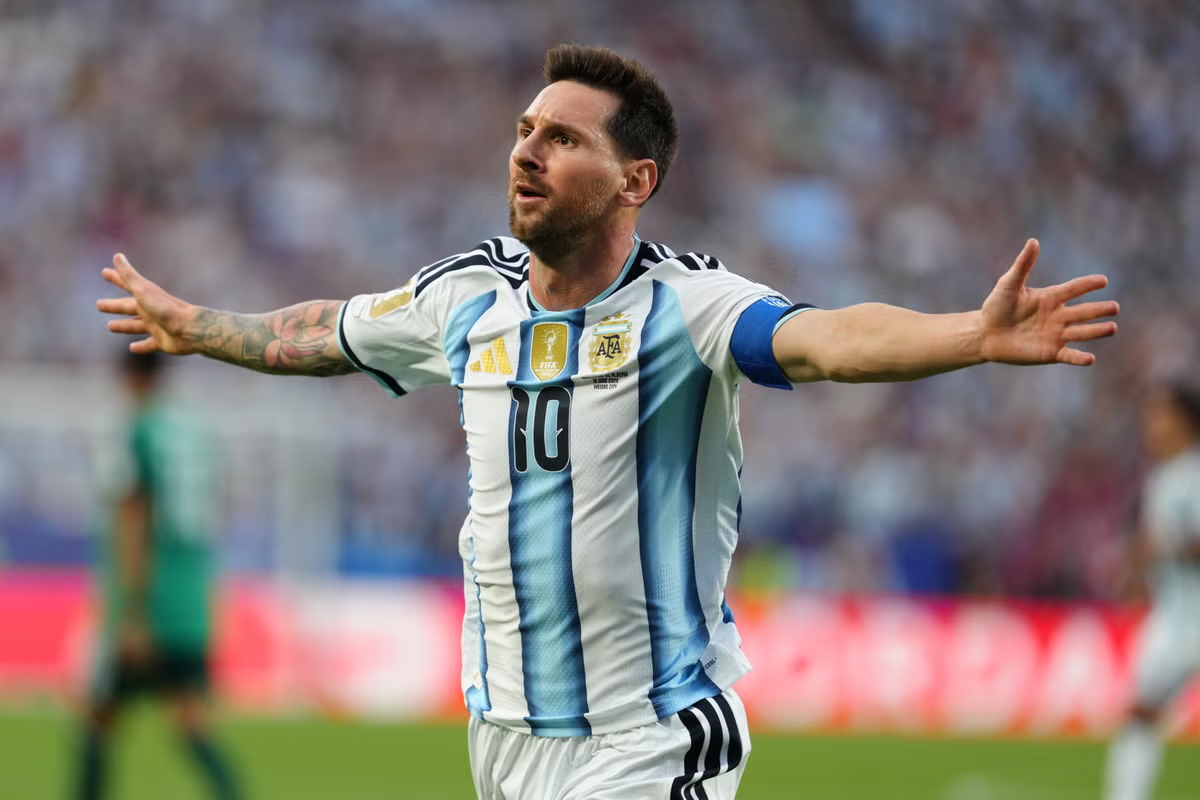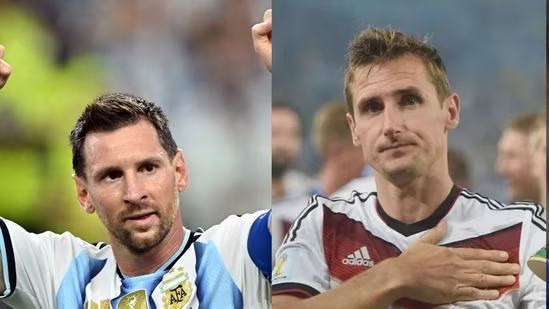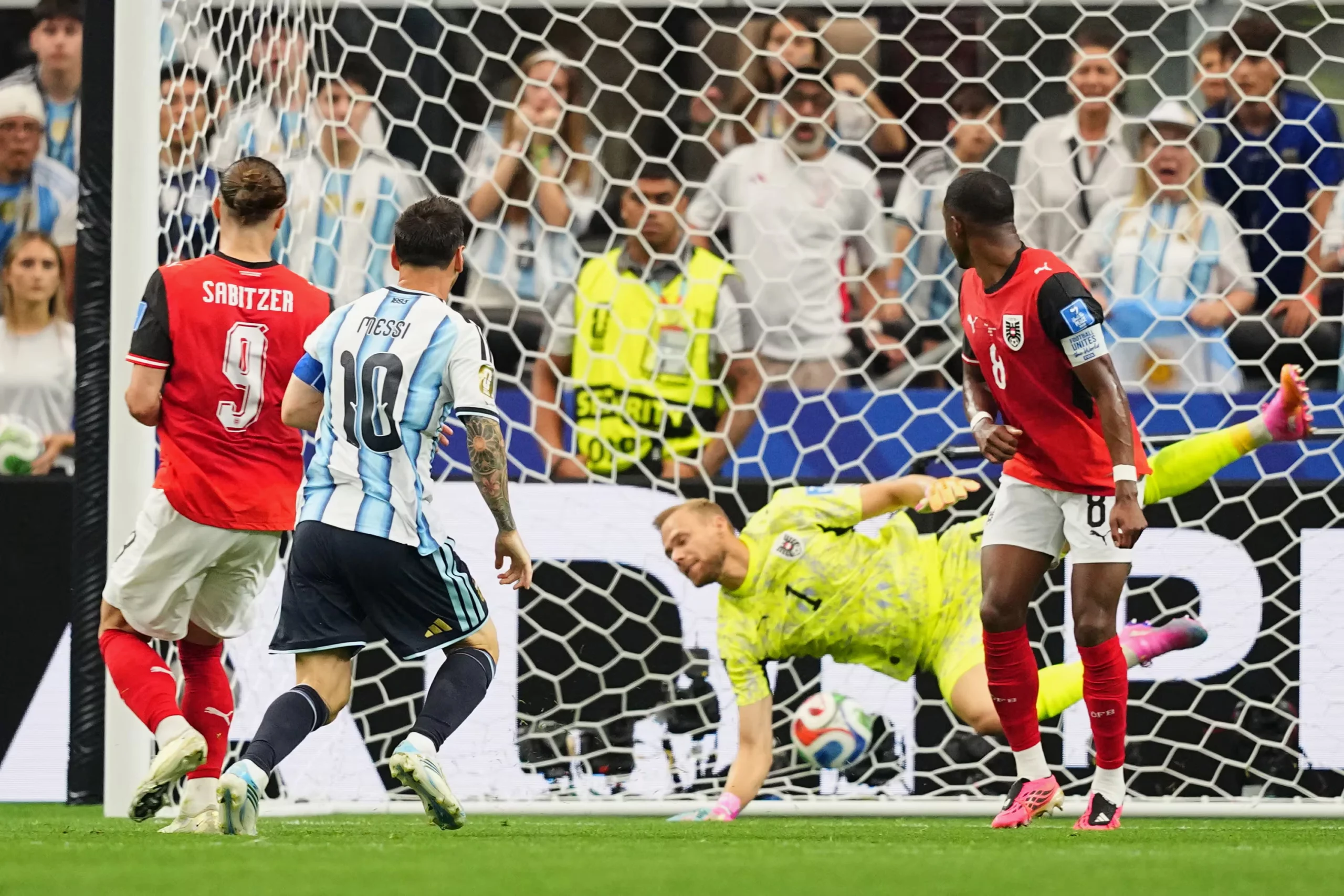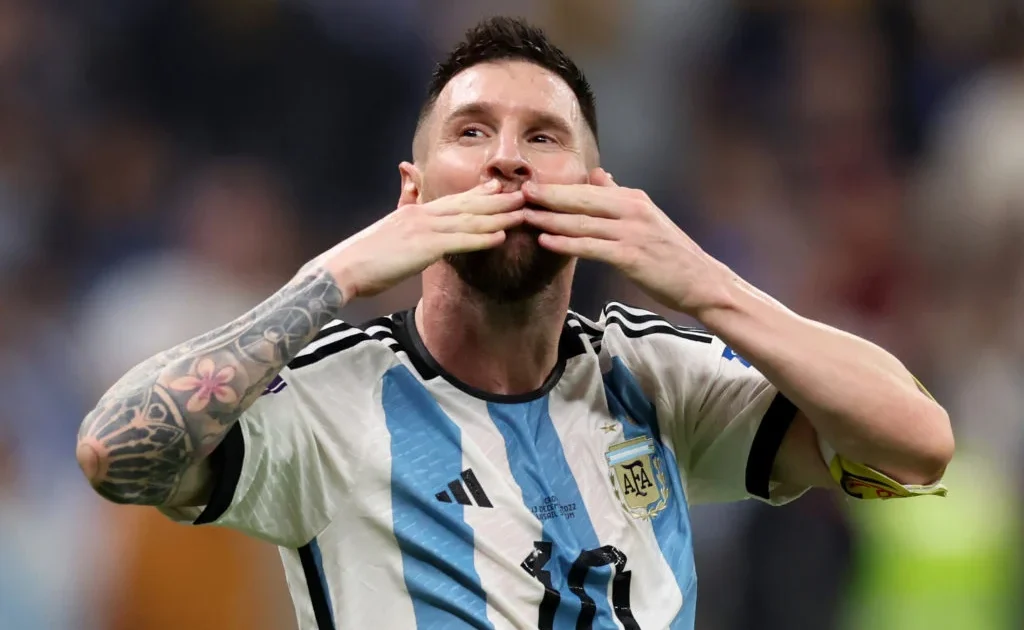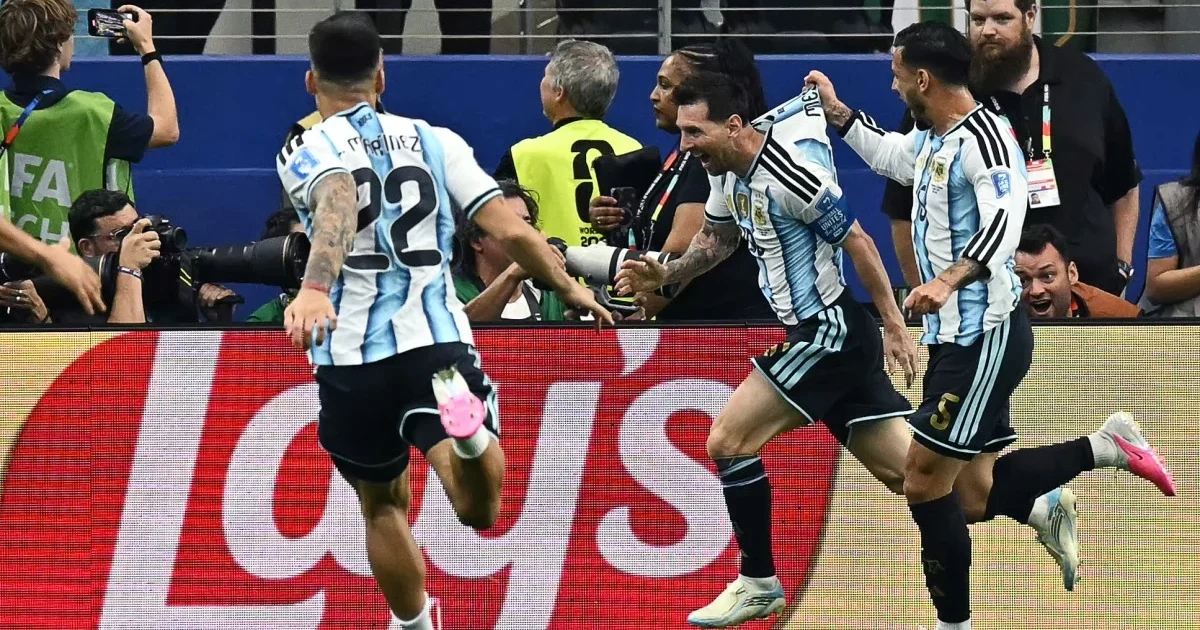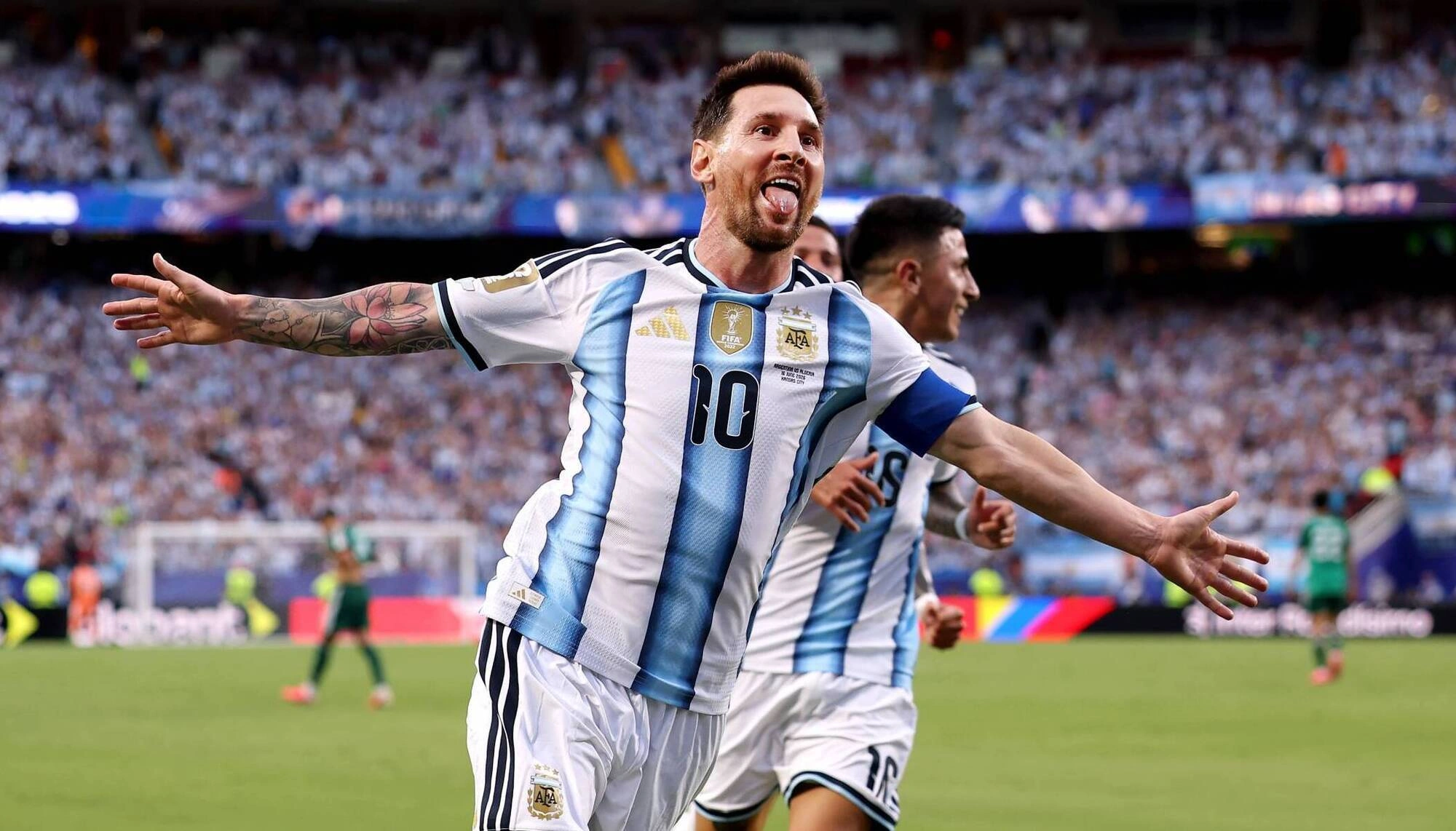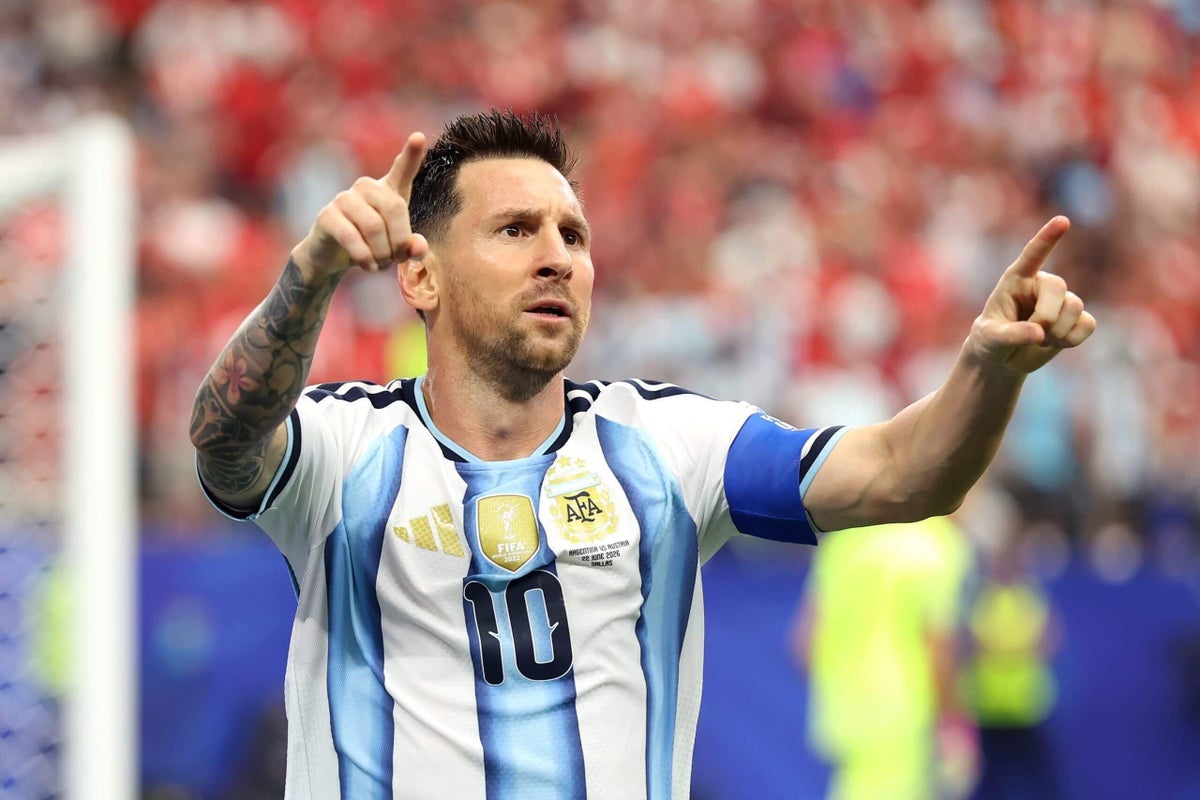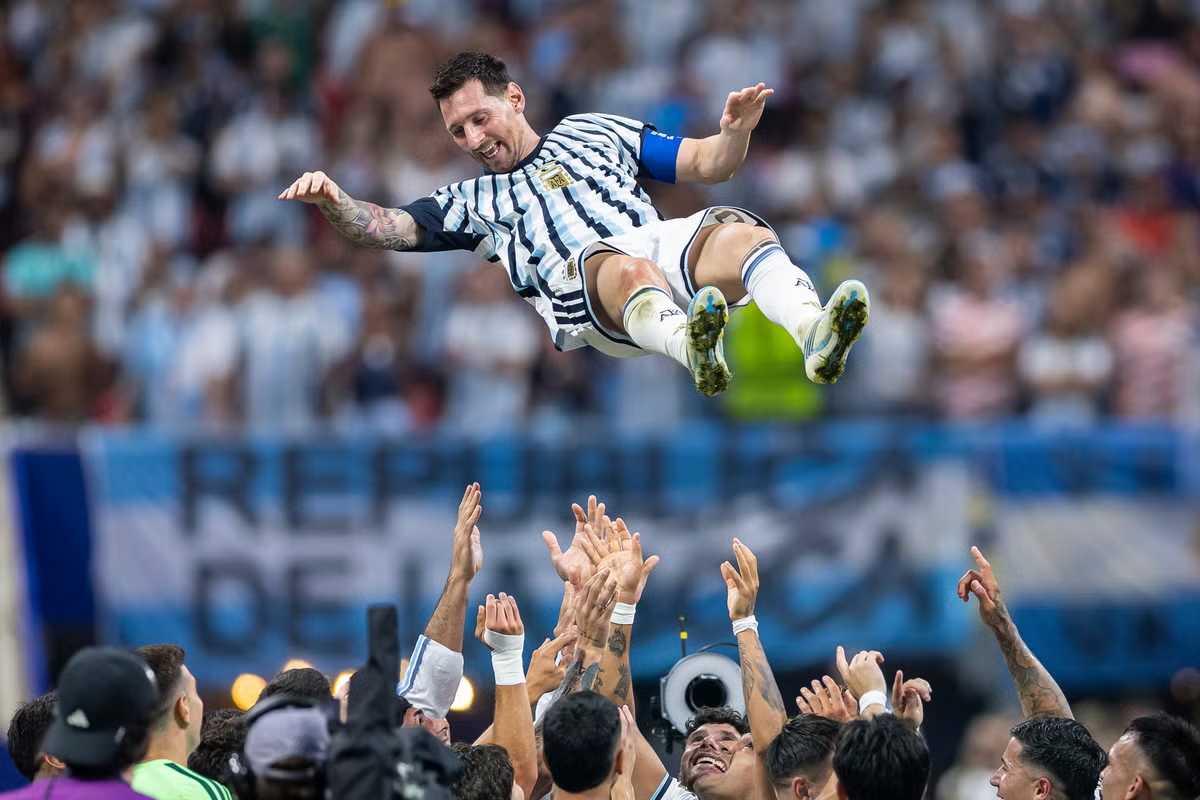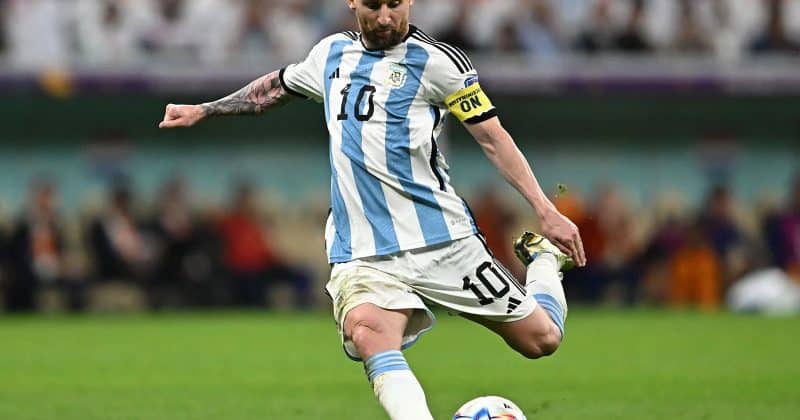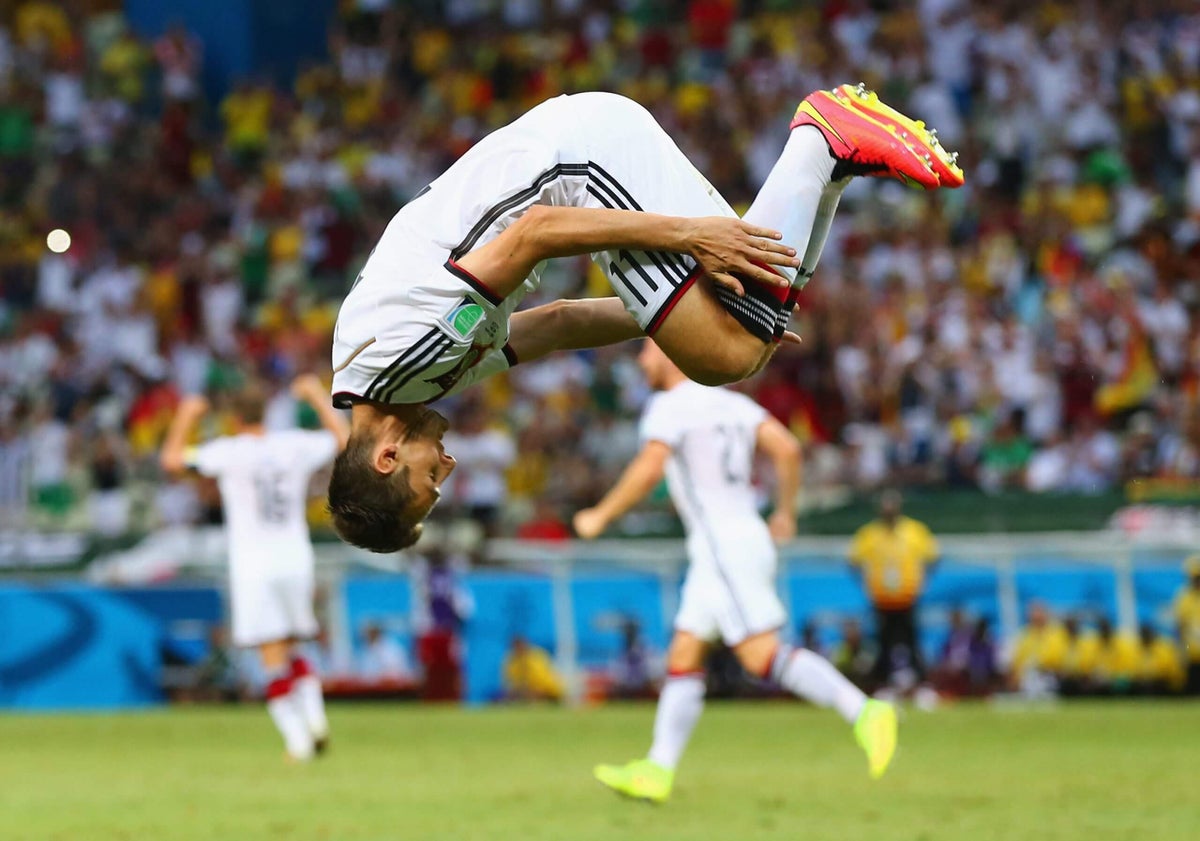
Get free access to the most comprehensive World Cup coverage in The Athletic appA long-standing World Cup record is in its final days.Lionel Messi has now scored 16 goals in the tournament’s history and Kylian Mbappe has 14. That means that a piece of trivia is about to disappear.Who is the World Cup’s all-time goalscorer? It’s not Pele or even Ronaldo, the great Brazilian.No, it’s Miroslav Klose.With his hat-trick goal against Algeria in the first round, Messi moved equal with Klose, but the German forward’s 16 goals were scored from fewer games (24 versus 27), meaning that for now, by the finest of margins, he remains atop of history.That will probably change today. Messi’s Argentina face Austria and Mbappe, who looks in ferocious form, might be let loose against Iraq. But while Klose’s record will go, his story will survive — and it’s a good one.Lionel Messi scored a hat-trick against Algeria to tie Miroslav Klose on 16 World Cup goals (Roberto Schmidt/ AFP via Getty Images)He was born in Poland and came from fine sporting stock. His mother made 82 appearances as a goalkeeper for the country’s handball team, while his father, a professional footballer, played in the Polish first division for over a decade, and even appeared for Auxerre in the 1979 French Cup final.If that makes it sound as if his rise was inevitable, then it’s misleading; the player who would one day become the leading goalscorer in World Cup history almost never became a professional player at all. That he even grew up in Germany is a tale from a John le Carre novel.In 1987, Communism was breaking down across Eastern Europe. Josef Klose, Miroslav’s father, was working as a reserve team coach at Opole, the club he had played for in Poland. Society was starting to fracture. Goods were becoming scarcer and more expensive. That summer, Josef told his employers that he needed an ear operation in West Germany and that he would be away for two weeks while he recovered.Actually, he was never coming back. He told his children, Miroslav and his sister, not to tell their school friends. After loading the family car and withdrawing their savings from a local bank, the family drove across the border to Germany, to one of the reception centres used to process people fleeing the old East.The author Ronald Reng wrote Klose’s biography, Miro. The book has never been translated into English, but it’s almost worth learning German for the story alone. Josef Klose wanted a future for his children. Presumably, he could never have imagined that his decision to leave Poland and abandon their two-room flat would change the course of German football history.Not that it was simple from that point on.Miroslav played football locally, for a team from Bledesbach, a village tucked deep in Germany’s south-west corner. And while today talented players are scouted from all over the world and sucked into academies from the moment they show a flicker of talent, he grew up in a more disconnected footballing society. He never played youth football for a major club. In fact, he was still an amateur when he was 21 and playing for FC Homburg’s reserves.According to Reng’s biography, Klose’s dreams were actually much simpler back then. He had studied carpentry and passed his exams. His big ambition was to start his own business and then build his parents a new house. The book begins with him high up on a building site, overseeing some roofing work in the baking sun and looking out across the valley around him.Why Deniz Undav of Germany is this World Cup’s super subAmy LawrenceGermany got lucky. Klose was spotted by a Kaiserslautern scout and he moved clubs in 1999. In the next two years, he made a quantum leap through the sport. Initially playing for the club’s second team, down in the fifth-tier of German football, Klose would make his Bundesliga debut, score his first Bundesliga goal, make his international debut, and score his first international goal, all by the spring of 2001.When Rudi Voller named him in his World Cup squad for 2002, Klose had, literally, gone from a building site to the pinnacle of world football is less than four years.Miroslav Klose scored the fourth of five goals at the 2002 World Cup against the Republic of Ireland (Laurence Griffiths/Getty Images)Klose had an excellent club career. He reached double figures in each of his four full seasons with Kaiserslautern, became truly prolific during three years at Werder Bremen, won two Bundesliga-DFB-Pokal doubles with Bayern Munich and even won the Coppa Italia with Lazio, with whom he spent the final five years of his career, before retiring in 2016.But, possibly more than any other player of his era, Klose belonged to the World Cup. His goals and his somersaults. His trademark goal celebration, a front flip, was actually borrowed from an old team-mate. Klose and Michael Awe played together at Homburg where Awe, another forward, used to perform the somersault after scoring. Klose said that he would one day do it in the Bundesliga, which he duly did, but neither knew just how global it would become.In 2002, only Ronaldo scored more than Klose’s five goals as Germany reached an unlikely World Cup final (Ronaldo scored eight). In 2006, when the Germans hosted the tournament, Klose scored another five and won his first Golden Boot. Another four followed in 2010 and then, in the 2014 tournament, which he began having scored as many goals as Gerd Muller, he scored against Ghana to equal the existing record (Ronaldo) and then in the 7-1 demolition of Brazil to break it.The goals describe the player. Klose was a targetman. He was formidable in the air, predatory in the box, but utterly fearless, too. England fans will remember a goal he scored against them in South Africa in 2010 when he chased Manuel Neuer’s long goal kick, shrugged off Matthew Upson and then beat David James to the ball, risking injury to give the Germans a 1-0 lead.Few of his goals were pretty, but all of them owed something to craft, cunning, bravery or desire. The priceless equaliser against Argentina in 2006, when he snuck around the back of the defence to keep the Summer Fairytale alive. Or when he did it again, this time against Ghana in 2014, when Germany were 2-1 down in the group and the media was starting to turn. They were goals that mattered.Miroslav Klose scores a trademark poacher’s goal against Ghana in 2014 (Jamie McDonald/Getty Images)Klose is not brash. He’s not opinionated or strident in his views, like many German internationals of the past, and he has always spoken of his World Cup goalscoring record with great humility. In fact, there have been times when he has seemed almost embarrassed to own it and has always been quick to redirect any attention that comes with it.“The record is nice,” he said in 2014, “but it is something the whole team achieved. I have great players around me who provide the passes.“Of course, it makes him easy to admire. Nobody has scored more goals for Germany than Klose (71). Not Gerd Muller (68). Not Uwe Seeler (43). Not Karl-Heinz Rummenigge (45). Only Lothar Matthaus (150) made more appearances than Klose (137). His name is up on the walls in gold lettering and it will likely never come down.
The story of Miroslav Klose, the World Cup’s all-time top scorer – 2014-2026
His record may well be in its final hours, but his place in World Cup history will last much, much longer
1,407 words~6 min read