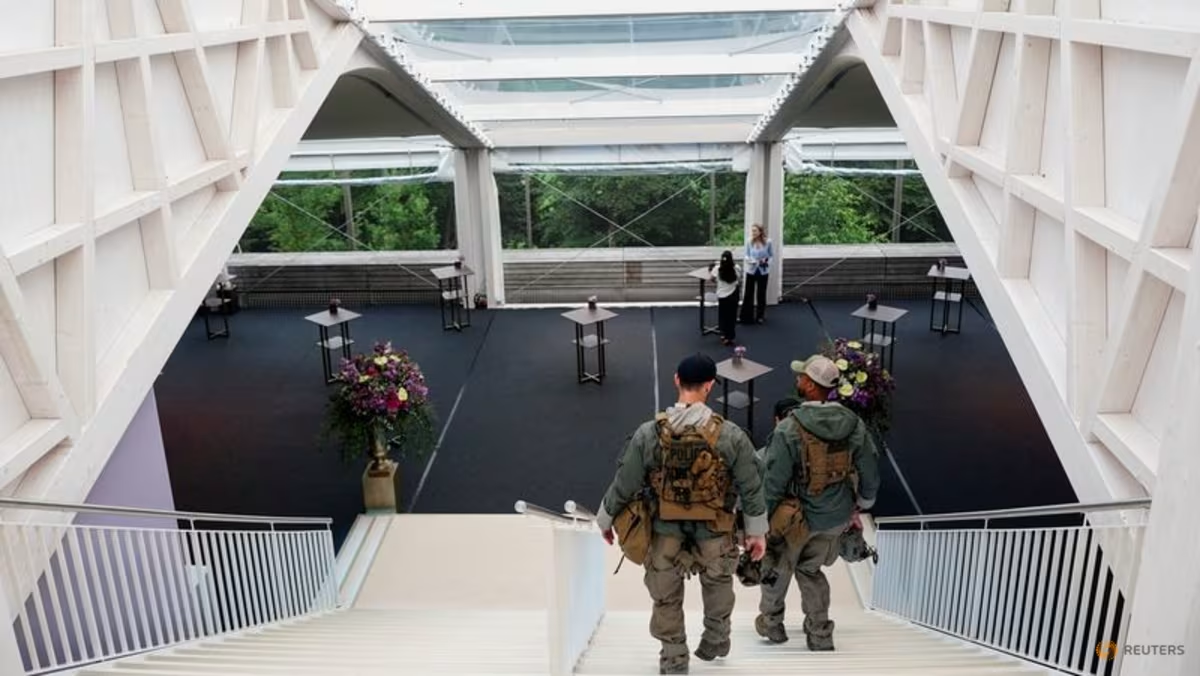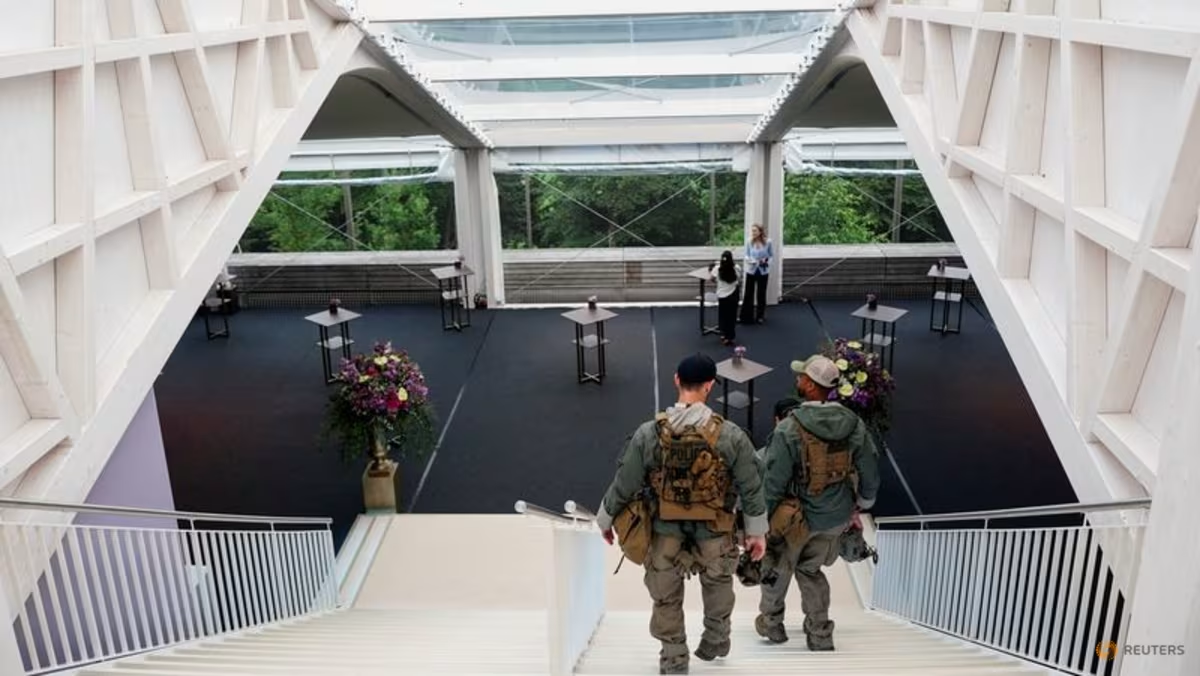
Crude oil futures traded lower on Monday morning after the first round of US-Iran talks concluded in Switzerland.At 9.26 am on Monday, September Brent oil futures were at $78.93, down by 1.40 per cent, and August crude oil futures on WTI (West Texas Intermediate) were at $65.65, down by 0.26 per cent.July crude oil futures were trading at ₹7155 on Multi Commodity Exchange (MCX) during the initial hour of trading on Monday against the previous close of ₹7262, down by 1.47 per cent, and August futures were trading at ₹7107 against the previous close of ₹7199, down by 1.28 per cent.In a post on X after the meeting with the US delegation in Switzerland, Abbas Araqchi, Foreign Minister of Iran, said: “…Oil and Petrochem exports are waived, blockade lifted, some frozen assets released, and major reconstruction and development plan launched for Iran.”In a post on the social media platform Truth Social earlier, US President Donald Trump said: “Iran must immediately stop their highly paid PROXIES in Lebanon from causing trouble. If they don’t, we’ll hit Iran very hard again, just like we did last week, only harder!!!”In their Commodities Feed for Monday, Warren Patterson, Head of Commodities Strategy of ING Think, and Ewa Manthey, Commodities Strategist, said recent developments show that moving towards a more permanent deal will be challenging, with very real risks of a flare-up in hostilities during the 60-day ceasefire.For energy markets, the key factor is still whether oil and LNG flows from the Persian Gulf continue to recover, despite all the rhetoric.Published on June 22, 2026
Crude oil futures decline after US and Iran conclude first round of talks
September Brent oil futures were at $78.93, down by 1.40%, and August crude oil futures on WTI (West Texas Intermediate) were at $65.65, down by 0.26%
TL;DRAI
First US-Iran talks conclude in Switzerland; Brent crude drops 1.40% to $78.93 as Iran reports sanctions relief. Potential Persian Gulf supply normalization could ease power costs for data centers, though geopolitical volatility during ceasefire poses capex planning uncertainty.
260 words~1 min read