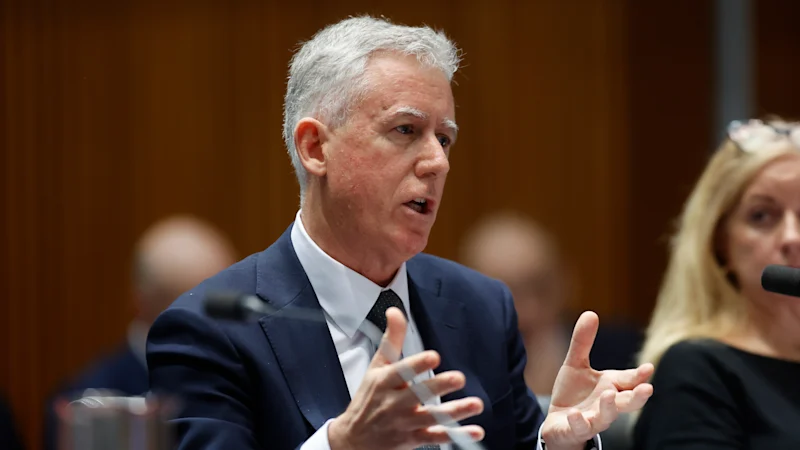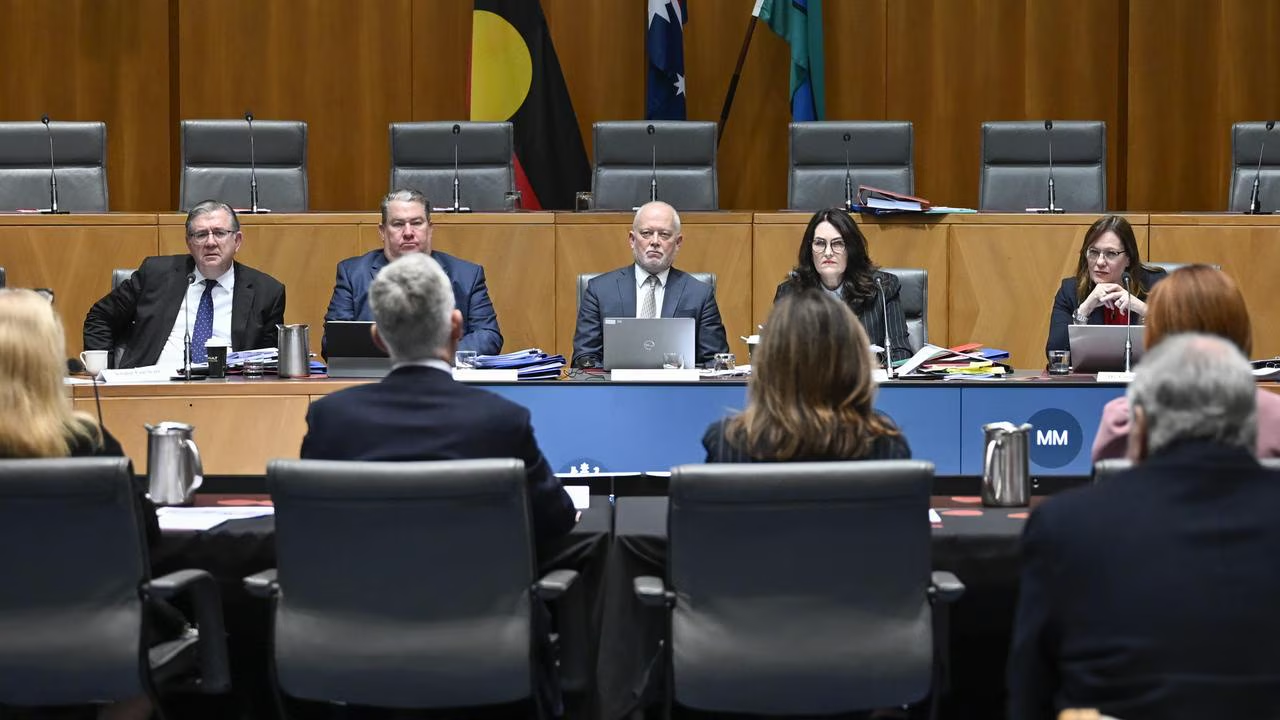
A former KPMG executive who alleged senior staff used confidential material from major companies to win work contracts told a parliamentary probe he would not do so again as the Attorney-General warns of “a real erosion of trust” in Australian institutions. The consultancy giant was accused earlier this year by the whistleblower – who has not been named – of serious allegations, some of which have been confirmed.In a response to KPMG’s own submission, the whistleblower – who also informed the firm of the allegations – told the Parliamentary Joint Committee on Corporations and Financial Services the consultancy company had “refused to substantially address the underlying allegations” over two years.“The reason for that refusal is becoming clearer. Any substantive response, on the merits, exposes KPMG further,” they said.The whistleblower said they could not understand why, for two years, KPMG did not agree to an independent probe or “non-retaliation guarantees”.“KPMG’s own submission has now answered that question,” they said.“Immediately after my protected disclosure of May 30, 2024, KPMG executives covertly accessed my IT environment and examined the documents and emails held there.“At that point, in addition to what they already knew because I had previously raised the substance, KPMG had a full view of what the matters were. “The decisions that followed, in the documents now before the committee, were that no independent investigation could be permitted. “Everything that has occurred since follows as a consequence of that decision.”The whistleblower questioned how many other people may have attempted to raise concerns at KPMG and had “been met with deeds of release, channelled into grievance processes designed to contain matters rather than examine them or quietly moved on”.“If I were asked, genuinely, whether I would do this again, my answer would be no,” they said.“Not because the matters were not worth raising, and not because I regret raising them, but because of what I now know, and could not have known then, about what disclosing them at a firm like KPMG, in the legal and regulatory environment that exists in Australia today, actually involves.“If I had known the inadequacy of the legal protections, the structural gaps in what ASIC can examine, the ambiguity of the partnership relative to the services company, and the limits of regulatory reach over a partnership of this kind, my answer would have been different. “If I had known the full range of tools available to KPMG that it was prepared to use: at least five external law firms across four jurisdictions, the circulation of my identity and the substance of my protected disclosure within and beyond the firm, the retaliation, the end of my employment, and the co-ordination with member firms across the global network, I would not do it again.“That is a question for the committee, and it is not a question about my circumstances. It is a question for any employee of a partnership in Australia now sitting on knowledge of misconduct and considering whether to come forward.”The whistleblower told the inquiry that protections and regulatory framework that “should have dealt with it (the allegations) did not”. “An organisation with the resources and the motive to do so can route serious misconduct around the legislation, and KPMG, on my experience, has demonstrated that it will,” they said.“This matter reached parliament not because the system worked but because every part of it that was meant to work did not.”The conduct, and the people responsible for it, needed to be examined, they said. “That examination cannot stop with the Australian firm. It must include the conduct of KPMG Australia’s leadership as well as global leadership and Australian partners,’ the whistleblower said.Asked whether the government was looking to tighten regulation, Attorney-General Michelle Rowland said the KPMG matter had been referred to the National Anti-Corruption Commission (NACC).“So, I’ll be cautious in how I comment on that,” she told ABC Radio National.“But, the key point I want to make here is that I think this all points to what has been a real erosion of trust in institutions when we see this kind of behaviour. “That is exactly what the NACC was established to address.”In its own submission, the committee said KPMG’s summary of events was “not a neutral chronology”.“It is a document composed to support a particular characterisation,” the committee said.“It mischaracterises the independent directors sequence. It does not address the IT search sequence. It does not disclose who received the allegation documents, and it describes a protected disclosure as a workplace complaint.”KPMG former head of audit Julian McPherson reportedly apologised to the whistleblower during a committee hearing last week. The hearing was told the employee was allegedly pressured to leave the firm. KPMG Australia’s former chief executive Andrew Yates also said he had reflected on the manner in which the whistleblower had been treated as well as allegations that the firm had allegedly misused Lendlease’s confidential client information.“I’ve reflected extensively,” Mr Yates said.“In my mind, across that passage of time, I felt at every point of time my team were conducting ourselves in the right way … in the appropriate manner.“In this case we didn’t get it right. We didn’t make them (the whistleblower) feel comfortable, as I’ve reflected on the things that led to me resigning.”Mr Yates said he had been “deeply distressed” to learn of the impact on the whistleblower. Earlier, the whistleblower alleged KPMG’s submission furthered a pattern that risked “misleading the committee”.
Toll on KPMG whistleblower revealed
A former KPMG executive who alleged senior staff used confidential material from major companies to win work contracts told a parliamentary probe he would not do so again as the Attorney-General warns of “a real erosion of trust” in Australian institutions.
898 words~4 min read