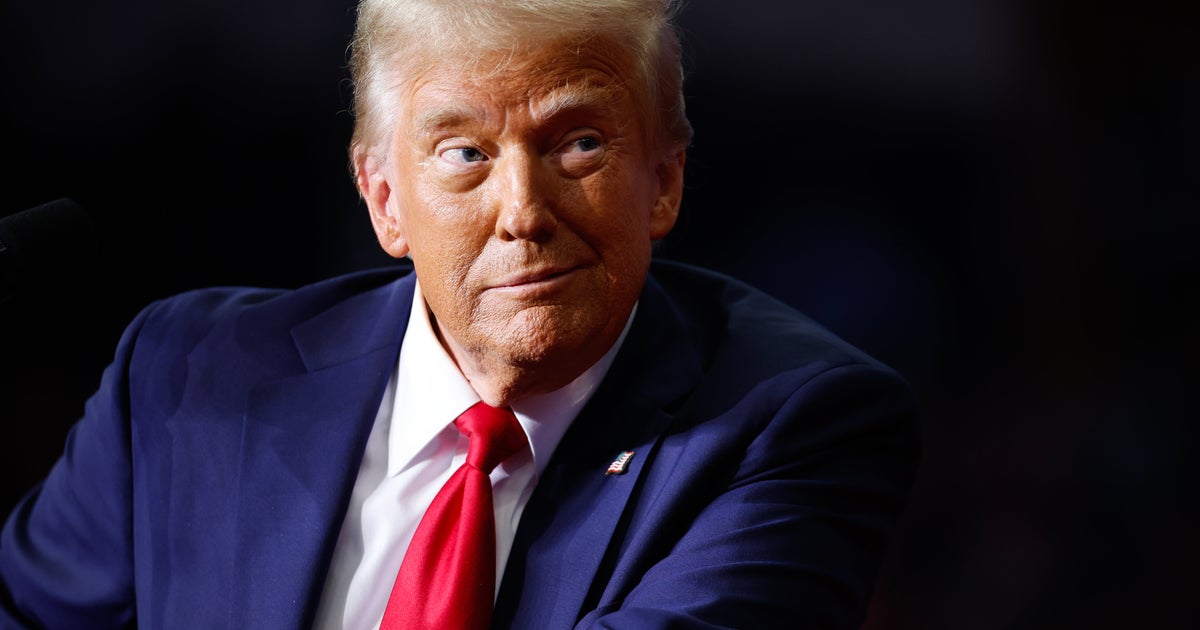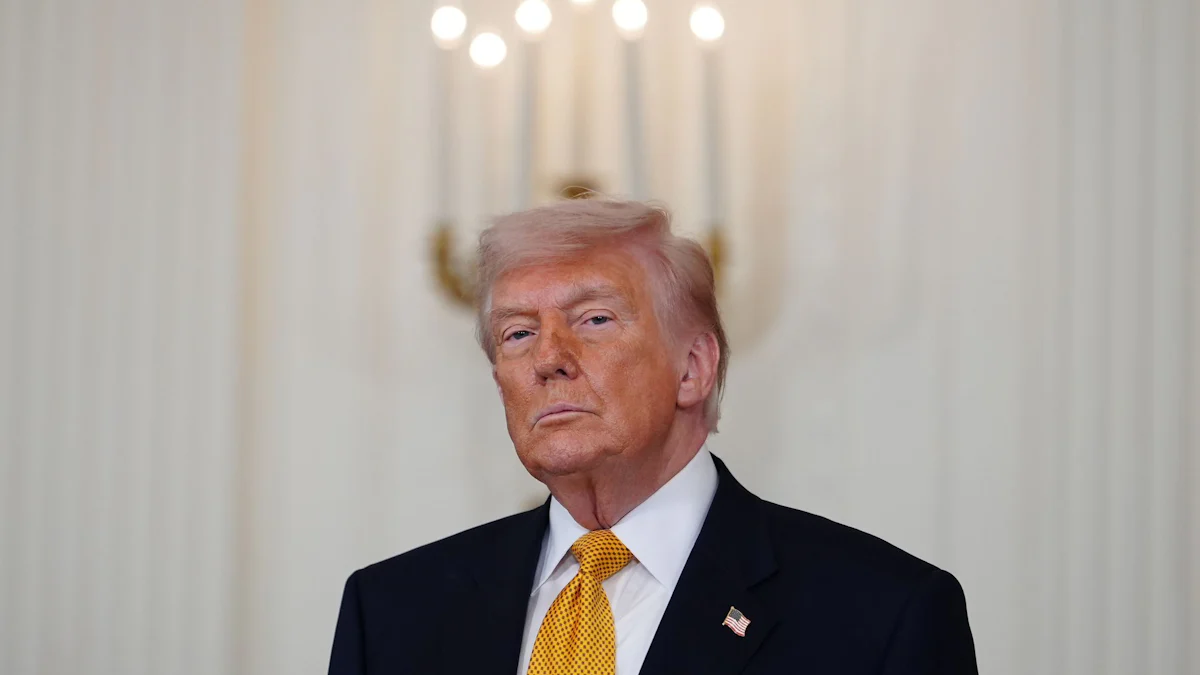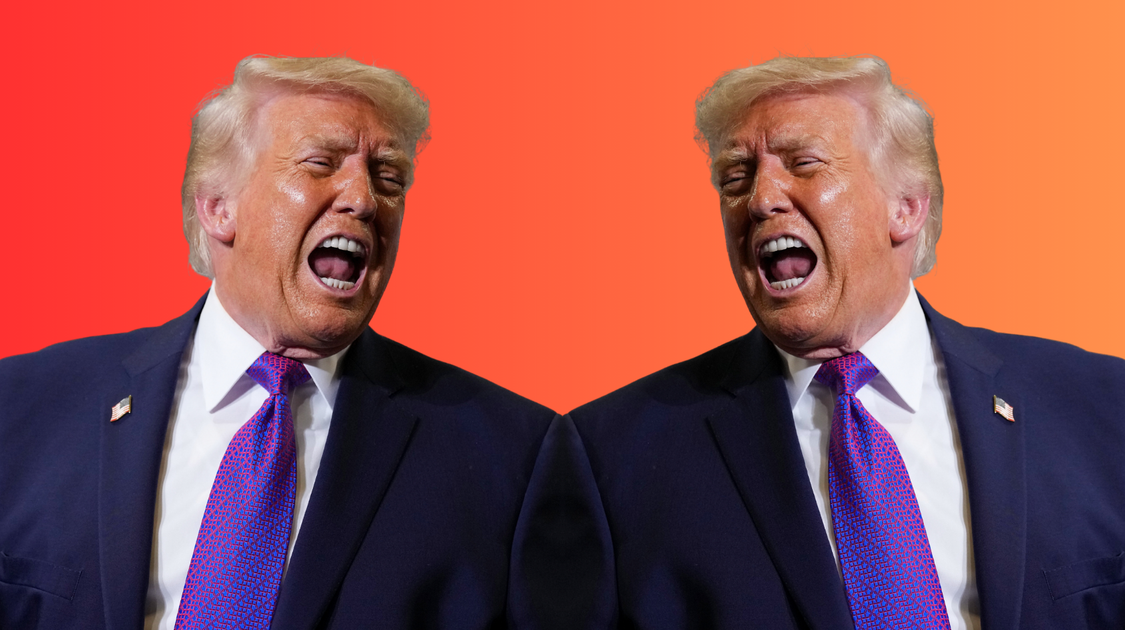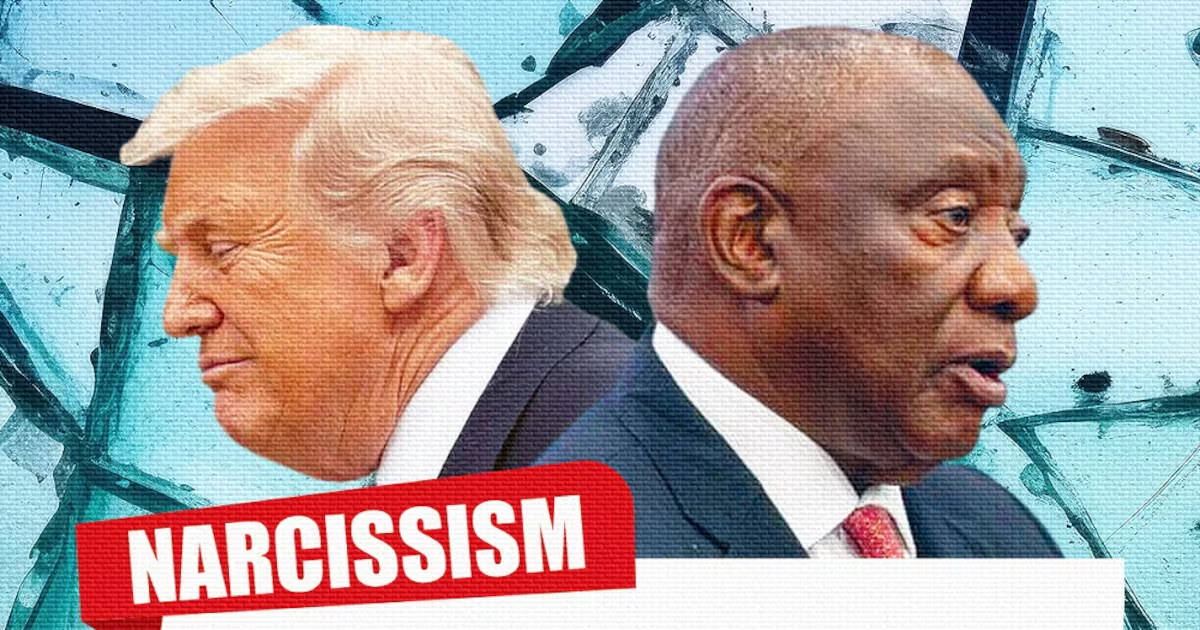
Questioning US President Donald Trump’s sanity has become common. From outraged expostulations — “he’s out of his head” — by members of the public to sober analyses by mental health professionals, the consensus is that Trump is, well, out of his head. We’ve heard about senile dementia and Alzheimer’s disease. But the diagnosis that has struck the most resonant chord in my lay person’s mind is “narcissistic personality disorder”, defined by the Mayo Clinic as “a mental health condition characterised by an extreme sense of self-importance, a profound lack of empathy, and an excessive need for admiration”. The same source advises “beneath this outward mask of grandiosity lies a fragile self-esteem vulnerable to the slightest criticism”. After most of the entertainers slotted to appear at a concert organised by the US administration withdrew their participation — because it wasn’t clear whether the concert was celebrating the 250th anniversary of the republic or Trump’s 80th birthday — Trump posted the following on Truth Social, his own social media platform: “I am thinking about bringing the Number One Attraction anywhere in the World, the man who gets much larger audiences than Elvis in his prime, and who does so without a guitar, the man who loves our Country more than anyone else, and the man who some say is the Greatest President in History (THE GOAT!), DONALD J TRUMP.” (all caps in the original) Try telling anyone the author of this post is not a narcissist. Pre-eminent British military scholar Lawrence Freedman identified an additional mental health condition, “cognitive dissonance”, to explain Trump’s behaviour. Freedman explains that “psychologists call the phenomenon when people who hold fundamentally conflicting beliefs are confronted by situations that push to the fore inconsistencies between them as cognitive dissonance. “Much of the theorising assumes that awareness of this dissonance can cause anxiety and embarrassment, leading people to think or act differently to reduce it. This can include seeking to explain away or deny the inconsistencies or by reframing the beliefs to render them congruent with each other”.Freedman continues: “Anyone knocking on Donald Trump’s door at 3am would probably find him awake, perhaps posting images of himself on Truth Social as a superhero, dressed to take on the world’s greatest villains. And we can be sure he considers himself the greatest crisis manager, as tough as they come when facing down the nation’s enemies and also the acknowledged master of the deal. ‘At a loss’“Yet in the most important crisis of his presidency — the confrontation with Iran — he seems to be at a loss about what to do next, paralysed by indecision, aware that the best deal currently on offer looks suspiciously like a defeat for him and his country.” Both diagnoses are persuasive: narcissistic personality disorder and cognitive dissonance, each hugely amplified by a crisis Trump cannot resolve in his own muddled head. One could test this against any of the major domestic or international crises that currently beset the Trump administration. Don’t yawn and say: “Boring. Everybody knows Trump lies all the time.” Cognitive dissonance isn’t mere lying. It’s about simultaneously holding and propagating contradictory propositions. Both may be lies. But both cannot be true because the one excludes the other. Guardian global affairs correspondent Andrew Roth, writing under the headline “Trump the unreliable narrator fails to force reality to match his story on Iran”, identifies Trump-speak that supports the cognitive dissonance diagnosis. Many of Trump’s efforts are in the service of establishing the proposition that he is simultaneously the most ruthless, successful warrior — commander-in-chief — of all time, and also the most compassionate, successful peacemaker of all time. Peace claimsHow many times have you heard Trump lauding the successful progress of peace talks between the US and Iran, claiming peace was imminent (CNN says he made this claim on 39 occasions and counting), while simultaneously (often in the same sentence) threatening the imminent obliteration of Iran — “a whole civilisation will die tonight” — if it doesn’t sign a peace agreement immediately. There are countless other examples. Trump has loudly proclaimed Iran has been vanquished (“the bully of the Middle East is dead”; “they have no navy, they have no air force, they have no anti-aircraft weaponry, they have no radar; they have no communication”) while simultaneously citing his (dead) adversary’s stubbornness as the obstacle to a peace “deal”. Or how to reconcile his threat to hit Iran “hard” following its downing of a state-of-the-art Apache helicopter (“they have no anti-aircraft weaponry”) while simultaneously insisting the downing of the aircraft is “no big deal”? Or excoriating his Nato allies for their cowardice in not coming to the aid of the US in protecting shipping in the Strait of Hormuz, while simultaneously insisting the US doesn’t need their help and in any event the fight has already been “militarily won”? Let’s hope that in trying to reconcile the conflicting claims bouncing around in his head, Trump’s finger doesn’t stray too close to the nuclear button. I do, however, understand politicians must live with a degree of dissonance. After all, a large part of their job includes trying to reconcile the contradictory interests of their diverse constituencies. But Trump has elevated — or downgraded — this essential politician’s function into a pathology, a disease. In short, he’s out of his head. By comparison, President Cyril Ramaphosa seems a rational, sober individual, able to hold in his mind most of the inconsistent beliefs and partial solutions every political leader must live with. No sign of cognitive dissonance. Nor does he seem to have been seduced by an elevated sense of his own importance. No narcissistic personality disorder either.However, I sometimes wish he would spend less time trying to resolve the conflicting demands he must grapple with. I also sometimes wish he would have sufficient faith in his own power, and public support, to decisively implement his preferred outcomes. Ramaphosa’s cross to bear is that he leads a political party that exhibits strong signs of a sort of institutional narcissism and cognitive dissonance. Its leaders and most zealous supporters insist on referring to the ANC as a “movement”, a “glorious movement” nogal, when it’s clear that in reality it’s a far-from glorious, rapidly declining political party. It professes great reverence for its past leaders without any attempt to reconcile this with the current, mostly extremely unimpressive, leadership. And how does the proclaimed glory of the ANC square with the simultaneous acknowledgement, often by the same individuals, of the corruption that for a large proportion of the population characterises the ANC? How does the claim to be a social movement, representing the South African nation, reconcile with its rapidly declining share of the vote? How does the claim of “renewal” live with daily evidence of corruption at all levels of the ANC and government, from the party’s “top seven” to the lowliest branch committee, from cabinet to the lowliest town councillor? Our president is a perfectly sane individual, but for the most part the lunatics are running the asylum. That’s the problem. The solution necessitates another column, preferably closer to election time. • Lewis, a former trade unionist, academic, policymaker, regulator and company board member, was a cofounder and director of Corruption Watch.
DAVID LEWIS | Trump and the ANC may have the same mental illness
Diagnoses of narcissism and cognitive dissonance offer insight into political dysfunction
1,205 words~5 min read