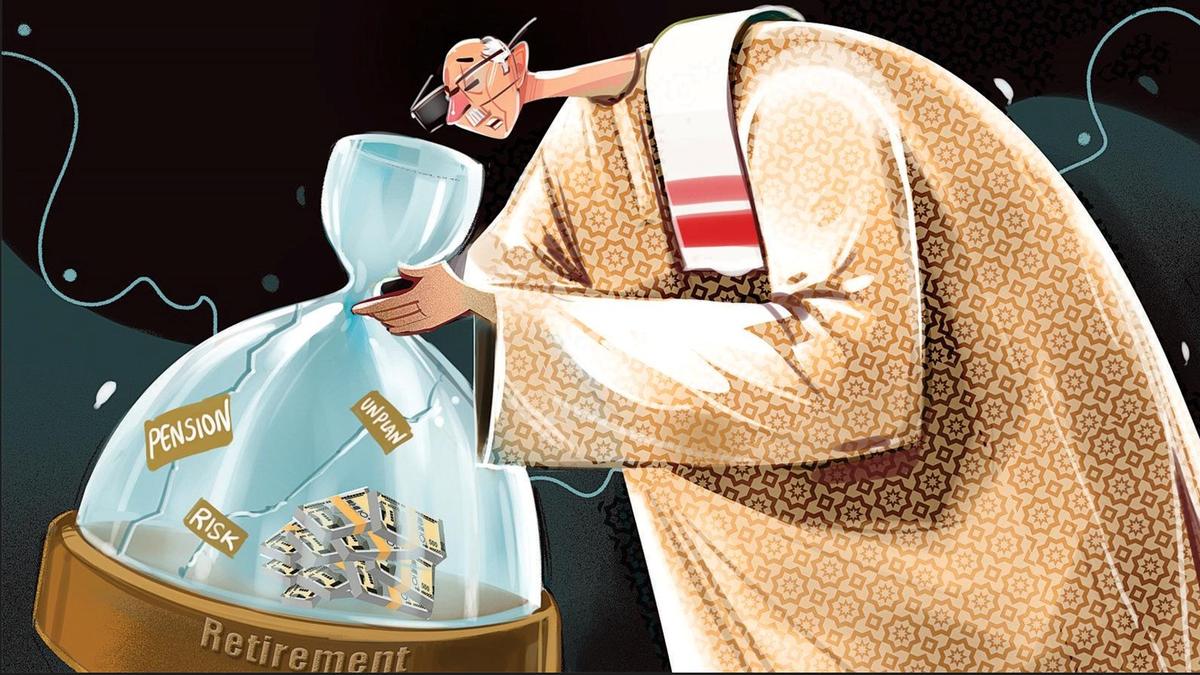
For many employees there is an assumption that their employer is “taking care” of their retirement planning. In reality, this assumption is increasingly inaccurate. Over the past few decades the responsibility for retirement planning has shifted significantly from employers to employees, yet many individuals have not adjusted their thinking accordingly. In the past, many employers offered defined-benefit pension funds. Under these arrangements the employer carried the responsibility for ensuring that employees received a pension at retirement. Investment risk and longevity risk rested primarily with the employer, and employees could generally expect a defined retirement outcome. Today, most retirement funds operate on a defined-contribution basis. While employers continue to contribute towards retirement savings, the eventual retirement benefit depends on contributions made, investment performance achieved and the decisions taken by the employee throughout their career. The responsibility for achieving a successful retirement outcome now rests with the individual. Unfortunately, retirement outcomes in South Africa remain concerning. South Africans save too little, start investing too late, and often fail to preserve retirement savings when changing jobs. One of the biggest risks is cashing in retirement savings when changing employment. The immediate access to cash can be tempting, but the long-term cost can be significant. Once withdrawn, that money no longer earns returns for the next 10, 20 or 30 years. This materially reduces the income available at retirement. The “two-pot” retirement system has created a new risk. Employees now have access to a portion of their retirement savings through the savings pot while still employed. This can provide useful flexibility during financial hardship. However, unnecessary withdrawals reduce future retirement income and may create avoidable tax consequences. The reality is that employees need to take a far more active role in managing their retirement benefits. Your annual retirement fund benefit statement should not simply be filed away. It should be reviewed carefully each year as part of your broader financial planning process. Check your capital Check your current retirement capital and contribution level and assess whether this is sufficient to meet your retirement objectives. It is important to understand what your investment trajectory is likely to provide as an income when you retire. There are various online retirement calculators that can assist with this analysis on a basic level, and your financial planner should be doing this as part of your annual review. Your annual review should include an assessment of how your retirement capital is invested. Some funds automatically reduce exposure to growth assets as you approach retirement. This may be suitable for some employees, but not for everyone. Many people continue working beyond their normal retirement date. Others remain invested for many years after retirement through a living annuity. Your investment strategy should therefore match your retirement date, time horizon and income needs. You should also review how the underlying investments have performed relative to appropriate benchmarks and alternatives. Short-term performance should not drive investment decisions, but poor long-term performance or an unsuitable strategy should not be ignored. Tax efficiency Many employees have the option to make additional voluntary contributions to their employer retirement fund. Retirement fund contributions remain one of the most tax-efficient investment vehicles available, with tax deductions available of up to 27.5% of taxable income, subject to legislative limits. Don’t overlook the insurance component. Retirement funds frequently include valuable group life and disability cover, yet many employees never verify whether the cover remains appropriate for their circumstances. Key questions to ask include: Would my income be protected if I became disabled? How long would my family be able to maintain their lifestyle if I died? Would the cover be enough to settle debt, cover living expenses and provide for future family needs? andWhen would benefits start and for how long would they be paid? While retirement fund trustees ultimately decide how death benefits are distributed in accordance with pension fund legislation, maintaining accurate beneficiary information assists trustees and can help reduce delays in the investigation process. Employees should review beneficiary nominations regularly, particularly following marriage, divorce, the birth of children or other major life events. Retirement fund death claims can take up to 12 months to finalise while trustees identify and investigate all financial dependants. Where approved life cover forms part of the retirement fund structure, these proceeds will be subject to the same process. This can create a liquidity challenge for surviving dependants who require immediate access to funds. For this reason, many families should consider whether additional personal life insurance outside the retirement fund environment may be appropriate. Two rules If there are only two retirement rules that employees remember, they should be these: avoid unnecessary withdrawals from your savings pot, since every withdrawal reduces the capital available to generate retirement income, and never cash in your retirement fund when changing jobs unless absolutely unavoidable. Employer retirement funds remain one of the most valuable employee benefits available. However, they are no longer a complete retirement solution. Employees must take ownership of their retirement planning, understand their benefits, review their investments and insurance regularly, and ensure that retirement planning forms part of a broader financial strategy. The responsibility for retirement security increasingly rests not with employers but with individuals themselves. • Maré is wealth manager at Netto Invest.
MICHAEL MARÉ | Understand your retirement benefits and responsibilities
Responsibility for achieving a successful retirement outcome now rests with the individual
870 words~4 min read