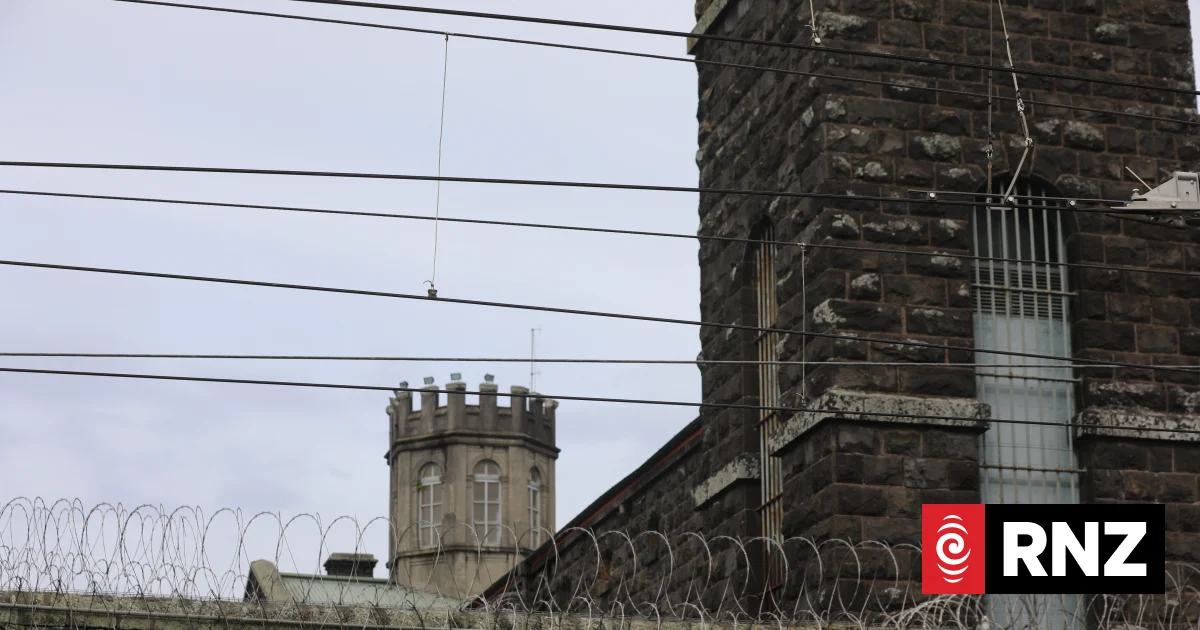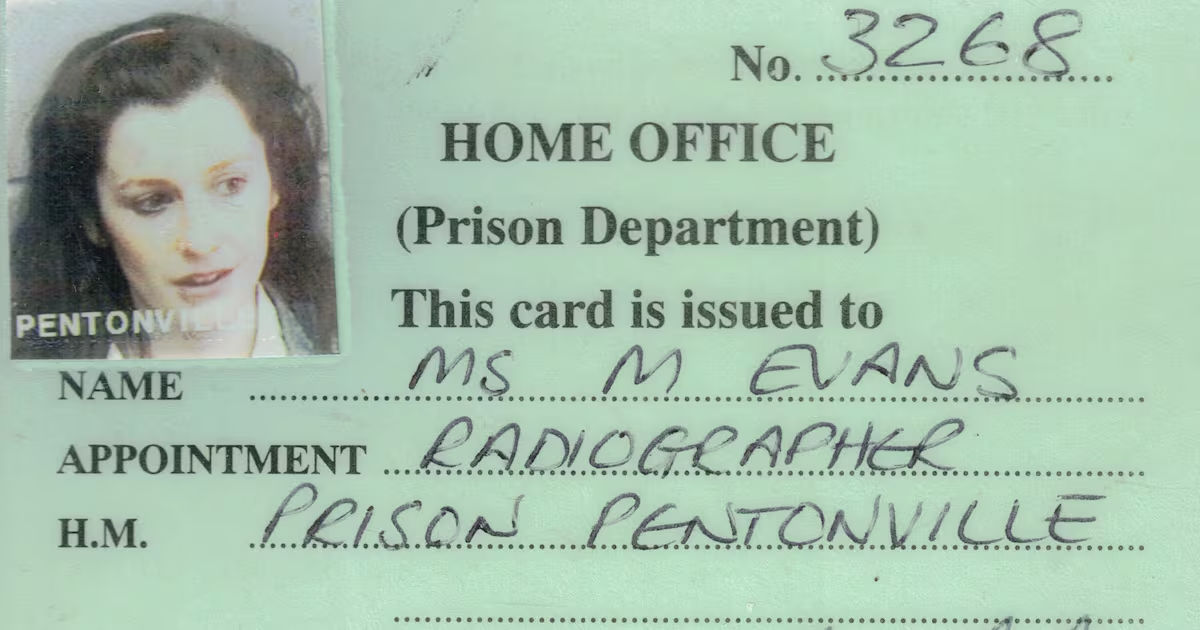
Thirty-two years ago I went “undercover”, working as a radiographer at Pentonville Prison in London. I wasn’t the first or last curious writer to go through those gates. Charles Dickens visited Pentonville too; David Copperfield’s famously obsequious Uriah Heep was incarcerated there for a time. Versions of imprisonment fuel many stories, could every plot be an escape attempt?My fascination started in childhood with the story of my grandmother Lizzie Cowhey who, at 23, went to Limerick prison for resisting eviction according to the “plan of campaign”, a strategy adopted during the Irish Land War. A Nationalist hero, she, they said, refused to drink from a tin mug, forcing her jailers to bring her a China cup and saucer.In 1995 I left Pentonville, terrified and exhausted after staff shortages forced me to work alone with prisoners. Later that year I had an operation and soon all I could remember was Pentonville’s filthy, stinking darkroom and a ballooning fear of cancer from too much radiation. The equipment had been condemned for years. My Irish GP always worried about my exposure to radiation – his first wife, a radiographer, had died of breast cancer. Clearly, his view was subjective but after working in Pentonville I began to worry too. I’d never been careful. A whiplash injury sustained in a car accident in 1986 made wearing a lead apron painful. On gruelling 24-hour stints in the Mater hospital, Dublin, when called to do a portable X-ray on the wards, I’d drop the lead apron to the floor and move as far as I could from the X-ray tube before pressing the exposure switch. Distance from the rays was supposed to be the best protection anyway – I’d be more careful next time. But next time I was more tired, the pain was worse and so it went on. The fear of cancer eventually faded but somehow I was ashamed of the morbid writer’s curiosity that – along with a need for extra money to cover the mortgage – sent me to that “Bluebeard’s Castle” in the first place. I wanted to forget I’d ever been there. Then, in 2022, I discovered a large handwritten notebook, some old type-written pages, my prison identification badge, a farcical hand-written notice exhorting patients not to “distract the radiographer”, a bundle of prison security rules and a chemical-stained draft of my resignation letter on HMPS (Her Majesty’s Prison Service) headed paper. They wouldn’t let me walk out until I “put it in writing”. On that last day they shouted something that now took on a greater significance. “Write it down! write it down, write in down!” they said.Or so I discovered as I read the diary. My younger self observes that the door and screen in the X-ray room are “very light” – she’s worried they’re not lead-lined but I don’t remember the “very light” screen or door. “Some fool has painted the darkroom black, I can’t see a thing!” say the hurried notes. I no longer knew what colour a darkroom should be painted. Outside Pentonville Prison, London, January 1950. Photograph: Haywood Magee/Getty Images The pages explained many subsequent themes in my writing, especially my narrative poems (Petrol, 2012 and The Coming Thing, 2023), which feature the protagonist Imelda. Imelda’s “Bluebeard” father Justin was conceived there, his constantly watching eyes inspired by Pentonville’s panopticon-inspired radial structure that allowed staff to monitor inmates while unobserved themselves. Jeremy Bentham, developer of the panopticon, is referenced in Imelda’s friend Dora’s utilitarianism. And Imelda’s fleeting mention of Linton Kwesi Johnson in The Coming Thing reflects one of the few memories I retained. Crossing the prison yard I’d “heard” LKJ calling the line “look out, look out, look out!” from his poem Time Come. It was all there – the unbearable tension, “read de vialence inna wi eye” , the melancholy, “wi feel bad / wi look sad” and my expectation of an imminent uprising, “smash de sky”. Strangeways was in my mind too – the ferocious 1990 prison riot showing what can happen when men are confined beyond endurance. When Bluebeard’s new wife discovers the murdered bodies of her predecessors in a forbidden, locked room, he must kill her too because she knows too much. In modern versions she is rescued by her brothers but according to the folklorist Maria Tatar the original tale wasn’t about resourcefulness, it was a warning: “Like many of our foundational cultural stories, Bluebeard turns on a woman’s desire for forbidden knowledge and in its canonical French form, describes it as a curse.” (Bluebeard, Secrets Beyond the Door, Princeton University Press, 2004). My irrational fear of cancer began to make sense now. I was traumatised. My foolhardy writer-self stepped over the threshold and somehow felt she deserved punishment. She was silenced, tapping into a fear much older than she was. When I visited Charles Stewart Parnell’s comfortable cell in Kilmainham Gaol in 2000, flashes of Pentonville came back. I doubted 19th-century women prisoners had any political prisoner status, never mind such luxury. I wondered what Cowhey’s six-month sojourn in Limerick’s jail was really like. The dead can be very powerful – we long to know them, we write to bring them closer. My sense that the forgotten pages of my Pentonville diary came from a “dead” self allowed me to finally write about my time there.And what about the undead? My hurried notes referred to vampires several times. A fan of Bram Stoker’s Dracula, I’d been recently struck by Gary Oldman’s heartsore Dracula in the 1993 Coppola film. And when Lord Arthur drawled “I would watch my colonial tongue if I were you”, it was a dart to the heart. I’d tried to defend the Guildford Four in the X-ray staffroom at the Whittington Hospital and was told to “watch my step”. No one else doubted their guilt – to “say nothing” would have been wiser. Martina Evans: 'I knew innocent people were imprisoned' Writing should always surprise the writer. And I was surprised because I’d never expected driving – drunken or otherwise – to be part of my prison poem. I never asked prisoners what they were in for – it didn’t feel right. But the men who were in for drunken driving wanted me to know. They told me – as soon as they laid eyes on me, prison officers nodding in agreement beside them – that they weren’t criminals “like that other lot”. In this era of the Birmingham Six and the Guildford Four appeals, I knew innocent people were imprisoned, that many were punished disproportionately, that poverty (so closely linked to property ownership) paved the way. I’d X-rayed an asthmatic 70-year-old Londoner imprisoned for not paying his poll tax, his crackling chest another rare, sharp memory. I’d been told they were keeping refugees in Pentonville. Furthermore, I’d X-rayed the end results of drunken-driving accidents for years, usually in the early hours of the morning. The self-professed “good guys” smirked at me reassuringly while I remembered stretchers with bloody scabbed bodies, necks immobilised in hard-white collars, the sickening smell of blood and alcohol mixed. In that trap of a darkroom, I swirled the X-rays in the vinegary developer, muttering LKJ’s Time Come. I thought of Little Dorrit, Dickens’s great novel about self-imprisonment. The old Pentonville security rules I was reading properly for the first time in 2022 seemed to know about it too:SHOW AND PHYSICALLY GO THROUGH WITH THE NEW MEMBER OF STAFF THE USE OF CELL AND PASS KEYS AND IN PARTICULAR THE METHOD OF NOT LOCKING ONESELF INTO A CELL. After nearly four decades of writing, I know how potent forgetting can be – it frees the space to express emotional truths in fiction. And as I began to make my story from the framework of those pages, I riffed with Bram Stoker’s Dracula in between the bursts of terror which still salt my veins. I thought of James Joyce “content to go down to posterity as a scissors and paste man” as I pasted Stoker’s words into my poem – “There must be a transfusion of blood at once. Is it you or me" – and felt renewed. Dracula is one of literature’s deadliest landlords and some scholars believe Stoker might have disguised an Irish story. Using pointers such as the legend of Abhartach, an almost unkillable blood drinker, or the Irish word for tainted blood “droc-fhola”, connections have been made with the Great Famine, absentee landlords and the Irish Land War – which brings me to back to my grandmother Lizzie Cowhey again. The American writer Charles Baxter’s observation that “Hell is story friendly . . . put your protagonist among the damned” rings true for me. And hell can be funny too, especially at some distance from the gates. Gallows humour is surely apt for Pentonville, Britain’s primary site of execution for 120 years. As I wrote and laughed in the shadow of the hangman, I connected with those murderous Victorian melodramas and their interwoven stripes of tragedy and comedy which Dickens likened to streaky bacon. Did Lizzie Cowhey laugh darkly too after she’d faced the giant battering ram of the crown forces? I was born looking backwards, craving old stories like a vampire craves blood. If I can’t get the ones I want, I have to make my own: Moll Finn, who smoked Major & was the only one able for the roaring surgeons of Cork Regional, told stories of radiographers’ slippery fingers dropping undeveloped gall bladders in the theatre or the radiographer who was also a ballerina opening the darkroom hatch to see a surgeon’sDracula face screaming on the other side. One fecking fogged film!said Molly from her funnel of smoke.Drunken Driving is published by Carcanet on June 25th
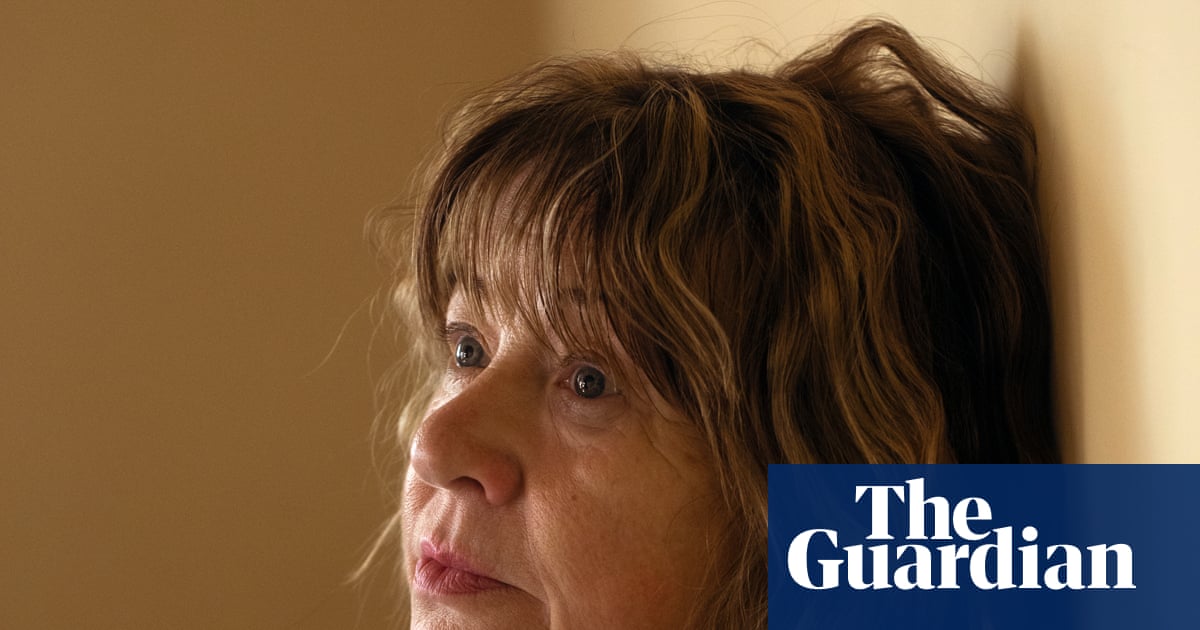
Martina Evans: Men who were in for drunken driving told me they weren’t ‘like that other lot’
Forgotten pages of my Pentonville diary came from a ‘dead’ self, which allowed me to finally write about my time there
1,622 words~7 min read