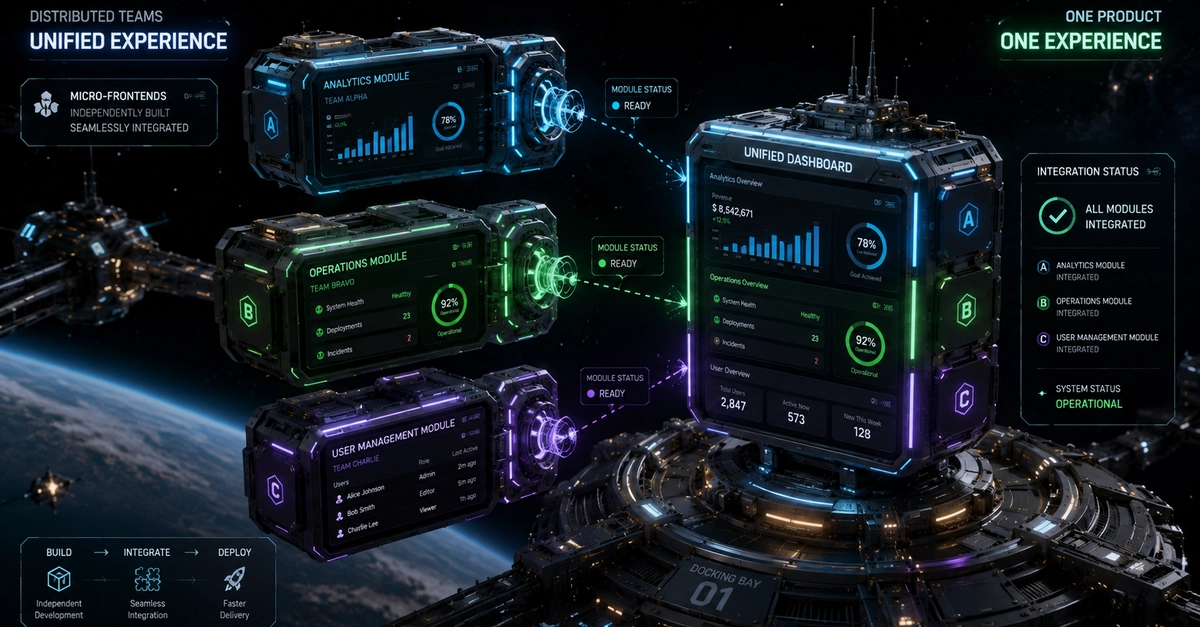
The short version: Module Federation lets a React Native app load its features at runtime, so each one can be deployed and updated on its own instead of riding in a single app-store release. That buys independent deploys and over-the-air fixes. It also hands you a distributed-systems problem that used to be a bundler's job. This series builds a working federated setup from scratch on a small Pokédex app. This first post is about whether you should.
Every feature ships in every release
A standard React Native app is one bundle. Organise it well, by feature rather than by type, and it changes nothing here: the login screen, the settings page, the report nobody opens, all compiled together, all gated behind the same store review, all riding the same release train. A one-line fix to one screen waits for the whole app to be rebuilt, resubmitted, and approved.
For a small app with one team, that's fine. The release train is cheap and everyone is on it anyway. For a large app with several teams, it's expensive. One team's urgent fix sits behind another team's half-finished feature because they share a binary. The release turns into a negotiation, and the cadence drops to the slowest contributor on the train.