When people ask how AI will shape the future of software, a lot of articles answer with the most intuitive points, heavily focusing on speed: building fast, reducing cost, and shipping fast. That's all good. But what happens after that?
I want to share a few counterintuitive thoughts that came to my mind—angles I haven't seen anyone else talking about yet.
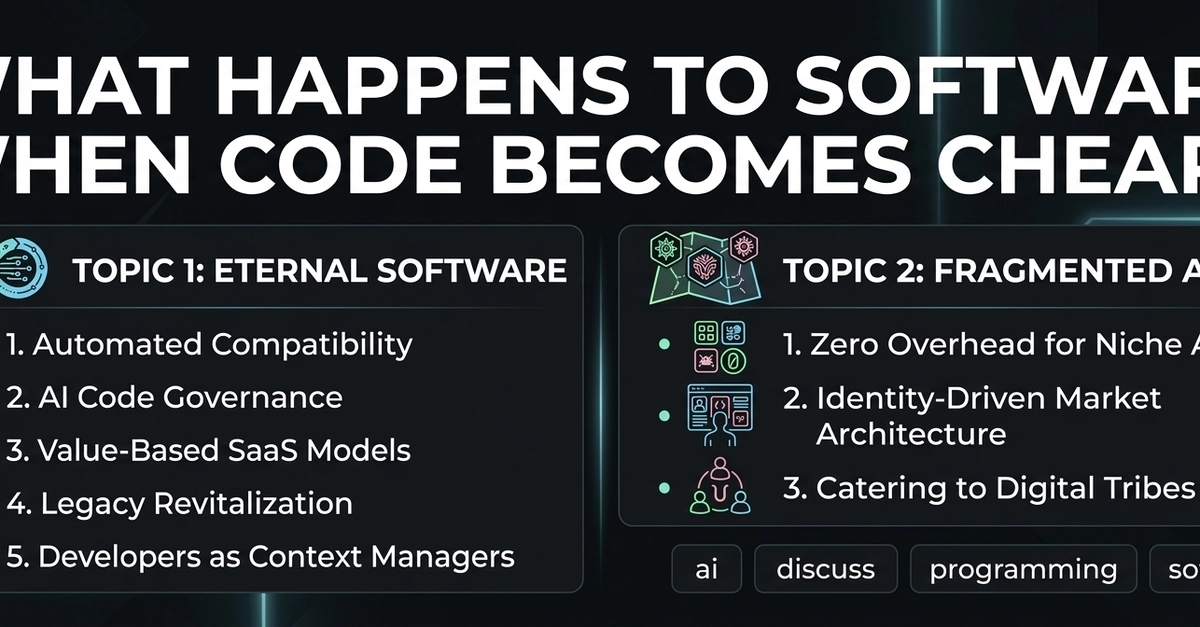
Topic 1: Eternal Software & The Death of the "Software Graveyard"
Historically, one of the most brutal crises facing tech companies was entering the "Software Graveyard" (Software Obsolescence). Before the era of AI, a company’s decision to abandon a legacy product or stop supporting it rarely meant the product itself was bad. It simply meant that the financial and human cost of keeping it alive was absolutely terrifying.
Software used to die because its surrounding ecosystem evolved—operating systems upgraded (iOS, Android), browsers shifted, and security standards advanced. Companies were forced to dedicate entire engineering teams just to chase these external changes, leading to massive technical debt.