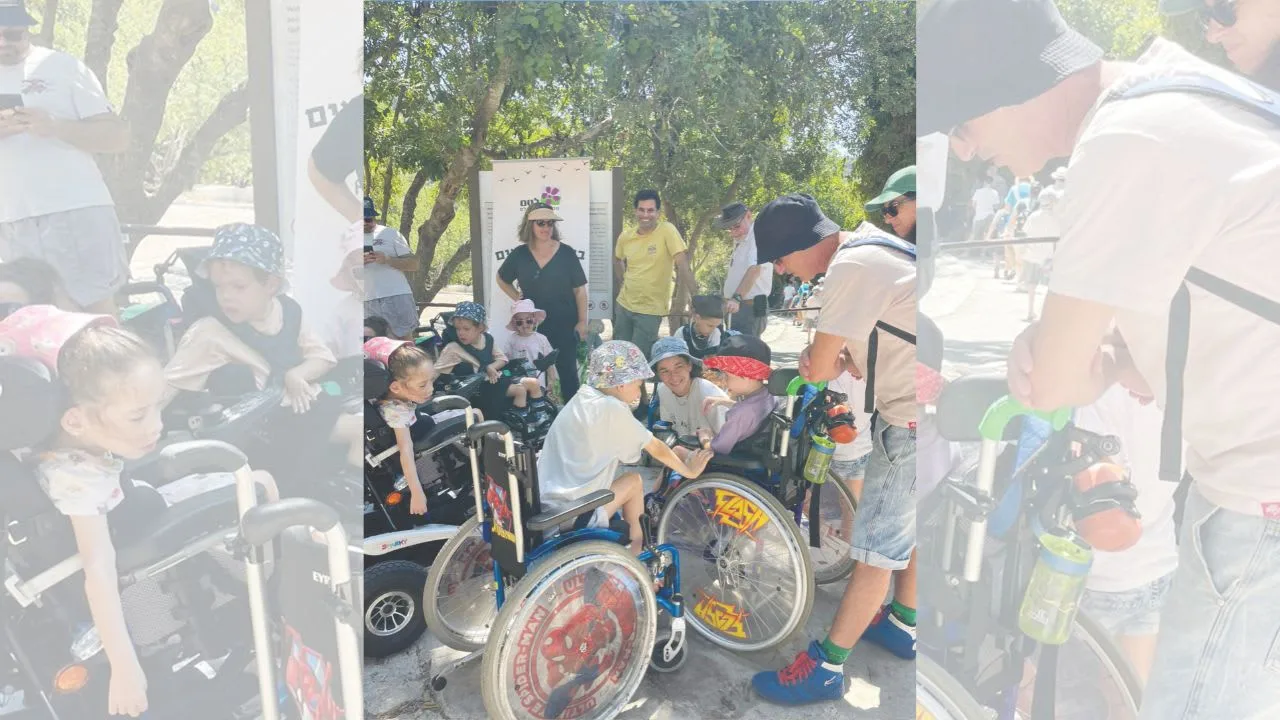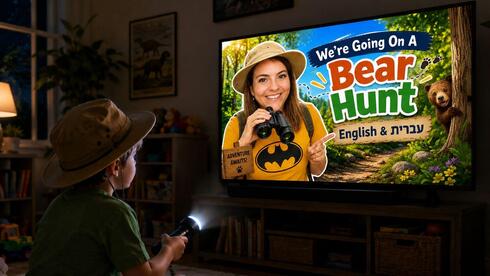
After Oct. 7, Miami speech therapist Moran Goldschmidt launched a free Hebrew-English Zoom storytime, connecting children in Israel and Jewish families worldwide through routine, language and comfortAs sirens sounded across Israel over the past few years, reservists were often called up and parents found themselves scrambling to explain an uncertain reality to their children. Yet every week, one familiar face appeared on screens for hundreds of young viewers in Israel and around the world.Armed with little more than a story, a warm smile and years of experience helping children learn to speak and read, Moran Goldschmidt has quietly built a global community of children who gather online for a free bilingual Hebrew-English storytime.4 View gallery Speech-language therapist Moran Goldschmidt leads activities with children during one of her educational programs, which grew out of the online storytime initiative she launched after Oct. 7 (Photo: Courtesy)What began as a volunteer initiative in the aftermath of October 7 has grown into something much larger: a weekly ritual connecting children in Israel with Jewish and Israeli families across continents through stories, songs, language and shared experiences.For Goldschmidt, a speech-language therapist and literacy specialist based in Miami, the idea was born out of a feeling familiar to many Israelis living abroad after the Hamas attack."On October 7, my body was in Florida, but my heart was in Israel," she recalled.Watching events unfold from afar, Goldschmidt felt powerless. Then she began thinking about the children living through the crisis.4 View gallery A child participates in Moran Goldschmidt's bilingual Hebrew-English storytime, which connects Israeli and Jewish families around the world through weekly online sessions (Photo: Courtesy)"I'm not a soldier or a politician," she said. "But I am an educator. Stories and teaching language are the gifts I've been given, so I decided to use them."That decision led her to launch a free bilingual Hebrew-English storytime on Zoom that now reaches hundreds of children in Israel and more than a dozen countries around the world. Every week, children ages 3 to 10 log on to hear stories about Jewish holidays, Israeli culture, friendship, resilience and belonging while strengthening their language skills.For many families navigating war, displacement and uncertainty, the sessions have become more than entertainment. They offer routine, connection and a brief moment of normalcy. Children know that no matter what is happening in the world around them, there will be a familiar face waiting for them each week.Goldschmidt understands the power of stories not only as a mother, but also as a professional who has spent years helping children develop speech, language, literacy and confidence. Before launching the project, she worked with children in classrooms and therapy settings throughout Florida. Today, she uses those same skills to support children facing the challenges of war, displacement and growing antisemitism.4 View gallery A child participates in Moran Goldschmidt's bilingual Hebrew-English storytime, which connects Israeli and Jewish families around the world through weekly online sessions (Photo: Courtesy)As the months passed, she said, the mission became about more than reading books."I wanted these children to know they matter," she said. "That they are seen, loved and never forgotten."The audience she serves is remarkably diverse. Israeli children join alongside youngsters from North America, Europe, South Africa and Latin America. Some live in communities where they are among only a handful of Jewish students in their schools. Others have experienced the realities of war firsthand.Yet for an hour each week, geography and hardship fade into the background.The children laugh at the same jokes, answer the same questions and celebrate the same stories in two languages.This summer, Goldschmidt is visiting Israel to volunteer with children across the country and meet many of the youngsters who have spent months—and in some cases years—seeing her only through a screen.For families, it is a chance to meet someone who became a steady presence in their children's lives during a turbulent period. For Goldschmidt, it is an opportunity to witness firsthand the impact of a project that began with a simple desire to help.4 View gallery Moran Goldschmidt (Photo: Courtesy)"For nearly three years, I've watched these children grow up during circumstances no child should have to experience," she said. "And yet they keep showing up ready to learn, laugh and connect."Their resilience, she added, continues to inspire her.The storytime sessions remain free of charge. Asked what motivates her to continue, Goldschmidt points to both her family history and her sense of responsibility."I'm the granddaughter of Holocaust survivors," she said. "Growing up, I often wondered what I would have done during those dark years."She does not claim that a weekly story hour can change the course of a war."But it was what I had to offer," she said. "This is my small way of bringing a little more light and joy into children's lives."Perhaps the clearest measure of the program's success is not found in attendance figures or social media metrics.It's in the children who keep coming back.At a time when so much of childhood has been disrupted by conflict and uncertainty, Goldschmidt's weekly storytime offers something increasingly rare: a place where children can simply be children.And sometimes, that is exactly what they need.
For children shaped by war, this story hour is a place to simply be kids
After Oct. 7, Miami speech therapist Moran Goldschmidt launched a free Hebrew-English Zoom storytime, connecting children in Israel and Jewish families worldwide through routine, language and comfort
855 words~4 min read