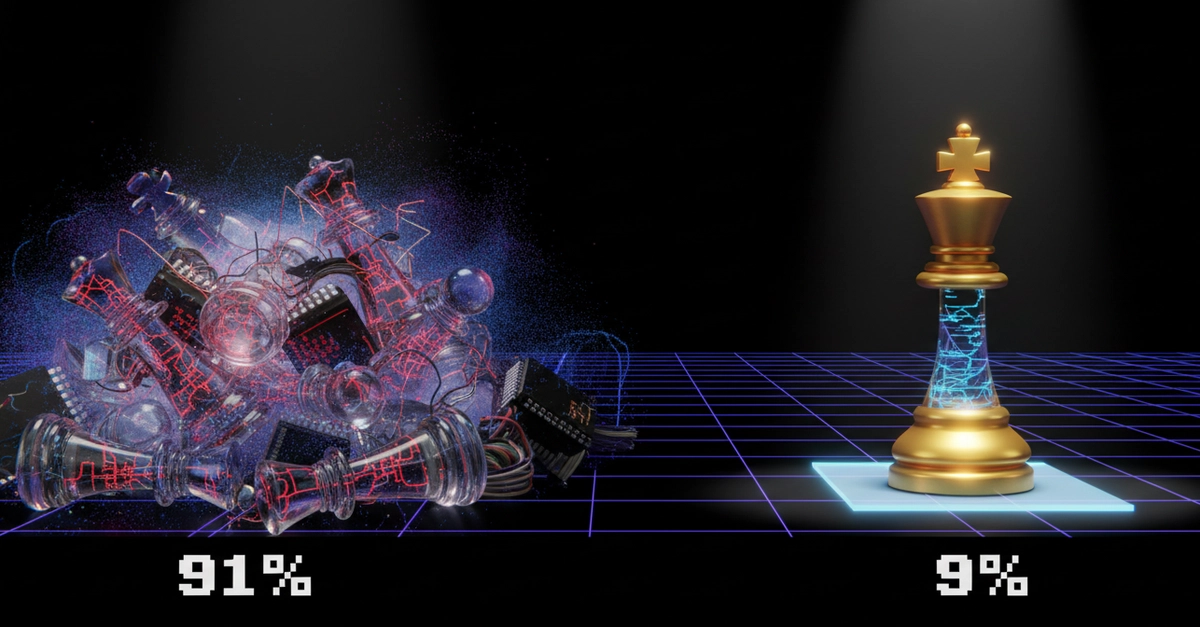
One widely-shared survey says 42 percent of companies already run AI agents in production. The most rigorous source in the field, Stanford's 2026 AI Index, says real autonomous-agent deployment still sits in single digits across nearly every business function. Both numbers were published this year, both are defensible, and the distance between them is where almost every bad decision about AI agents is being made right now. If you only remember one thing about agents in mid-2026, make it this: the technology is far more capable than the deployment numbers suggest, and the gap is not about intelligence. It is about trust, scope, and whether anyone can tell when the agent is wrong.
I build agent systems for a living, and I spend at least as much time talking clients out of agent projects as into them. Not because the tools are bad. Because the honest answer to "should we put an autonomous agent on this" is usually "on this specific slice, yes, and on the rest, not yet." The market is loud with both hype and backlash, and the truth is less satisfying than either. Here is the version I actually believe, with the numbers that support it.
The Number Depends Entirely on Who You Ask
The single biggest error in reading agent-adoption data is treating "deploying," "in production," "scaling," and "delivering value" as the same word. They are measured by different people, on different cohorts, with definitions that quietly do most of the work.