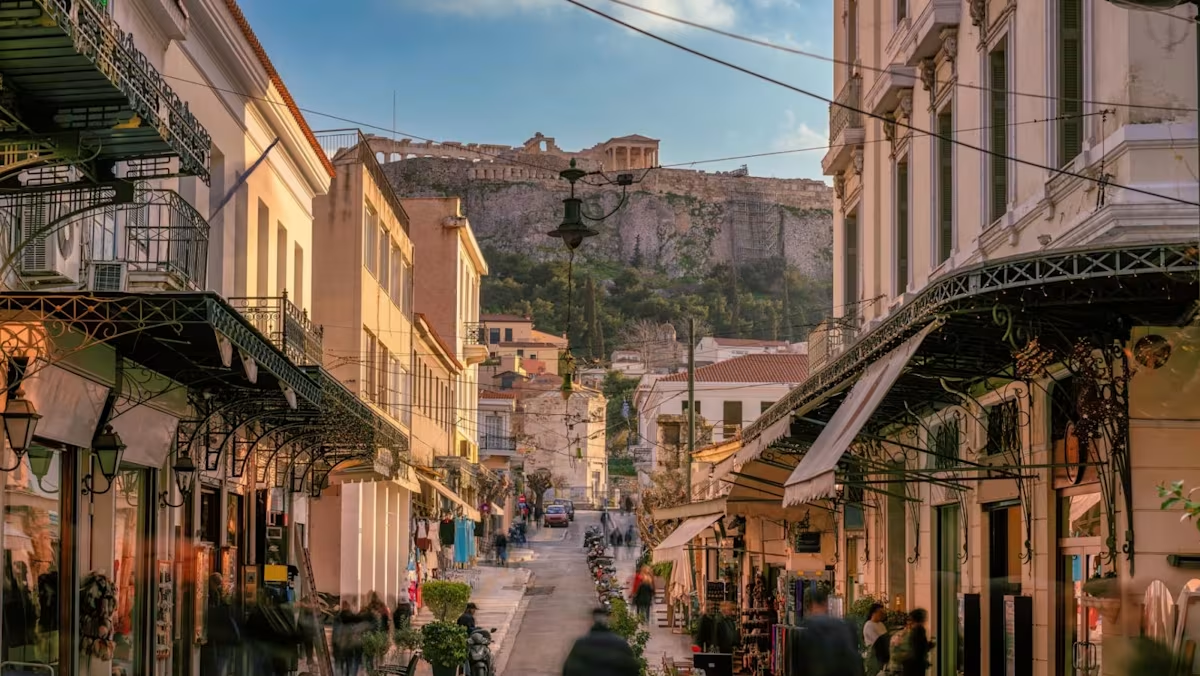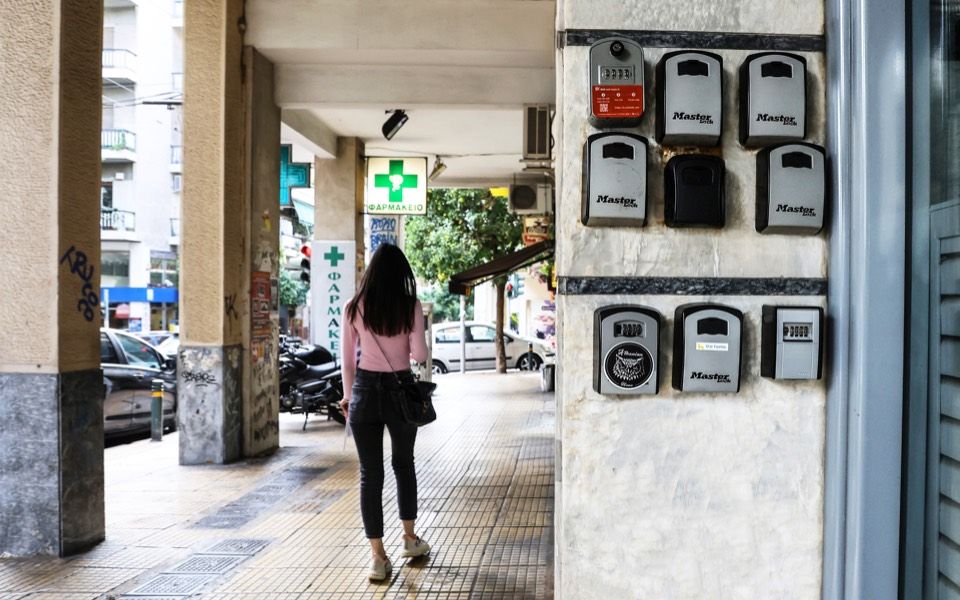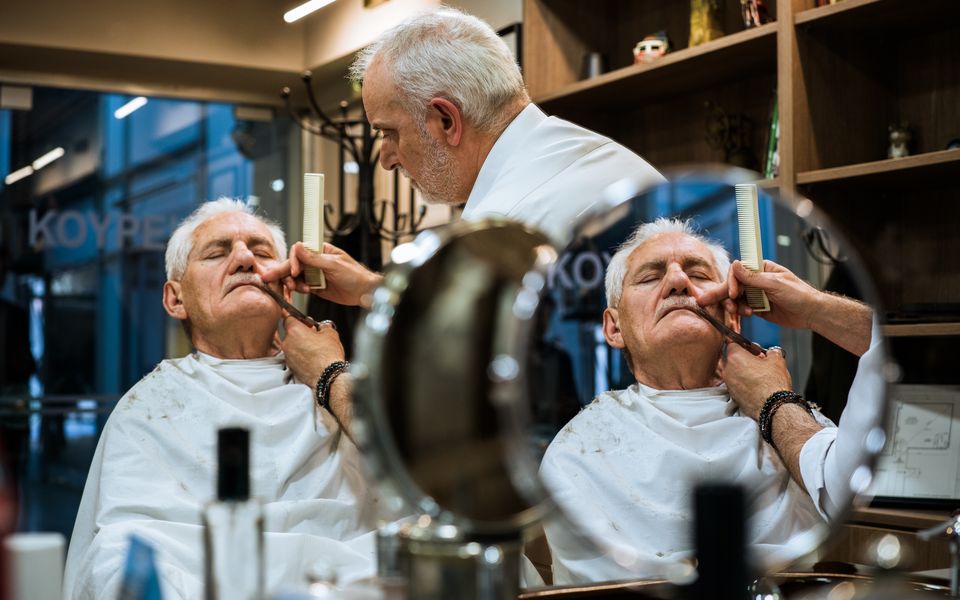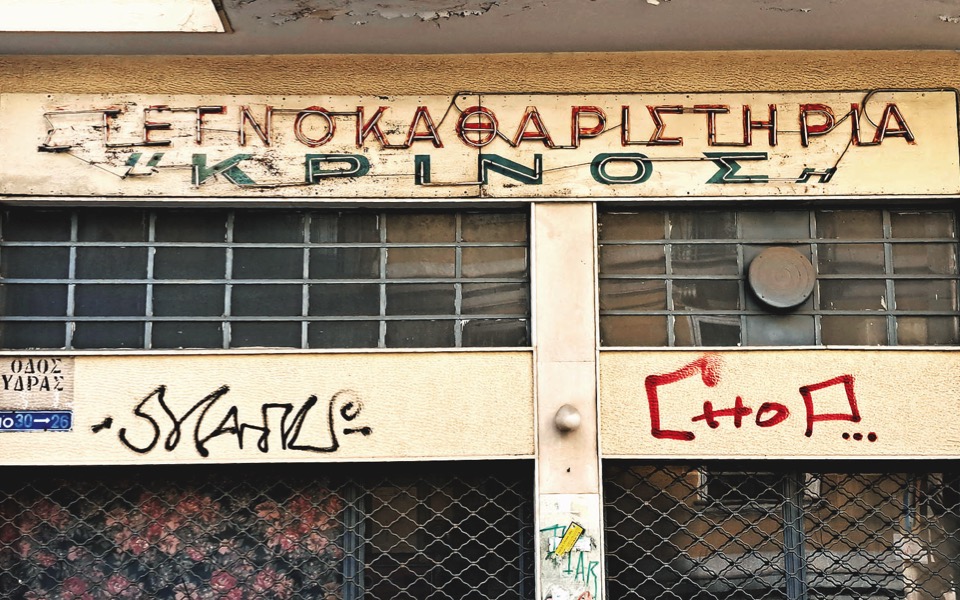
‘Krinos’ (Lily) dry cleaners, on 30 Hydra Street, Kypseli. [Nikos Vatopoulos]
I don’t remember if Mr Nikos’ grocery store on Drosopoulou Street in central Athens had a name or a nice sign in those years. But there were sacks of rice and beans, fine feta cheese in a barrel, and staff in white aprons. But I recall the multitude of signs, old or modern by the standards of the postwar world, that filled the streets of Athens.
Grocery stores like Mr Nikos’, along with electricians, greengrocers, fishmongers, clothing repair shops, barbershops, hairdressers, toy stores, shoe polishers, pharmacies, convenience stores, stationery stores, novelty stores, photo studios, dry cleaners, sewing and knitting supplies, and garages, made up that dense microcosm of the Athenian neighborhood that glorified microhistory.
I collect these images that survived and remain witnesses of another, handmade and simpler life, floating in our memory as evidence of urban folklore. An entire world lived in the city through these daily transactions. I remember the photo album by Evita Machaira, “The Shadow of Athens,” with text by Manos Eleftherios – published in 2002 – which treasured this graphic heritage of the inscriptions. Recently I had also watched the excellent photography of the author Giorgos Thanos. There are many people who observe these inscriptions and are moved – but the “skin” of the city is changing.