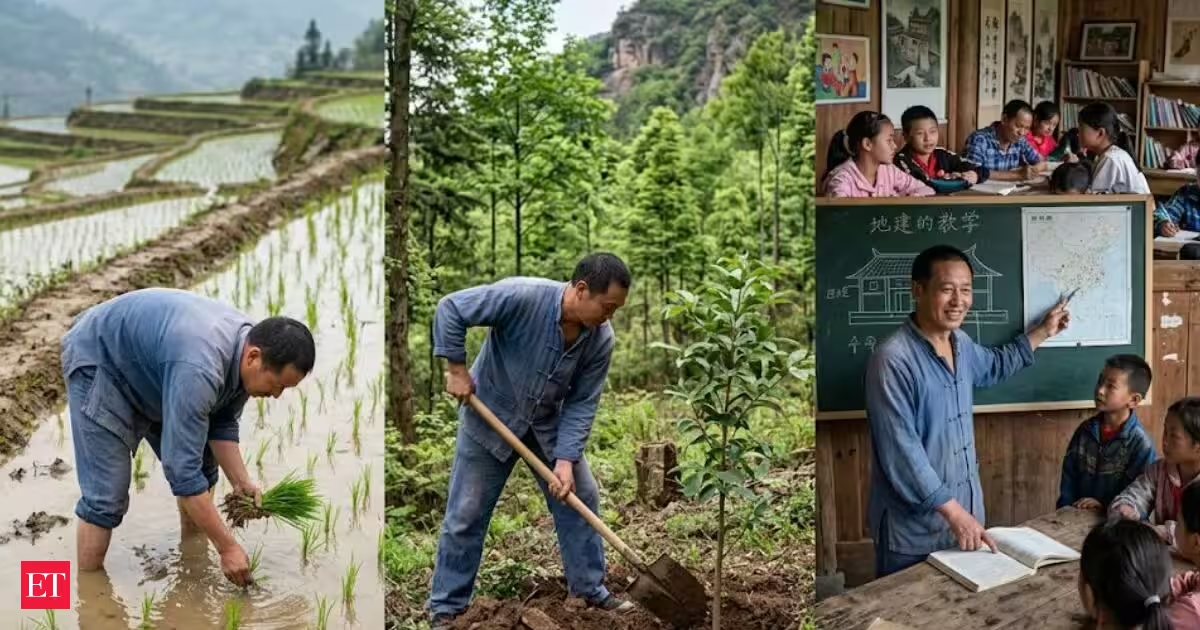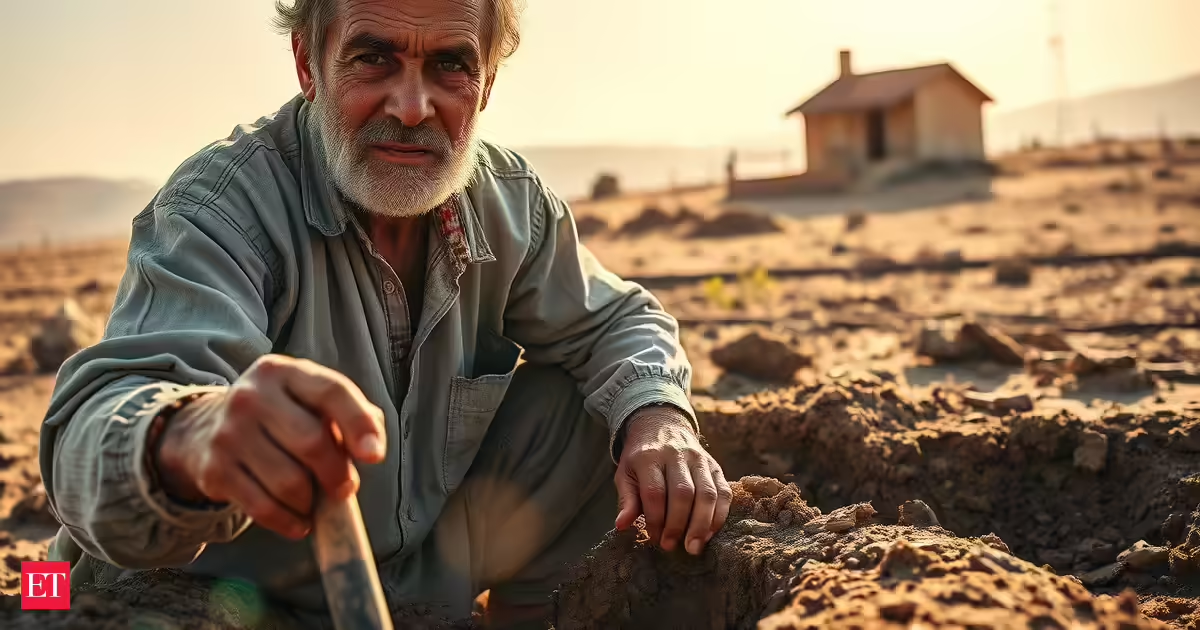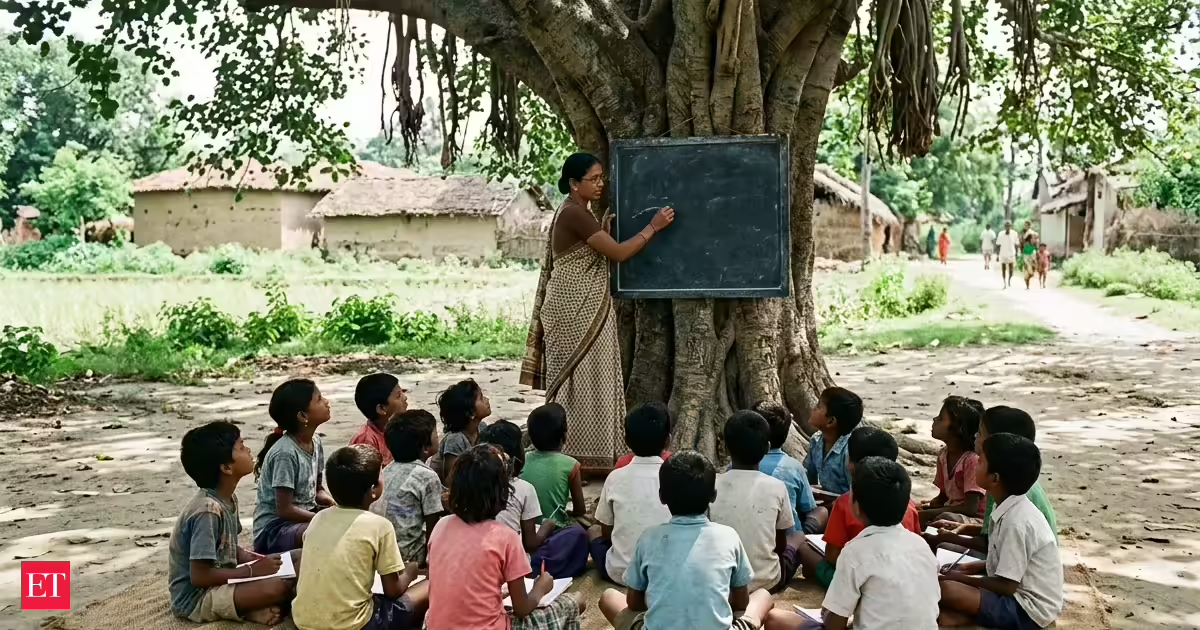
Best proverb of the day comes from an ancient Chinese saying that has inspired people for centuries. The proverb says, "When planning for a year, plant corn. When planning for a decade, plant trees. When planning for life, train and educate people." The message explains that different goals require different actions and different timeframes. Some efforts bring quick results. Others require patience. The greatest investment is helping people learn and grow. This proverb teaches lessons about planning, success, education, community, and long-term thinking. It continues to guide individuals, families, businesses, teachers, and leaders across the world.The proverb says, "When planning for a year, plant corn. When planning for a decade, plant trees. When planning for life, train and educate people." Understanding the message behind the proverbThe proverb explains that the scale of a person's goal should decide the action they take. If someone wants results within a short period, they should focus on immediate tasks. If they want benefits over many years, they should invest in projects that take time. If they want their influence to continue after they are gone, they should invest in people through education, training, and guidance.This idea shows that success is not measured only by what someone gains today. It is also measured by what they build for tomorrow and what they leave behind for future generations.You Might Also Like:Best proverb of the day teaches three levels of planningThe proverb divides planning into three simple stages. Each stage carries an important life lesson.Planning for one year: Plant cornCorn grows within one season. It needs regular care and provides food in a short time. This represents goals that require immediate attention. In daily life, this can mean earning money to pay bills, preparing for an examination, completing office work, or solving current problems. These short-term goals provide stability and help people meet their present needs. The proverb reminds us that focusing on immediate responsibilities is necessary. Without meeting today's needs, it becomes difficult to prepare for tomorrow.Planning for a decade: Plant treesTrees need many years before they provide shade, fruit, or wood. They require patience, care, and consistency. This part of the proverb represents long-term planning. People who build careers, save money, improve their health, develop relationships, or start businesses often work for years before seeing results. The lesson encourages patience. Success usually comes through continuous effort rather than instant rewards.You Might Also Like:Planning for life: Train and educate peopleThe final part carries the deepest meaning. People live beyond crops and trees. Knowledge passed from one person to another continues through families, schools, workplaces, and communities.Teaching, mentoring, and educating others creates an impact that continues for generations. A teacher influences students. Parents guide children. Experienced workers train newcomers. Leaders prepare future leaders. The proverb explains that investing in people creates the greatest return because knowledge spreads from one generation to the next.The history and origin of this Chinese proverbThis saying belongs to ancient China and is commonly attributed to the philosopher and statesman Guan Zhong, also known as Guan Yiwu. He lived between 725 BCE and 645 BCE. The proverb appears in the ancient Chinese text called Guanzi, especially in the chapter known as Quan Xiu.You Might Also Like:The original translation is commonly presented as:"The best plan for a year is to grow grain. The best plan for ten years is to plant trees. The best plan for a lifetime is to educate people."Over time, translators adapted the wording. Some versions mention rice instead of corn. Others mention grain instead of rice. Some versions replace "lifetime" with "one hundred years." Despite these differences, the central message remains unchanged. The saying is sometimes mistakenly credited to Confucius because both philosophers valued education and social development.Different versions of the proverbSeveral translations exist across different countries and languages.Common versions include:If your plan is for one year, plant rice.If your plan is for ten years, plant trees.If your plan is for one hundred years, educate children.Another version says:When planning for life, train and educate people. Although the wording changes, every version highlights the importance of balancing immediate needs with long-term investments.Why this proverb remains relevant today?Modern life often encourages people to seek quick results. Many expect success within a short period. This proverb reminds us that meaningful achievements often require patience. Students spend years learning before beginning careers.Parents spend decades raising children. Businesses invest in research before launching products. Governments invest in education to prepare future generations. Communities become stronger when knowledge is shared. The proverb encourages people to think beyond immediate rewards and consider how today's actions will influence tomorrow.English equivalents and related expressionsSeveral English sayings carry similar ideas.Give a person a fish and you feed them for a day. Teach a person to fish and you feed them for life.Rome was not built in a day.You reap what you sow.Knowledge is power.Education is the key to success.These expressions also highlight patience, learning, preparation, and long-term thinking.Lessons people can apply every dayThe proverb can be used in many situations. Students can focus on learning instead of only passing examinations. Parents can spend time teaching values along with providing material support. Employers can invest in employee development.Teachers can encourage lifelong learning. Communities can support education programs. Individuals can balance present responsibilities while preparing for future goals. The message is simple. Meet today's needs, prepare for tomorrow, and leave behind knowledge that benefits others.Why education creates the greatest legacy?The proverb ends with educating people because knowledge grows over time. A crop feeds a family for one season. A tree benefits people for many years. Education helps generations continue learning, solving problems, and improving society.When one person teaches another, the learning does not stop. The student can become a teacher and pass knowledge to others. This creates a chain that continues across many years. That is why many scholars consider education the highest investment anyone can make.
Best proverb of the day: 'When planning for a year, plant corn. When planning for life...' Life lessons on happiness, goals, immediate results, sustainable foundations, lasting legacy, investments and true success
Best proverb of the day reminds us that the goals we set decide the actions we take. The Chinese proverb, often linked to Guanzi, explains the value of planning for the present, preparing for the future, and investing in people through education. Its message remains useful in daily life, careers, families, and society. It encourages balanced thinking, patience, learning, and creating a legacy that lasts across generations.
975 words~4 min read